Best Paying Delivery Apps in 2026: 9 Apps Compared
By ToolNimba Editorial Team October 29, 2026 12 min read

- Top pick
 DoorDash
Most restaurant orders
Starting priceFreeCheck out DoorDashRead our review - Runner-up
 Uber Eats
Flexible food and grocery delivery
Starting priceFreeCheck out Uber EatsRead our review - Also great
 Grubhub
Scheduled shifts and restaurant volume
Starting priceFreeCheck out GrubhubRead our review
How we researched this
We compared official pricing and feature pages, app store listings, privacy policies and public user reviews. Prices change, so check the provider's site before you pay.
Key takeaways
- Driver pay varies a lot by market, time of day, tips, and the type of order, so no single app pays best for everyone in every city.
- Food delivery apps such as DoorDash, Uber Eats, and Grubhub tend to offer the most frequent orders, while grocery and package apps can offer larger, steadier jobs.
- Almost every app on this list lets drivers keep 100 percent of tips, and most show an estimated payout before you accept an order.
- All of the apps here are free to join, but drivers pay their own fuel, vehicle wear, and taxes as independent contractors.
- The smart move for most drivers is to sign up for two or three apps and compare real earnings in their own area over a few weeks.
Quick comparison
| Name | Best for | Starting price | Free plan | |
|---|---|---|---|---|
| DoorDash | Most restaurant orders | Free | Yes | Visit |
| Uber Eats | Flexible food and grocery delivery | Free | Yes | Visit |
| Grubhub | Scheduled shifts and restaurant volume | Free | Yes | Visit |
 Instacart | Grocery shopping and delivery | Free | Yes | Visit |
 Amazon Flex | Scheduled package blocks | Free | Yes | Visit |
 Spark Driver | Walmart grocery and retail orders | Free | Yes | Visit |
 Shipt | Grocery shopping with scheduled windows | Free | Yes | Visit |
 Roadie | Larger and longer-distance deliveries | Free | Yes | Visit |
 Gopuff | Short trips from one pickup point | Free | Yes | Visit |
The best paying delivery apps
Pay depends on where you drive, when you drive, and how tips fall on a given day. The apps below are the main options for US drivers in 2026, ranked by how useful we found each one for earning, not by a single pay figure.
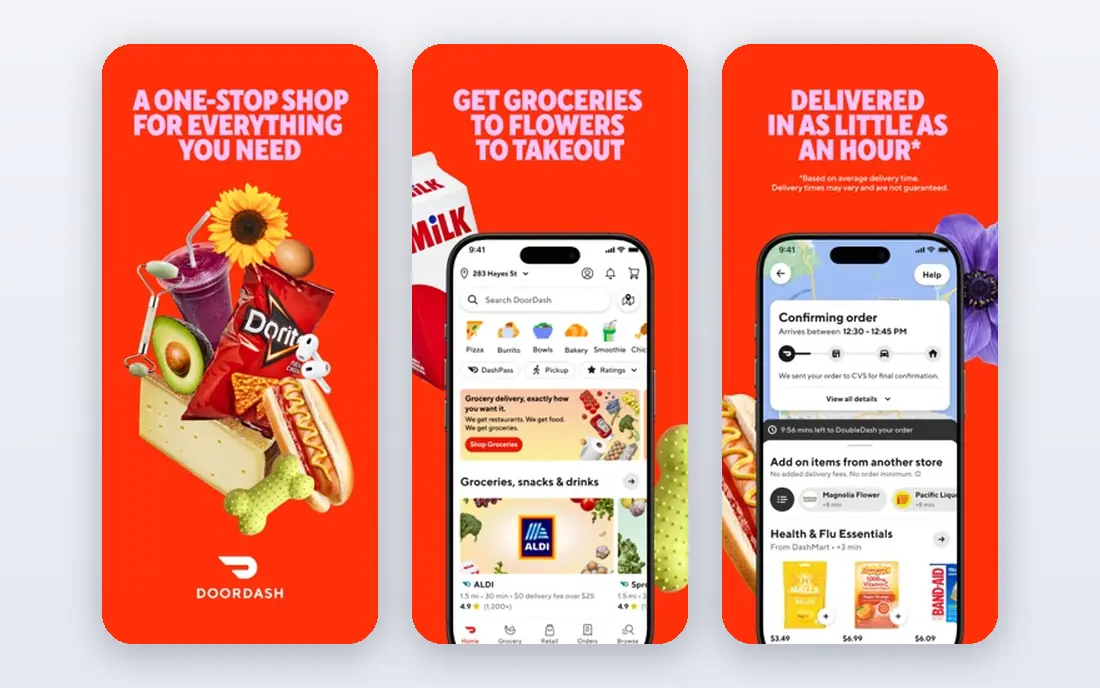
DoorDash is our pick for most people starting out, mainly because orders are frequent in many cities and the app shows an estimate before you accept. Dashers are independent contractors who choose their own hours, with no set schedule and no minimum hours. DoorDash says base pay plus promotions plus tips make up total earnings, and base pay varies with time, distance, and how desirable an order is.
The catch is that busy does not always mean well paid. Short, low-tip orders can eat up time, and you still cover fuel and vehicle costs. Drivers who do best tend to work meal peaks, decline weak offers, and learn which neighborhoods tip well. Sign-up requires being at least 18, having a smartphone and bank account, and passing a background screening.
- Very large restaurant network
- Upfront offer estimates
- Keep 100 percent of tips
- Pay varies by market and time
- Busy areas can be competitive
- Instant cash-out can carry a fee

Uber Eats suits drivers who want one app for several kinds of work, since existing Uber drivers can add food delivery in the Driver app. Earnings come from base fare, promotions, and tips, and the app shows the fare along with pickup and drop-off details before you accept. That upfront view helps you skip trips that do not pay enough for the distance.
On the other hand, requirements depend on how you travel. Car and scooter drivers generally need to be at least 19 with a valid license, while bike and foot delivery is open from 18 with a government ID. Activation can take from a few minutes to about 48 hours depending on documents and the background check. It is a strong second app for drivers who already use DoorDash and want another source of orders.
- Can combine food delivery with other Uber work
- Upfront fare details
- Keep 100 percent of tips
- Car drivers must be at least 19 in most cases
- Earnings vary by city
- Promotions change often
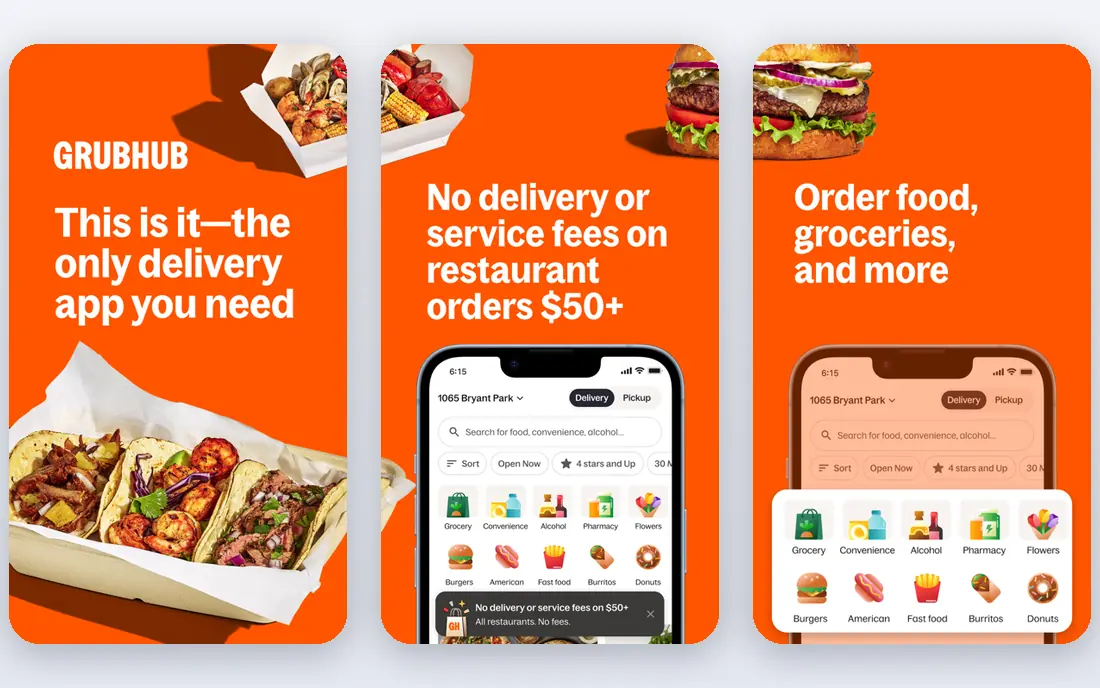
Grubhub stands out for drivers who like planning ahead, because you can schedule hours in advance or go live on short notice. Delivery pay includes mileage and time, plus 100 percent of tips, and drivers can also earn bonus pay through incentives and challenges. The app also lets drivers deliver by car, bike, or moped in many markets, which lowers the barrier for people without a car.
The trade-off is access. Grubhub lists many major cities, but new drivers in some areas report waiting on a waitlist before they can start. Applicants must be at least 18, or 21 in Las Vegas, and car drivers need a valid license and auto insurance. If your market is open, it pairs well with DoorDash for filling quiet hours.
- Large restaurant network
- Scheduling in advance
- Keep 100 percent of tips
- Some markets have waitlists
- Car drivers need insurance and a license
- Pay includes mileage and time, so short trips can pay less
Instacart is different from the food apps above because shoppers pick groceries, pay with an Instacart card, and then deliver them. That extra work is why a batch can be worth more than a single restaurant trip, and shoppers keep 100 percent of tips. Full-service shoppers need to be at least 18, be authorized to work in the US, have consistent access to a vehicle, and pass a background check.
Shopping also brings headaches that restaurant delivery does not. Items go out of stock, customers ask for substitutions by chat, and a large order can take a while in the store. Drivers who enjoy grocery work and know their local stores well tend to do better here. For pure driving without shopping, one of the food or package apps is a better fit.
- Grocery batches can pay more per job than single restaurant orders
- Shoppers choose batches
- Instant cash-out available
- Shopping takes time and physical effort
- Customers may change orders
- You need to lift up to 40 pounds
Amazon Flex works on blocks, which are set delivery windows that you reserve in the app. Amazon says most drivers earn 18 to 25 dollars an hour, with a note that actual earnings vary by location, tips, delivery time, and other factors. Each block shows its expected pay before you accept it, so you can judge whether the window is worth your time.
The limits are stricter than most food apps. Drivers must be 21 or older, have a valid license, a qualifying vehicle, and a smartphone, and they work as independent contractors who cover fuel and taxes. Package blocks are usually a few hours long, which suits drivers who prefer one planned run over many small trips. If your area has regular block availability, Flex can be a steady second income.
- Pay shown upfront for each block
- Scheduled blocks suit planners
- Grocery blocks can include tips
- Must be 21 or older
- Needs a mid-size or larger vehicle
- Blocks can be competitive in some cities
Spark Driver, the Walmart delivery platform, is worth a close look if you live near a busy Walmart. Drivers pick a zone tied to a store, then accept shopping and delivery trips or curbside deliveries where store staff have already gathered the order. That curbside option is a plus for new drivers, since there is no store time to learn on the first runs.
The main risk is the waitlist. If your chosen zone is at capacity, you may wait weeks, and drivers report that applying to a nearby store can speed things up. Requirements include being at least 18, or 21 in select markets, having a valid license and insured vehicle, and passing a background check. Pay depends on delivery type, distance, order size, incentives, and tips, so results vary by store.
- Tied to Walmart stores with steady order flow
- Curbside orders need no shopping
- Drivers see trip details before accepting
- Zones are tied to single stores and can fill up
- Need an insured car
- Some markets require drivers to be 21
Shipt offers two kinds of work in one app: personal shopping, where you shop and deliver groceries and household items, and package delivery, where you pick up packages at a Target location and follow a route. Personal shoppers keep 100 percent of tips, and active shoppers who complete at least one shop every 90 days can get a free annual Shipt membership. That mix gives drivers a way to switch between shopping and driving as demand changes.
Signing up takes more effort than some rivals. Applicants must be at least 18, have a valid license, Social Security number, auto insurance, a reliable vehicle, and a smartphone, and the shopper process includes written answers and a video response. Openings depend on local need, so you may join a waitlist. For drivers who like grocery work and want a Target-linked option, Shipt is a solid addition.
- Personal shoppers keep 100 percent of tips
- Package delivery option for Target routes
- Free membership for active shoppers
- Must be able to lift 50 pounds
- Shopper application includes written and video steps
- Some areas have limited openings
Roadie, a UPS company, is a crowdsourced delivery platform for local same-day and next-day delivery in passenger vehicles. Drivers sign up at the driver site or in the app, must be 18 or older, and need a Social Security number and a valid US license. Unlike food apps, Roadie gigs range from groceries and appliances to lost luggage, and drivers offer on the gigs they want.
That variety is both the appeal and the limit. A longer or bulkier gig can pay far more than a single restaurant order, and RoadieXD routed gigs for cargo vans can run several hours. But gig volume is uneven, and a small car limits what you can take. Roadie works best as an extra app for drivers who want occasional larger jobs on top of steadier food or grocery work.
- Big and bulky deliveries can pay more per gig
- Drivers choose gigs and set their own schedule
- No passengers to transport
- Gigs can be sparse outside busy areas
- Larger items need a suitable vehicle
- Pay depends heavily on distance and item size
Gopuff keeps things simple by sending drivers to one facility near them, then out to customers in a smaller zone. Drivers deliver everyday essentials, from cleaning supplies and home needs to food and drinks, and Gopuff says drivers earn an upfront amount for every order, even if a customer cancels it. Drivers also keep 100 percent of tips and can earn Wait Pay when they schedule time, though that varies by market.
The age bar is higher here, at 21 or older, and drivers need a valid US license, a vehicle with insurance and registration in their name, and a smartphone. Some orders may also need an alcohol delivery training course where applicable. If you live near a Gopuff facility, the short, repeatable trips can be an efficient way to earn, especially late at night when other apps slow down.
- One centralized pickup location
- Smaller delivery zones
- Upfront amount per order and 100 percent of tips
- Must be 21 or older
- Limited to areas with a Gopuff facility
- Scheduled time can affect Wait Pay
How we picked these
We compared official driver pages, sign-up requirements, pay explanations, and app store listings for the main US delivery platforms, and we checked public driver guides for details the official pages do not spell out. We favored apps that are open to new drivers in 2026, show pay or offer details before acceptance, and let drivers keep their tips. We did not count a single advertised pay figure as a promise, since market, tips, and time of day change the result.
What actually decides your pay
The app matters less than the details of each order, so it helps to judge every offer on its own merits.
Time and place beat brand
Meal peaks, weekends, bad weather, and dense neighborhoods tend to produce more orders and better tips. A quiet suburb at mid-afternoon will pay less on any app. Try the same hours on two apps for a week or two and keep notes on earnings after fuel.
Tips and order type
Grocery batches and larger orders often carry larger tips, but they also take longer. A short restaurant trip with a good tip can beat a long grocery run with a weak one. Look at the total payout and the estimated time, not just the headline number.
Costs you pay yourself
All of these apps treat drivers as independent contractors, so fuel, maintenance, insurance, and taxes come out of your earnings. Track mileage from day one, set aside money for taxes, and check whether your auto policy covers delivery work. A gross pay figure that looks strong can shrink fast in a gas-heavy car.
Stacking apps
Running two or three apps at once, where the rules allow it, lets you pick the best offer instead of waiting on one platform. The risk is double-booking or missing a pickup, so accept only what you can finish on time. Over time, most drivers settle on one main app and one backup.
Sources
- https://dasher.doordash.com/en-us/delivery-driving-jobs/ma/boston
- https://www.uber.com/us/en/deliver/
- https://flex.amazon.com/
- https://drive4spark.walmart.com
- https://www.shipt.com/shopper/sign-up
- https://driver.roadie.com/
- https://www.gopuff.com/gfj/1-deliver-with-gopuff-on-your-schedule-denver-co-68e4bfb4ef403d04fa13c080
- https://driver-support.grubhub.com/hc/en-us/articles/360029692891-What-are-the-requirements-for-partnering-with-Grubhub
- https://www.instacart.com