Best Plant Identification App in 2026: 10 Apps Compared
By ToolNimba Editorial Team October 29, 2026 12 min read

- Top pick
 PictureThis
Most complete identification and care
Starting price$39.99 per yearCheck out PictureThisRead our review - Runner-up
 PlantNet
Best free identification
Starting priceFreeCheck out PlantNetRead our review - Also great
 Seek by iNaturalist
Families and nature walks
Starting priceFreeCheck out Seek by iNaturalistRead our review
How we researched this
We compared official pricing and feature pages, app store listings, privacy policies and public user reviews. Prices change, so check the provider's site before you pay.
Key takeaways
- PlantNet is the best free plant identification app, with no paywall on core identification and community verification.
- PictureThis is the most complete paid option, with a large species database, disease diagnosis, and care guides.
- Seek by iNaturalist is the best free pick for families and nature walks, with no account needed for basic use.
- Planta and Greg are the best picks if identification is only the first step and you also want watering and care reminders.
- No app is perfect on lookalike species, so check a second app or a field guide before eating, touching, or treating a plant as safe.
Quick comparison
| Name | Best for | Starting price | Free plan | |
|---|---|---|---|---|
| PictureThis | Most complete identification and care | $39.99 per year | Yes | Visit |
| PlantNet | Best free identification | Free | Yes | Visit |
| Seek by iNaturalist | Families and nature walks | Free | Yes | Visit |
 Planta | Identification plus care planner | $35.99 per year | Yes | Visit |
 PlantSnap | Large catalogue with lifetime option | $21.99 per year | Yes | Visit |
 Flora Incognita | Wild plant accuracy | Free | Yes | Visit |
 Google Lens | Quick ID without a new app | Free | Yes | Visit |
 PlantIn | Identification with human experts | $29.99 per year | Yes | Visit |
 Greg | Care reminders and light measurement | $29.99 per year | Yes | Visit |
 Plant Parent | Identification and diagnosis | $29.99 per year | Yes | Visit |
The best plant identification apps
These apps cover wild plants, houseplants, care, and diagnosis, so pick by whether you identify on walks, in the garden, or around the house.
Never eat, feed to a pet, or use a plant medicinally based only on an app result. Apps can confuse lookalike species, and some lookalikes are toxic. For edibility or pet safety, confirm with a local expert, veterinarian, or poison control source before acting.
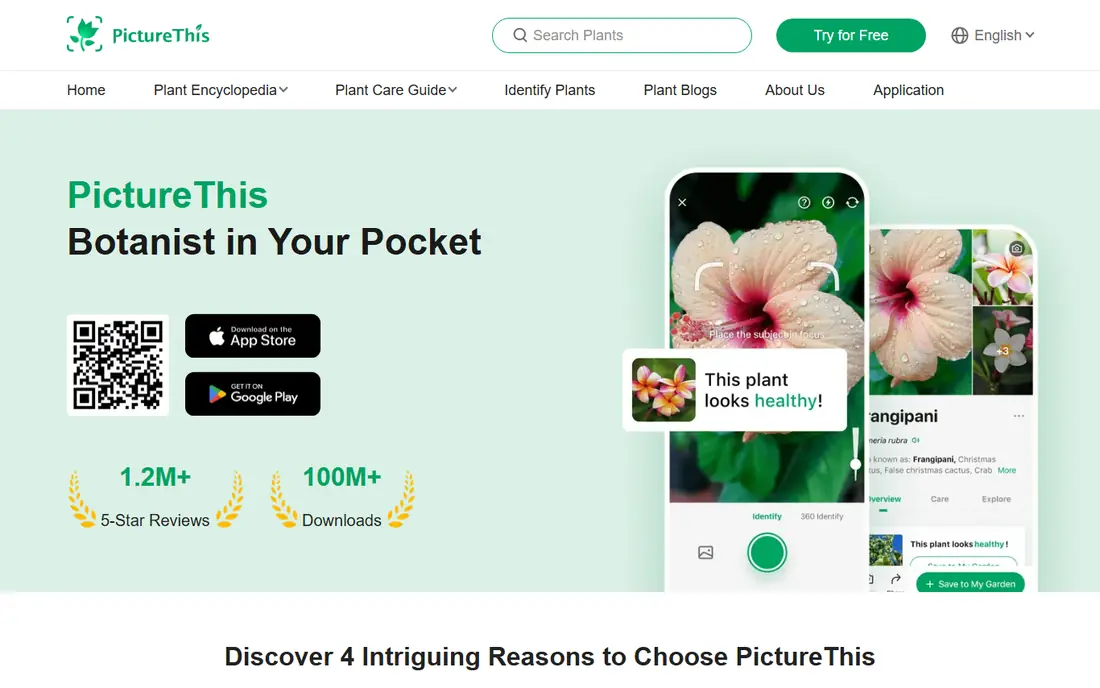
PictureThis is our pick for most gardeners and houseplant owners who want one app to do identification, diagnosis, and care. Photograph a plant, get a likely species, then read watering, light, and care guidance, and use the diagnosis tool if leaves look sick. The database covers houseplants and garden plants well, which is where many free apps are thinner.
The cost and the upsell prompts are the honest catches. The free download offers limited identifications, and Premium at $39.99 per year opens the full experience. If you identify plants weekly and want diagnosis in the same app, that price is reasonable. If you only identify occasionally, PlantNet or Seek will cover you free.
- Very large species database
- Disease diagnosis and care guides
- Toxicity warnings for many plants
- Premium costs $39.99 per year
- Free tier is limited
- App pushes the subscription often
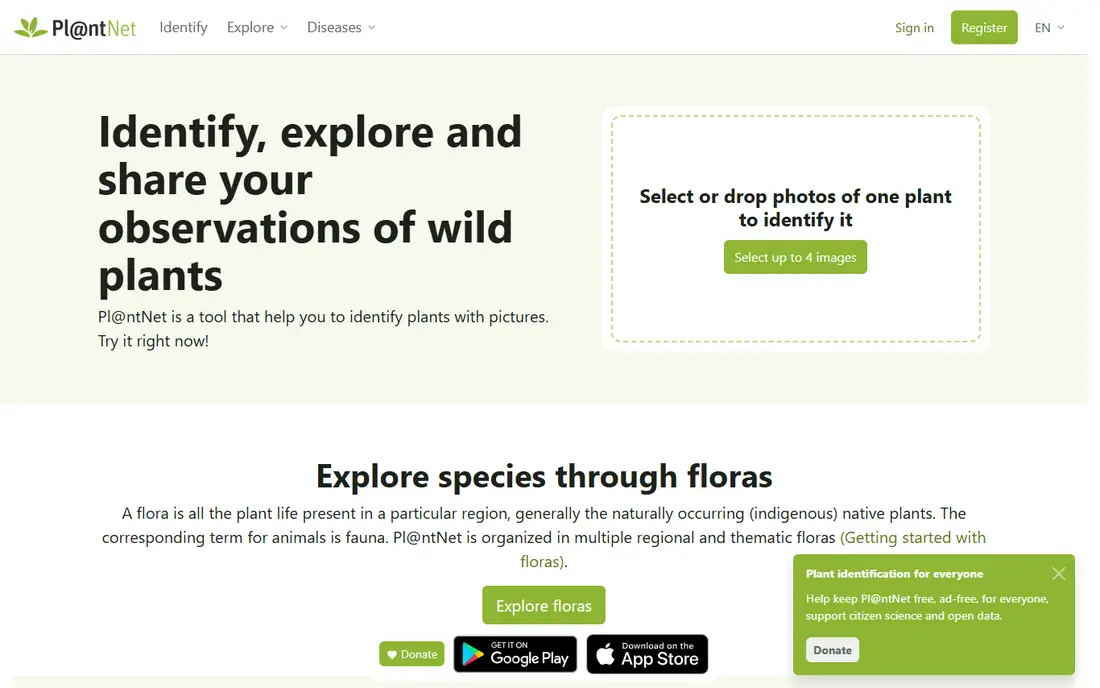
PlantNet is the best free plant app, and the one to try first if cost matters. It is backed by research institutions, uses community verification, and shows scientific names alongside common names, which helps when common names vary by region. You can narrow identification to a regional flora, which reduces false matches from species that do not grow near you.
The scientific focus is both a strength and a limit. PlantNet excels on wild plants and is less polished for houseplant care, with no full watering planner like Planta. For walks, gardens, and nature study, it is excellent and free. For houseplant care after identification, pair it with Planta or Greg.
- Completely free core identification
- Community verification and scientific names
- Regional flora lists
- Weaker on houseplant cultivars than PictureThis
- Interface is more scientific than friendly
- No full care planner

Seek, from iNaturalist, is the best plant app for families and casual nature lovers. Point the camera at a plant, get a likely identification, and earn badges for new species, which turns a walk into a game for kids. It also identifies animals and fungi, so one app covers a whole nature walk, and basic use needs no account.
Seek is less precise than PlantNet on tricky wild species, and it has no houseplant care or disease diagnosis. Use it for discovery and learning, then confirm a tricky or important identification in PlantNet. For free, family-friendly identification, Seek is hard to beat.
- Free with no account needed for basic use
- Identifies plants, animals, and fungi
- Challenges make nature walks fun for kids
- Less precise than PlantNet on some wild species
- No care planner or diagnosis
- Needs a photo with clear features
Planta is the best plant identification and care app for houseplant owners who kill plants by overwatering or forgetting them. Identify a plant, add it to your collection, and Planta builds a care schedule based on species, pot size, light, and location, then reminds you when to water, fertilize, or repot. Progress photos and a journal help you see whether a plant is actually improving.
Identification alone is not Planta deepest strength, and Premium at $35.99 per year opens the fuller schedule and features. If you only need to name a plant on a walk, PlantNet is better and free. If you own many houseplants and want them to survive, Planta is the best all-in-one care pick here.
- Identification paired with a smart care schedule
- Watering, light, and fertilizing reminders
- Plant journal and progress photos
- Premium costs $35.99 per year in recent listings
- Identification is a step toward care, not the deepest ID tool
- Some features need Premium
PlantSnap has been around for years and claims one of the largest plant catalogues, which helps with garden plants and less common species. The app identifies from a photo, saves plants to a collection, and offers care basics, and some listings offer a lifetime purchase instead of a yearly subscription, which appeals to people who dislike renewals.
Catalogue size does not guarantee accuracy, and PlantSnap can struggle with close lookalikes, as most apps do. Care features are also thinner than Planta or Greg. PlantSnap suits users who want broad coverage and a possible one-time purchase, with PlantNet as a free second check for important identifications.
- Large claimed catalogue of species
- Lifetime purchase option in some listings
- Identification plus care basics
- Annual price varies by listing, from $21.99
- Accuracy varies on lookalikes
- Care features are thinner than Planta
Flora Incognita is a research-backed app focused on wild plants, with high accuracy claims in peer-reviewed work for the flora it covers. It is free, simple to use, and strong for meadow, forest, and field plants, especially in Central Europe where its database is deepest. For a hiker or student in that region, it is one of the most trustworthy free options.
Coverage outside its core region is thinner, and houseplant identification is not its job. If you live in North America or grow mostly houseplants, PlantNet or PictureThis will cover more species. If you walk wild areas in Europe, add Flora Incognita alongside PlantNet and compare results on tricky species.
- Free identification focused on wild plants
- Peer-reviewed accuracy claims for its region
- No account pressure for basic use
- Best coverage is for Central European flora
- Less useful for houseplants
- Fewer care features than paid rivals
Google Lens is the best plant identification option if you do not want another app at all. On many Android phones it is built into the camera or Google app, and on iPhone it works through the Google app. Point it at a plant or a gallery photo, and it returns visually similar plants and web pages, often with a likely species at the top.
Lens is a general tool, not a plant specialist, so it lacks care schedules, diagnosis, and the community verification of PlantNet. Results can also be broad when species look alike. Use Lens for a quick first guess, especially in a shop or garden, then confirm in PlantNet or PictureThis when the identification matters.
- Free and already on many Android phones
- Quick identification from camera or gallery photos
- No new account or install for many users
- General image search, not a plant specialist
- No care planner or diagnosis
- Results can be broad on lookalikes
PlantIn combines app identification with access to human botanists, which is useful when the app alone is unsure. Photograph a plant, get an app result, and ask a botanist for help on tricky cases or sick plants, depending on your plan. Care reminders and a plant collection sit alongside identification, so it works as a houseplant app too.
Pricing varies by store listing, from $29.99 to $39.99 per year, and expert help may sit on higher plans, so check what your plan actually includes. If you often face sick or unusual plants and want a human second opinion, PlantIn is a strong pick. If you only need a name, a free app will do.
- Photo identification plus care reminders
- Paid human botanist help in some plans
- Disease diagnosis features
- Annual price varies from $29.99 to $39.99 by listing
- Expert help may cost extra
- Free tier is limited
Greg, sometimes listed as Greg Plant App, is a care-first app with identification included. Its watering reminders adjust to plant type, pot, and conditions, and its light meter uses your phone to check whether a spot is actually bright enough for a plant. That light check alone solves a common houseplant problem, since human guesses about light are often wrong.
Identification is not as deep as PictureThis or PlantNet, so Greg works best after you know what you own, or paired with a free identifier. At $29.99 per year for the premium tier, it is a good value for houseplant owners who want care reminders that adapt, rather than a fixed calendar that ignores seasons and light.
- Smart watering reminders based on plant and environment
- Light meter using the phone camera
- Community of plant owners
- Identification is secondary to care
- Premium costs $29.99 per year
- Fewer species tools than PictureThis
Plant Parent covers the same ground as PictureThis for many users: identify a plant, diagnose a sick leaf, set reminders, and manage a collection. The interface is clean, diagnosis is easy to reach, and reminders help new plant owners build a routine without learning a complex app. That simplicity makes it a good alternative if PictureThis feels busy or pushy.
The overlap is also its weakness. Plant Parent does not clearly beat PictureThis on database size or PlantIn on expert help, so the best reason to pick it is that you prefer its design and reminder flow. Try the free tier with a few plants, compare diagnosis results with a second app, and upgrade only if the reminders and diagnosis prove useful weekly.
- Identification plus disease diagnosis
- Care reminders and watering schedule
- Plant collection management
- Annual price around $29.99
- Similar feature set to PictureThis and PlantIn, so choice comes down to interface
- Free tier is limited
How we picked these
We compared official app store listings, vendor sites, and recent plant app comparisons, and we checked that each homepage loads and belongs to the product named. We favored apps with a working free tier or trial, ongoing availability on iOS or Android in 2026, and a clear identification or care use. We left out apps that no longer work, require payment before any identification, or focus only on garden design without identification. Prices come from app store listings and can vary by region, so check the listing on your phone before subscribing.
How to get a better identification
Take several photos: the whole plant, a leaf top and underside, flowers or fruit if present, and bark or stem for trees. Fill the frame with the plant, shoot in shade or on a cloudy day to avoid harsh shadows, and avoid a single blurry leaf shot, which rarely separates lookalike species. If two apps disagree, trust neither alone, and check a field guide or local expert for the deciding features.
Houseplants versus wild plants
Houseplant apps such as Planta, Greg, and PictureThis handle cultivars and indoor species better, while PlantNet, Seek, and Flora Incognita handle wild flora better. Using the wrong type for the job is a common cause of wrong identifications. Pick a wild plant app for walks and a houseplant app for plants you bought in a shop.
Diagnosis is a guess, not a lab test
Disease diagnosis in apps looks at leaf color and damage patterns, but many problems look alike, from overwatering to pests to nutrient issues. Treat a diagnosis as a starting point: check soil moisture, light, and pests yourself, isolate a sick plant from others, and ask a local nursery or extension service if the plant is valuable or the problem spreads.
Sources
- https://www.picturethisai.com
- https://identify.plantnet.org
- https://www.inaturalist.org
- https://planta.app
- https://www.plantsnap.com
- https://floraincognita.com
- https://lens.google
- https://myplantin.com
- https://greg.app
- https://plantparentai.com
- https://floralens-app.com/en/blog/trends/tools/best-plant-identification-app
- https://www.getgrowli.app/blog/picturethis-alternatives