Best Platform for SEO B2C in 2026: 8 Platforms Compared
By ToolNimba Editorial Team November 8, 2026 10 min read

- Top pick
 Semrush
All-in-one SEO for consumer brands
Starting price$139 per monthCheck out SemrushRead our review - Runner-up
 Ahrefs
Backlink and competitor research
Starting price$129 per monthCheck out AhrefsRead our review - Also great
 Moz Pro
Simpler setup for small teams
Starting price$99 per monthCheck out Moz ProRead our review
How we researched this
We compared official pricing and feature pages, app store listings, privacy policies and public user reviews. Prices change, so check the provider's site before you pay.
Key takeaways
- Semrush is our pick for most consumer brands because it covers keyword research, audits, tracking and competitor research in one account.
- Ahrefs is the stronger choice when backlink research and competitor content are the main job.
- Moz Pro and SE Ranking cost less at entry level and suit smaller teams with fewer sites to track.
- Google Search Console is free and should run alongside any paid tool, since it shows real clicks and queries for your own site.
- A cheaper tool with limits you can live with beats a large suite that your team rarely opens.
Quick comparison
| Name | Best for | Starting price | Free plan | |
|---|---|---|---|---|
| Semrush | All-in-one SEO for consumer brands | $139 per month | Free trial | Visit |
| Ahrefs | Backlink and competitor research | $129 per month | Yes | Visit |
| Moz Pro | Simpler setup for small teams | $99 per month | Free trial | Visit |
 SE Ranking | High tracking volume per dollar | $129 per month | Free trial | Visit |
 Surfer | Content scoring and briefs | See website | Free trial | Visit |
 Mangools | Easy keyword research on a budget | See website | Free trial | Visit |
 Screaming Frog SEO Spider | Technical site crawls | See website | Yes | Visit |
 Google Search Console | Real search data for your own site | Free | Yes | Visit |
The best platforms for SEO B2C
Consumer SEO is different from business-to-business SEO. Shoppers search with short, practical phrases, compare prices fast, and often buy on a phone. The tools below help you find those phrases, fix site problems, and see which pages actually bring in orders and signups.
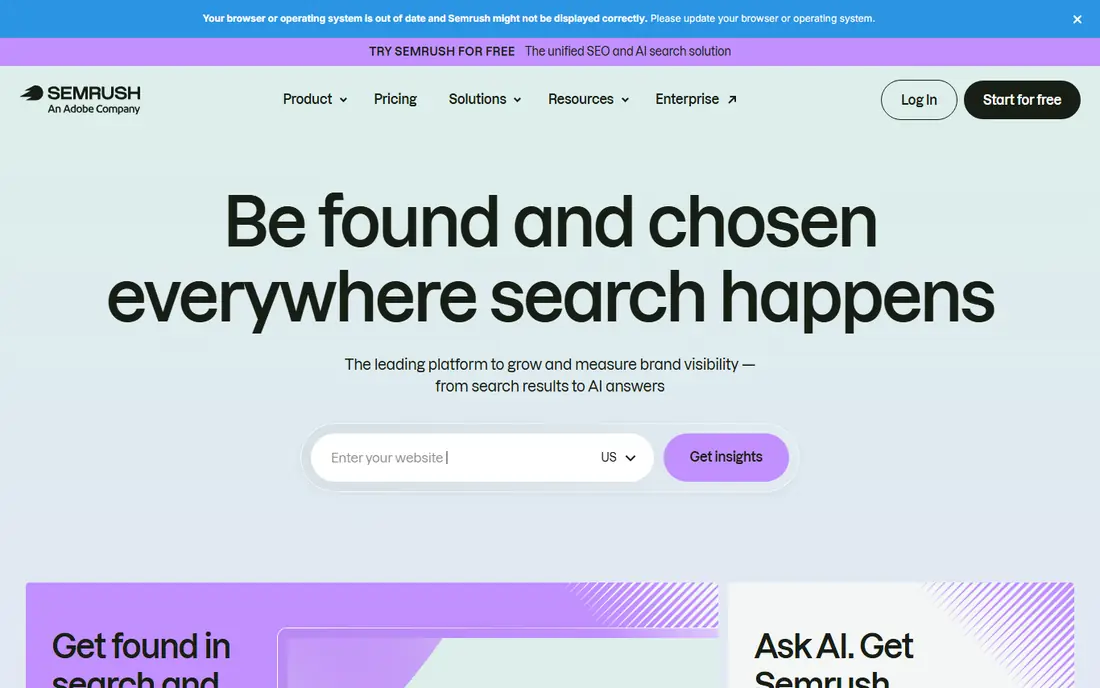
Semrush suits a consumer brand that wants one login for most SEO work. You can research product and category keywords, audit a shop for broken links and slow pages, track rankings for the terms that drive sales, and check what rivals rank for. That breadth matters when one small team covers content, product pages and local listings.
The catch is cost and complexity. At $139 per month for the entry SEO plan, it is the dearest starting point in this list, and add-ons for extra users can push the bill higher. Start with a short list of money pages and a small keyword set, and only expand projects once the team uses the reports each week.
- Broad keyword, audit, tracking and competitor tools in one place
- Daily rank tracking
- Useful content and advertising research
- Entry price is higher than several rivals
- The full toolkit can feel busy for a one-person team
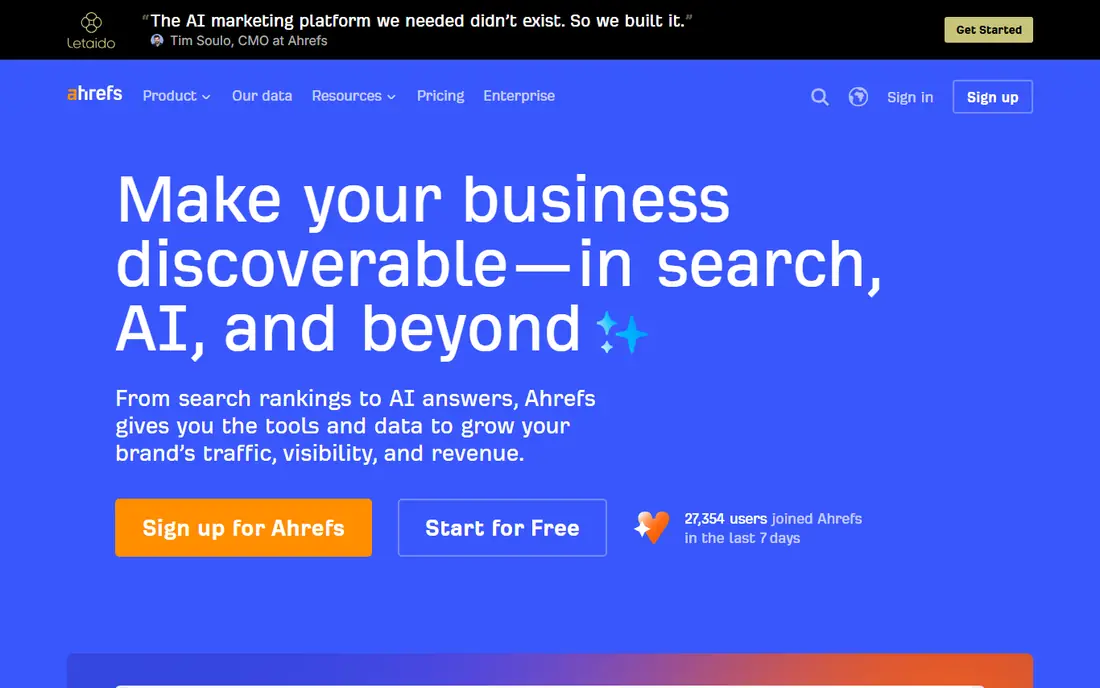
Ahrefs earns its place for link and competitor work. If a rival product page keeps outranking you, Site Explorer helps you see which pages link to it and which keywords send it traffic. That evidence is more useful than guessing why a page wins. Content teams can also find topics that already attract links and search visits.
The free tier is limited to sites you own and verify through Ahrefs Webmaster Tools, so it does not replace paid research on rivals. Paid plans start at $129 per month for Lite, and credit limits deserve a close read before you sign up. For a brand that mainly needs backlinks and competitor insight, it is a focused pick.
- Large backlink index
- Strong competitor content research
- Free tools for sites you verify
- Credits and extra seats can add cost
- No free trial on paid plans in the usual sense
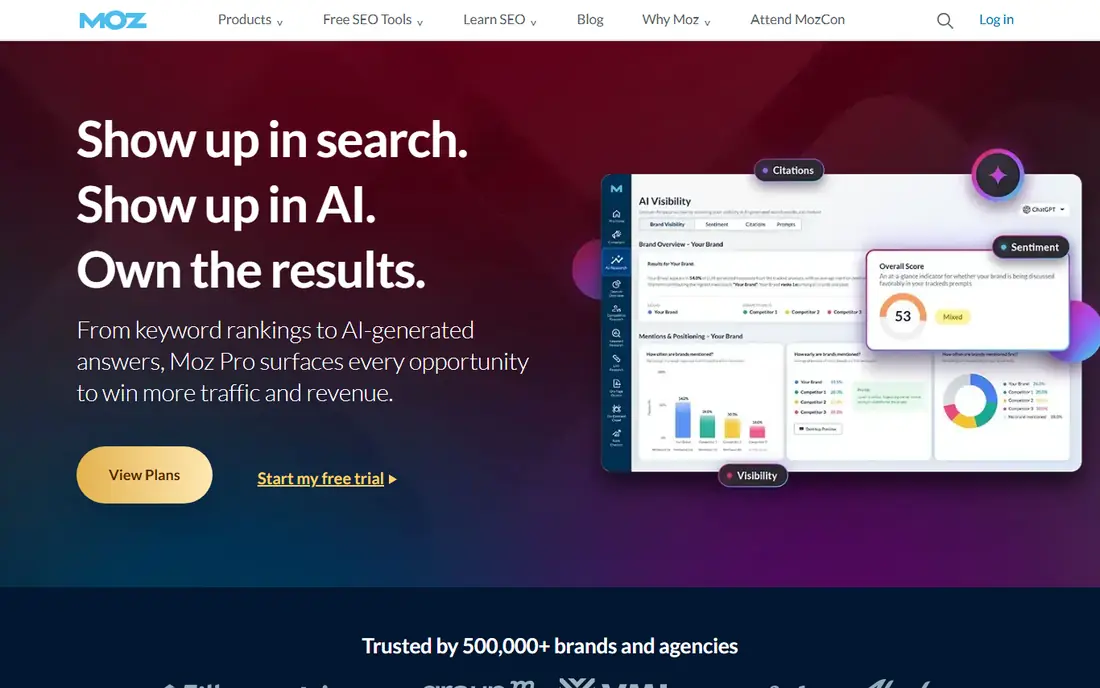
Moz Pro is the calm option in this group. The Standard plan starts at $99 per month, or $79 per month when billed annually, and covers research, rank tracking and site audits without a long learning curve. Small consumer teams often value that clarity, since they need answers fast and do not have a dedicated SEO analyst.
Its limits show up as you grow. Standard tracks 300 keywords across three campaigns, so a shop with many categories may need a higher tier or add-ons. If your main need is straightforward tracking and audits, and you do not need deep advertising research, Moz Pro is a sensible, lower-cost start.
- Clear interface for beginners
- Useful rank tracking and audits
- Well-known Domain Authority metric
- Smaller tracked keyword allowance at entry level
- Fewer advertising tools than Semrush
SE Ranking stands out on tracking volume. Core starts at $129 per month, or $103.20 per month billed annually, and tracks 2,000 keywords daily across ten projects. That is a strong fit for a consumer site with many product lines, seasonal pages and local variants that all need watching.
The interface is capable rather than famous, and some teams will miss the depth of Ahrefs link data or the breadth of Semrush advertising tools. Check project counts, seats and add-ons before you commit, since those extras change the real monthly cost. For tracking-heavy teams, the value is hard to ignore.
- Tracks 2,000 keywords on the Core plan
- Daily rank checks
- Covers research, audits and tracking
- Smaller brand recognition than Semrush or Ahrefs
- Add-ons can raise the final bill
Surfer answers a narrower question than the suites above: how well does this page cover a topic compared with the pages already ranking? Writers paste in a draft or build from a brief, then see terms, headings and length signals to consider. For consumer guides, buying advice and category copy, that structure speeds up editing.
Do not buy Surfer expecting it to replace an audit or link tool. Pair it with Search Console and one of the suites, and treat its score as a guide, not a target. Chasing a perfect score can produce repetitive text that shoppers dislike. Used with judgment, it helps a small content team publish stronger pages more often.
- Scores content against top-ranking pages
- Helps writers build clear briefs
- Useful for product and guide pages
- Not a full rank tracker or backlink suite on its own
- Scoring needs human editing to avoid bland copy
Mangools is built for people who want keyword answers without a steep learning curve. KWFinder shows difficulty, search volume and related terms in a clean view, and the wider suite adds rank tracking and link checks. A new shop or a solo marketer can research a product range in an afternoon and leave with a usable shortlist.
The trade-off is depth. If you need large-scale audits, deep link histories or agency reporting, Mangools will feel thin next to Semrush or Ahrefs. For a consumer brand at the start of its SEO work, though, ease of use is a real advantage, since a tool that gets used beats a powerful tool that sits idle.
- Friendly keyword and SERP tools
- Easy to learn
- Good for small sites and freelancers
- Lighter backlink and audit depth than the big suites
- Tracking limits are lower
Screaming Frog is a desktop crawler, and it is the most direct way to see what search engines meet on your site. It lists broken links, duplicate titles, missing meta descriptions, redirect chains and thin pages in one export. For a shop with hundreds of product URLs, that list turns vague worries about technical SEO into concrete fixes.
The free version covers smaller crawls, which is enough for many small stores. Larger sites need a paid licence, and the raw output can overwhelm a beginner. Use it for regular audits, fix the high-impact errors first, and let your suite or Search Console handle day-to-day tracking.
- Detailed crawl of URLs, titles, status codes and redirects
- Free version for smaller sites
- Pairs well with any suite
- Desktop software, not a cloud dashboard
- Results need SEO knowledge to act on
Every consumer brand should set up Google Search Console, whatever else it buys. It shows the actual queries that brought clicks, which pages rank but get few clicks, and whether Google can index new product pages. No paid tool can replace that first-party view of your own site.
Its limits are clear. You cannot research rivals, track their backlinks or estimate their traffic from this tool alone. Think of it as the ground truth for your site, and use a paid platform for the competitive and planning work around it. Since it costs nothing, there is no reason to skip it.
- Free
- Shows real queries, clicks and indexing problems
- Direct data from Google
- Only covers your own verified sites
- No rival keyword or backlink research
How we picked these
We compared official pricing pages, feature pages, app and product documentation, and public reviews for tools that serve consumer-facing sites. We favored tools that cover keyword research, technical audits, rank tracking or content help, and that are still sold and supported in October 2026. We left out tools that only serve one narrow task with no clear fit for a consumer brand, and we did not claim hands-on testing. Prices noted here should be checked on the vendor pricing page before you buy, since plans and limits change.
What to check before you pay
Start with your own site, not a sales page. Connect Search Console, list your top twenty product and category pages, and note which terms already bring sales. That list tells you how many keywords you really need to track and whether a 300-keyword plan is enough.
Next, match the tool to the job you will do weekly. A content team needs briefs and scoring. A shop with frequent stock and price changes needs audits and fast rank checks. A brand fighting strong rivals needs link and competitor data. Buying the biggest suite for a job a smaller tool handles well wastes money each month.
Finally, test the workflow before an annual plan. Run one audit, build one brief, track one set of keywords, and export one report you would actually share. Check seat costs, project limits and credit rules in that trial. If the team will not open the tool weekly, a cheaper plan or a free tier is the better choice until habits form.
Sources
Frequently asked questions
What is the best platform for SEO B2C?
For most consumer brands, Semrush is the broadest single choice, since it covers research, audits, tracking and rival analysis. Ahrefs is better if backlinks are the priority, while Moz Pro or SE Ranking suit smaller budgets. The best choice depends on how many sites and keywords you track and which job you do most often.
What is the best rated SEO tool for B2C?
There is no single winner for every brand, because ratings weigh different strengths. Semrush tends to rank well for breadth, Ahrefs for link data, and Moz Pro for ease of use. Compare the features you will use weekly rather than an overall score.
Do I need a paid SEO platform if I use Google Search Console?
Search Console is essential, but it only shows data for your own site. A paid tool adds rival research, keyword discovery, backlink data and fuller audits. Many small shops start with Search Console plus a free tier, then add a paid plan when tracking needs grow.
How many keywords should a consumer shop track?
Start with the terms tied to your best-selling categories and products, plus a small set of guide and comparison terms. A few hundred well-chosen keywords beat thousands of low-value terms that no one reviews. Expand tracking only when you act on the reports.
Is Semrush or Ahrefs better for a consumer brand?
Semrush is broader, with advertising, social and content tools alongside SEO. Ahrefs is deeper on backlinks and competitor content. If you can only buy one, pick Semrush for breadth or Ahrefs for link-led growth, and use Search Console with either one.
Can a small shop do SEO with free tools alone?
Yes, at the start. Search Console plus the free versions of Screaming Frog and Ahrefs Webmaster Tools cover audits and your own search data. Free keyword tools help with early research, but paid tracking becomes useful once you have many pages and rivals to watch.