Best Platforms for Selling Online in 2026: 8 Platforms Compared
By ToolNimba Editorial Team October 29, 2026 10 min read

- Top pick
 Shopify
Most product stores
Starting price$29 per monthCheck out ShopifyRead our review - Runner-up
 WooCommerce
WordPress users wanting control
Starting priceFreeCheck out WooCommerceRead our review - Also great
 BigCommerce
Larger catalogs and B2B
Starting price$29 per monthCheck out BigCommerceRead our review
How we researched this
We compared official pricing and feature pages, app store listings, privacy policies and public user reviews. Prices change, so check the provider's site before you pay.
Key takeaways
- Shopify is our pick for most product businesses because it combines a polished store, strong checkout and a huge app store.
- WooCommerce is best if you already use WordPress and want full control without a monthly platform fee.
- Etsy and Amazon are best for instant traffic, but marketplace fees and rules mean you do not own the customer relationship.
- Compare total cost, not just the monthly plan, since transaction fees, app costs and payment rates change the real bill.
Quick comparison
| Name | Best for | Starting price | Free plan | |
|---|---|---|---|---|
| Shopify | Most product stores | $29 per month | No | Visit |
| WooCommerce | WordPress users wanting control | Free | Yes | Visit |
| BigCommerce | Larger catalogs and B2B | $29 per month | No | Visit |
 Wix | Small stores on a full website | $29 per month | No | Visit |
 Squarespace | Design-led brands | $19 per month | No | Visit |
 Etsy | Handmade and vintage sellers | $0.20 per listing | No | Visit |
 Amazon | Instant traffic at scale | $39.99 per month | No | Visit |
 Gumroad | Digital products for creators | Free | Yes | Visit |
The best platforms for selling online
We compared official pricing pages, fee structures and 2026 pricing checks for the platforms below. Selling online splits into two models: your own store, where you own the brand and customer data, and a marketplace, where you get traffic but pay per-sale fees and follow marketplace rules. Many sellers use both, with a store for brand and a marketplace for reach.

Shopify is the safest default for a product business that wants to launch fast and scale without managing servers. Hosting, security, checkout and updates are bundled in one bill, themes are polished, and the app store covers subscriptions, bundles, loyalty, dropshipping and more. The checkout is a genuine advantage, since it is built to convert mobile shoppers with minimal friction.
The Basic plan costs $39 per month, or $29 billed annually, and card rates start at 2.9 percent plus 30 cents with Shopify Payments. Using an outside gateway adds up to 2 percent on Basic, which is the fee to watch. New stores can try it for a few days, then pay $1 per month for the first three months under a current offer, but check the renewal price. For most sellers, Shopify's speed and reliability justify the monthly cost.
- Fast, high-converting checkout
- Huge app store
- Multichannel selling to social and marketplaces
- Outside payment gateways add a fee on Basic
- Many useful features need paid apps
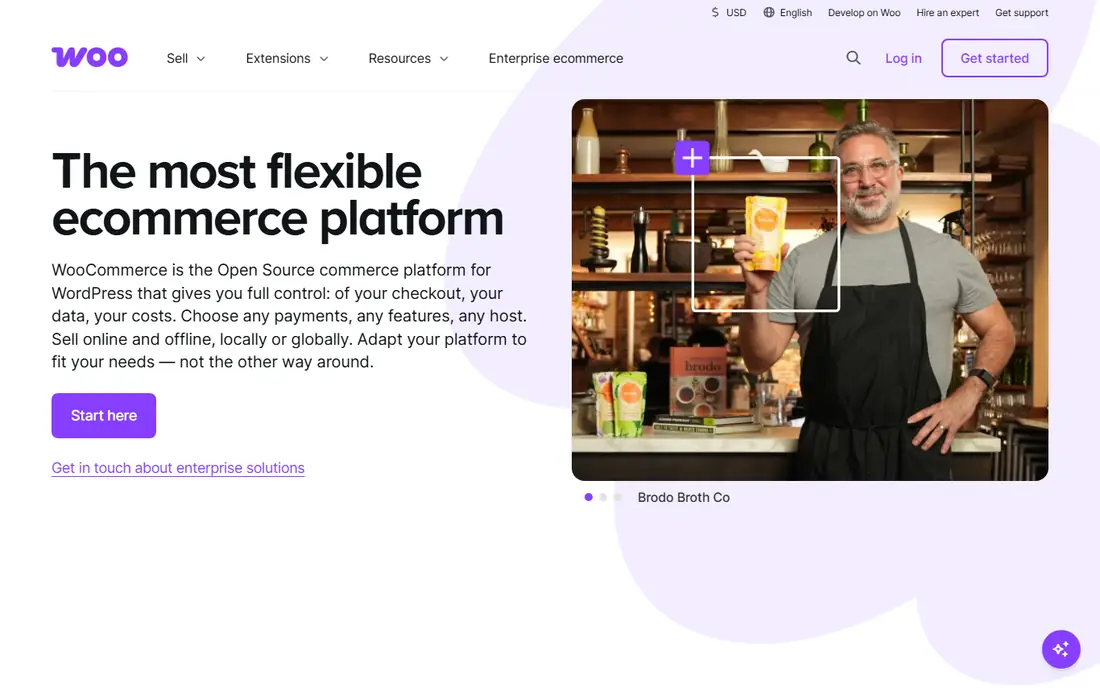
WooCommerce turns a WordPress site into a full store, and it is the best choice if you already run WordPress or want to own every part of your store. The plugin itself is free and charges no platform transaction fee, so you pay only your payment processor and your hosting. That control suits content-led stores, since WordPress blogging and SEO tools are built into the same system.
The trade-off is ownership of the work. You choose hosting, handle updates, security and backups, and pay for premium plugins as needed, which realistically runs $50 to $120 per month for a serious store once hosting and plugins are counted. If you like that control and have some technical comfort, WooCommerce is cheaper long-term and more flexible than any hosted rival. If you want everything handled for you, Shopify is easier.
- Free plugin with no platform transaction fee
- Full control over design and data
- Huge WordPress plugin ecosystem
- You pay for hosting and maintain updates and security
- Setup takes longer than a hosted store
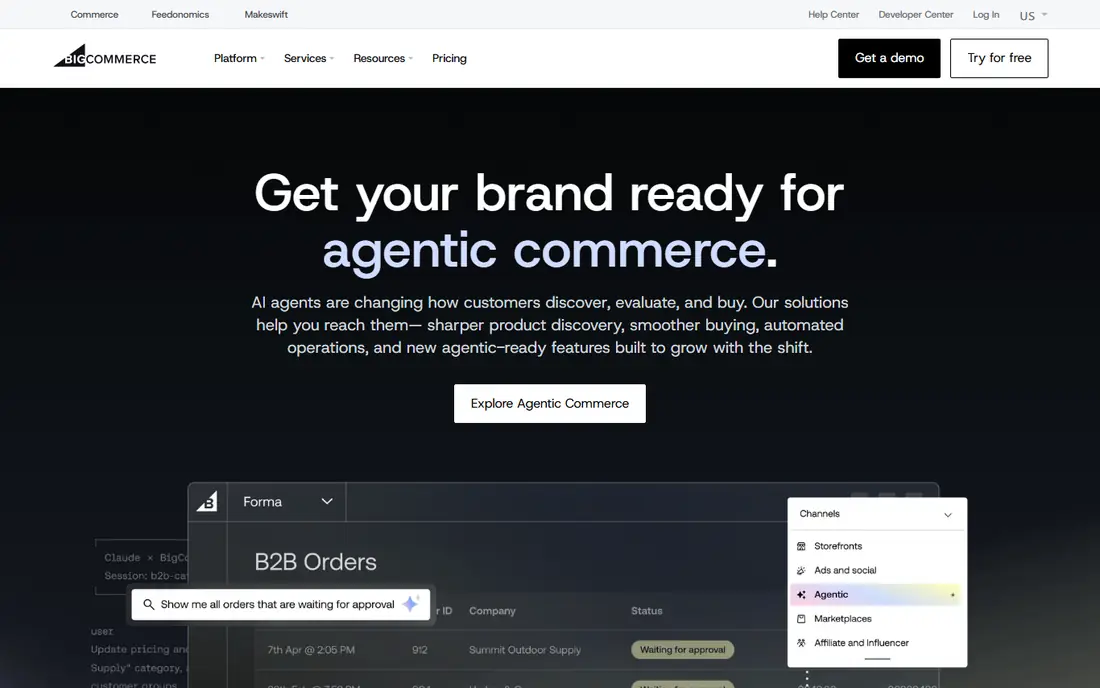
BigCommerce suits mid-market brands and B2B sellers who need built-in power without buying dozens of apps. Its Core plan starts at $39 per month, or $29 billed annually, and includes features that Shopify often charges extra for, such as more built-in product options and customer groups. B2B tools for wholesale pricing, custom catalogs and company accounts are stronger here than on most hosted rivals.
The catch is sales caps. Plans cover a set amount of yearly online sales, and passing the cap triggers an upgrade, so a fast-growing store should model that threshold. The app store is also smaller than Shopify's, though the built-in features reduce the need for apps. For a larger catalog or a B2B store, BigCommerce is a strong alternative to Shopify.
- Strong built-in features reduce app dependence
- No platform transaction fees
- B2B and multi-storefront tools
- Plans are capped by yearly sales and auto-upgrade
- Smaller app store than Shopify
Wix is best when the rest of your website matters as much as the shop: a blog, bookings, an about page and a small catalog in one place. The visual editor is easy to use, AI tools help generate a starting design, and the Core plan at $29 per month billed annually includes payments with no platform fee on Wix Payments. For a solo founder or a small catalog, that simplicity wins.
At scale, Wix trails Shopify on ecommerce depth, app choice and multichannel selling, and changing templates after launch is limited. A store with a few dozen products will not notice those limits, but a store with thousands of products and complex fulfillment will. Start with Wix if you want a beautiful all-in-one site, and move to Shopify or BigCommerce when catalog size and order volume demand it.
- Visual editor with AI tools
- Full website plus store in one plan
- No platform fee on Wix Payments
- Ecommerce depth trails Shopify at scale
- Switching templates later is limited
Squarespace is the design pick in this list. Its templates look polished without a designer, and it suits photographers, artists, writers and lifestyle brands whose site is part of the product. The Basic commerce plan starts at $19 per month billed annually, with a 2 percent transaction fee, while Core at $29 removes that fee. Setup is simple, and content, portfolio and store pages share one clean system.
Ecommerce depth is thinner than Shopify or BigCommerce, with fewer apps and less advanced fulfillment tooling. A brand with a small, curated catalog will be happy, while a high-volume store with complex shipping rules will feel constrained. Pick Squarespace when design and brand matter most and your catalog is modest.
- Polished design system out of the box
- Good for creatives and content-led brands
- Simple store setup
- Transaction fee on the Basic plan
- Ecommerce features are thinner than Shopify
Etsy is the marketplace for handmade, vintage and craft supplies, and its main advantage is traffic. Buyers already search Etsy for unique goods, so a new seller can get sales without building an audience from scratch. Listing costs $0.20 per item, which keeps upfront costs low, and setup is far simpler than building a store.
The fees are the catch. Etsy charges a transaction fee of 6.5 percent plus payment processing on each sale, and offsite ad fees can apply to some sales, so margins shrink fast. You also follow Etsy rules and do not own the customer email list in the same way a store owner does. Use Etsy for reach and discovery, and build your own store in parallel for repeat customers and better margins.
- Built-in traffic from buyers seeking handmade and vintage goods
- Simple listing setup
- Low upfront cost
- Transaction and payment fees add up
- You do not own the customer relationship
Amazon offers instant traffic at a scale no other platform matches, and its Professional selling plan costs $39.99 per month. Buyers trust Amazon checkout, and Fulfillment by Amazon handles storage, packing and shipping for sellers who opt in. For a commodity product or a brand that needs volume fast, Amazon can deliver sales that a new store cannot.
The costs and control trade-offs are steep. Referral fees run 8 to 15 percent or more depending on category, plus FBA fees where used, and competition on price is intense. Amazon also controls the customer relationship and enforces strict performance rules. Treat Amazon as a sales channel, not your whole business, and keep your own store for brand, margins and customer data.
- Largest US online shopping audience
- Fulfillment options through FBA
- Trusted checkout for buyers
- Referral fees of 8 to 15 percent or more by category
- Intense competition and strict rules
Gumroad is the simplest way for a creator to sell a digital product, course, ebook or membership without building a store. There is no monthly fee to start, setup takes minutes, and checkout, delivery and basic analytics are handled for you. That low friction suits writers, musicians, designers and educators testing a first product.
The limits are design and scale. Gumroad takes a per-sale fee, store customization is limited, and physical product fulfillment is not its strength. A creator with a growing catalog and a brand to build will eventually want Shopify, WooCommerce or Squarespace. For a first digital launch, Gumroad removes every barrier except making something worth buying.
- Free to start with no monthly fee
- Simple digital product checkout
- Built for creators selling downloads and memberships
- Per-sale fees on the free plan
- Limited store design and physical product tools
How we picked these
We compared official pricing pages, fee schedules and 2026 pricing checks, and we favored platforms that are available to US sellers now, publish clear pricing or fee structures, and fit a clear selling model: hosted store, self-hosted store, marketplace or creator checkout. Where plan names and prices changed during 2026, we used the most recent annual-billing figures and noted monthly rates where they differ.
How to choose your first platform
Start with what you sell and where your buyers already shop. Handmade goods belong on Etsy first, commodity products belong on Amazon, and digital products belong on Gumroad or your own store. If you sell your own brand of physical products, a hosted store on Shopify or BigCommerce gives you control, while WooCommerce fits WordPress users who want that control without a platform fee.
Next, model total cost for your expected sales. Add the monthly plan, payment processing, platform transaction fees and likely app costs, then compare that total across two or three platforms. Finally, start small: list a few products, test checkout on a phone, and measure conversion before investing in a large catalog or paid ads. A platform that feels easy to run will beat a powerful one you avoid using.
Sources
- https://www.shopify.com
- https://www.woocommerce.com
- https://www.bigcommerce.com
- https://www.wix.com
- https://www.squarespace.com
- https://www.etsy.com
- https://www.amazon.com
- https://www.gumroad.com
- https://www.Fulfill.com/blog-posts/the-top-ecommerce-platforms-to-use-in-2025
- https://techilu.com/best-cms-for-ecommerce/