Best Search Visibility Software in 2026: 9 Tools Compared
By ToolNimba Editorial Team October 29, 2026 8 min read

- Top pick
 Semrush
All-in-one search visibility
Starting price$139.95 per monthCheck out SemrushRead our review - Runner-up
 Ahrefs
Backlink and keyword visibility
Starting price$129 per monthCheck out AhrefsRead our review - Also great
 SE Ranking
Budget visibility tracking
Starting priceSee websiteCheck out SE RankingRead our review
How we researched this
We compared official pricing and feature pages, app store listings, privacy policies and public user reviews. Prices change, so check the provider's site before you pay.
Key takeaways
- Semrush suits teams that want search visibility plus keyword, backlink and content tools in one suite.
- Ahrefs suits teams that prioritize backlink and keyword data with strong visibility tracking.
- SE Ranking suits small and mid-size teams that want visibility tracking at a lower price.
- Moz Pro suits teams that value its visibility metrics and approachable interface.
- Rankscale and Otterly suit teams tracking AI search visibility alongside traditional search.
- BrightEdge and Searchmetrics suit enterprises tracking visibility across many markets.
Quick comparison
| Name | Best for | Starting price | Free plan | |
|---|---|---|---|---|
| Semrush | All-in-one search visibility | $139.95 per month | Free trial | Visit |
| Ahrefs | Backlink and keyword visibility | $129 per month | No | Visit |
| SE Ranking | Budget visibility tracking | See website | Free trial | Visit |
 Moz Pro | Approachable visibility metrics | $99 per month | Free trial | Visit |
 Rankscale | AI plus search visibility | $17 per month | Free trial | Visit |
 Otterly | AI visibility on a budget | $29 per month | Free trial | Visit |
 SISTRIX | Visibility index depth | See website | Free trial | Visit |
 BrightEdge | Enterprise visibility | See website | Free trial | Visit |
 Searchmetrics | Visibility across markets | See website | Free trial | Visit |
The best search visibility software
Search visibility software tracks how often your site appears in search results, which keywords drive impressions, and how your share compares with competitors. We compared official feature pages, pricing pages and public documentation to build this list, covering traditional search visibility and newer AI search visibility.
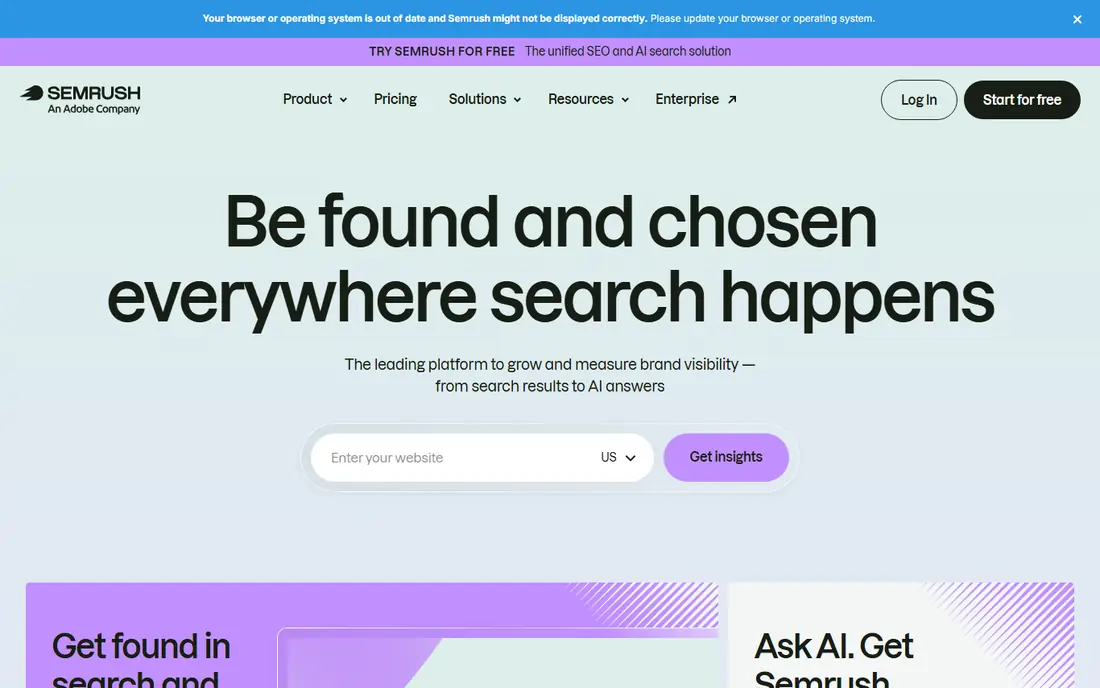
Semrush tracks search visibility across keywords, domains and competitors, with position tracking, visibility scores and traffic estimates, alongside keyword research, backlink analysis, site audits and content tools. The Pro plan costs 139.95 dollars per month, with a trial available.
The breadth suits teams that want visibility data next to the tools that act on it. Smaller teams may find the suite more than they need. For all-in-one search visibility, Semrush is our pick.
- Visibility tracking plus keyword, backlink and content tools
- Large keyword database
- Strong reporting
- Higher entry price
- Breadth can overwhelm small teams
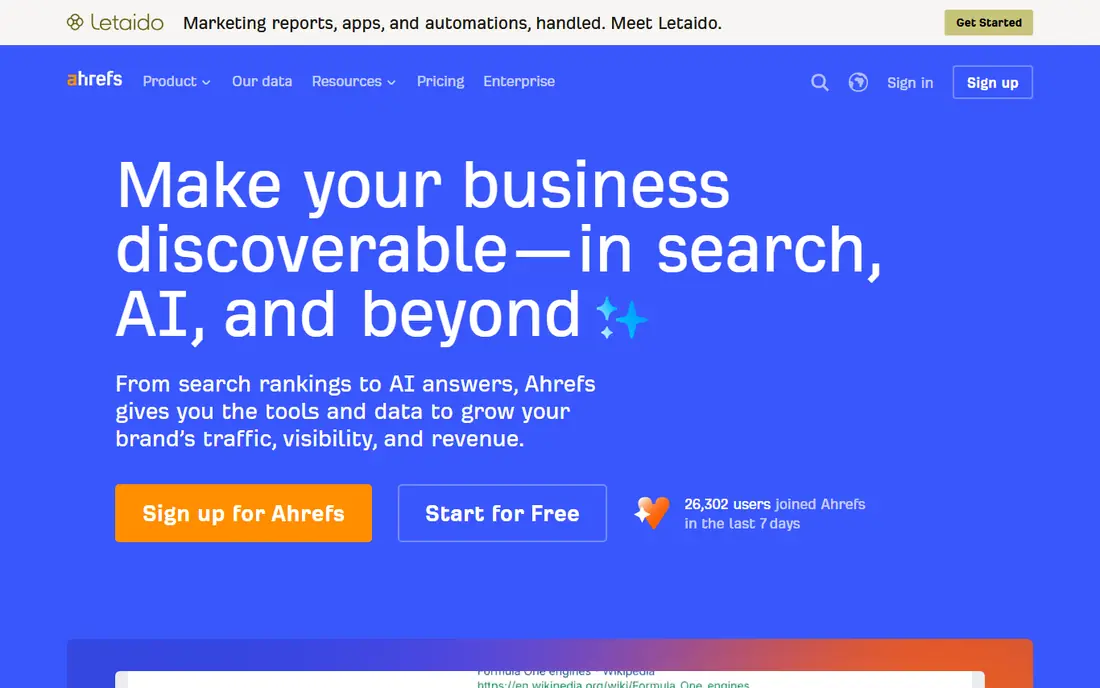
Ahrefs tracks search visibility with rank tracking, traffic estimates and competitive analysis, built on its large backlink and keyword indexes. The Lite plan costs 129 dollars per month, with higher tiers adding more data and users.
The data depth suits teams that rely on backlink and keyword analysis alongside visibility. There is no free tier, so testing needs a paid plan. For backlink-driven visibility, Ahrefs is a top pick.
- Strong backlink and keyword data
- Visibility tracking
- Large index
- No free tier
- Reporting trails some rivals for executives
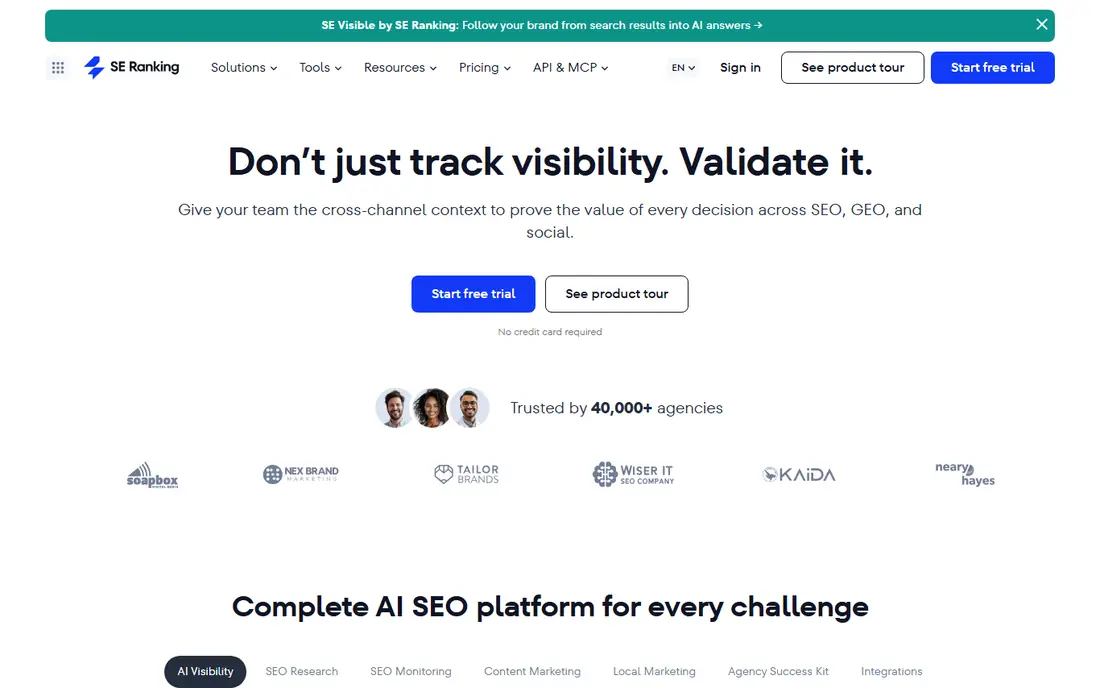
SE Ranking tracks search visibility with rank tracking, competitor analysis and reporting, plus a newer AI visibility add-on for tracking brand mentions in AI answers. Pricing is tiered by rank tracking frequency and keywords, with a trial available.
The value suits small and mid-size teams and agencies that need white-label reports without enterprise pricing. Database depth trails Semrush and Ahrefs. For budget visibility tracking, SE Ranking is a strong pick.
- Rank tracking and visibility at lower prices
- White-label reporting
- AI visibility add-on
- Smaller keyword database than Semrush
- Fewer advanced features
Moz Pro tracks search visibility with rank tracking, visibility scores and competitor analysis, plus keyword research, site audits and link data. The Starter plan costs 99 dollars per month, with a trial available.
The clarity suits teams that want readable metrics without a steep learning curve, backed by Moz's learning resources. Data depth trails larger rivals. For approachable visibility metrics, Moz Pro is a good pick.
- Clear visibility metrics
- Approachable interface
- Strong learning resources
- Database depth trails Semrush and Ahrefs
- Some features need higher tiers
Rankscale tracks AI visibility across ChatGPT, Gemini, Perplexity, Claude, DeepSeek, Mistral, Grok, Copilot and more, with credit-based pricing and API access. The Essentials plan costs 204 dollars per year, or 17 dollars per month on yearly billing, for 120 credits and two brand dashboards.
The AI focus suits teams that want search visibility to include AI answers, not just result pages. Traditional rank tracking is thinner than Semrush. For AI search visibility on a budget, Rankscale is a smart pick.
- AI visibility across many engines
- Credit-based pricing
- API and MCP support
- Smaller brand than leaders
- Traditional rank data is thinner
Otterly tracks brand visibility in AI answers daily across ChatGPT, Google AI Overviews, Perplexity and Copilot, with mentions, positions and citations. The Lite plan costs 29 dollars per month for 15 prompts, with a 7 day trial.
The price makes Otterly the easiest way to add AI visibility to traditional search tracking. Traditional rank features are limited, so pair it with Semrush or SE Ranking for full coverage. For AI visibility on a budget, Otterly is our pick.
- Daily AI visibility tracking
- Lowest entry price
- Unlimited team members
- Lite covers 15 prompts and four engines
- Traditional search features are limited
SISTRIX provides a visibility index tracking millions of keywords, with historical data, competitor comparisons and market analysis for large sites and agencies. Pricing is tiered, with a trial available.
The index depth suits enterprises and agencies that need long historical visibility data. The interface takes learning, and pricing varies by market. For visibility index depth, SISTRIX is a strong pick.
- Deep visibility index
- Historical data
- Strong for large sites
- Custom pricing
- Interface takes learning
BrightEdge tracks search visibility across large sites and markets, with AI-driven recommendations, content optimization and integrations with analytics and business intelligence tools. Pricing is custom, with demos available.
The recommendation engine suits enterprises that need prioritized actions, not just visibility scores. The sales-led process takes time. For enterprise visibility, BrightEdge is a top pick.
- Enterprise visibility plus AI recommendations
- Broad integrations
- Executive reporting
- Custom pricing
- Depth can overwhelm small teams
Searchmetrics tracks search visibility across markets and competitors, with content performance insights and reporting for executives. Pricing is custom, with demos available.
The market breadth suits enterprises tracking visibility in many countries and languages. The interface feels dated compared with newer rivals. For visibility across markets, Searchmetrics completes the list.
- Visibility data across many markets
- Content performance insights
- Enterprise reporting
- Custom pricing
- Interface feels dated to some users
How we picked these
We compared official feature pages, pricing pages and public documentation for each tool, and favored products that are actively sold and supported in October 2026. We mixed all-in-one suites, budget trackers, AI visibility tools and enterprise platforms so the list covers solo marketers through large brands. Prices come from vendor pricing pages checked in September and October 2026, and where pricing is custom we say so plainly rather than guessing.
How to measure search visibility well
Track visibility for your money keywords, not just your whole site: a rising site score can hide falling positions on the terms that drive revenue. Pair visibility with traffic and conversions, since impressions without clicks or sales mean little. Finally, track AI visibility alongside traditional search, since buyers increasingly discover brands through AI answers.
Compare against named competitors
Visibility means little in isolation. Pick two or three named rivals, track the same keywords, and compare share over time: rising share after content changes matters more than any single score.
Separate visibility drops into three causes before acting. First, check for site problems like outages, blocked pages or broken tracking. Second, check for algorithm or competitor shifts on the same keywords. Third, check whether your own content changed. This order matters, since fixing content when the real cause is a technical fault wastes weeks, while the reverse wastes a different kind. Diagnose first, then act.
Report visibility monthly and investigate weekly. Monthly trends smooth out daily noise and suit executive reporting, while weekly checks catch sudden drops early enough to fix. When visibility falls, check the biggest losing keywords first, since a handful of high-volume terms usually explain most of the move. That focus keeps investigations short and actions clear.