Best SERP Tracker Tool in 2026: 9 Tools Compared
By ToolNimba Editorial Team October 31, 2026 10 min read

- Top pick
 SE Ranking
Best overall value
Starting price$129 per monthCheck out SE RankingRead our review - Runner-up
 AccuRanker
Large agencies and fast refreshes
Starting price$224 per monthCheck out AccuRankerRead our review - Also great
 Semrush
Full SEO suite plus tracking
Starting price$139 per monthCheck out SemrushRead our review
How we researched this
We compared official pricing and feature pages, app store listings, privacy policies and public user reviews. Prices change, so check the provider's site before you pay.
Key takeaways
- SE Ranking offers the best overall value for most teams, with daily tracking for a large keyword set inside a full SEO platform.
- AccuRanker suits agencies with very large keyword sets that need fast on demand refreshes and clean client reporting.
- Semrush and Ahrefs make sense if you already use those suites for research, backlinks and audits, rather than buying a tracker alone.
- Wincher and Mangools SERPWatcher are lower cost entry points, but check update frequency and keyword limits before choosing.
- Google Search Console remains the free baseline every site should use, even though it does not replace daily rank tracking or competitor views.
Quick comparison
| Name | Best for | Starting price | Free plan | |
|---|---|---|---|---|
| SE Ranking | Best overall value | $129 per month | Free trial | Visit |
| AccuRanker | Large agencies and fast refreshes | $224 per month | No | Visit |
| Semrush | Full SEO suite plus tracking | $139 per month | Free trial | Visit |
 Ahrefs | Backlink led SEO plus tracking | $129 per month | No | Visit |
 Nightwatch | Local and multi region tracking | See website | Free trial | Visit |
 Wincher | Simple lean tracking | $49 per month | Free trial | Visit |
 Mangools SERPWatcher | Beginners and small teams | See website | No | Visit |
 Serpstat | Budget all in one suite | $50 per month | Free trial | Visit |
 Google Search Console | Free first party baseline | Free | Yes | Visit |
The best SERP tracker tools
A SERP tracker, also called a rank tracker, checks where your pages rank in search results for a set of keywords, usually daily, and shows how those positions change over time. Good trackers also show local results, mobile versus desktop positions, SERP features and competitor movement. We compared official pricing pages, update frequency, keyword limits, local tracking, reporting and public reviews.
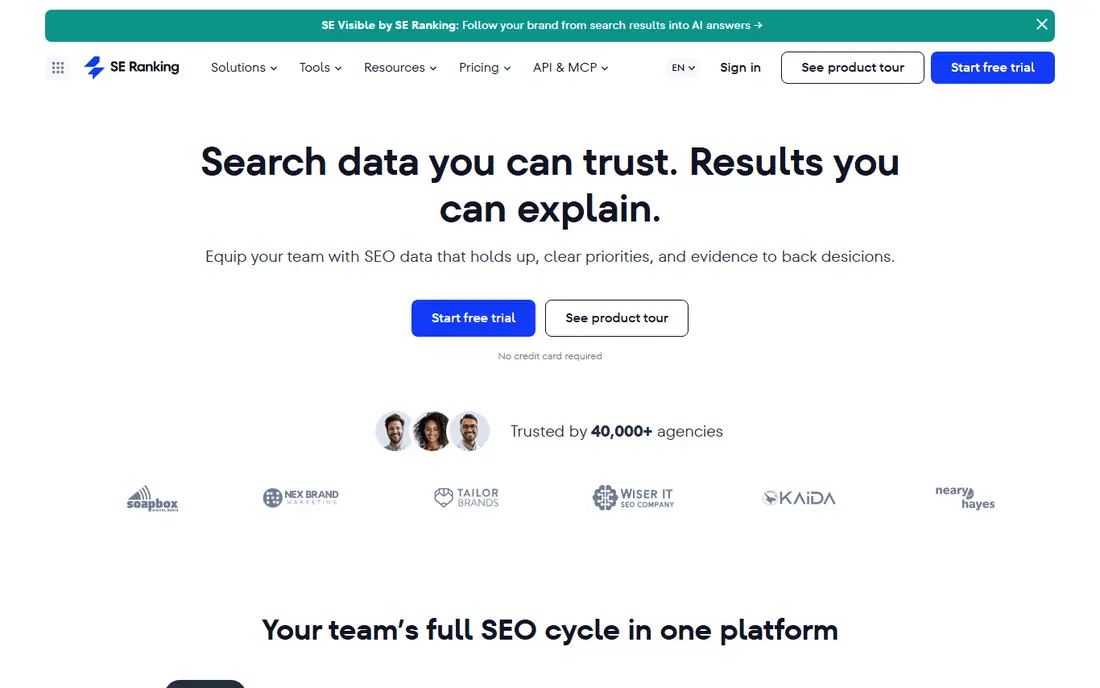
SE Ranking is the best value rank tracker for most teams because its entry plan covers a large keyword set with daily updates, plus site audits, keyword research and competitor views. That combination means a small SEO team can run tracking, audits and research without buying three tools. AI search tracking inside projects is a useful bonus as AI overviews and AI answers grow.
Tracker only users may find the wider platform more than they need, and some advanced reporting sits on higher plans. If you want one affordable platform that tracks rankings well and supports wider SEO work, SE Ranking is the easiest recommendation in this guide.
- Daily tracking for up to 2,000 keywords on the entry plan
- AI tracking included in projects
- Audits and research in the same plan
- Interface can feel broad for tracker only users
- Advanced reporting needs higher plans
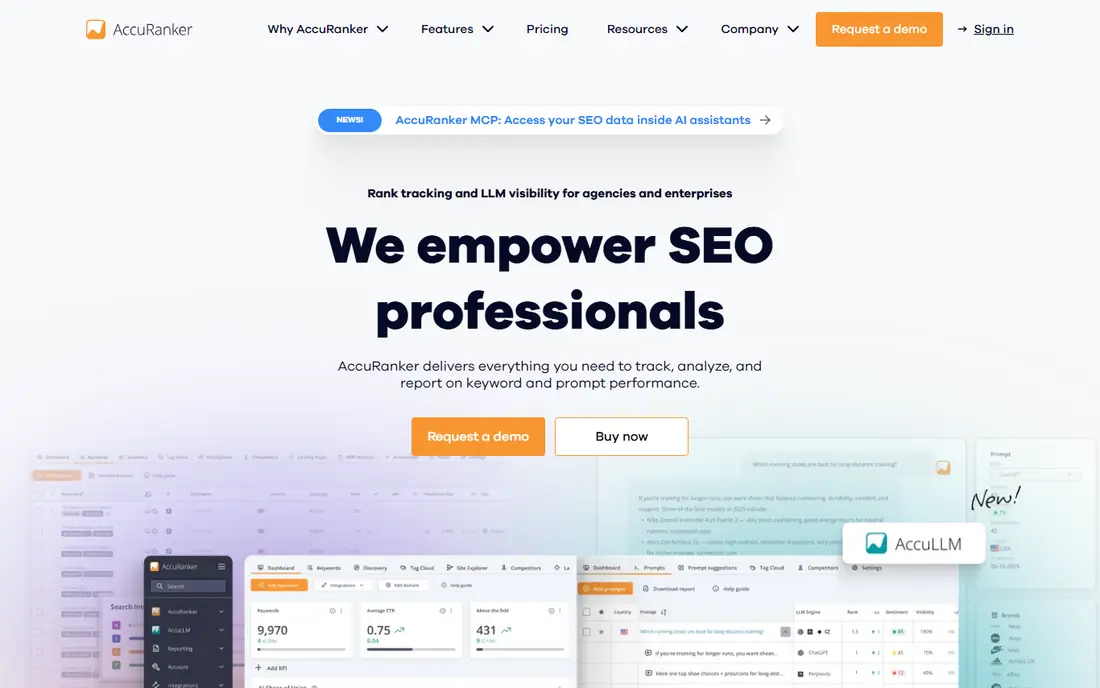
AccuRanker is built for speed and scale, and agencies with large keyword sets choose it for that reason. Daily tracking is standard, but on demand refresh lets you check a keyword immediately after a site change, which is valuable during launches and fixes. Tagging by intent, URL or SERP feature helps large teams slice thousands of keywords into useful reports.
The entry price of $224 per month reflects that agency focus, and smaller sites will find cheaper options. If you manage many clients or keywords and need reliable, fast data for reporting, AccuRanker justifies its cost. If you track under 500 keywords, compare SE Ranking or Wincher first.
- On demand rank refresh in seconds
- Strong tagging and reporting
- API and data integrations on higher plans
- Entry price is high for small sites
- Advanced integrations need Expert or Enterprise plans

Semrush Position Tracking suits teams that already use Semrush for research and audits. You can track rankings daily, compare up to many competitors per project, and connect ranking changes with keyword research, backlink data and site health. That context helps you explain why a ranking moved, not just that it moved.
Buying Semrush only for rank tracking is expensive, since the entry plan starts at $139 per month. If your team uses the wider suite daily, the tracker is good value as part of the package. If you only need rankings, a dedicated tracker will cost less.
- Daily position tracking
- Deep keyword and competitor research
- Audits, content and PPC tools in one suite
- Entry cost reflects the full suite
- Tracker only users pay for tools they may not use
Ahrefs Rank Tracker appeals to teams that centre their SEO work on backlinks and content research. Tracking rankings next to link data helps you see whether link building and content updates line up with ranking gains. The Lite plan starts at $129 per month and covers 750 tracked keywords, which suits many small and mid sized sites.
Weekly updates on some standard plans are a limit to check, because daily trackers give faster signals after changes. Ahrefs is best for teams that already value its research tools. Tracker only buyers should compare daily update options in SE Ranking, AccuRanker and Nightwatch.
- Rank tracking alongside a leading backlink database
- Strong keyword research
- Clear reporting
- Update frequency varies by plan
- No free trial on standard plans
Nightwatch stands out for local SEO, with tracking down to city and postal code level and support for many languages and regions. Agencies that report to local clients value its unlimited seats and white label reports, which make sharing results simple. Daily updates plus on demand checks give a good balance of routine monitoring and fast checks.
AI search tracking requires an add on, so total cost depends on your setup. If local accuracy is central to your work, Nightwatch is a strong choice. If you only need national rankings, a simpler tracker may be cheaper and easier.
- Strong location level tracking
- Daily and on demand updates
- Unlimited seats and white label reporting
- AI tracking is an add on
- Pricing varies by configuration
Wincher suits small sites and solo owners who want straightforward daily rank tracking without a large SEO suite. Its starting price of $49 per month covers 500 keywords, and you can track many websites, which helps freelancers and small agencies. The interface stays focused on rankings, so you spend less time learning extra tools.
It does not match the research, audit and reporting depth of larger suites, and local tracking is more basic than Nightwatch. If your main need is a clear daily ranking view at a low cost, Wincher is an excellent fit. If you need audits and research too, SE Ranking may be better value.
- Daily tracking
- Unlimited websites on many plans
- Simple interface for small teams
- Fewer suite features than Semrush or SE Ranking
- Local depth is basic
Mangools SERPWatcher is part of the Mangools suite, which also includes keyword research, backlink and site tools. Its interface is one of the cleanest in this category, which helps beginners who find larger suites overwhelming. Small teams can track rankings, check competitors and learn SEO basics in one place.
The main limit is update frequency, since basic plans update weekly rather than daily, with daily updates on higher agency plans. Keyword limits are also lower than SE Ranking at entry level. If you are learning SEO and want a friendly suite, Mangools is a good start. If you need daily signals, check the plan details carefully.
- Clean, easy interface
- Bundled with other Mangools tools
- Good for learning SEO
- Weekly updates on basic plans
- Keyword limits are lower than SE Ranking
Serpstat offers a budget friendly way to combine rank tracking with keyword research, audits and competitor analysis. Its entry price around $50 per month makes it attractive for small teams and freelancers who want more than a tracker alone. Keyword clustering helps organise large lists into content groups, which is useful for planning.
Data depth and interface polish vary by market, and some users find larger suites more refined. Still, for the price, Serpstat covers a lot of ground. If budget is tight and you want a suite rather than a tracker only tool, Serpstat deserves a trial alongside Wincher and SE Ranking.
- Low entry cost for a suite
- Keyword clustering
- Rank tracking plus research tools
- Interface and data depth vary by market
- Advanced AI tracking needs higher plans
Google Search Console is the free baseline every site should connect, regardless of which paid tracker you choose. It shows average position, clicks and impressions for queries your pages actually received, straight from Google data. No third party tool can claim that first party accuracy, and it helps you discover queries you were not tracking.
It does not replace a paid tracker, because it reports rolling averages, lacks competitor positions and sends no ranking alerts. Use Search Console to validate paid tracker data and to find new keywords, then use a paid tool for daily snapshots, local detail and competitor views. Together, they give a fuller picture than either alone.
- Free data straight from Google
- Shows queries that earned impressions
- Useful for all sites
- Reports averages, not daily snapshots
- No competitor tracking
- No ranking alerts
How we picked these
We compared official pricing pages, keyword limits, update frequency, local tracking, SERP feature coverage, reporting options and public reviews. We looked at whether pricing was published or quote based, and we included both dedicated trackers and full suites so readers can compare total value. We did not claim hands on testing that we did not carry out, and we noted where update frequency varies by plan.
Choosing a SERP tracker for your keyword list
Count your keywords honestly before you compare prices. A cheap plan with 200 keywords costs more per keyword than a larger plan if you track 1,000 terms, while a large plan wastes money if you only track 50. Also decide whether you need daily updates, local tracking, mobile versus desktop splits and competitor tracking, because those features separate trackers that look similar on price alone.
Daily versus weekly tracking
Daily tracking gives faster signals after site changes, algorithm updates and competitor moves, which matters for active SEO work. Weekly tracking is enough for stable sites that change slowly, and it can cost less. If you report to clients or react to ranking drops quickly, choose daily. If you check rankings monthly, weekly may be fine.
Testing two trackers fairly
Run the same keyword list in two tools with identical location and device settings for a few weeks, then compare reported positions. Small differences are normal because tools sample results differently, but large, consistent gaps suggest a settings or data issue. That test tells you more than any sales page.