Best Sleep App in 2026: 9 Apps Compared
By ToolNimba Editorial Team October 29, 2026 8 min read

- Top pick
 Calm
Sleep stories and soundscapes
Starting price$69.99 per yearCheck out CalmRead our review - Runner-up
 Headspace
Structured sleep courses
Starting price$69.99 per yearCheck out HeadspaceRead our review - Also great
 Sleep Cycle
Sleep tracking and smart alarm
Starting priceSee websiteCheck out Sleep CycleRead our review
How we researched this
We compared official pricing and feature pages, app store listings, privacy policies and public user reviews. Prices change, so check the provider's site before you pay.
Key takeaways
- Calm is the strongest pick for falling asleep, thanks to its large Sleep Stories library and soundscapes.
- Headspace suits beginners who want structured courses, with sleep content alongside meditation and focus tools.
- Sleep Cycle and Pillow track sleep with your phone and add a smart alarm that wakes you in a light sleep phase.
- BetterSleep and Slumber focus on sound mixing and stories for people who need background audio to drift off.
- Sleep apps help habits and relaxation, but they are not medical devices: persistent sleep problems deserve a doctor, not an app.
Quick comparison
| Name | Best for | Starting price | Free plan | |
|---|---|---|---|---|
| Calm | Sleep stories and soundscapes | $69.99 per year | Yes | Visit |
| Headspace | Structured sleep courses | $69.99 per year | Free trial | Visit |
| Sleep Cycle | Sleep tracking and smart alarm | See website | Yes | Visit |
 Pillow | Apple Watch sleep tracking | See website | Yes | Visit |
 BetterSleep | Custom sleep sound mixes | See website | Yes | Visit |
 SleepScore | Sleep scoring and advice | See website | Yes | Visit |
 Loona | Interactive sleep stories | See website | Free trial | Visit |
 Slumber | Sleep stories for adults | See website | Yes | Visit |
 Aura | Meditation and sleep audio | See website | Free trial | Visit |
The best sleep app
The best sleep app depends on what keeps you awake: a busy mind, noise, irregular hours or simply no wind-down routine. We compared official feature pages, pricing pages and public documentation to build this list, covering story apps, trackers and sound tools.
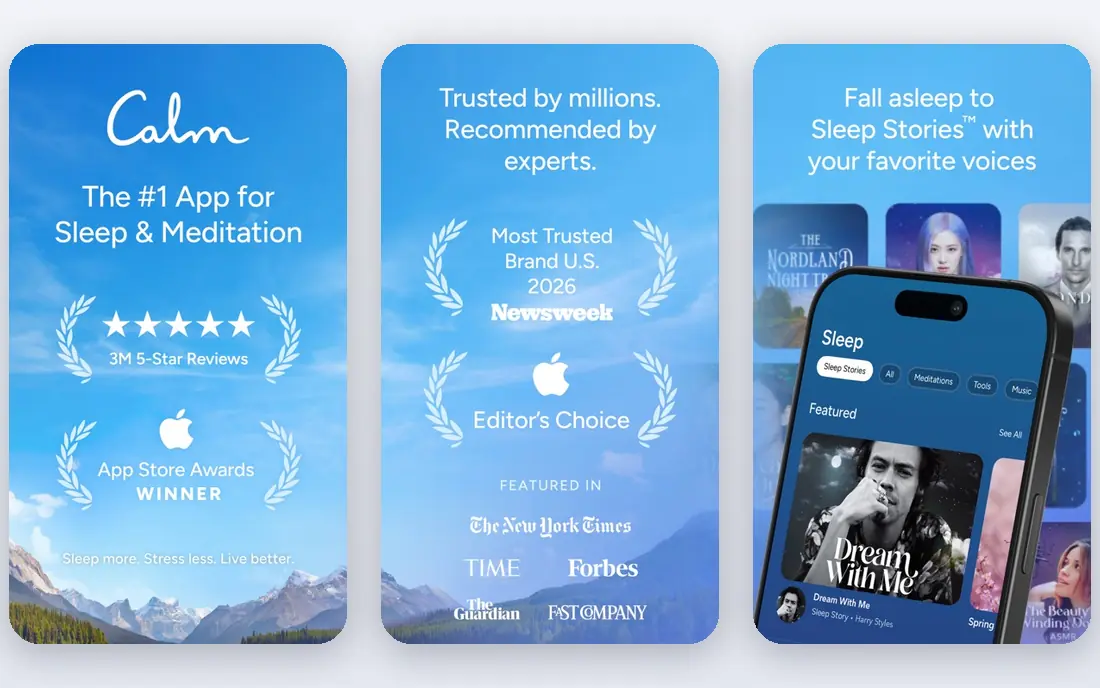
Calm is the best known sleep app for good reason: its Sleep Stories library runs to hundreds of titles narrated by familiar voices, and new stories arrive regularly. Soundscapes, breathing exercises and music round out a wind-down routine that suits people whose minds race at bedtime.
Pricing is 69.99 dollars per year after a 7 day trial, with a family plan and a lifetime option also available. The free tier includes a limited selection of meditations and stories. If falling asleep is your main problem, Calm is our pick for most people.
- Huge Sleep Stories library with well-known narrators
- Soundscapes and breathing exercises
- Family plan available
- Annual price is premium
- Meditation content can feel buried under sleep features
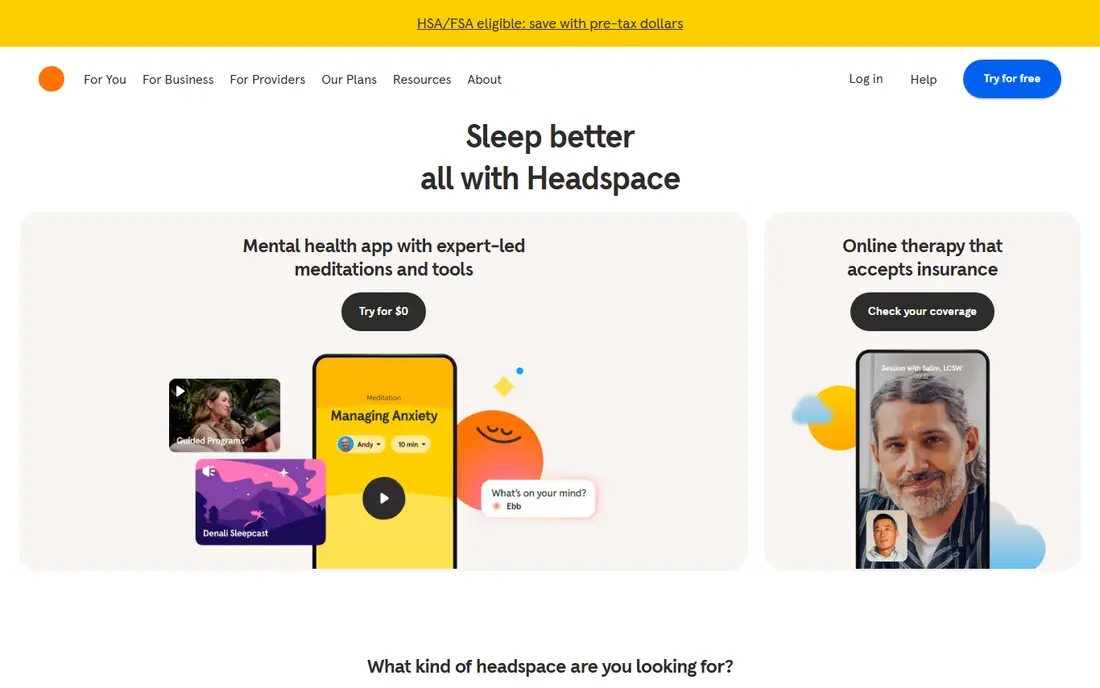
Headspace teaches meditation through structured courses, and its sleep section follows the same approach with sleepcasts, wind-down exercises and courses on better sleep habits. The guidance suits people who like being told what to do next rather than browsing a library.
Pricing matches Calm at 69.99 dollars per year after a 14 day trial, with a discounted student plan. The structured style helps beginners build a habit, but sleep-specific content is thinner than Calm. Choose Headspace if you want meditation and sleep in one guided program.
- Step-by-step courses for beginners
- Sleepcasts and wind-downs
- Student and family plans
- Sleep library smaller than Calm
- Little to use after trial without paying
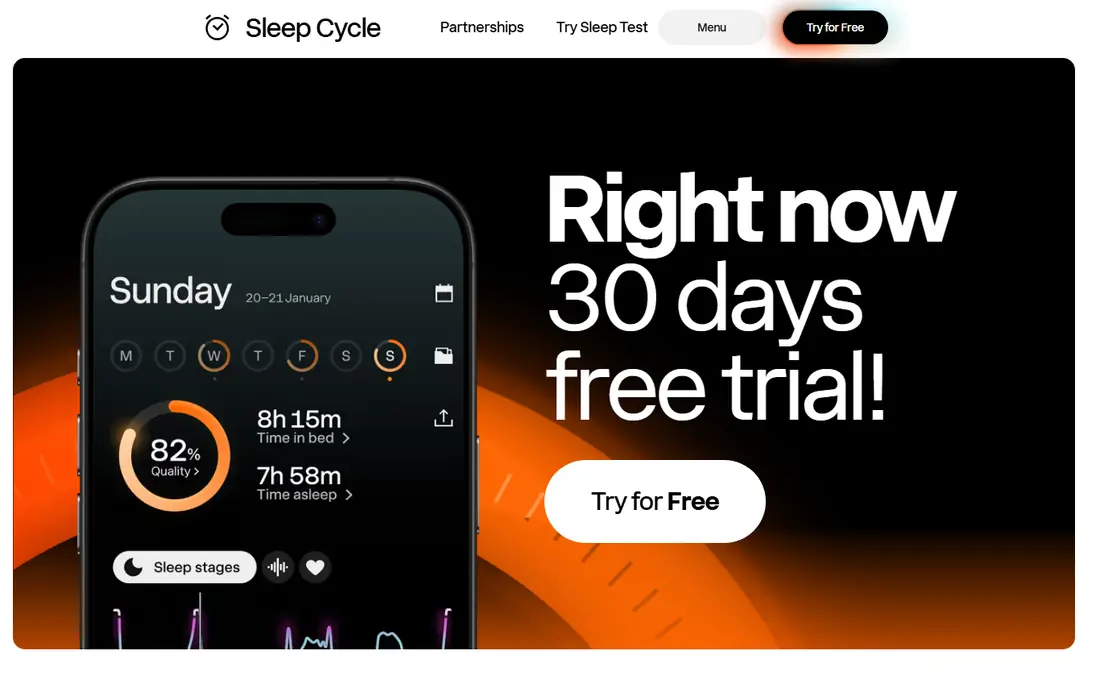
Sleep Cycle uses your phone microphone and accelerometer to track sleep phases and wake you during a light sleep window, which many users find gentler than a fixed alarm. Trends show sleep quality, regularity and factors like snoring over weeks and months.
The free version covers basic tracking and the smart alarm, while premium adds detailed analysis, backup and extra alarm sounds. Phone based tracking is convenient but less precise than a wearable, so treat the data as a guide to patterns rather than a medical measurement.
- Phone based tracking with no wearable needed
- Smart alarm window
- Long term sleep trends
- Tracking accuracy varies by phone placement
- Premium features are subscription only
Pillow is built for Apple users, with automatic sleep detection on Apple Watch and detailed charts for sleep stages, heart rate and audio events like snoring. It syncs with Apple Health and offers a smart alarm similar to Sleep Cycle.
The free tier covers core tracking, while premium opens full history and analysis. Android users should look elsewhere, and the best experience needs an Apple Watch. For iPhone owners who already wear a watch to bed, Pillow is a natural fit.
- Deep Apple Watch and Health integration
- Automatic sleep detection
- Detailed sleep stage charts
- Apple only
- Best features need a watch and premium plan
BetterSleep, formerly Relax Melodies, lets you mix rain, waves, white noise and other sounds into a personal soundscape, then add stories or meditations on top. Bedtime reminders and sleep tracking round out a simple nightly routine.
The free version includes a solid set of sounds, with premium opening the full library and more stories. People who fall asleep to background noise will get the most from it, while those wanting structured courses may prefer Headspace.
- Mix your own soundscapes from many sounds
- Sleep stories and meditations
- Bedtime reminders
- Library quality varies
- Premium needed for full catalog
SleepScore gives each night a score and pairs it with advice on sleep hygiene, light exposure and schedule regularity. The phone based tracking needs no wearable, and the app tracks trends over time so you can see whether changes help.
The free tier covers basic scoring, while premium adds detailed analysis and coaching content. The advice is sound but general, so it suits people who want a simple number to track rather than a deep program. Persistent problems still deserve professional advice.
- Simple nightly sleep score
- Personalized advice
- Works with phone only
- Advice can feel generic
- Premium needed for deeper insights
Loona takes a different approach: interactive sleepscapes combine a short activity, a story and relaxing visuals to ease you out of the day. Mood check-ins tailor the session, and the experience feels more like a wind-down ritual than a content library.
The app is subscription based after a free trial, with no permanent free tier. It suits people who find passive stories boring and want something to do as they relax. If you want tracking or a huge library, other apps here offer more.
- Interactive sleepscapes that respond to you
- Calming visuals and stories
- Mood check-ins
- Subscription only after trial
- Less tracking than rivals
Slumber focuses on sleep stories for adults, with a large library, regular new episodes and background sounds to keep playing after a story ends. Meditations and sound mixes support the same wind-down routine.
The free tier includes a rotating selection of stories, with premium opening the full catalog. The interface is simple, which is a plus at bedtime when nobody wants to hunt through menus. For story lovers who find Calm pricey, Slumber is a worthy alternative.
- Large story library with new episodes
- Background sounds and meditations
- Simple interface
- Smaller brand than Calm
- Fewer extra features
Aura personalizes meditation, sleep stories and music based on your mood and goals, learning from what you use. Short sessions suit busy schedules, and the library covers anxiety, focus and sleep alongside bedtime content.
A free trial opens the full library, after which a subscription is needed. Recommendations improve with use, so give it a week before judging. Aura fits people who want one app for daytime calm and nighttime sleep.
- Personalized recommendations
- Short sessions for busy days
- Sleep stories and music
- Subscription needed for full library
- Recommendations take time to tune
How we picked these
We compared official feature pages, pricing pages and public documentation for each app, and favored products that are actively sold and supported in October 2026. We mixed story apps, trackers and sound tools so the list covers different sleep problems. Prices come from vendor pricing pages, and where pricing varies by store or region we say so plainly rather than guessing.
How to choose a sleep app
Start with your main problem. Trouble falling asleep points to Calm, Slumber or Loona, while irregular schedules benefit from trackers like Sleep Cycle or Pillow. Noise sensitive sleepers should try BetterSleep sound mixes first, since a free tier may solve the problem outright.
Use the trial properly
Most paid apps offer a trial of 7 to 14 days. Use it nightly, not once, and judge by whether you fall asleep faster or wake more rested, not by how pretty the app looks. Cancel before the trial ends if it is not helping.
Keep expectations realistic
Sleep apps support habits and relaxation. They do not diagnose sleep apnea, insomnia or other disorders. If you snore heavily, wake gasping, or feel exhausted despite regular sleep, talk to a doctor rather than switching apps.