Best Software for Visibility in 2026: 9 Tools Compared
By ToolNimba Editorial Team October 31, 2026 9 min read

- Top pick
 Semrush
All-in-one search and AI visibility
Starting price$139 per monthCheck out SemrushRead our review - Runner-up
 Ahrefs
Backlink research and rank tracking
Starting price$29 per monthCheck out AhrefsRead our review - Also great
 Moz Pro
Smaller teams that want clear SEO guidance
Starting price$49 per monthCheck out Moz ProRead our review
How we researched this
We compared official pricing and feature pages, app store listings, privacy policies and public user reviews. Prices change, so check the provider's site before you pay.
Key takeaways
- Semrush and Ahrefs cover the widest ground, pairing search rankings with backlink data and newer AI search tracking.
- Brand monitoring tools such as Brand24 and Mention answer a different question from SEO suites, since they track mentions and sentiment across the web.
- Newer AI visibility tools like Profound focus on how chatbots and AI answers describe a brand, which traditional rank trackers only partly cover.
- Free and low cost entry points exist, but serious tracking across many keywords, competitors, and AI platforms moves into paid plans quickly.
- Start with one clear question, such as search rankings, brand mentions, or AI answers, before paying for a tool that tries to do all three.
Quick comparison
| Name | Best for | Starting price | Free plan | |
|---|---|---|---|---|
| Semrush | All-in-one search and AI visibility | $139 per month | Yes | Visit |
| Ahrefs | Backlink research and rank tracking | $29 per month | Yes | Visit |
| Moz Pro | Smaller teams that want clear SEO guidance | $49 per month | Free trial | Visit |
 SE Ranking | Agencies that need client reporting | See website | Free trial | Visit |
 Brand24 | Mention and sentiment monitoring | See website | Free trial | Visit |
 Mention | Simple media and social monitoring | See website | Free trial | Visit |
 Similarweb | Market and competitor traffic insight | See website | Yes | Visit |
 Ubersuggest | Solo owners on a tight budget | $29 per month | Yes | Visit |
 Profound | AI search and chatbot visibility | $99 per month | Free trial | Visit |
The best software for visibility
Visibility now means more than a Google ranking. A brand can rank well, get mentioned in forums, and still be described poorly by an AI assistant. The tools below cover those different angles, so pick based on where your customers actually find you.

Semrush is our pick for most teams that want one login for search visibility. It covers keyword research, rank tracking, site audits, backlink checks, and competitor research, and its newer plans add tracking for AI Overviews and AI assistants. That breadth matters when a marketing team, rather than one specialist, owns visibility. The trade-off is cost and complexity. A small site may use only a fraction of the platform, so check the project and keyword limits on the entry plan before you commit.
- Broad keyword, backlink, and site audit tools
- AI visibility tracking on newer plans
- Strong competitor and advertising research
- Entry price is high for a single site
- Limits on projects and keywords push upgrades
- The interface can feel crowded for beginners
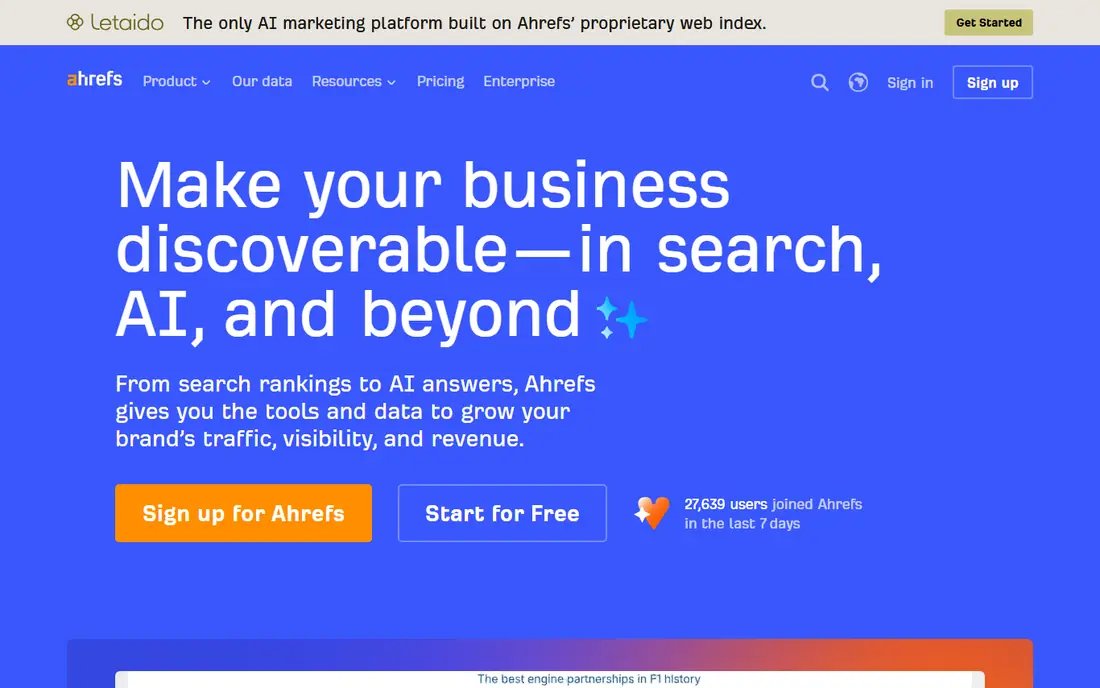
Ahrefs built its name on backlinks, and that data remains its strongest card. If you want to know who links to competitors, which pages attract links, and where your own site loses ground, it is hard to beat. Its Starter plan keeps the entry cost lower than Semrush, while its Brand Radar add-on tracks mentions across AI platforms. The catch is that the most complete picture often needs the add-on and a higher tier, so the headline price is not the whole story.
- Deep backlink data
- Clear rank tracking and site audit tools
- Brand Radar add-on for AI visibility
- Full AI visibility tracking costs extra
- Higher tiers rise steeply
- Some features need a learning period
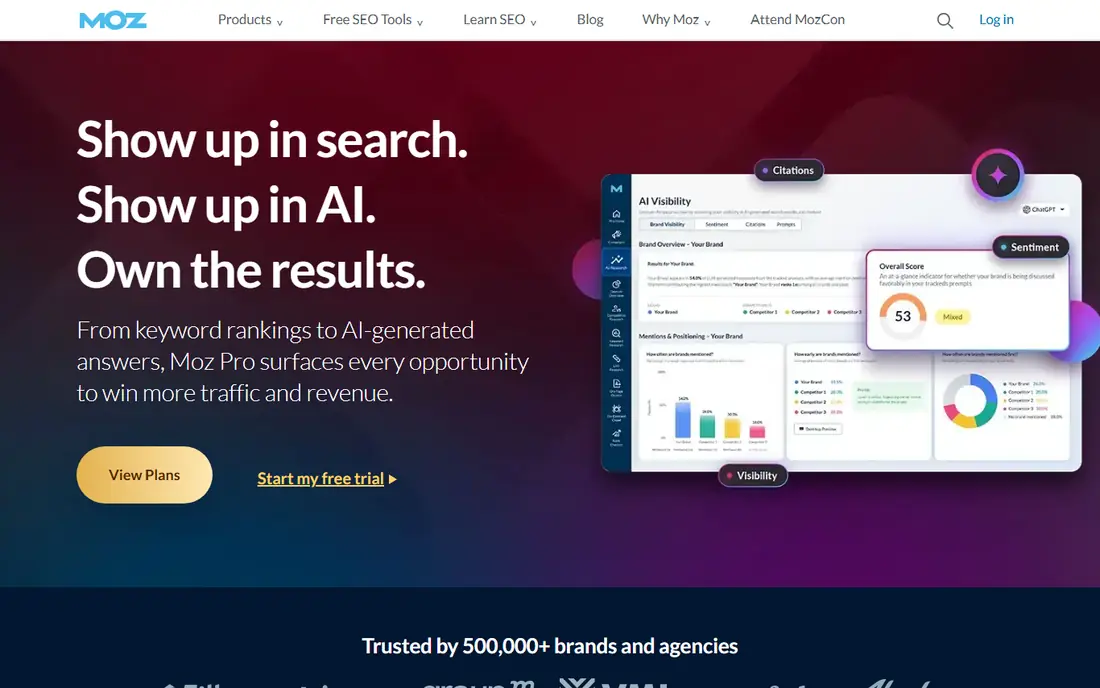
Moz Pro suits teams that want guidance rather than a wall of data. Its keyword research, rank tracking, and site audits are presented in plain terms, and its educational content helps a generalist marketer act on the results. It will not match Ahrefs on link depth or Semrush on breadth, and it is a weaker choice if AI search tracking is your main goal. For a small business that mainly needs to watch rankings and fix site issues, that simpler focus is a benefit, not a flaw.
- Straightforward keyword and rank tools
- Helpful learning material for beginners
- Clear site crawl and issue reports
- Backlink data is thinner than Ahrefs
- AI visibility features are less developed
- Campaign limits apply on lower tiers
SE Ranking is a practical agency workhorse. It handles rank tracking, site audits, keyword research, and competitor checks, and its reporting tools make it easy to show clients what changed and why it matters. Agencies like the ability to scale projects without the enterprise price of the largest suites. The compromise is data depth, especially for backlinks, where the leaders still hold an edge. If client reports and steady rank tracking matter more than the deepest link graph, it fits well.
- Flexible rank tracking and reporting
- White label reports for clients
- Competitive pricing for agency use
- Backlink database is smaller than the leaders
- Some advanced features sit on higher tiers
- Interface takes time to learn
Brand24 answers a question SEO tools handle poorly: what are people saying about you right now. It collects mentions from news, blogs, forums, and social platforms, and it can alert you when mention volume jumps. That makes it useful for reputation work, product launches, and crisis spotting. It does not replace rank tracking or backlink research, and automated sentiment scores can misread sarcasm or mixed comments. Use it alongside an SEO tool, not instead of one.
- Tracks mentions across web and social sources
- Sentiment and reach estimates help spot problems early
- Alerts flag sudden spikes in mentions
- Mention volume limits matter on busy brands
- Sentiment scoring needs human review
- Not a full SEO suite
Mention keeps brand monitoring simple, which is exactly what a small team needs. You set up alerts for your brand, product names, and competitors, then review mentions in one feed. It is less complex than enterprise listening platforms, and that keeps the learning curve short. The limits show up when a brand gets a lot of attention, since mention caps and historical data restrictions sit on the cheaper plans. For a business that mainly needs to catch press, reviews, and social comments, it does the job without a large contract.
- Easy setup for brand and keyword alerts
- Covers news, blogs, forums, and social posts
- Team sharing and basic reporting included
- Historical data is limited on lower tiers
- Advanced analytics need higher plans
- Mention limits can bind fast-moving brands
Similarweb looks outward rather than inward. It estimates how much traffic competitors receive, where that traffic comes from, and which channels drive it. That context helps a business decide whether a market is worth entering and which competitors deserve attention. The numbers are estimates drawn from panels and other signals, so treat them as directional rather than exact. It is also not a substitute for tracking your own rankings or fixing your own site, but as a market lens it adds something the other tools here do not.
- Traffic estimates for competitors and markets
- Audience and referral insight
- Useful for sizing a niche before investing
- Estimates, not exact traffic counts
- Detailed data sits behind paid plans
- Less useful for day-to-day rank tracking
Ubersuggest is the budget route into search visibility. It offers keyword ideas, rank tracking, site audits, and basic competitor views at a price a solo owner can justify. The free tier is enough to test the workflow and check a small site, while paid plans add more projects and searches. The data is thinner than Semrush or Ahrefs, and heavy users will hit limits sooner. If you run one site and need the basics done well, that trade is reasonable. If you run an agency, you will outgrow it.
- Low entry price for keyword and site tools
- Simple keyword ideas and content suggestions
- Free tier covers basic checks
- Data depth lags the leading suites
- Project limits are tight
- Fewer advanced reporting options
Profound focuses on the newest visibility problem: how AI assistants answer questions about your brand. It tracks prompts across major AI platforms, shows how often your brand appears, and surfaces the sources those answers draw on. That is valuable if customers increasingly ask chatbots for recommendations instead of clicking search results. It does not cover traditional rankings, backlinks, or site audits, so most teams will pair it with an SEO tool. Treat single AI answers as samples, since results vary, and look at trends over time instead.
- Tracks brand mentions across AI assistants
- Shows which sources AI answers cite
- Helps teams spot narrative and reputation gaps
- Narrower than a full SEO suite
- AI answers vary from run to run
- Pricing rises with tracking volume
How we picked these
We compared official feature pages, pricing pages, and app store listings, along with public reviews, and we kept only tools that genuinely cover search visibility, brand visibility, or AI visibility. We favored tools with a clear use case and a published price or trial, and we left out vague dashboards that promise visibility without explaining what they measure. Prices change often, so check the vendor page before you buy.
What to check before you pay
Start by naming the visibility problem you need to solve. A team chasing search traffic needs rank tracking and site audits. A team worried about reputation needs mention alerts and sentiment review. A team selling through AI answers needs prompt tracking across assistants. Buying one tool for all three jobs often means paying for features you never open.
Check the limits that drive cost. Keyword counts, tracked projects, mention volumes, and AI prompt allowances all push upgrades. A plan that looks cheap can turn expensive once you add a second site, a competitor set, or a larger prompt list. Run a trial on your real brand and competitors, not on sample data, and compare the results with free sources such as Google Search Console. If the paid tool does not add a clear decision, a cheaper option may serve you better.