Best Telehealth Services in 2026: 9 Services Compared
By ToolNimba Editorial Team November 8, 2026 10 min read

- Top pick
 Teladoc
Broad insured care in one app
Starting priceSee websiteCheck out TeladocRead our review - Runner-up
 Amwell
Therapy and psychiatry
Starting priceSee websiteCheck out AmwellRead our review - Also great
 MDLIVE
Insurance-based visits
Starting priceSee websiteCheck out MDLIVERead our review
How we researched this
We compared official pricing and feature pages, app store listings, privacy policies and public user reviews. Prices change, so check the provider's site before you pay.
Key takeaways
- Teladoc is our pick for most insured users, because it covers urgent care, primary care, mental health, and dermatology in one app with broad insurance acceptance.
- Amwell is the strongest choice for therapy and psychiatry, with deeper mental health services and prescribing options in many states.
- Sesame and GoodRx Care are the best cash-pay options, with upfront prices and no insurance needed for a simple visit.
- PlushCare suits patients who want the same doctor over time, rather than whoever is available next.
- This is general information, not medical advice; for emergencies call local emergency services, and check whether a service is licensed in your state before booking.
Quick comparison
| Name | Best for | Starting price | Free plan | |
|---|---|---|---|---|
| Teladoc | Broad insured care in one app | See website | No | Visit |
| Amwell | Therapy and psychiatry | See website | No | Visit |
| MDLIVE | Insurance-based visits | See website | No | Visit |
 Doctor on Demand | Primary and urgent video care | See website | No | Visit |
 PlushCare | Ongoing care with the same doctor | $99 per visit | No | Visit |
 Sesame | Upfront cash-pay pricing | $25 per visit | No | Visit |
 GoodRx Care | Low-cost cash visits | $19 per visit | No | Visit |
 K Health | Text-based triage plus clinician care | $29 per visit | No | Visit |
 One Medical | Ongoing primary care with offices | $199 per year | No | Visit |
The best telehealth services
Telehealth services let you see a clinician by video, phone, or message without going to a clinic. Some are built for insured patients, some for cash payers, and some for ongoing primary care rather than one-off urgent visits. The nine services below cover those different needs, and the right pick depends mainly on whether you have insurance, what kind of care you need, and whether you want the same doctor each time.
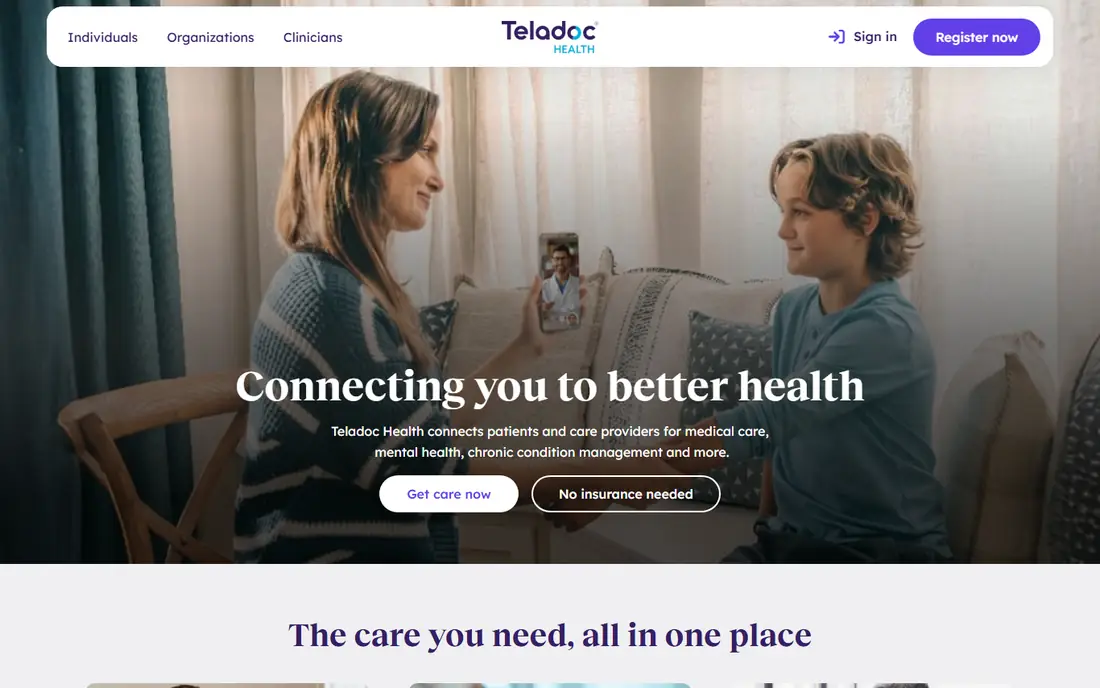
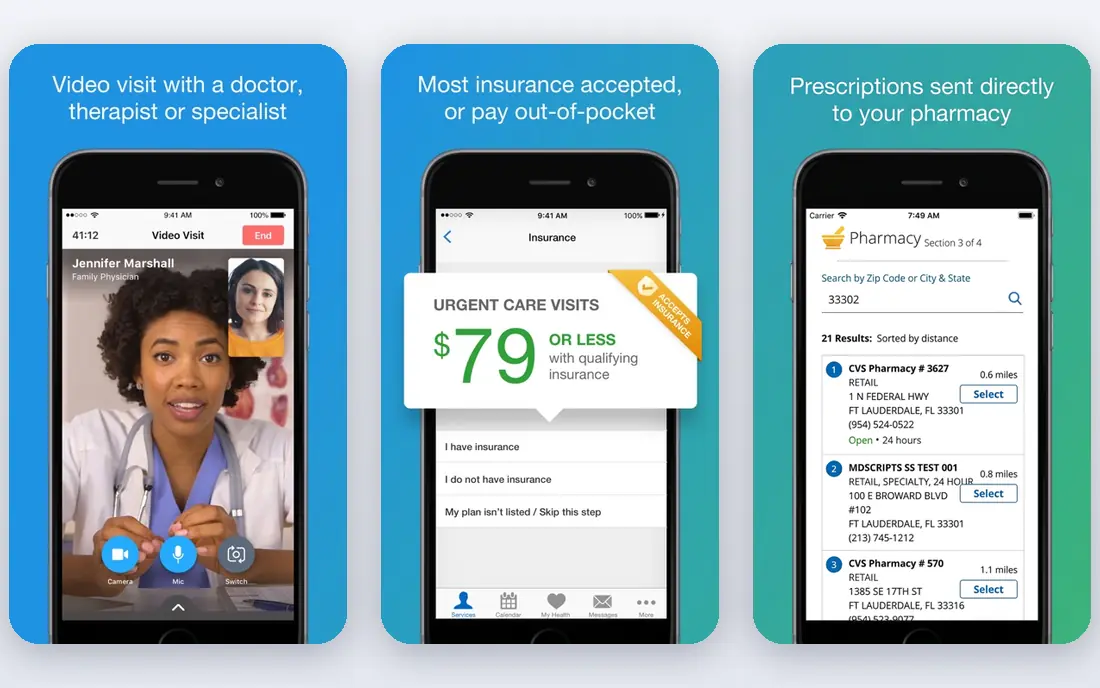
Teladoc is the largest telehealth service in the United States, and its breadth is the reason it leads this list. One app covers urgent care visits around the clock, primary care, mental health therapy and psychiatry, and dermatology, with many employer and insurance plans covering visits at a low copay or no copay. For insured users who want one place for most routine needs, that breadth is hard to match.
Cash prices without insurance are higher than on cash-pay services such as Sesame or GoodRx Care, and you will usually see whichever clinician is available rather than building a long-term relationship with one doctor. Those limits matter less for urgent issues, where speed matters most. For general, insured, on-demand care, Teladoc is our default pick.
- Urgent, primary, mental health, and dermatology in one app
- Broad insurance acceptance
- Fast access in many cases
- Cash prices are higher than cash-pay rivals
- Continuity with one doctor is limited
Amwell matches Teladoc on general urgent care but goes deeper on mental health. It offers therapy and psychiatry visits, with psychiatrists able to prescribe in many states, including some controlled substances where allowed, which is rarer in telehealth. It also works with many insurers and health systems, so insured patients often pay only a copay.
Without insurance, urgent care and especially initial psychiatry visits can be expensive, reaching well into the hundreds of dollars for psychiatry in some cases. That makes Amwell a stronger pick for insured mental health care than for uninsured urgent care. If therapy or psychiatry is your main need, Amwell deserves the first look.
- Strong behavioral health services
- Psychiatry with prescribing in many states
- Many insurers accepted
- Cash urgent care prices are higher than rivals
- Therapy and psychiatry pricing varies by provider
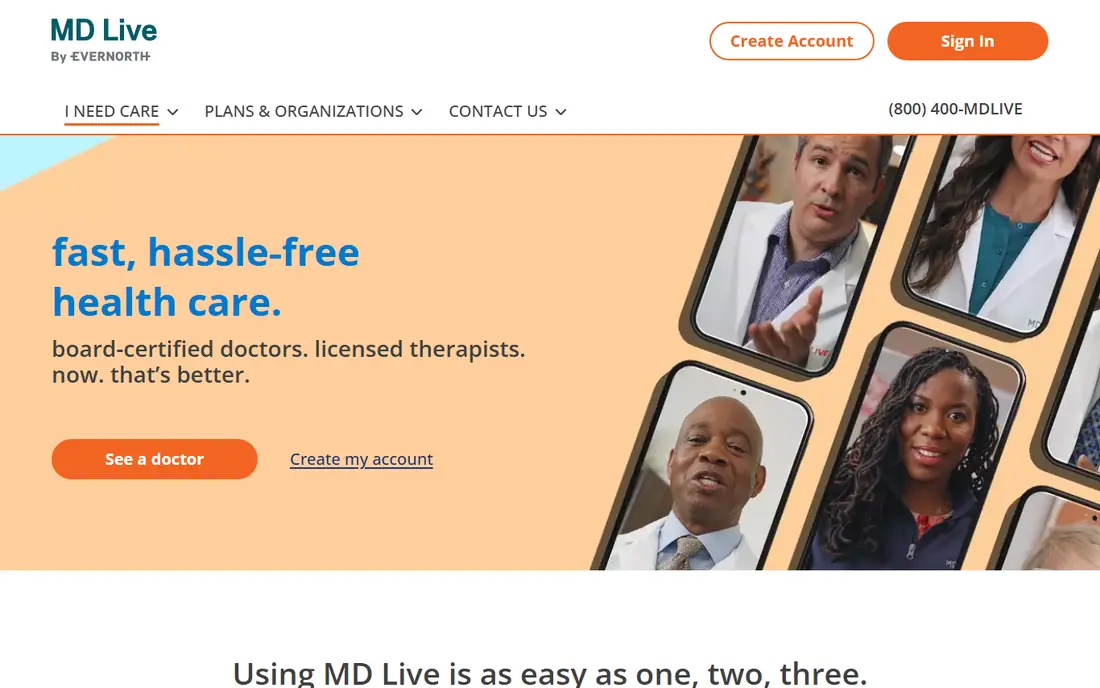
MDLIVE is a long-running telehealth service built around insurance and employer plans, covering urgent care, primary care, behavioral health, and dermatology. Many commercial plans include MDLIVE, so insured patients often pay a copay or nothing for a visit, and scheduling is straightforward through the app or website.
Cash prices without insurance vary by visit type and can be high for specialist or psychiatry visits, so uninsured users should compare Sesame or GoodRx Care first for a simple issue. For insured users, especially those whose plan already includes MDLIVE, it is a reliable, well-established option that covers most routine needs.
- Wide insurance and employer coverage
- Urgent, primary, mental health, and dermatology
- Simple scheduling
- Cash prices vary widely by visit type
- Less suited to uninsured cash-pay users
Doctor on Demand, now part of Included Health, offers video visits for primary care, urgent care, and mental health, with many major insurance plans accepted. Its visit structure is clear: you book a video appointment, see a licensed clinician, and get prescriptions or referrals where appropriate. That simplicity suits patients who prefer video over text-based care.
Cash pricing varies by visit type, and its specialist network is narrower than Teladoc's overall range. For insured patients who want straightforward video primary and urgent care, Doctor on Demand is a solid choice. For a very specific specialty, check whether the service covers it before booking.
- Video visits for primary, urgent, and mental health care
- Many major plans accepted
- Clear visit structure
- Cash prices vary by visit type
- Specialist depth is narrower than larger rivals
PlushCare is built around continuity: you see the same doctor over time, who learns your history and manages ongoing needs, rather than seeing a different clinician each visit. That model suits patients with chronic conditions, regular prescriptions, or a preference for a doctor who knows them. It accepts many major insurance plans, and cash visits start at about $99.
The cash price is higher than Sesame or GoodRx Care, and some plans add a membership fee on top of visit costs. For a one-off cold or rash, a cheaper cash service makes more sense. For ongoing primary care by video, PlushCare's continuity is a genuine advantage that the on-demand giants do not match.
- Continuity with the same doctor
- Full-service virtual primary care
- Many major plans accepted
- Higher cash visit price than rivals
- Membership adds cost for some plans
Sesame is a marketplace where clinicians list their prices upfront, so you know the cost before you book. Visits start at about $25 for some services, depending on provider and specialty, and the range covers primary care, urgent care, mental health, and many specialties. That transparency is refreshing in a market where prices are often hidden until after a visit.
Sesame does not bill insurance, so insured patients may pay more here than through an in-network service, though Sesame can provide a superbill for possible reimbursement in some cases. For uninsured patients, or for a simple visit where you want a fixed price with no surprises, Sesame is one of the best telehealth options available.
- Prices shown upfront by provider and specialty
- No insurance needed
- Wide range of visit types
- Does not accept insurance
- You pay the full price even if you have cover
GoodRx Care offers low-cost cash visits for general medical care, preventive care, and chronic condition management, with prices around $49 per visit without a membership and around $19 per visit with a Gold membership. That makes it one of the cheapest ways to see a clinician without insurance, and GoodRx prescription discounts can lower medicine costs as well.
GoodRx Care does not bill insurance, and its range is narrower than Teladoc or Amwell for specialist and mental health care. For a straightforward issue such as a cold, rash, urinary symptoms, or a refill question, it is an excellent low-cost choice. For complex or specialist needs, a fuller service will serve you better.
- Low cash prices, especially with a Gold membership
- Prescription discounts through GoodRx
- Simple visit flow
- Does not accept insurance
- Visit range is narrower than full-service rivals
K Health starts with an AI-assisted chat that asks about your symptoms, then connects you with a clinician for diagnosis, treatment, or prescriptions where appropriate. Visits cost about $29 to $35, with a monthly plan option around $49 for ongoing access. That text-first model suits users who prefer typing to video, or who want a quick triage before committing to a full visit.
Insurance acceptance is limited, with mainly employer partnerships, so most users pay cash. Text-based care also suits straightforward issues better than complex exams that need a physical check. For a fast, low-cost, text-first visit, K Health is a distinctive and useful option.
- AI-assisted text triage with clinician follow-up
- Low cash visit price
- Monthly plan option
- Limited insurance acceptance
- Text-first model suits some issues better than others
One Medical, part of Amazon, combines virtual care with in-person offices for ongoing primary care. Membership costs $199 per year, or $99 per year with Amazon Prime, and scheduled visits are billed to insurance where accepted, with on-demand visits from about $29 in some cases. Members can book same-day video or office visits and build a relationship with a primary care team.
The membership fee is an extra cost on top of insurance billing, and in-person offices are only available in certain cities, though virtual care is wider. For patients who want a real primary care home with both video and office access, One Medical is the strongest hybrid on this list. For a single urgent visit, a cheaper on-demand service makes more sense.
- Same-day video or in-person visits
- Ongoing primary care relationship
- Many major insurers accepted for visits
- Membership fee on top of visit billing
- In-person offices only in some cities
How we picked these
We compared official service pages, pricing pages, insurance information, and public reviews, and we kept only services that offer real clinician visits in the United States today. We favored a mix of insured on-demand services, cash-pay marketplaces, text-based care, and ongoing primary care, so readers can match the service to their insurance and needs. Prices vary by plan, state, and visit type, so where a price was uncertain, we wrote See website and suggest confirming before booking.
What to check before you book
Confirm that the service and clinician are licensed in your state, since telehealth licensing varies and some services cannot see patients everywhere. Check whether your insurance is in network, what your copay will be, and whether prescriptions, labs, or referrals are included. For mental health prescribing, ask directly whether the service can prescribe what you need in your state, since rules differ by medication and location.
Privacy and safety in telehealth
Good telehealth services use encrypted video and messaging, publish a privacy policy, and explain how your health data is stored and shared. The best services in this guide state HIPAA-compliant practices on their sites, but you should still read the privacy terms before sharing sensitive information. Avoid services that ask for unnecessary personal data, and never use telehealth for an emergency: call local emergency services instead.
When telehealth is not enough
Telehealth suits many routine issues, but it cannot replace a physical exam, lab work, imaging, or emergency care. Chest pain, severe breathing difficulty, serious injury, and other urgent symptoms need in-person or emergency care right away. A good telehealth clinician will tell you when an in-person visit is needed, and you should follow that advice rather than pushing for a remote diagnosis.
Sources
Frequently asked questions
What is the best telehealth service?
Teladoc is our pick for most insured users, thanks to broad coverage in one app. Amwell is best for therapy and psychiatry, Sesame and GoodRx Care are best for cash payers, and PlushCare is best for ongoing care with the same doctor.
What is the best online doctor service without insurance?
Sesame and GoodRx Care are the strongest cash-pay options, with upfront prices starting at about $25 and $19 per visit respectively with the relevant membership or provider. K Health is another low-cost text-based option at about $29 per visit.
What are the best telemedicine apps for mental health?
Amwell and Teladoc both offer therapy and psychiatry, with Amwell going deeper on psychiatry prescribing in many states. Doctor on Demand and PlushCare also offer mental health visits, so compare provider availability and pricing in your state.
Is telehealth HIPAA compliant?
Reputable telehealth platforms state HIPAA-compliant practices, using encrypted video and secure messaging, but compliance depends on the specific service and how it handles data. Read the privacy policy and security information on the service site before booking, especially for sensitive health topics.
Can a telehealth doctor prescribe medicine?
Yes, telehealth clinicians can prescribe many medicines where appropriate, subject to state rules and the type of medicine. Controlled substances have stricter rules, and some services limit what they prescribe, so ask before booking if a specific prescription matters to you.
What is the best virtual doctor app for ongoing primary care?
PlushCare and One Medical are the strongest options for ongoing primary care, with PlushCare offering video continuity and One Medical adding in-person offices in many cities. Teladoc also offers primary care, but with less continuity with a single doctor.