Best Tools for Pest Management in 2026: 8 Tools Compared
By ToolNimba Editorial Team October 29, 2026 8 min read

- Top pick
 Semios
Orchards, vineyards and tree nuts
Starting priceSee websiteCheck out SemiosRead our review - Runner-up
 Trapview
Automated trap monitoring and forecasting
Starting price50 euros per yearCheck out TrapviewRead our review - Also great
 FarmSense
Real-time insect monitoring
Starting priceSee websiteCheck out FarmSenseRead our review
How we researched this
We compared official pricing and feature pages, app store listings, privacy policies and public user reviews. Prices change, so check the provider's site before you pay.
Key takeaways
- Automated traps from Semios and Trapview replace manual trap checks and give daily pest counts without field visits.
- Plantix and Agrio put AI pest and disease diagnosis in a phone, which suits small farms and home growers.
- Weather based tools like xarvio and Pessl FieldClimate forecast pest pressure so sprays can be timed better.
- Hardware systems cost more up front but save labor across a season, while apps cost little and work right away.
- No tool replaces scouting entirely: use trap and app data to target field walks, not to skip them.
Quick comparison
| Name | Best for | Starting price | Free plan | |
|---|---|---|---|---|
| Semios | Orchards, vineyards and tree nuts | See website | No | Visit |
| Trapview | Automated trap monitoring and forecasting | 50 euros per year | Free trial | Visit |
| FarmSense | Real-time insect monitoring | See website | No | Visit |
 Plantix | Phone diagnosis for small farms and gardens | Free | Yes | Visit |
 Agrio | AI diagnosis and pest alerts | See website | Free trial | Visit |
 xarvio Field Manager | Spray timing and disease forecasting | Free | Yes | Visit |
 Pessl FieldClimate | Weather stations and disease models | See website | No | Visit |
 Spensa | Smart traps for row crops | See website | No | Visit |
The best tools for pest management
Pest management tools help growers catch problems early, spray only when needed and keep records for buyers and regulators. We compared official feature pages, pricing pages and public documentation to build this list, covering traps, apps and forecasting platforms that work in 2026.
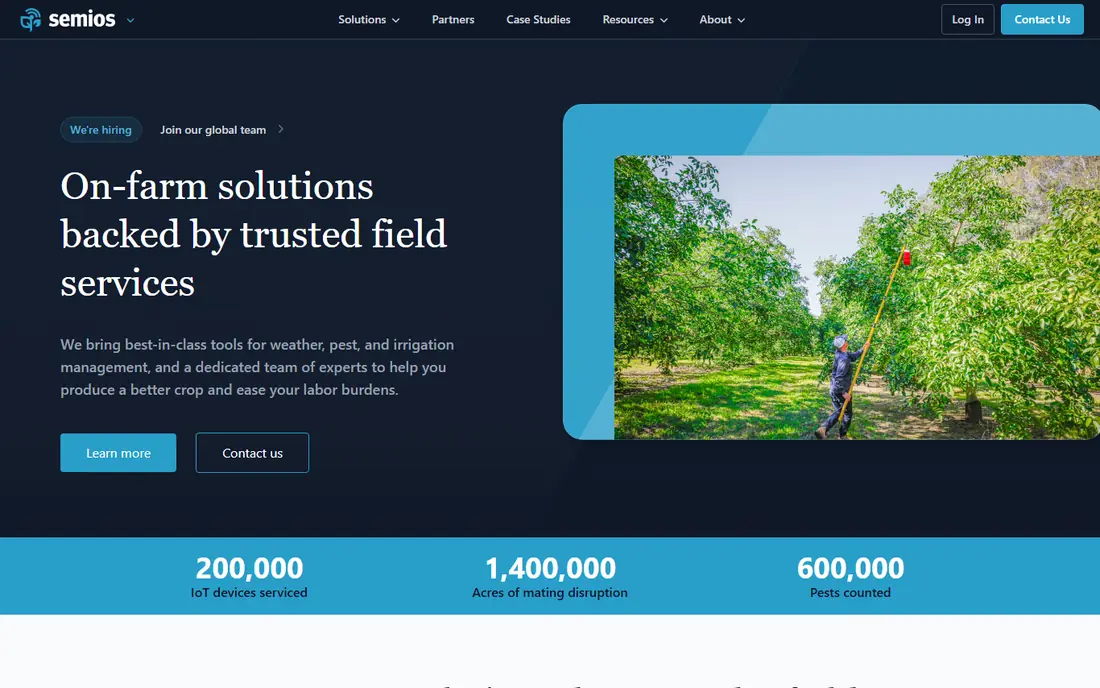
Semios builds a network of in-field sensors, cameras and pheromone dispensers for orchards, vineyards and nut crops. Its traps count target moths automatically, and its mating disruption system releases pheromones to reduce pest reproduction without spraying. The company installs and maintains the hardware, so growers get data and service rather than a box to manage.
The full service model suits larger specialty crop farms that want pest control handled end to end. Pricing is quote based and reflects acreage and services, so small farms may find it costly. For high value crops where one missed spray window is expensive, the labor savings and precision are the main draw.
- Automated pheromone monitoring and mating disruption
- Full service installation and upkeep
- Irrigation monitoring available
- Quote based pricing
- Aimed at larger specialty crop operations
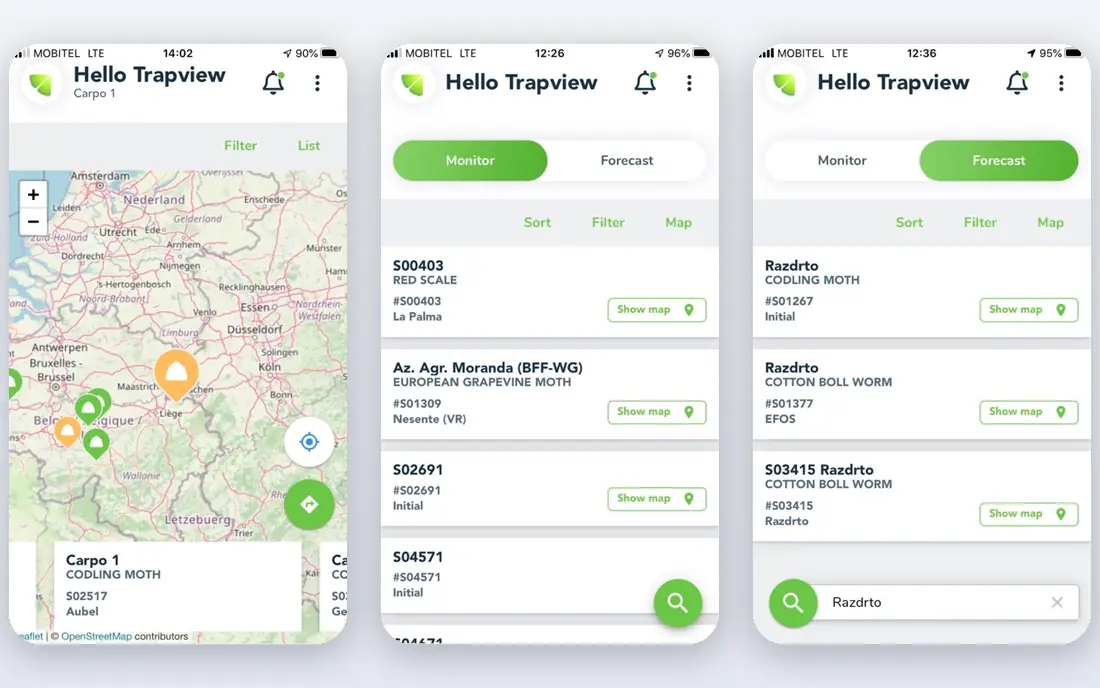
Trapview makes camera equipped traps that photograph catches daily and identify pests automatically, plus a scouting app for field observations. Its platform adds forecasting models that predict pest development from weather data, helping growers time treatments rather than reacting late.
The scouting app starts at 50 euros per year for a basic plan, with a premium plan at 250 euros per year adding automatic pest recognition, and a 10 day free trial is available. Trap hardware is priced separately through local representatives. The system suits growers and advisers who want daily counts without driving to every trap.
- Automatic pest recognition from trap photos
- Forecasting models
- Works in more than 50 countries
- Hardware traps are a separate cost
- Scouting app pricing is in euros
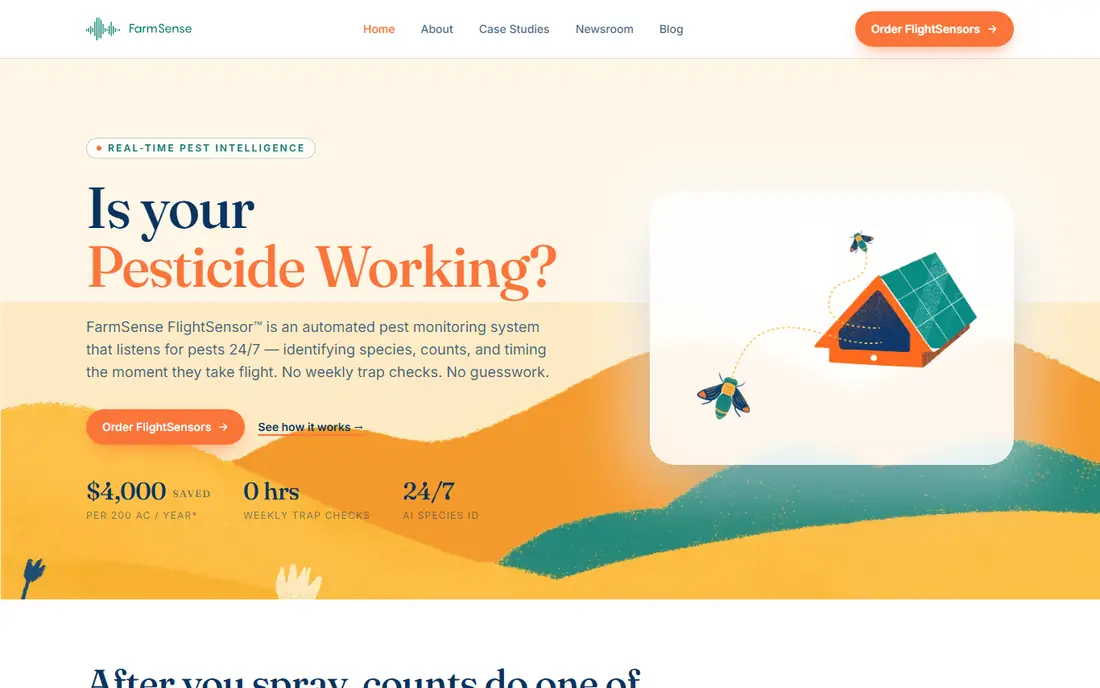
FarmSense uses optical sensors that identify and count flying insects in real time as they pass through a monitoring unit. Results flow to a cloud dashboard with alerts, so growers see population changes as they happen instead of waiting for weekly trap checks.
Real-time data is the advantage: spray decisions can follow same day counts rather than last week's numbers. The trade is scope, since the system covers the insect species its models support, and pricing is quote based. It fits operations that already scout intensively and want to cut manual trap labor.
- Real-time insect counts from optical sensors
- No manual sorting
- Cloud dashboard and alerts
- Quote based pricing
- Limited to supported pest species
Plantix is a free app that diagnoses crop pests, diseases and nutrient problems from a phone photo. Point the camera at a damaged leaf, and the app suggests the likely problem with treatment advice and prevention tips. It covers a wide range of crops and is popular with smallholders and home growers.
The price is right and the app works anywhere with a phone signal. Results are best treated as a first opinion: blurry photos and unusual symptoms can mislead, and serious outbreaks still deserve a local agronomist or lab test. For quick checks in the field, though, it is a strong free tool.
- Free photo diagnosis of pests and diseases
- Large crop library
- Community and advice features
- Diagnosis is guidance, not a lab test
- Accuracy varies with photo quality
Agrio combines AI photo diagnosis with hyperlocal weather data to warn growers about pest and disease risk. Users photograph a problem or log field conditions, and the app returns identification, treatment options and alerts when nearby weather favors an outbreak.
The combination of diagnosis and forecasting is useful: you learn what the problem is and when conditions may worsen. A free tier or trial covers basic use, with paid plans adding deeper monitoring. As with any image tool, clear photos and correct crop selection improve results.
- AI image diagnosis plus weather based alerts
- Field monitoring and record keeping
- Works for many crops
- Paid plans needed for full features
- Diagnosis quality depends on images
xarvio Field Manager, from BASF, helps growers plan sprays with field specific disease risk models, growth stage tracking and zone maps. The free version covers field management basics, while paid tiers add advanced timing recommendations and variable rate application maps.
The forecasting models are the main reason to use it: they weigh weather, crop stage and disease history to suggest when a spray will actually pay. Data coverage and model quality vary by region and crop, so check your area before relying on it. For growers already tracking fields digitally, it adds a decision layer on top of record keeping.
- Free basic version
- Field zone maps and spray timing advice
- Disease risk models
- Advanced features are paid
- Best in regions with strong data coverage
Pessl Instruments sells iMETOS weather stations and the FieldClimate platform that turns their data into disease and pest models. A station on your farm measures rain, leaf wetness, temperature and more, and the models translate those readings into infection risk for common diseases and pests.
Local data is the advantage: forecasts use your field's weather, not a distant station's. The cost includes hardware plus a platform subscription, and the station needs a good site with power and connectivity. Farms that already invest in weather data get the most from FieldClimate.
- Own weather station hardware
- Disease and pest models for many crops
- Reliable local data
- Hardware and subscription costs
- Setup needs a suitable station site
Spensa builds wireless smart traps that count target pests and send data to a dashboard, cutting the need for manual trap checks across large row crop fields. The platform tracks population trends over the season, which helps time insecticide applications and judge whether they worked.
The system suits large row crop operations where trap routes eat hours each week. Pricing is quote based and availability centers on the US market, so growers elsewhere should check coverage. For farms with many dispersed traps, the labor savings are the core benefit.
- Automated trap counts for row crop pests
- Wireless data to a dashboard
- Reduces manual scouting
- Quote based pricing
- US focused availability
How we picked these
We compared official feature pages, pricing pages and public documentation for each tool, and favored products that are actively sold and supported in October 2026. We mixed automated traps, phone diagnosis apps and forecasting platforms so the list covers orchards, vineyards, row crops and small farms. Prices come from vendor pages or, where pricing is quote based, we say so plainly rather than guessing.
How to choose a pest management tool
Start with the pest problem you actually face. Orchards and vineyards benefit most from automated traps and mating disruption, while row crop growers may get more from forecasting models and scouting apps. Next, weigh hardware against software: traps and weather stations cost more but save labor, while apps start free and work today.
Combine data with field walks
Trap counts and app diagnoses point you to the right field and the right row. Confirm with your own eyes before spraying, especially for high cost treatments or regulated products.
Keep records from day one
Buyers, regulators and your future self all benefit from spray and scouting records. Tools that log treatments automatically make audits and next season planning much easier.