Best Tools for Tracking LLM Visibility in 2026: 8 Tools Compared
By ToolNimba Editorial Team October 29, 2026 8 min read

- Top pick
 Profound
Enterprise answer-engine tracking
Starting priceSee websiteCheck out ProfoundRead our review - Runner-up
 Otterly
Low-cost daily tracking
Starting price$29 per monthCheck out OtterlyRead our review - Also great
 Peec AI
Clean analytics for SEO teams
Starting price$95 per monthCheck out Peec AIRead our review
How we researched this
We compared official pricing and feature pages, app store listings, privacy policies and public user reviews. Prices change, so check the provider's site before you pay.
Key takeaways
- Otterly is the best low-cost starting point, at $29 per month for small teams that need daily LLM tracking.
- Peec AI and LLMrefs suit mid-size teams that need many prompts, with clear prompt allowances on published plans.
- Profound, Scrunch and AthenaHQ suit larger brands, but their entry prices and engine coverage vary widely by tier.
- Prompt count, engines covered and refresh frequency matter more than headline price, so compare plans on those three points.
Quick comparison
| Name | Best for | Starting price | Free plan | |
|---|---|---|---|---|
| Profound | Enterprise answer-engine tracking | See website | No | Visit |
| Otterly | Low-cost daily tracking | $29 per month | No | Visit |
| Peec AI | Clean analytics for SEO teams | $95 per month | No | Visit |
 Scrunch | Brand presence plus site audits | $250 per month | No | Visit |
 AthenaHQ | Broad engine coverage | $295 per month | Yes | Visit |
 Goodie AI | AI search monitoring for brands | See website | No | Visit |
 Brandlight | Brand visibility in AI answers | See website | No | Visit |
 LLMrefs | Many prompts on one plan | $79 per month | No | Visit |
The best tools for tracking llm visibility
Large language models now answer questions that once sent users to a website, so a brand needs to know when it appears in those answers, what is said about it, and which sources are cited. These eight tools track that visibility across ChatGPT, Gemini, Perplexity and other AI engines.
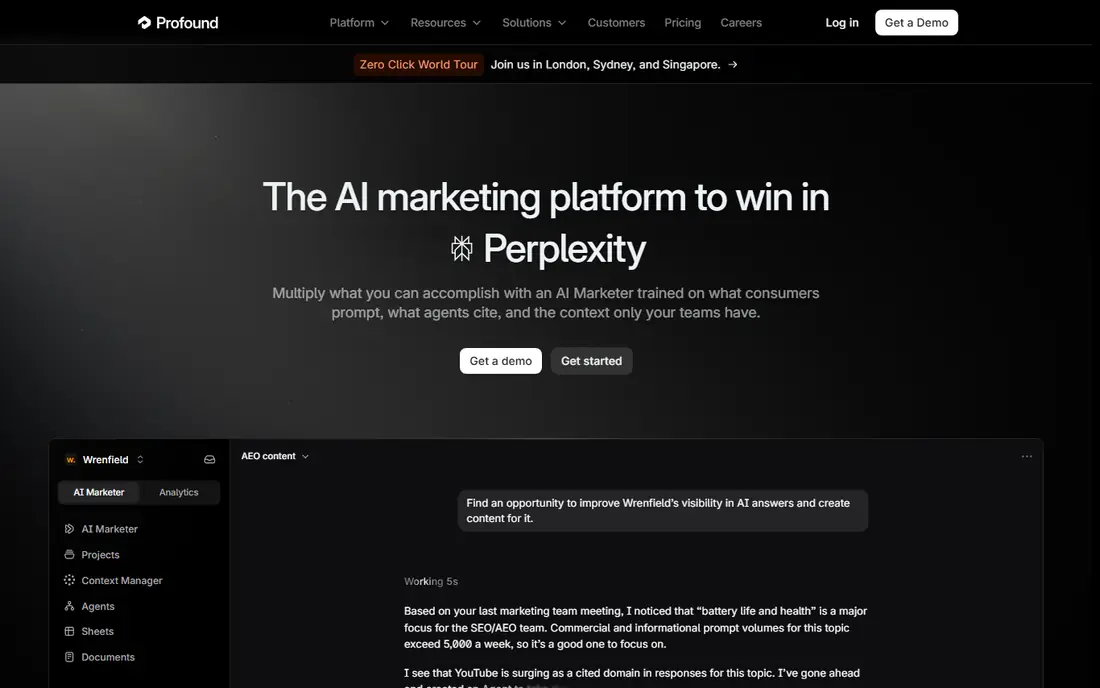
Profound is the most frequently named enterprise tool in this category, and its breadth explains why. On higher tiers it tracks ChatGPT, Perplexity, Google AI Overviews, Google AI Mode, Gemini, Claude, Copilot, Grok and DeepSeek, with prompt volumes, citation analysis and shopping placement. Content agents on some plans turn tracking findings into optimisation suggestions.
The pricing model is the catch. Brands buy through an enterprise quote, while a lower published plan is aimed at agencies, so a small team cannot simply sign up at a listed price. Profound suits brands with a real enterprise budget and a need for the widest engine coverage, not a solo marketer testing LLM tracking for the first time.
- Tracks up to nine answer engines on enterprise tiers
- Prompt volume and shopping visibility
- Agent analytics
- Brand pricing is quoted, not self-service
- Entry tiers cover fewer engines than the full platform
Otterly is the accessible entry point for LLM visibility. Its Lite plan costs $29 per month, or $25 billed annually, and tracks 15 prompts daily across ChatGPT, Google AI Overviews, Perplexity and Copilot, with unlimited team members. A 7-day trial lets a team test the dashboard on its own brand before paying.
Prompt limits are the obvious constraint. Fifteen prompts suit a small brand with a focused set of questions, but a larger brand will need a higher plan or add-ons for Claude, Gemini and Google AI Mode. For a first LLM tracker, Otterly's low price and clear limits make it easy to judge.
- Lite plan at $29 per month
- Daily tracking across core engines
- Unlimited team members
- Only 15 prompts on Lite
- Claude and Gemini are paid add-ons on lower plans
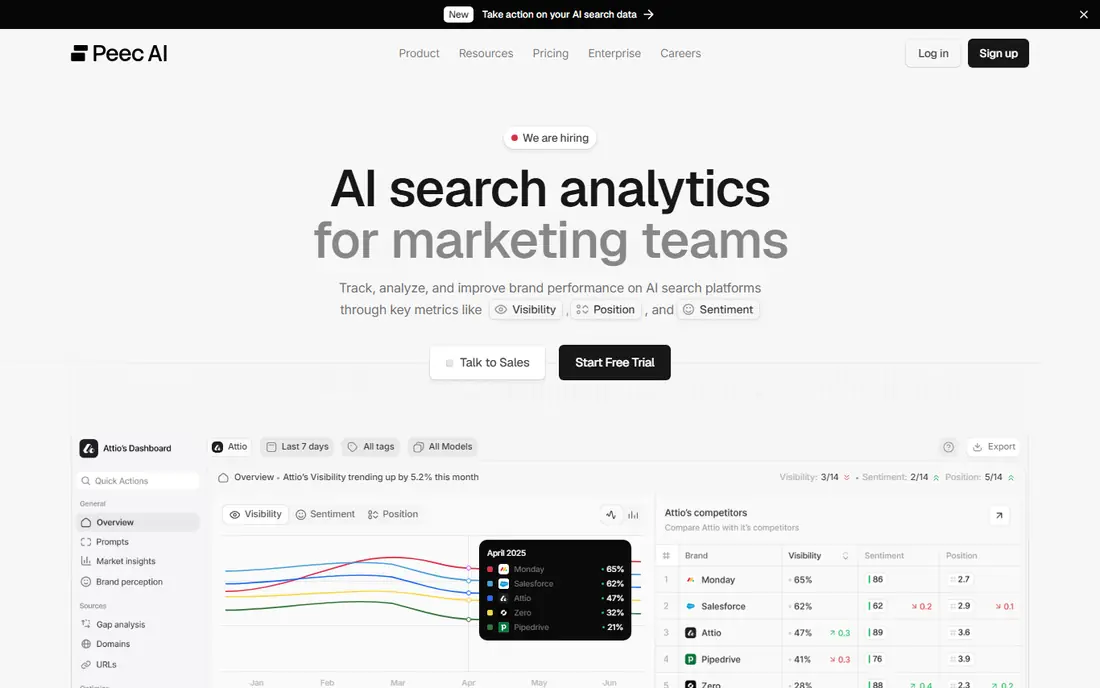
Peec AI appeals to SEO teams that want clean, prompt-level analytics without enterprise complexity. Its Starter plan tracks 50 prompts daily on three models of the user's choice, with unlimited users, which suits a team that shares reporting. Citation analysis shows which sources AI answers rely on, across several countries and languages.
Model coverage needs checking. Starter does not cover all six models, so a team that needs every engine must move to a higher tier. Peec AI's published pricing is in euros on some pages, so US buyers should confirm the dollar cost at checkout, but the prompt allowance per dollar remains competitive.
- 50 prompts daily on Starter
- Unlimited users
- Citation analysis across countries and languages
- Starter covers three models of choice, not all six
- Prices are shown in euros on some pages
Scrunch combines LLM visibility tracking with insight into how AI crawlers read a website. Its Core plan tracks 125 prompts across ChatGPT, Perplexity, Google AI Overviews and Copilot, with site audits that show how a site appears to AI models. That technical layer helps teams fix crawl and content issues that pure mention tracking would miss.
At $250 per month, Scrunch is a mid-market purchase, not a casual trial, though a 7-day trial is available. Some engine coverage and API access sit on higher tiers, so teams should confirm the exact plan includes the engines they need before committing.
- 125 prompts on Core
- Site audits and crawler insight
- Tracks several major engines
- High entry price
- Some features, such as Claude coverage, sit on higher tiers
AthenaHQ stands out for engine breadth on a self-service plan. Its Starter plan costs $295 per month and covers 11 engines with 3,600 credits a month, where one credit equals one answer. An action centre turns findings into recommendations, and a free Essential plan with 300 credits lets a team test the product without a card.
The credit model needs care. Teams must translate prompts, engines and frequency into credits to forecast the monthly bill, and API access costs extra on Starter. AthenaHQ suits larger teams that need many engines in one dashboard and are willing to learn the credit system.
- 11 engines on Starter
- Credit-based tracking
- Free Essential plan with 300 credits
- High Starter price
- Credit model takes time to understand
- API access is a paid add-on on Starter
Goodie AI focuses on monitoring how brands appear in AI search answers, with competitor comparison and reporting aimed at marketing teams. Its dashboard keeps the focus on visibility, mentions and share of voice, rather than burying AI data inside a wider SEO suite. That focus helps teams that only need LLM tracking and do not want to pay for unrelated tools.
Pricing transparency is weaker than Otterly or Peec AI, so buyers should request a quote for their prompt volume and engine needs. Goodie AI suits brands that want a dedicated AI monitor and are comfortable with a sales conversation to set the plan.
- Focused AI search monitoring
- Brand and competitor tracking
- Clear reporting for marketing teams
- Pricing is not published as a simple entry plan
- Newer than larger rivals
Brandlight targets brand and PR teams that need to know how AI answers describe their brand, not just whether it is mentioned. Competitor benchmarking shows how rivals appear for the same prompts, which helps a brand team spot positioning gaps. The reporting style suits stakeholders who need a clear brand story rather than a technical audit.
As with other quoted tools, fair comparison requires a demo and a written quote for the prompt set and engines a team actually needs. Brandlight is best judged on whether its brand reporting fits a PR workflow, rather than on a published entry price it does not offer.
- Brand-focused AI visibility tracking
- Competitor benchmarking
- Designed for brand and PR teams
- Pricing is quoted
- Feature details vary by plan, so a demo is needed to compare fairly
LLMrefs offers the most prompts per dollar in this list, with 500 prompts, unlimited projects and unlimited seats on a single $79 per month plan, across ten listed engines. For an agency or a brand with a large prompt set, that allowance dwarfs rivals at a similar price, and the single-plan structure avoids tier confusion.
Weekly checks are the trade-off. LLMrefs does not refresh daily, so it suits stable prompts and long-term tracking better than fast-moving commercial terms that change daily. Teams that need daily alerts should pair it with a daily tracker, or choose a daily tool for their most important prompts.
- 500 prompts on a single plan
- Unlimited projects and seats
- Ten engines listed
- Checks run weekly, not daily
- Less suited to fast-moving prompts
How we picked these
We compared official pricing pages, prompt allowances, engine coverage and public reviews, and we kept only tools that track LLM or AI answer visibility today. We favoured tools with published prompt limits or a clear plan structure, and we marked quoted pricing as such instead of inventing a figure. Tools that only offer a free checker without ongoing tracking were left out.
How to choose the right LLM tracker
List the prompts that drive real business, then count them honestly. A tool with 15 daily prompts may beat one with 500 weekly prompts if those 15 questions decide most enquiries. Next, check which engines are included on the plan you would buy, since entry plans often cover fewer engines than the homepage suggests.
Finally, test the workflow. The best tracker is the one whose citation data leads to a page edit, a new source or a PR action. Run a trial on your own brand and competitors, export a report, and see whether the findings change what your team does next week. If they do not, the tool is a chart, not an asset.