Best Used Car App in 2026: 8 Apps Compared
By ToolNimba Editorial Team November 1, 2026 8 min read

- Top pick
 CarGurus
Price transparency
Starting priceFreeCheck out CarGurusRead our review - Runner-up
 Carvana
Fully online buying
Starting priceFreeCheck out CarvanaRead our review - Also great
 CarMax
No-haggle buying with returns
Starting priceFreeCheck out CarMaxRead our review
How we researched this
We compared official pricing and feature pages, app store listings, privacy policies and public user reviews. Prices change, so check the provider's site before you pay.
Key takeaways
- CarGurus is best for price checks, with deal ratings that help buyers spot overpriced listings fast.
- Carvana and CarMax suit buyers who want fixed pricing, home delivery, and a return window, rather than dealer negotiation.
- Autotrader and Cars.com offer the broadest inventory, which matters when searching for a rare trim or model.
- Always check vehicle history, inspect the car, and confirm total price with fees before paying, since listing prices rarely tell the full story.
Quick comparison
| Name | Best for | Starting price | Free plan | |
|---|---|---|---|---|
| CarGurus | Price transparency | Free | Yes | Visit |
| Carvana | Fully online buying | Free | Yes | Visit |
| CarMax | No-haggle buying with returns | Free | Yes | Visit |
 Autotrader | Broad inventory search | Free | Yes | Visit |
 Cars.com | Local dealer inventory | Free | Yes | Visit |
 Edmunds | Research and True Market Value | Free | Yes | Visit |
 TrueCar | Upfront dealer pricing | Free | Yes | Visit |
 Kelley Blue Book | Valuations and pricing | Free | Yes | Visit |
The best used car apps
Used car apps differ in what they actually sell: some are marketplaces, some are dealers, and some are pricing tools. The best app for you depends on whether you want to negotiate, buy online, or research first. We compared official app features, pricing tools, and independent used car roundups for each app below.
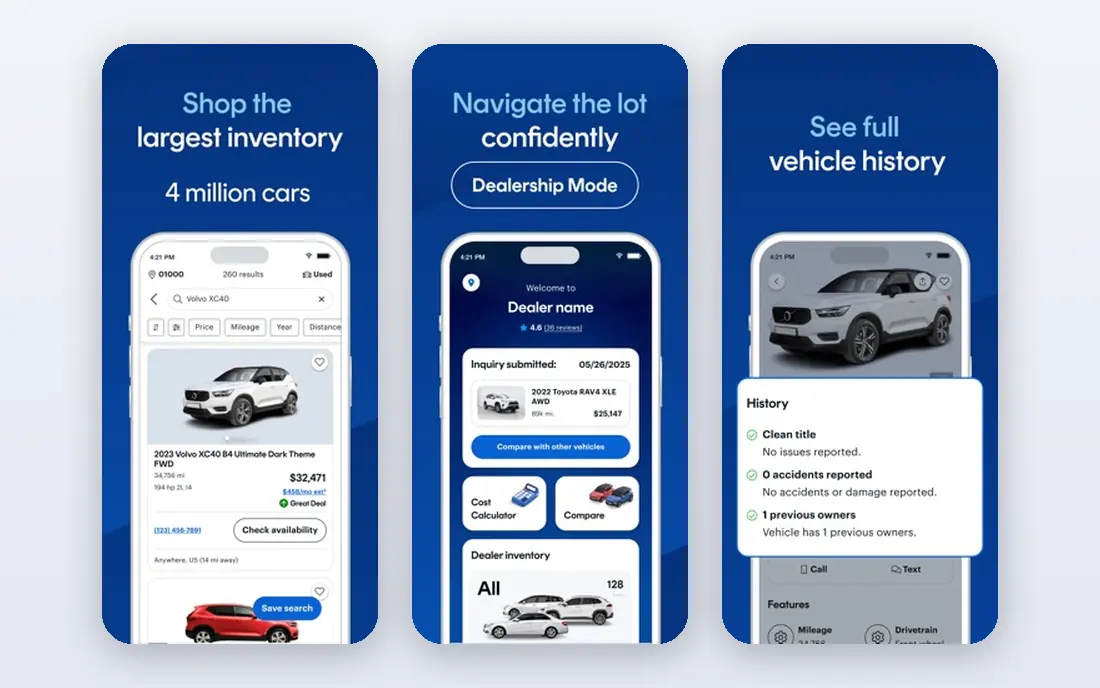
CarGurus is our pick for most used car shoppers, because its Instant Market Value analysis rates listings as Great Deal, Good Deal, Fair Deal, or Overpriced. That rating, plus price history, gives buyers an edge before talking to a dealer. Inventory is large, and dealer reviews add context that a price alone cannot give.
It is a marketplace, not a dealer, so buying terms, delivery, and returns depend on the seller. Use CarGurus to find and validate a deal, then confirm history, fees, and inspection options with the dealer before committing.
- Deal ratings and price history
- Large inventory
- Dealer reviews
- Not a direct seller, so return terms vary by dealer
- Sponsored listings can push deals down
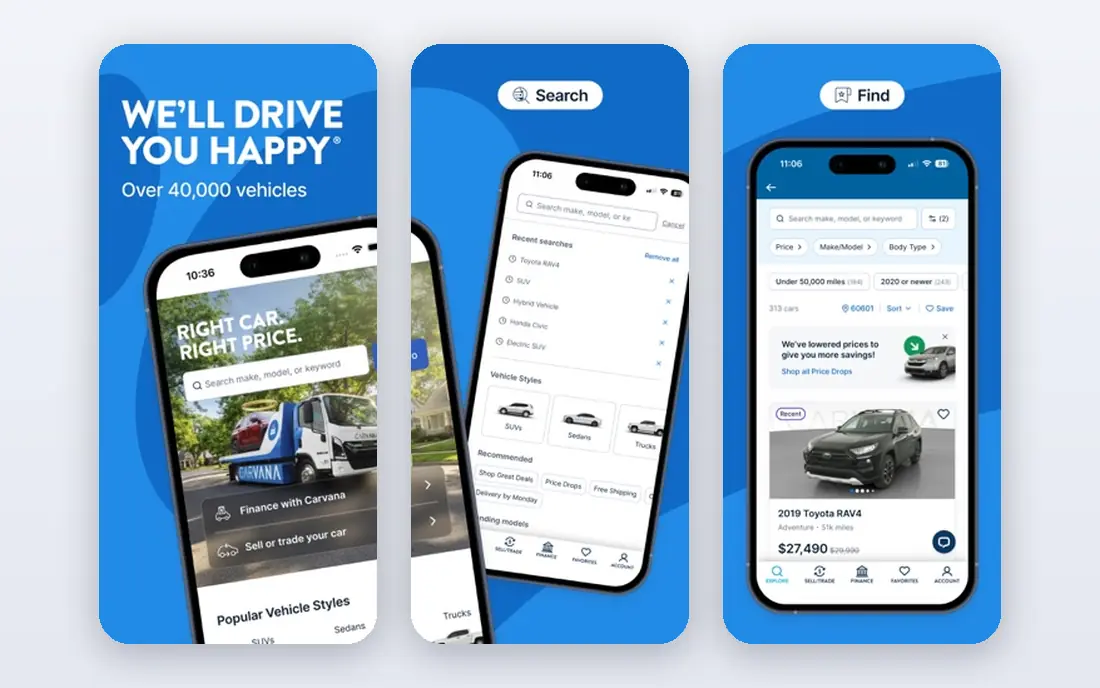
Carvana suits buyers who want to avoid dealership visits. Cars are listed with fixed prices, financing and trade-in can be handled online, and delivery brings the car to your door. A 7-day, 400-mile test-own period lets buyers return the car if it does not fit their needs, subject to terms.
Inventory is smaller than Autotrader or Cars.com, since Carvana sells its own stock. Prices can also run higher than a negotiated dealer deal, so compare the same model on CarGurus before buying for convenience alone.
- No-haggle pricing
- Home delivery
- 7-day test-own period
- Inventory smaller than aggregate sites
- Delivery fees in some areas
- Prices can be higher
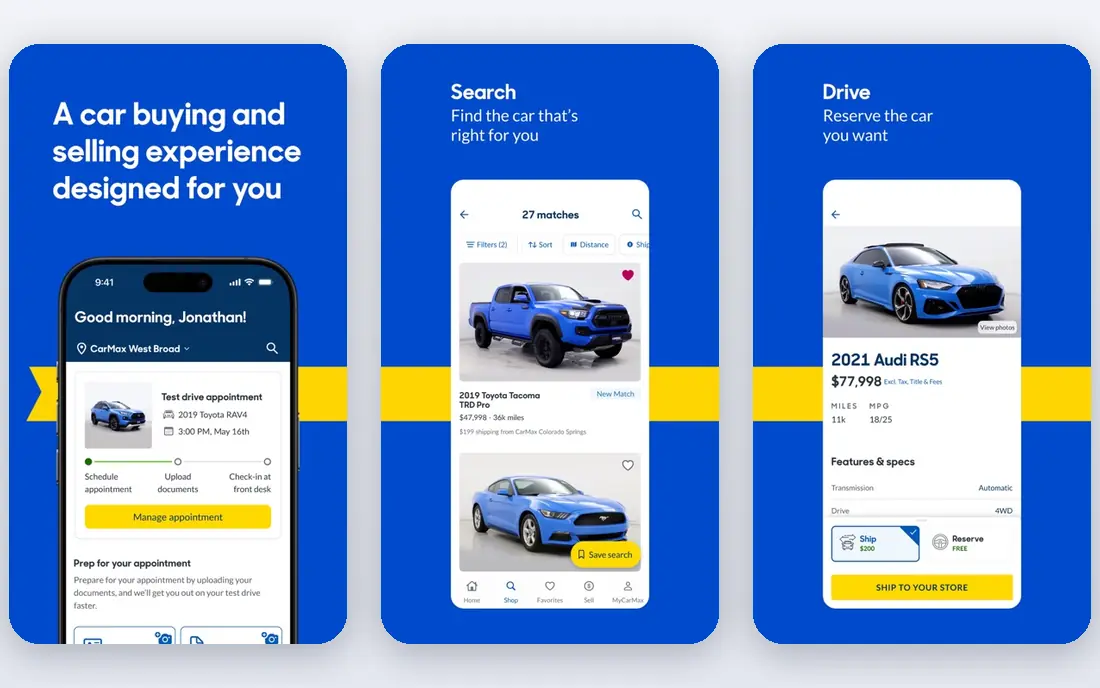
CarMax combines online shopping with a large physical store network, which helps buyers who want to see a car before buying but still avoid haggling. Fixed pricing removes negotiation stress, and return terms, listed as 10 days in many 2026 roundups, give time to get an independent inspection.
The trade is price. CarMax cars often cost more than similar private-party listings, and transferring a car from a distant store can add a fee. For buyers who value certainty over the lowest price, that trade is reasonable.
- Large store network
- Fixed pricing
- 10-day return policy in many listings
- Prices can be higher than private sellers
- Transfer fees for distant cars
Autotrader is the broadest search tool for buyers who want to see everything available, including rare trims and certified pre-owned cars. Filters cover price, mileage, drivetrain, features, and seller type, and research articles help buyers compare models. That breadth matters when a specific car is hard to find locally.
Pricing analysis is less sharp than CarGurus, so use both: Autotrader to find the car, CarGurus or Kelley Blue Book to check the price. Also confirm availability, since large marketplaces can carry outdated listings.
- Very large inventory
- Strong filters including certified pre-owned
- Dealer and private listings
- Pricing tools are less advanced than CarGurus
- Some listings can be outdated
Cars.com is a strong local search app, with a large dealer network and tools for price comparison, dealer reviews, and service center location. Mobile search is smooth, and saved searches with alerts help buyers act fast on new listings in their area.
Like Autotrader, it is a marketplace, so the buying experience depends on the dealer. Check fees, history, and return terms for each listing, rather than assuming the app itself guarantees them.
- Large inventory
- Dealer reviews
- Price comparison tools
- Interface feels less data-led than CarGurus
- Terms vary by dealer
Edmunds is best used before buying, not just during search. Its expert reviews, owner reviews, and True Market Value estimates help buyers understand what a model should cost, what goes wrong, and which trim suits their needs. That research prevents expensive mistakes, such as buying a model year with known issues.
For live inventory, Autotrader and Cars.com are broader. Use Edmunds to narrow the model and price, then search marketplaces for the actual car.
- Expert reviews
- True Market Value pricing
- Detailed model research
- Less emphasis on deal ratings
- Inventory is not the largest
TrueCar shows upfront pricing from its dealer network, which helps buyers who dislike haggling but still want a dealer purchase. Buying insights show what others paid for similar cars, which adds context to a listed price. The app is free to browse, with no purchase required to search.
Upfront price is not always the final price, since taxes, title, and dealer fees can add up. Confirm the out-the-door total in writing before signing, and compare with CarGurus deal ratings for the same model.
- Upfront pricing from dealers
- Buying insights
- Large dealer network
- Inventory is smaller than the largest sites
- Price is not a final out-the-door figure
Kelley Blue Book, known as KBB, is the valuation standard many buyers and dealers cite. Its pricing tools show trade-in, private-party, and dealer retail ranges, which help buyers judge whether a listing is fair. Instant cash offer tools also help sellers compare dealer offers quickly.
As a marketplace, it is thinner than CarGurus or Autotrader, so use it as a pricing check, not as the only search tool. Remember that valuations are estimates based on condition, mileage, and local market, not a guaranteed sale price.
- Trusted valuations
- Instant cash offers
- Dealer pricing context
- Marketplace depth is thinner than rivals
- Valuations are estimates, not offers
How we picked these
We compared official app features, pricing tools, and independent 2026 used car roundups. We kept apps that are free to browse, have large US inventory or trusted pricing data, and are available in October 2026. We left out auction-only sites for collectors, except where they serve a clear buyer need, and we favored apps with history, inspection, or return help.
What to check before you buy
Never buy on listing price alone. Check vehicle history, accident records, title status, and service history, and get an independent pre-purchase inspection for any car without a strong return policy. Confirm total price, including taxes, title, registration, and dealer fees, in writing.
Compare the same car across apps
Search the same model, year, and trim on CarGurus, Autotrader, and Cars.com. Price gaps often reveal overpriced listings, hidden fees, or condition differences. A car that is far cheaper than similar listings deserves extra inspection, not instant trust.
Check return and delivery terms
Carvana and CarMax offer return windows, while marketplace dealers vary. Ask about return days, mileage limits, restocking fees, and who pays for return transport before you pay. For delivered cars, confirm delivery fees and timing.
Arrange financing before you shop
Get a pre-approval or rate quote from your bank or credit union before visiting a dealer. That gives a baseline to compare dealer financing against, and it prevents rushed decisions in the finance office.
For any car over a few thousand dollars, pay for an independent inspection by a mechanic who does not sell cars. An inspection often finds worn brakes, tires, leaks, or prior repair work that photos and listings hide. The inspection fee is small compared with a major repair, and a seller who refuses an inspection is a warning sign.
Also check insurance and running costs before falling in love with a model. Fuel, insurance group, tax, and common repair costs vary widely between similar-looking cars, and a cheap purchase price can hide expensive ownership. A quick quote from an insurer and a look at owner forums for common faults gives a fuller picture of total cost than the listing price alone, and it can change which trim or model year is the smart buy.
Sources
- https://www.cargurus.com
- https://www.carvana.com
- https://www.carmax.com
- https://www.autotrader.com
- https://www.cars.com
- https://www.edmunds.com
- https://www.truecar.com
- https://www.kbb.com
- https://smartupworld.com/best-used-car-websites/?scrape=true&cacheburst=1728877406
- https://www.cargurus.com/research/articles/best-used-car-websites