Best WMS Software in 2026: 8 Systems Compared
By ToolNimba Editorial Team November 8, 2026 9 min read

- Top pick
 NetSuite WMS
NetSuite ERP users
Starting price$99 per user per monthCheck out NetSuite WMSRead our review - Runner-up
 Manhattan Active WM
Large complex networks
Starting priceSee websiteCheck out Manhattan Active WMRead our review - Also great
 SAP Extended Warehouse Management
Large SAP estates
Starting priceSee websiteCheck out SAP Extended Warehouse ManagementRead our review
How we researched this
We compared official pricing and feature pages, app store listings, privacy policies and public user reviews. Prices change, so check the provider's site before you pay.
Key takeaways
- NetSuite WMS is our pick for firms already running NetSuite, since inventory, orders and finance stay in one system.
- Manhattan Active WM and Blue Yonder suit large, complex distribution networks with automation and labor management needs.
- SAP Extended Warehouse Management fits large SAP estates, while Oracle Warehouse Management suits Oracle shops.
- Fishbowl, ShipHero and Infoplus offer faster, lower-cost entry for smaller and mid-sized warehouses.
- Warehouse software cost depends on users, sites, automation and implementation, so a quote matters more than a list price alone.
Quick comparison
| Name | Best for | Starting price | Free plan | |
|---|---|---|---|---|
| NetSuite WMS | NetSuite ERP users | $99 per user per month | No | Visit |
| Manhattan Active WM | Large complex networks | See website | No | Visit |
| SAP Extended Warehouse Management | Large SAP estates | See website | No | Visit |
 Oracle Warehouse Management | Oracle estates | See website | No | Visit |
 Blue Yonder WMS | Large retail and distribution | See website | Free trial | Visit |
 Fishbowl Inventory | Small manufacturers | See website | Free trial | Visit |
 ShipHero | Shopify and direct-to-consumer brands | $1,995 per month | No | Visit |
 Infoplus WMS | High-volume fulfillment | $495 per month | No | Visit |
The best WMS software
Warehouse management software controls receiving, put-away, picking, packing, shipping and returns, and it keeps inventory counts honest across locations. The right system depends on warehouse size, order volume, automation and the ERP you already run. The systems below span small warehouses to enterprise distribution networks.
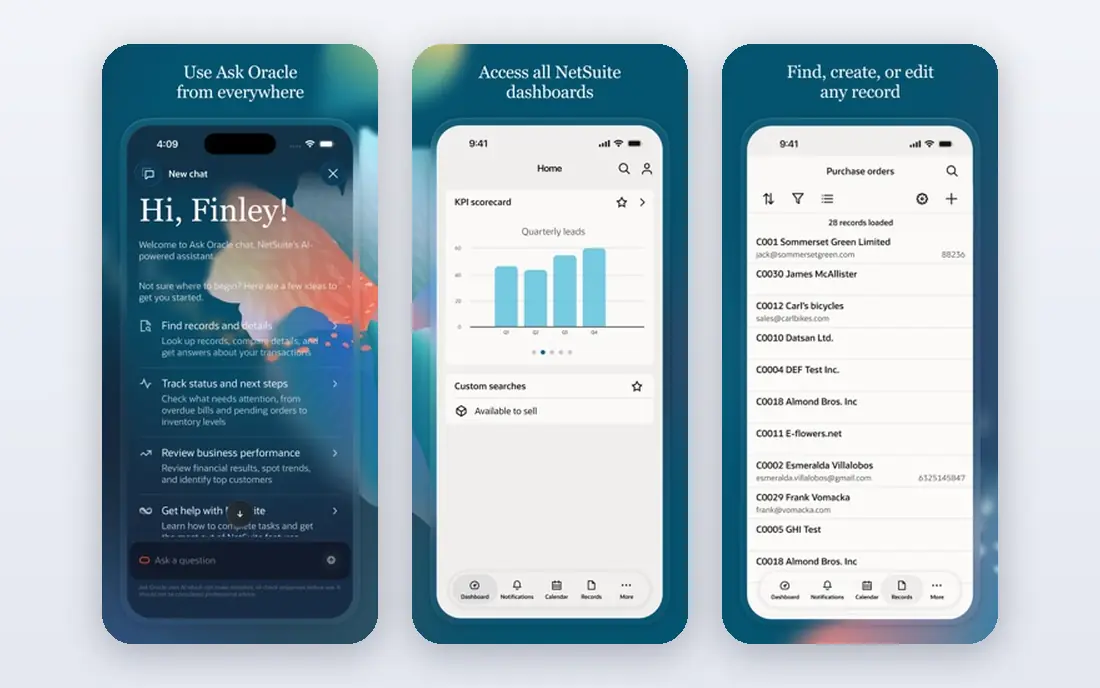
NetSuite WMS is the natural choice if your business already runs NetSuite ERP. Receiving, put-away, picking, packing and returns feed the same inventory and financial records as sales and purchasing, which reduces duplicate entry and reconciliation work. Multi-location support helps firms with several warehouses or retail sites.
The price signal is $99 per user per month for the WMS add-on, on top of NetSuite ERP costs, and total cost rises with users, features and implementation help. Users also report a steep learning curve, so plan training time for floor staff. For a NetSuite shop, though, the integration value usually outweighs the effort of learning a separate best-of-breed system.
- Native NetSuite integration keeps inventory, orders and finance in sync
- Multi-location support
- Mobile picking and packing
- Costs climb with add-ons and integrations
- Learning curve is steep for new users
Manhattan Active WM is built for large, complex distribution. Its warehouse execution tools coordinate people, robots and orders across a site, while order streaming lets teams handle urgent direct-to-consumer orders alongside bulk waves without switching modes. Slotting, labor management and analytics support high-volume sites that live on accuracy and speed.
That depth comes with a complex implementation. Third-party comparisons list entry pricing around $2,000 per licence per year, but enterprise deployments cost far more once sites, users and automation are counted. Smaller firms should look lower down this list. Large networks with automation plans will find Manhattan hard to beat on execution depth.
- Cloud-native with frequent updates
- Warehouse execution for automation
- Order streaming for mixed picking
- Complex rollout that needs IT and partner help
- Entry cost is high for smaller firms
SAP Extended Warehouse Management
Best for: Large SAP estates
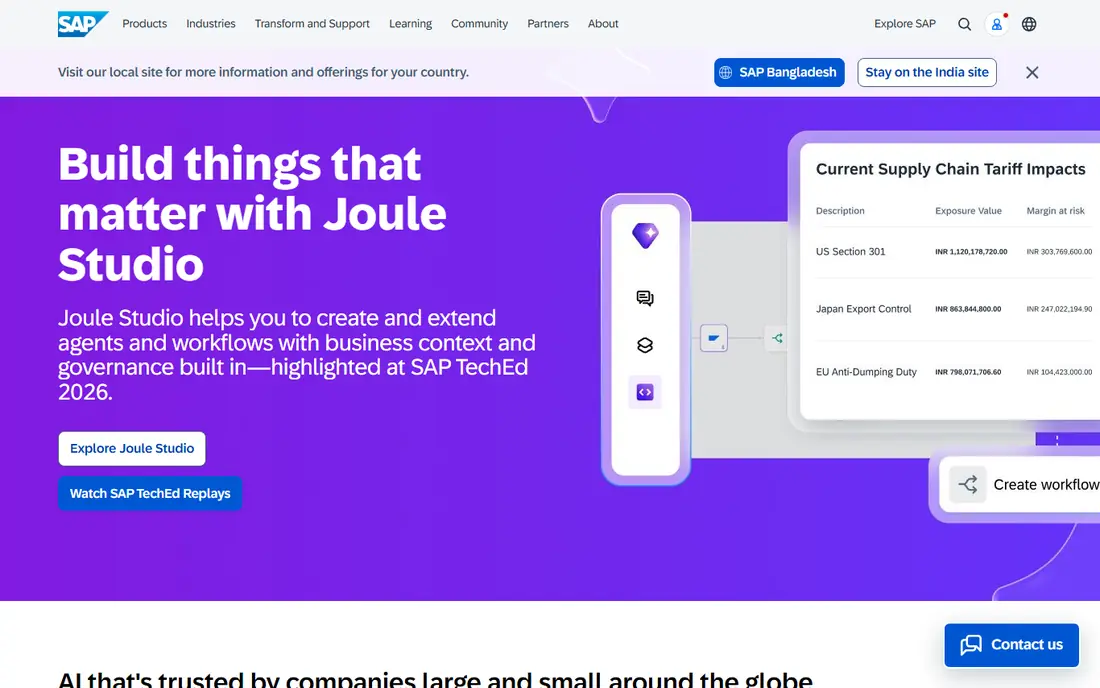
SAP Extended Warehouse Management, often called SAP EWM, is the warehouse system for firms already committed to SAP. It handles complex inbound, storage, picking and outbound processes, supports automation and yard logic, and shares master data with SAP ERP and supply chain tools. For a manufacturer or distributor with many plants and warehouses, that shared data model is a major advantage.
The cost is enterprise-grade and quote-based, and implementation needs SAP specialists and careful process design. A small warehouse should not buy EWM on its own. A large SAP firm that needs advanced warehouse control, however, will get more from EWM than from bolting a separate system onto SAP with custom integrations.
- Deep SAP integration
- Advanced warehouse processes for large sites
- Strong for manufacturing and distribution
- Quote-based enterprise pricing
- Long implementation and specialist skills needed
Oracle Warehouse Management, part of the Oracle supply chain family, suits firms already running Oracle ERP or NetSuite at scale. It covers inbound, outbound, inventory and 3PL work, with client portals for third-party logistics providers and material handling integrations for conveyors, sorters and scales. Real-time visibility helps teams cut picking errors and stockouts.
Users report that customization can require consultant help and that the interface feels dated compared with newer cloud tools. Third-party comparisons list entry pricing around $25,000 per year, but real deployments vary widely by sites and users. For an Oracle estate, the integration and 3PL depth make it a credible enterprise pick despite those caveats.
- Strong Oracle integration
- 3PL support with client portals
- Real-time inventory visibility
- Customization often needs Oracle consultants
- Interface feels dated to some users
Blue Yonder WMS serves large retail, distribution, manufacturing and service operations. Its strengths include inbound processing, outbound parcel tools, labor management and yard management, which matter when a network runs many sites and carrier options. A trial period helps teams pilot the system before a full commitment, which is rarer among enterprise WMS vendors.
Cost is the barrier. Third-party comparisons list entry pricing around $100,000 per year, with on-premise deployments far higher, and upgrades can add expense. That puts Blue Yonder firmly in the large-enterprise bracket. If your network is large enough to need its labor and yard depth, the trial and broad coverage justify a detailed quote. Smaller firms should skip it.
- Broad industry coverage
- Strong labor and yard management
- Trial available for pilots
- High enterprise cost
- Upgrades and configuration can be complex
Fishbowl Inventory is a practical step up from spreadsheets for small manufacturers and distributors. It covers inventory tracking, picking, packing, receiving and order management, with a well-known QuickBooks integration that keeps accounting in sync. Third-party guides have listed starting pricing around $6,795 for a small perpetual package, though current pricing should be confirmed with the vendor.
The system is not built for large automated distribution centers, and firms that outgrow it may need to migrate later. For a one- or two-warehouse firm that needs reliable counts, barcode scanning and order flow without enterprise cost, Fishbowl offers a workable middle ground. Use the trial to test your actual receiving and picking flow, not just a demo script.
- Inventory and warehouse basics for small firms
- QuickBooks integration
- Perpetual and cloud options in past pricing
- Less depth for large multi-site automation
- Implementation help may be needed as you grow
ShipHero is aimed at direct-to-consumer brands that ship many small orders. It combines warehouse management with shipping, inventory and order routing, and its Shopify-friendly workflows suit brands that sell mainly online. Third-party comparisons list starting pricing around $1,995 per month, which reflects its mid-market positioning.
Very small brands shipping a handful of orders a day will find that price hard to justify. Brands shipping hundreds of orders a day, with multiple sales channels and a need for fast, accurate picking, will see the value in fewer errors and faster dispatch. Check order-volume tiers and shipping carrier support before signing, since those details shape the real monthly bill.
- Built for direct-to-consumer fulfillment
- Shopify-friendly workflows
- Shipping and inventory in one platform
- Monthly entry price is high for very small brands
- Best value at higher order volumes
Infoplus WMS, now part of a wider commerce platform, targets mid-sized fulfillment operations and 3PLs. Third-party comparisons list starting pricing around $495 per month, which makes it one of the more accessible cloud WMS options. It covers receiving, picking, packing, shipping and inventory across clients and channels, with integrations for online shops and carriers.
It does not match enterprise systems on automation, labor planning or complex yard logic. For a growing fulfillment firm that needs reliable cloud WMS without enterprise implementation cost, that trade is often right. Map your picking methods, carrier rules and client billing needs before a trial, since those workflows decide whether Infoplus fits.
- Cloud WMS for fulfillment and 3PL work
- Lower entry price than enterprise systems
- Integrations with shops and carriers
- Less automation depth than Manhattan or Blue Yonder
- Setup still needs process work
How we picked these
We compared vendor product pages, pricing guides and public reviews for WMS products that are still sold in October 2026. We favored systems with clear warehouse workflows, barcode and mobile support, and integration paths to common ERPs and shops. Prices for enterprise systems are quote-based, so we used vendor or third-party guide figures where available and marked others as See website. We did not claim hands-on testing in a live warehouse. Get a written quote for your sites, users and automation before budgeting.
What to check before you buy
Start with your order profile, not a feature list. Count daily orders, lines per order, returns, and peak-season spikes. A system built for bulk pallets will frustrate a direct-to-consumer team, and a system built for single-item parcels will struggle with pallet moves and kitting.
Next, check integration and hardware. Confirm ERP, shop, carrier and accounting connections, plus barcode scanners, printers and mobile devices your floor team will actually use. A WMS that cannot talk to your ERP cleanly will create manual work every day.
Finally, budget for implementation, not just licences. Data cleanup, location setup, picking rules, training and go-live support often cost as much as the first year of software. Ask vendors for a full implementation estimate, a trial with your real SKUs, and references from warehouses of a similar size.
Sources
- https://www.netsuite.com/portal/products/netsuite-wms.shtml
- https://www.manhattanscale.com
- https://www.sap.com/products/scm/extended-warehouse-management.html
- https://www.oracle.com/scm/warehouse-management
- https://blueyonder.com
- https://www.fishbowlinventory.com
- https://shiphero.com
- https://www.infopluscommerce.com
Frequently asked questions
What is the best WMS software?
For NetSuite users, NetSuite WMS is the natural pick. For large complex networks, Manhattan Active WM and Blue Yonder lead on execution depth. For smaller firms, Fishbowl, ShipHero and Infoplus offer faster entry. The best system depends on warehouse size, order type and ERP.
How much does WMS software cost?
Small systems can start at a few hundred dollars per month or a few thousand dollars per year, while mid-market cloud systems often run $495 to $1,995 per month. Enterprise systems are quote-based and can exceed $100,000 per year. Users, sites, automation and implementation drive the final cost.
Is NetSuite WMS good for small warehouses?
NetSuite WMS works best when the firm already runs NetSuite ERP. On its own, the $99 per user per month add-on plus ERP costs may be high for a very small warehouse. Smaller firms without NetSuite should compare Fishbowl or Infoplus first.
What is the difference between WMS and inventory software?
Inventory software tracks stock levels and locations at a basic level. WMS adds warehouse workflows such as receiving, put-away rules, wave picking, packing, shipping and labor tracking. Firms with high order volumes or multiple warehouses usually need WMS, not just inventory tracking.
Can WMS software integrate with Shopify?
Yes, several systems on this list integrate with Shopify, including ShipHero and Infoplus. Check whether the integration covers orders, inventory sync, tracking and returns for your channels, and whether it needs a third-party connector.
How long does WMS implementation take?
Small cloud systems can go live in weeks with clean data and simple picking rules. Mid-market systems often take one to three months. Enterprise systems with automation and multiple sites can take six months or more. Data quality and process design matter more than software speed alone.