eBay Alternatives in 2026: 9 Marketplaces Compared
By ToolNimba Editorial Team November 7, 2026 9 min read

- Top pick
 Etsy
Handmade and vintage goods
Starting priceFreeCheck out EtsyRead our review - Runner-up
 Mercari
Quick general resale
Starting priceFreeCheck out MercariRead our review - Also great
 Poshmark
Fashion and social selling
Starting priceFreeCheck out PoshmarkRead our review
How we researched this
We compared official pricing and feature pages, app store listings, privacy policies and public user reviews. Prices change, so check the provider's site before you pay.
Key takeaways
- Match the marketplace to what you sell: fashion does better on Poshmark and Depop, handmade on Etsy, and bulky goods on Facebook Marketplace.
- Seller fees vary a lot, from no fee for local pickup to 20 percent for fashion sales, so work out your net after fees before you list.
- General marketplaces give reach, while niche marketplaces give the right buyers, and many sellers use both.
- Good photos, honest condition notes, and fast replies matter more than the platform you pick.
- Check each platform's buyer protection and return rules, because they affect how disputes are handled.
Quick comparison
| Name | Best for | Starting price | Free plan | |
|---|---|---|---|---|
| Etsy | Handmade and vintage goods | Free | Yes | Visit |
| Mercari | Quick general resale | Free | Yes | Visit |
| Poshmark | Fashion and social selling | Free | Yes | Visit |
 Facebook Marketplace | Local sales and bulky items | Free | Yes | Visit |
 Depop | Vintage and streetwear fashion | Free | Yes | Visit |
 Vinted | Low-fee everyday fashion | Free | Yes | Visit |
 OfferUp | Local buying and selling | Free | Yes | Visit |
 Craigslist | Free local classifieds | Free | Yes | Visit |
 Whatnot | Live auctions and collectibles | Free | Yes | Visit |
The best ebay alternatives
We compared marketplaces on seller fees, buyer reach, categories, shipping, and protection. Listing is free on most of these platforms, and fees are usually charged on sale, so check the current fee page before you list, because rates change.

Etsy is the clear alternative for makers and vintage sellers, because its buyers arrive looking for handmade, custom, and vintage items, not just the cheapest used good. A well-built shop with clear photos, material details, and shipping times can build repeat buyers, and Etsy's search rewards shops that keep listings accurate and responsive. Vintage items must be at least 20 years old, which keeps the category distinct from general resale.
Fees add up, with a listing fee, a transaction fee of 6.5 percent, and payment processing on top, plus optional advertising costs. For handmade sellers, that cost is often worth the audience, but for general used goods, a general marketplace will usually be cheaper and faster.
- Large audience for handmade and vintage
- Strong search for gifts
- Seller tools and analytics
- Listing fee plus transaction and payment fees
- Competition is high in popular categories
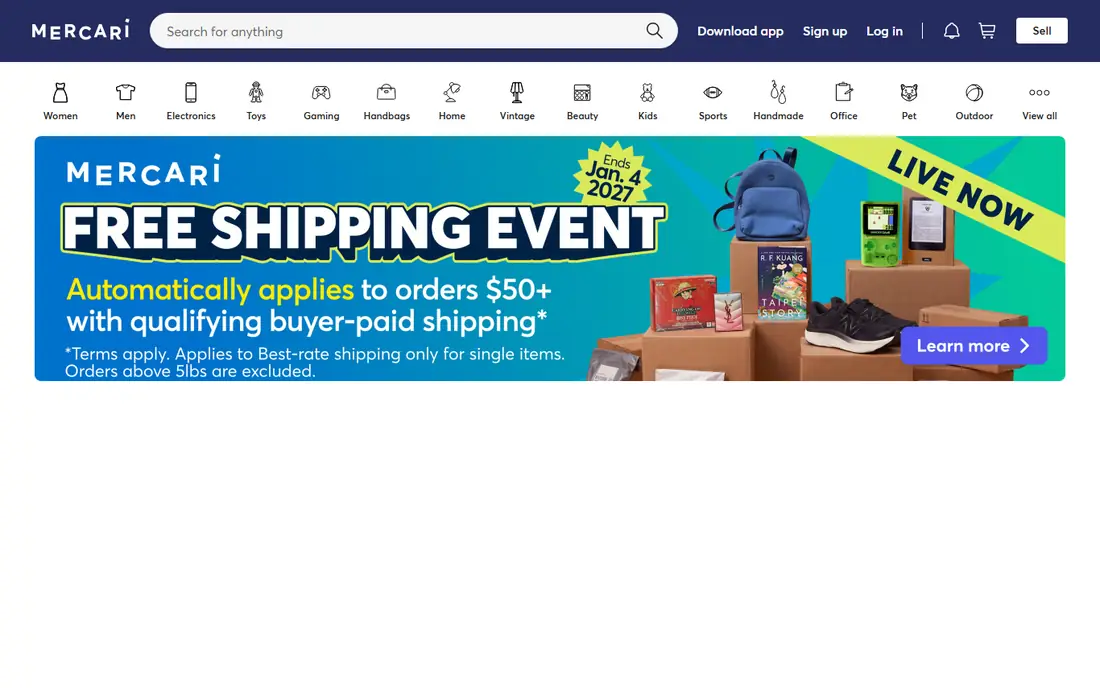
Mercari is built for speed. Listing takes minutes from a phone, with photos, a price, and a description, and the app handles shipping labels for many orders. It suits sellers clearing out household goods, electronics, and clothing without building a storefront or a brand. Buyers browse for bargains, so fairly priced items tend to move quickly.
The main caution is fees, which have changed in recent years, with some models charging sellers and others charging buyers a service fee. Read the current fee page in the app before you price an item, because your net depends on which model applies. For casual sellers, Mercari remains one of the easiest places to start.
- Simple listing flow
- Broad general categories
- Prepaid shipping labels
- Fee structure has changed over time, so check current terms
- Buyer cancellations happen

Poshmark turns selling into a social activity, with follows, shares, likes, and live selling shows that help fashion listings get seen. That community is its strength for clothing, shoes, and accessories, especially for sellers who enjoy engaging with buyers and sharing closets regularly. Prepaid shipping labels simplify fulfilment, with the buyer usually paying for shipping.
The fee is steep: 20 percent on sales of 15 dollars or more, or a flat 2.95 dollars under 15 dollars. That makes Poshmark best for fashion items with enough margin to absorb the fee, not for low-value general goods. If you sell clothing often, the audience can justify the cost.
- Fashion-focused buyers
- Social sharing and live shows
- Prepaid labels for most orders
- 20 percent fee on sales of 15 dollars or more
- Fashion-only focus limits other categories
Facebook Marketplace is the practical choice for anything you do not want to ship. Furniture, appliances, and large household items sell locally with no platform fee for pickup, and the huge Facebook audience means local buyers are easy to reach. You can also ship some items, with a fee on shipped orders, which widens your reach beyond your city.
Local selling has its own friction, including no-shows, low offers, and messages that go nowhere. Meet in a safe public place, price with haggling in mind, and keep communication inside the platform. For bulky goods, those hassles are usually worth avoiding shipping costs and damage risk.
- Huge local audience
- No fee for local pickup
- Good for furniture and bulky goods
- No-shows and haggling are common
- Shipped orders carry a fee and more rules
Depop is where vintage, Y2K, and streetwear sellers find buyers who care about style and story, not just price. Listings look like social posts, with photos and a feed that rewards a distinct aesthetic, and its audience skews younger than eBay or Facebook. For a seller with curated vintage stock, Depop can move items that would sit unnoticed on a general marketplace.
In the United States, Depop charges no selling fee, but a payment processing fee still applies, so check the current rate before you price. Outside fashion, Depop is not a fit, and sellers of electronics or household goods should pick a general platform instead.
- Young, trend-driven fashion audience
- Visual, social listings
- No selling fee in the US
- Payment processing fee applies
- Audience is narrow outside fashion
Vinted appeals to sellers who are tired of high commission rates. Sellers pay no selling fee, and buyers pay a buyer protection fee, which means you keep the full sale price you set, minus any payment costs that apply. That model suits everyday clothing sellers who move volume and want a simple, low-cost outlet.
The trade-off is audience and category range. Vinted is fashion-first, and its buyer pool is stronger in some countries and categories than others. For everyday clothing, it is a strong second marketplace alongside Poshmark or Depop, especially if you price for quick sales.
- No seller fees
- Buyers pay a protection fee
- Simple fashion listings
- Fashion-focused
- Buyer pool varies by country and category
OfferUp combines local classifieds with shipped sales, so you can list a sofa for pickup and a phone for shipping in the same account. Its US audience is large, and the app makes messaging, offers, and meetups straightforward. For casual sellers who want one app for both local and shipped goods, OfferUp is a practical middle ground.
Shipped sales carry a fee, commonly reported around 12.9 percent, so check the current rate before you list a shipped item. Local sales avoid that fee but bring the usual classifieds hassles. OfferUp works best as a complement to a niche marketplace, not as a replacement for it.
- Local and shipped sales in one app
- Large US audience
- Simple messaging
- Shipped orders carry a fee
- Local sales still involve no-shows
Craigslist remains useful precisely because it is simple and mostly free. You post a local ad, buyers contact you, and you arrange pickup and payment directly, with no commission on most categories. For furniture, vehicles, rentals, and local services, that direct model still works, especially in large cities.
There is no buyer protection and no payment handling, so you must manage safety yourself. Meet in public, accept cash or a secure payment method, and be wary of overpayment scams and shipping requests. Craigslist is best for local, in-person sales where you control the transaction.
- Free for most listings
- Local reach
- No platform commission on most sales
- No buyer protection
- More scams and spam to filter
- Dated interface
Whatnot is a live shopping app where sellers run video shows and auctions for collectibles, trading cards, sneakers, fashion, and more. The live format creates urgency and community, and collectors who follow a seller return for regular shows. For sellers with inventory that benefits from storytelling and real-time bidding, Whatnot can outperform a static listing.
Fees include a commission, commonly 8 percent at the standard tier, plus payment processing, so factor that into starting prices. Live selling also takes preparation, camera presence, and time, which is not for every seller. If you enjoy presenting and you sell collectibles, Whatnot is worth testing with a small show first.
- Live video selling for collectibles
- Engaged collector audience
- Auction energy
- Commission plus payment fees
- Live selling takes time and presentation skill
How we picked these
We compared official fee pages, seller help pages, and marketplace comparisons from 2026, focusing on the same seller questions: what does it cost to sell, who buys here, how does shipping work, and what protection exists. We favored marketplaces that are active in the United States, that state fees clearly, and that cover different seller needs, from handmade to local to live collectibles. We did not invent fee rates, and we note where fee models have changed recently.
How to choose the right marketplace
Start with your inventory, not with the lowest fee. List fashion on a fashion marketplace, handmade on Etsy, and bulky goods locally, even if the fee is higher, because the right buyers pay more and buy faster. For general goods, list on two platforms, but manage inventory carefully so you do not sell the same item twice, and remove a listing as soon as it sells elsewhere.
Pricing, photos, and safety
Price by checking sold listings for the same item in the same condition, then subtract fees and shipping to find your net. Take clear photos in natural light, show flaws honestly, and write condition notes that a buyer can trust. For local sales, meet in a public place during daylight, and for shipped sales, use tracked shipping and keep proof of postage until the buyer confirms delivery.
Sources
- https://www.etsy.com
- https://www.mercari.com
- https://www.poshmark.com
- https://www.facebook.com/marketplace
- https://www.depop.com
- https://www.vinted.com
- https://www.offerup.com
- https://www.craigslist.org
- https://www.whatnot.com
- https://www.underpriced.app/blog/where-to-sell-online-2026-comparison
- https://tms-outsource.com/blog/posts/apps-like-mercari/
Frequently asked questions
What is the best eBay alternative for sellers?
It depends on what you sell. Etsy is best for handmade and vintage, Poshmark and Depop for fashion, Facebook Marketplace for local and bulky goods, and Mercari for quick general resale. Many sellers use two marketplaces to cover both reach and niche buyers.
Which eBay alternative has the lowest seller fees?
Facebook Marketplace and Craigslist charge no fee for most local sales, and Vinted charges no seller fee, with buyers paying a protection fee. For shipped sales, fees vary, so check each platform's current fee page and work out your net after fees and shipping.
Can I sell on multiple marketplaces at once?
Yes, and many sellers do, but you must manage inventory to avoid selling the same item twice. List on two platforms, remove the listing from the other as soon as it sells, and keep track of which platform each sale came from for fees and taxes.
Is Facebook Marketplace safe for sellers?
It can be, with care. Meet in a safe public place, keep messages inside the platform, and avoid overpayment scams or requests to ship before payment clears. For shipped orders, use the platform's checkout and tracked shipping where available.
Do I need to pay taxes on marketplace sales?
In the United States, marketplaces may issue a tax form if your sales cross a reporting threshold, and tax rules vary by state and by whether you sell as a business. Keep records of sales, fees, and shipping costs, and check current IRS and state guidance or ask a tax professional for your situation.
What sells best on eBay alternatives?
Fashion, vintage, collectibles, handmade goods, and local furniture tend to do well on the platforms here, because each has a buyer base looking for those categories. Electronics and general household goods sell well on Mercari and OfferUp, while sneakers and cards do well on Whatnot and similar niche apps.