Best Identity Guard Alternatives in 2026: 8 Services Compared
By ToolNimba Editorial Team October 31, 2026 11 min read

- Top pick
 Aura
All-in-one protection
Starting price$12 per monthCheck out AuraRead our review - Runner-up
 Norton LifeLock
Security bundle
Starting price$10 per monthCheck out Norton LifeLockRead our review - Also great
 IDShield
Restoration and legal help
Starting price$14.95 per monthCheck out IDShieldRead our review
How we researched this
We compared official pricing and feature pages, app store listings, privacy policies and public user reviews. Prices change, so check the provider's site before you pay.
Key takeaways
- Aura is the most complete all-in-one alternative, with three-bureau monitoring on every plan from $12 per month billed annually and a 14-day trial.
- Norton LifeLock suits users who also want Norton security software, with plans from about $10 per month and insurance up to $3 million on higher tiers.
- Experian IdentityWorks is the only option here with a genuinely free tier, though it only watches your Experian file until you pay for Premium.
- IDShield stands out for restoration help and legal support, while IdentityIQ suits users who mainly want credit monitoring and scores.
- No service can prevent all identity theft, so check renewal prices, insurance limits, and what restoration actually includes before you pay.
Quick comparison
| Name | Best for | Starting price | Free plan | |
|---|---|---|---|---|
| Aura | All-in-one protection | $12 per month | Free trial | Visit |
| Norton LifeLock | Security bundle | $10 per month | Free trial | Visit |
| IDShield | Restoration and legal help | $14.95 per month | No | Visit |
 Experian IdentityWorks | Free bureau monitoring | Free | Yes | Visit |
 IdentityIQ | Credit monitoring | $6.99 per month | No | Visit |
 IdentityForce | Deep monitoring | $14.99 per month | No | Visit |
 Allstate Identity Protection | Family and funds cover | $9.99 per month | No | Visit |
 NordProtect | Budget protection | $3.99 per month | No | Visit |
The best identity protection services
Identity Guard alternatives differ in how many credit bureaus they watch, whether they include a VPN or antivirus, how much insurance they offer, and who helps you restore your identity after fraud. The services below are all currently sold in the United States and cover a distinct need, from budget monitoring to family plans.
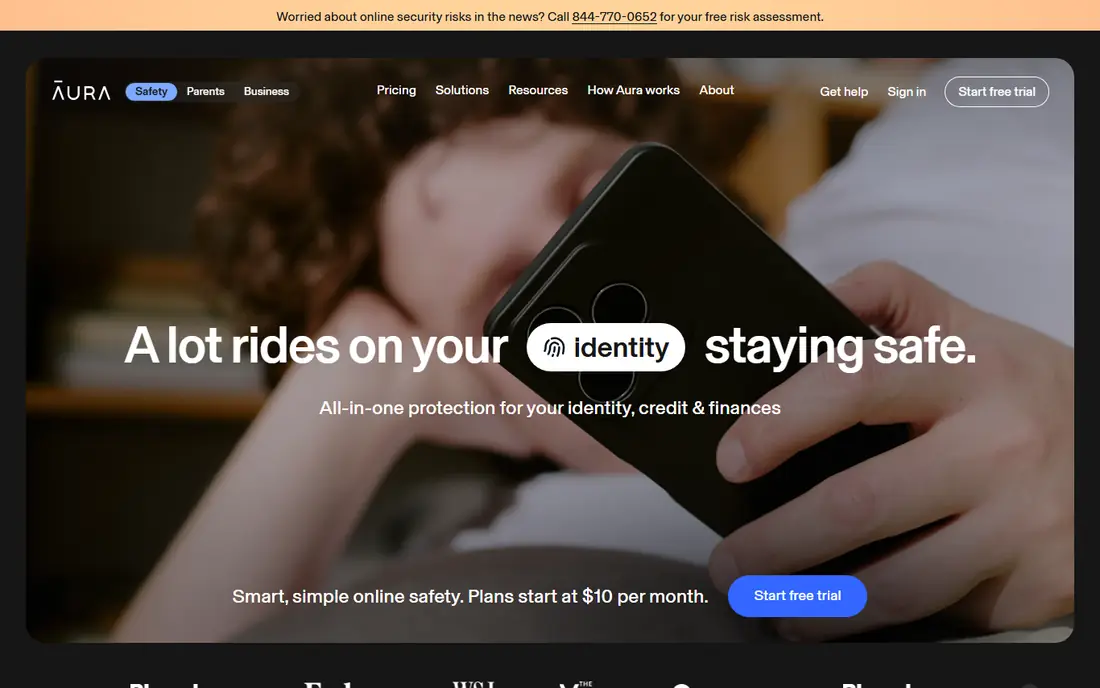
Aura is the closest like-for-like replacement for Identity Guard, because every plan includes three-bureau credit monitoring, dark web monitoring, and device protection tools. That matters, because many rivals only offer three-bureau monitoring on premium tiers, which means a cheaper plan can miss activity at one or two bureaus. Aura also monitors home title records on higher plans, criminal records, and change-of-address filings, which covers fraud types that credit monitoring alone can miss.
The honest catch is tiering within an otherwise simple lineup. Home title monitoring and some advanced features require a higher plan, and the family plan costs more than the individual plan by a wide margin. Use the 14-day trial to test alerts, the app, and support response, and check the renewal price before the trial ends, because first-year pricing is often lower than renewal pricing.
- Three-bureau monitoring on all plans
- VPN, antivirus, and password manager included
- $1 million insurance per adult
- Cheapest plan lacks some advanced features
- Family pricing rises sharply for larger households
Norton LifeLock appeals to users who want identity protection and device security from one subscription. Lower tiers cover dark web monitoring, one-bureau credit monitoring, and identity restoration, while higher tiers add three-bureau monitoring, credit lock features, and larger insurance limits. The Norton bundle also includes antivirus, a VPN, and a password manager on many plans, which can replace separate security subscriptions.
The trade-off is clarity. LifeLock Standard starts at about $10 per month on first-year annual billing, but renewal pricing is higher, and you need a higher tier for full three-bureau cover. If you only want identity monitoring and already have antivirus, Aura or IDShield may give you more monitoring per dollar. If you want one bundle for devices and identity, LifeLock is easier to manage.
- Norton antivirus and VPN bundled
- Insurance up to $3 million on top tier
- Long track record
- Three-bureau monitoring only on higher tiers
- Renewal prices rise after the first year
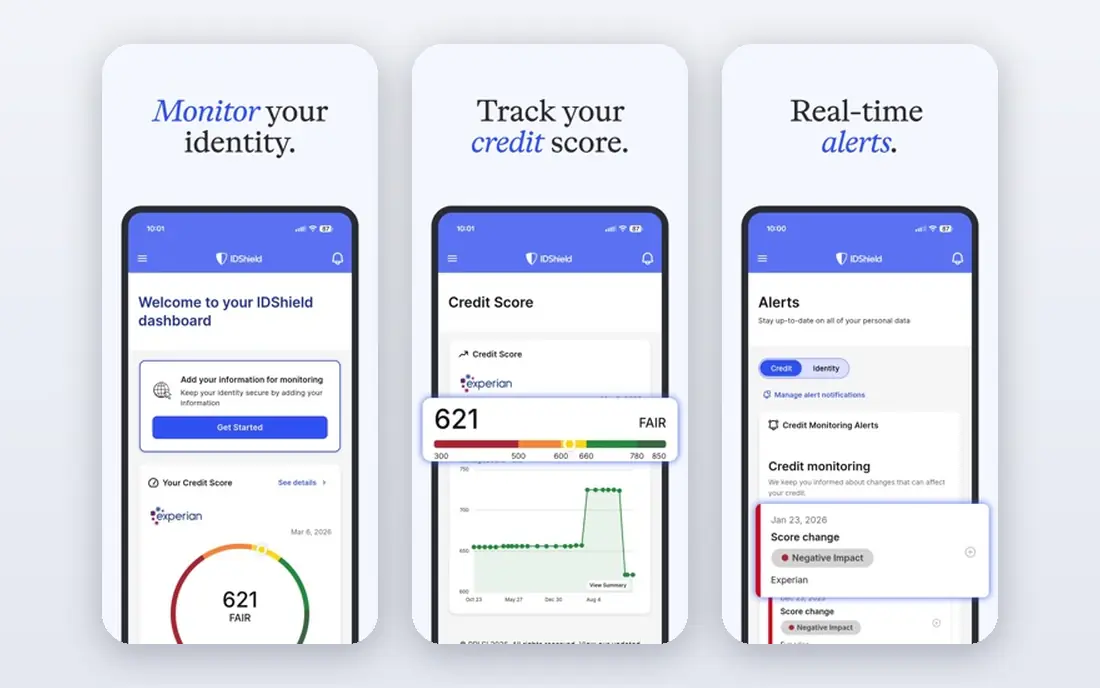
IDShield stands out for what happens after fraud, not just for alerts. Its plans include identity restoration with licensed private investigators, plus legal consultation for identity-related issues, which can save time when you need to dispute accounts, contact creditors, and file reports. The one-bureau individual plan starts at $14.95 per month, while the three-bureau plan costs $19.95 per month, so check which bureau cover you actually need before choosing.
IDShield costs more than budget options such as IdentityIQ or NordProtect, and it does not bundle a full antivirus suite in the same way as LifeLock or Aura. It fits users who worry most about the cleanup after identity theft, or who want legal help on call. Read the insurance terms carefully, because the headline limit is not the same as cash reimbursement for every type of loss.
- Licensed investigators for restoration
- Legal consultation included
- Three-bureau plan available
- Higher starting price
- One-bureau plan is the cheaper entry point
Experian IdentityWorks is the best starting point if you want to pay nothing at first. The free tier monitors your Experian credit file, sends alerts for new accounts and inquiries at that bureau, and includes a FICO score. Because Experian is one of the three major bureaus, that is useful cover, and it comes direct from the bureau that holds the file, which can make alerts clearer.
The limit is obvious: free cover misses Equifax and TransUnion. Premium at $24.99 per month adds three-bureau monitoring, dark web monitoring, and up to $1 million in identity theft insurance, plus a family plan for two adults and up to 10 children. That price is higher than Aura for similar monitoring, so Experian makes most sense as a free supplement, or for users who already trust Experian and want bureau-direct tools.
- Genuinely free tier
- Direct Experian monitoring
- FICO score included on free plan
- Free plan only watches Experian
- Premium is pricey at $24.99 per month
IdentityIQ suits users who mainly want credit monitoring, scores, and reports without paying for a full security bundle. Its entry plan starts at $6.99 per month, and higher plans add three-bureau monitoring, credit scores from all three bureaus, and up to $1 million in identity theft insurance. That focus keeps the price lower than all-in-one services, while still covering the most common identity theft signal: a new account or inquiry on your credit file.
The catch is breadth. IdentityIQ does not include a VPN, antivirus, or password manager as standard, and some monitoring features sit on higher tiers. If you want dark web monitoring for emails, phone numbers, and passwords, check which plan includes it before you subscribe. It is a good credit-first choice, but not a full replacement for Aura if you want device tools included.
- Low starting price
- Three-bureau options
- Credit scores and reports included on higher plans
- No VPN or antivirus bundle
- Some features need the Secure Max plan
IdentityForce, owned by TransUnion, focuses on deep monitoring across credit, dark web, public records, and court records. Its UltraSecure plan starts at $14.99 per month, while UltraSecure plus Credit adds credit monitoring and scores for $19.90 per month in many listings. That depth suits users who want alerts beyond credit files, such as address changes, criminal record misuse, and payday loan applications in their name.
IdentityForce costs more than budget services, and its interface is more functional than polished compared with Aura. It fits users who value monitoring accuracy and restoration help over bundled antivirus or a sleek app. Check whether your plan includes three-bureau credit monitoring, because the base plan alone may not cover all three bureaus.
- Broad monitoring including court and public records
- $1 million insurance
- Strong restoration support
- Higher price
- UltraSecure plus Credit plan costs more for full credit cover
Allstate Identity Protection
Best for: Family and funds cover
Allstate Identity Protection is a solid family option, with individual plans from $9.99 per month and a Premier plan that adds three-bureau monitoring, social media monitoring, and up to $2 million in stolen funds reimbursement in some listings. That funds cover is higher than many rivals, and it matters if your main worry is money taken from accounts rather than only credit accounts opened in your name.
The trade-off is tiering again. Basic monitoring is useful, but full three-bureau cover and the highest funds limits need Premier, which costs more. Allstate also offers identity restoration and fraud resolution support, which helps when you need to work through a case. Compare Premier with Aura and LifeLock on total household cost, because family pricing can change the ranking quickly.
- Up to $2 million in funds cover on Premier
- Family plans
- Broad monitoring
- Three-bureau monitoring only on Premier
- Pricing varies by plan and household
NordProtect, from Nord Security, is the budget pick here, with plans from $3.99 per month in recent listings. It offers dark web monitoring, identity theft insurance up to $1 million on higher tiers, and credit lock and freeze help in the app. Higher tiers add NordVPN, antivirus, and data broker removal tools, which makes it a useful bundle for users who already use Nord products.
The limit is bureau cover. One-bureau monitoring below the top tier means you can miss activity at other bureaus, and availability is US only, with New York excluded in some listings. NordProtect suits budget users who want basic monitoring plus Nord tools, but Aura remains the better choice if three-bureau monitoring on every plan is your priority.
- Low starting price
- Identity theft insurance
- NordVPN and antivirus on higher tiers
- One-bureau monitoring below top tier
- US only and excludes New York in some listings
How we picked these
We compared official pricing pages, plan details, and privacy policies for each service, plus public reviews that list bureau cover, insurance limits, and renewal pricing. We kept only services that are currently available in the United States, offer identity monitoring and restoration, and provide a distinct price or feature reason to choose them over Identity Guard. Where first-year and renewal prices differ, we noted that difference rather than quoting only the lowest figure.
How to choose an identity protection service
Start with bureau cover, because that decides what you will actually see. Three-bureau monitoring is the safest baseline if you can afford it, while one-bureau monitoring is better than nothing but leaves gaps. Next, check dark web monitoring for your email addresses, phone numbers, and passwords, and check whether the service monitors home title, criminal records, and address changes if those risks worry you.
Check insurance and restoration in detail
Insurance headlines can mislead, because limits, deductibles, and covered losses vary. Ask what the policy pays for: stolen funds, legal fees, lost wages, and restoration costs are often treated differently. Also check who does the restoration work. A dedicated case manager or licensed investigator is more useful than a DIY checklist when you are dealing with multiple creditors.
Watch renewal prices and cancellation
Many services discount the first year, then renew at a higher rate. Note the renewal price at signup, set a calendar reminder before renewal, and test cancellation before you need it. A service that is hard to cancel is not a good protection choice, however good its alerts are.