Leadpages Alternatives in 2026: 9 Tools Compared
By ToolNimba Editorial Team October 31, 2026 9 min read

- Top pick
 Unbounce
Conversion testing and design freedom
Starting price$29 per monthCheck out UnbounceRead our review - Runner-up
 Instapage
Large ad teams and collaboration
Starting price$99 per monthCheck out InstapageRead our review - Also great
 ClickFunnels
Full sales funnels
Starting price$97 per monthCheck out ClickFunnelsRead our review
How we researched this
We compared official pricing and feature pages, app store listings, privacy policies and public user reviews. Prices change, so check the provider's site before you pay.
Key takeaways
- Unbounce suits teams that test landing pages often, though A/B testing sits on higher tiers.
- Instapage fits larger ad teams that need collaboration and ad-to-page matching, at a higher price.
- ClickFunnels is the better pick when you need full sales funnels, not just single landing pages.
- Systeme.io, Carrd, and HubSpot offer the cheapest routes to a working landing page.
- Traffic caps, contact limits, and testing tiers change the real cost, so check them before you switch.
Quick comparison
| Name | Best for | Starting price | Free plan | |
|---|---|---|---|---|
| Unbounce | Conversion testing and design freedom | $29 per month | Free trial | Visit |
| Instapage | Large ad teams and collaboration | $99 per month | Free trial | Visit |
| ClickFunnels | Full sales funnels | $97 per month | Free trial | Visit |
 Landingi | Many campaign pages on a budget | $24 per month | Free trial | Visit |
 Swipe Pages | Marketers running paid ads | $29 per month | Free trial | Visit |
 GetResponse | Email-first businesses | $19 per month | Free trial | Visit |
 Systeme.io | Solo creators on a tight budget | Free | Yes | Visit |
 Carrd | One simple page | $19 per year | Free trial | Visit |
 HubSpot | Teams already using HubSpot CRM | Free | Yes | Visit |
The best Leadpages alternatives
Leadpages built its name on quick landing pages with templates and lead capture. The alternatives below split into three groups: dedicated landing page builders, full funnel platforms, and email or website tools that include landing pages. Your choice should follow how you get traffic and whether you need testing, funnels, or email in the same account.
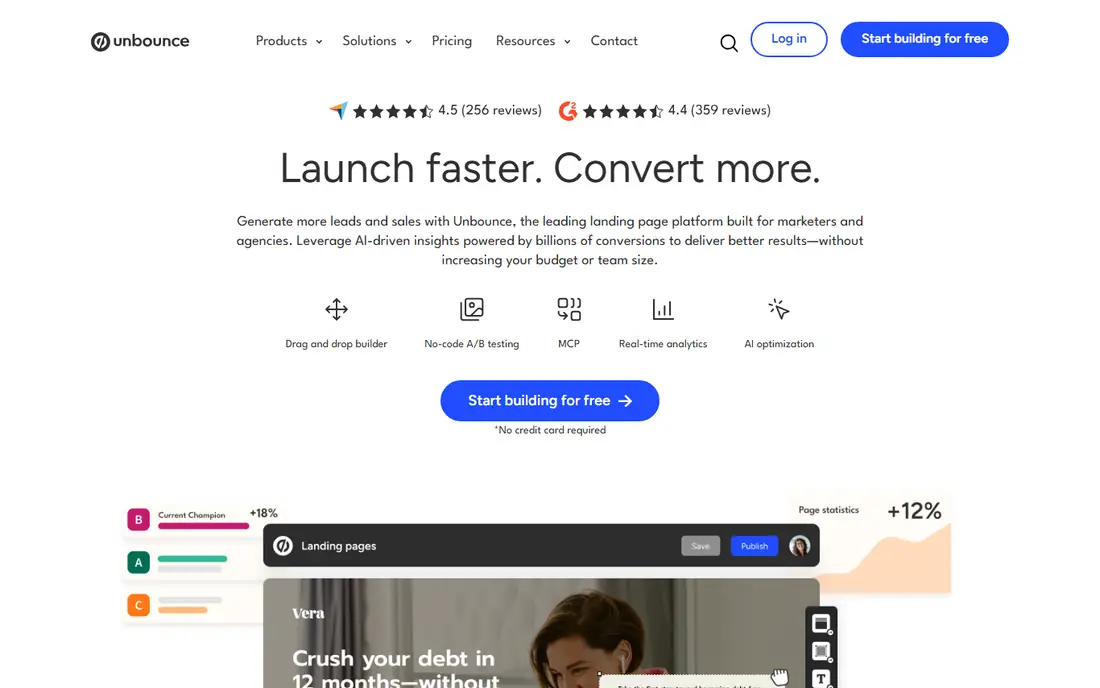
Unbounce is our pick for teams that treat landing pages as a testing program. Its editor gives designers more freedom than template-locked builders, and its Smart Traffic tool can route visitors to the variant most likely to convert. That matters for paid traffic, where small gains pay for the tool. The catch is tiering: the entry plan limits pages and visitors, and full A/B testing sits above it. If you run regular tests and have the traffic to learn from them, Unbounce earns its price. If you need one page and no tests, a cheaper builder fits better.
- Free-form editor for custom page design
- Smart traffic and AI copy tools
- Strong testing features on higher tiers
- Entry plan caps pages and visitors
- A/B testing requires a higher tier
- Monthly cost rises with traffic
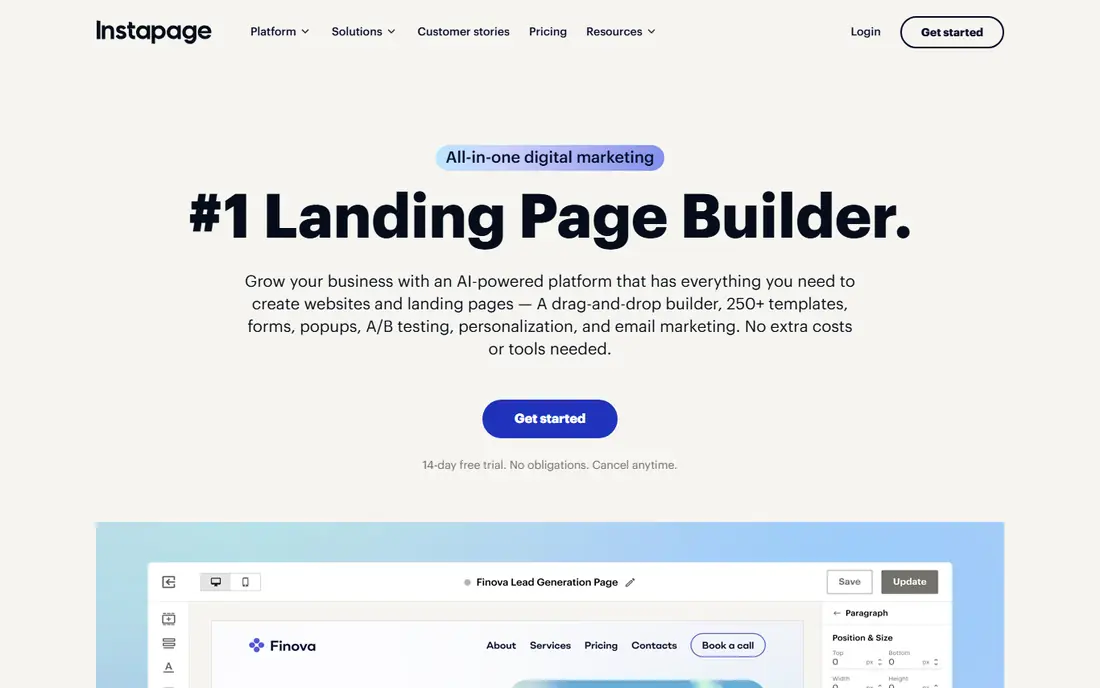
Instapage fits ad teams that run many campaigns and need pages matched to each ad. Its AdMap feature links ads to relevant pages, and its collaboration tools let teams review and approve pages without messy exports. That workflow suits agencies and larger marketing teams. The price is the barrier: entry starts near $99 a month, and optimization features sit higher still. For a solo marketer with one campaign, it is more than needed. For a team spending serious money on ads, the time saved on page matching can justify it.
- Ad-to-page matching and personalization
- Collaboration tools for teams and agencies
- Strong analytics for paid campaigns
- High entry price
- A/B testing and optimization need higher tiers
- Visitor caps apply
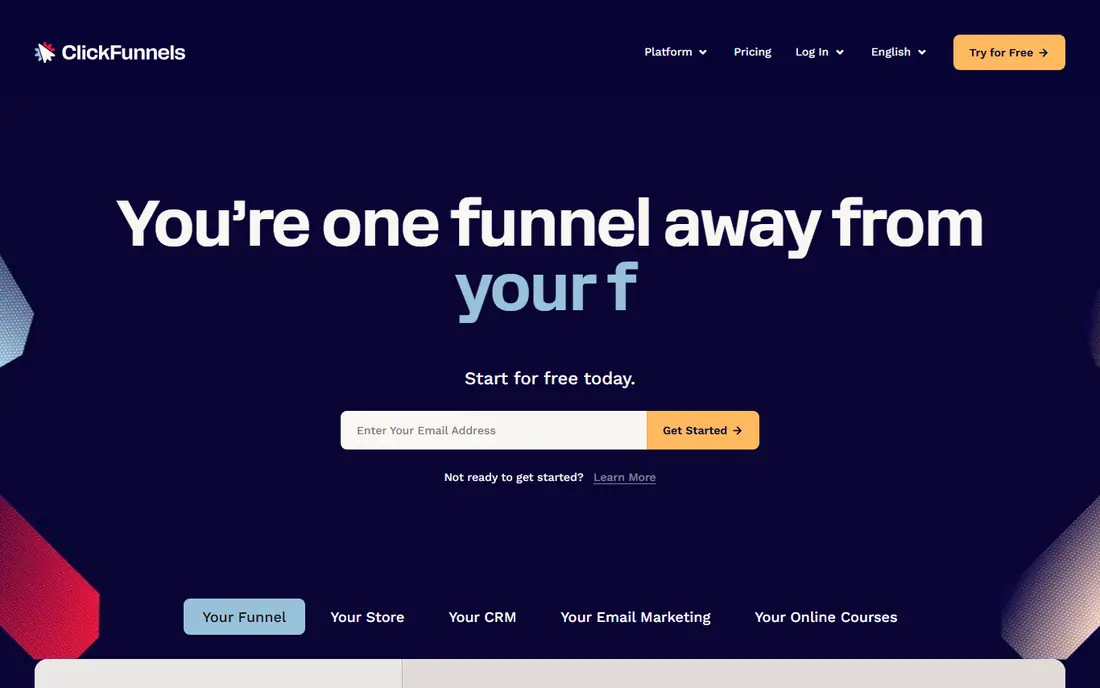
ClickFunnels is not a like-for-like Leadpages swap, since it builds whole funnels rather than single pages. It covers landing pages, order forms, upsells, membership areas, and email follow-up in one system, which suits coaches and course sellers. Testing is included earlier than on several rivals, which helps teams that optimize funnels as a whole. The price and breadth are the trade-offs: a business that only needs a lead capture page will pay for funnel features it never uses. If your sales process is a multi-step funnel, ClickFunnels is the more complete tool.
- Complete funnels with checkout and upsells
- Large template library for courses and coaching
- A/B testing included on entry plans
- Higher price than simple page builders
- Interface can feel dated
- Overkill for a single landing page
Landingi suits marketers who publish many campaign pages and want to keep the bill down. Its annual price undercuts Unbounce and Instapage, and its templates cover common lead generation and event pages. Publishing and connecting forms is straightforward, which helps small teams move fast. The limits matter for testing: A/B testing sits on a higher tier, so teams that test constantly should budget for that upgrade. If volume matters more than advanced testing, Landingi offers good value.
- Low annual price for many pages
- Template library for common campaigns
- Easy publishing and integrations
- A/B testing requires a higher tier
- Trial is capped on visits
- Advanced features need upper plans
Swipe Pages focuses on speed for paid traffic. Its pages load quickly, which helps mobile conversion, and its plans suit marketers and agencies running ads at scale. The builder is simpler than Unbounce, which can be a benefit for teams that want to launch fast rather than design freely. The trade-offs are a smaller ecosystem and testing gated behind higher tiers. If page speed and paid traffic performance are your main concerns, Swipe Pages is worth a trial alongside Unbounce.
- Fast pages built for paid traffic
- AMP support for mobile speed
- Agency features for managing client pages
- Smaller template library than larger rivals
- A/B testing needs a higher tier
- Less known than Unbounce or Instapage
GetResponse makes sense when email is the main channel and landing pages support it. You can build pages, capture leads, and run email automation without connecting separate tools, which keeps a small team organized. The page builder is capable but less flexible than Unbounce or Instapage, and pricing grows as your list grows. If landing pages are your core product, choose a dedicated builder. If email drives your business and pages are a supporting tool, GetResponse keeps the stack simple and affordable.
- Landing pages plus email marketing in one account
- Automation and list tools included
- Low entry price at 1,000 contacts
- Page builder is less flexible than dedicated tools
- Price rises with contact count
- A/B testing needs a higher plan
Systeme.io is the budget all-in-one for solo creators. Its free plan lets you build pages, collect leads, and send emails, while paid plans add funnels and courses at a price well below ClickFunnels. That breadth is ideal for a creator testing an offer without a large monthly commitment. The design tools are simpler, and advanced testing is limited, so established teams may find it basic. If you are starting out and need a working funnel for little money, Systeme.io is hard to beat on value.
- Free plan for getting started
- Funnels, email, and courses in one account
- Low paid entry price
- Design options are simpler than premium builders
- No native A/B testing on basic plans
- Smaller integration library
Carrd sets the cost floor for a landing page. For $19 a year, you can publish a clean, mobile-friendly page with a form and links, which is enough for a waitlist, a simple offer, or a personal project. Setup takes minutes, not days. The limits are clear: it is not a funnel builder, it does not offer A/B testing, and it suits one focused page rather than a campaign library. If you need one page done well for almost no money, Carrd is the answer. If you need testing and many pages, pay for a dedicated builder.
- Very low annual price
- Fast setup for a single page
- Clean, mobile-friendly designs
- No A/B testing
- One page per site on basic plans
- Not built for funnels or large campaigns
HubSpot fits teams that already run their contacts, deals, and email in HubSpot. Landing pages feed leads straight into the CRM, with reporting that follows them through the pipeline, and free tools let you start without a new subscription. The page builder is solid but less design-free than Unbounce, and serious marketing features require paid hub tiers that cost far more than a standalone builder. If HubSpot is already your system of record, using its pages keeps data clean. If you only need pages, a cheaper dedicated tool is better.
- Landing pages tied directly to HubSpot CRM
- Free tools for getting started
- Strong reporting as you scale into paid hubs
- Advanced features need paid Marketing Hub tiers
- Builder is less flexible than Unbounce
- Costs rise as you add seats and hubs
How we picked these
We compared official pricing pages, feature pages, and public reviews, and we kept only tools a Leadpages customer could realistically move to, including dedicated builders, funnel platforms, and email tools with landing pages. We favored tools with published prices, trials, or free plans, and we noted where testing, traffic caps, and contact limits change the cost. Prices change often, so check the vendor page before you switch.
How to switch without losing leads
Start by listing what Leadpages does for you today: pages, forms, integrations, domains, and tests. Rebuild the highest-traffic pages first, and keep Leadpages running until the new pages are tested with real traffic. Export your lead lists and check that forms connect to your email tool or CRM before you redirect domains. Test mobile layouts, form submissions, and tracking on the new platform, since a broken form costs more than a month of subscription savings.
Watch the limits that cause surprise bills. Unbounce, Instapage, and Landingi meter visits, GetResponse prices by contacts, and ClickFunnels and HubSpot grow with features and seats. A tool that looks cheaper on entry can cost more at your real traffic or list size. Compare at your actual numbers, not the headline plan, and keep a note of when A/B testing becomes available, since that feature alone can move you to a higher tier.