Best Redbubble Alternatives in 2026: 9 Platforms Compared
By ToolNimba Editorial Team November 7, 2026 9 min read

- Top pick
 TeePublic
Apparel and pop culture designs
Starting priceFreeCheck out TeePublicRead our review - Runner-up
 Society6
Wall art and home decor
Starting priceFreeCheck out Society6Read our review - Also great
 Zazzle
Personalized gifts and paper goods
Starting priceFreeCheck out ZazzleRead our review
How we researched this
We compared official pricing and feature pages, app store listings, privacy policies and public user reviews. Prices change, so check the provider's site before you pay.
Key takeaways
- TeePublic is the closest marketplace alternative to Redbubble for apparel and pop culture designs.
- Society6 is best for wall art and home decor, while Zazzle is best for personalized gifts and paper goods.
- Printful and Printify are best when you want your own store, your own prices and higher margins.
- Threadless and Spreadshirt sit in the middle, with a free shop plus optional marketplace reach.
- Marketplace traffic is convenient, but it means lower margins and no customer list, so many artists run both a marketplace and their own store.
Quick comparison
| Name | Best for | Starting price | Free plan | |
|---|---|---|---|---|
| TeePublic | Apparel and pop culture designs | Free | Yes | Visit |
| Society6 | Wall art and home decor | Free | Yes | Visit |
| Zazzle | Personalized gifts and paper goods | Free | Yes | Visit |
 Threadless | Indie artists with a free shop | Free | Yes | Visit |
 Spreadshirt | Marketplace plus shop in Europe and the US | Free | Yes | Visit |
 Printful | Quality-focused own-store printing | Free | Yes | Visit |
 Printify | Price-focused own-store printing | Free | Yes | Visit |
 Fourthwall | Creators building a branded store | Free | Yes | Visit |
 Fine Art America | Photographers and fine artists | Free | Yes | Visit |
The best Redbubble alternatives
Redbubble works because it brings buyers, handles printing and shipping, and pays a royalty. The alternatives below split into two camps: marketplaces that bring traffic but pay lower royalties, and print-on-demand fulfillment services that let you run your own store with higher margins but no built-in buyers. We compared official pricing, royalty models and product ranges, and we noted where a platform charges a monthly fee. Note that one former option, Spring, closed in September 2026, so it is not listed here.
TeePublic is the closest direct alternative to Redbubble. You upload art, TeePublic prints and ships apparel, stickers, mugs and more, and you earn a royalty per sale. It is especially strong for trending, meme and pop culture designs, and its marketplace brings buyers without you running ads.
The trade is control. Royalties are lower than the margin you keep on your own store, and you do not own the customer relationship. For an artist who wants passive marketplace income with almost no setup, TeePublic is the first place to try after Redbubble.
- Free storefront with built-in traffic
- Strong for trending and fan designs
- Simple upload process
- Lower royalties than own-store printing
- No customer list
- Crowded discovery
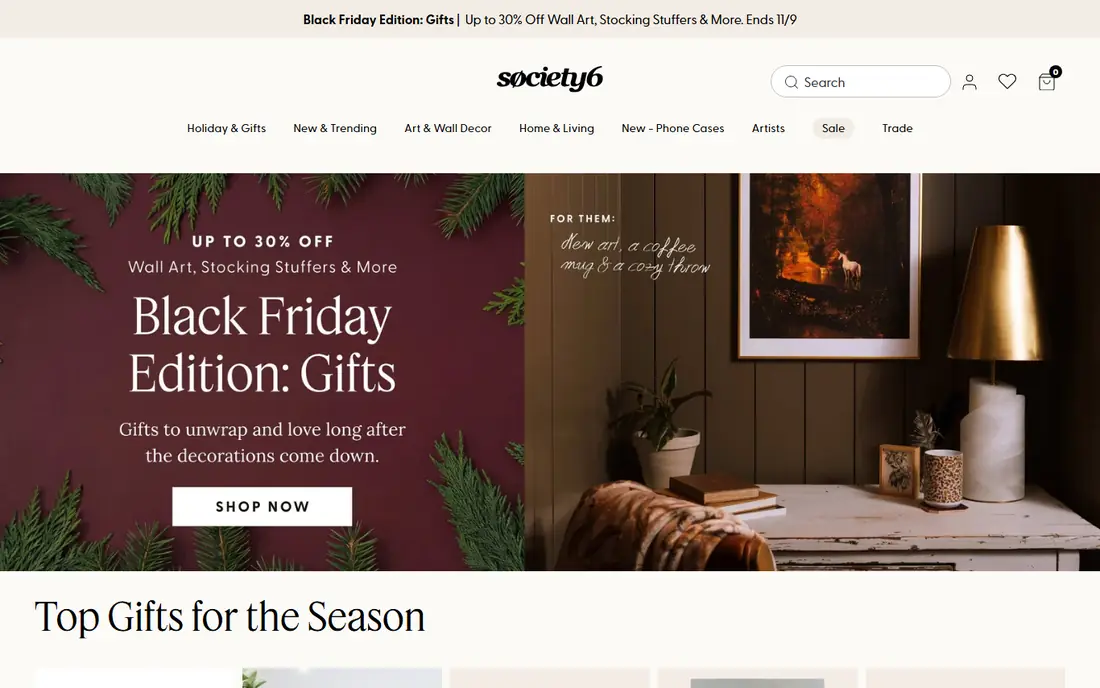
Society6 is a curated marketplace for artists selling wall art, home decor and accessories. Framed prints, tapestries, throw pillows, duvet covers and stationery sit alongside apparel, which makes it a better fit for illustrators and photographers than a t-shirt-only marketplace. Production, shipping and customer service are handled for you.
Earnings depend on product rules, with Society6 setting base prices and artist markups in the 5 to 10 percent range on some items, plus options to set your own markup on others. That means income per sale is modest, and curation can limit what gets listed. For art-led sellers, the audience and product range still make it worthwhile.
- Strong art and decor marketplace
- Wide home product range
- Production handled
- Artist earnings vary by product
- Approval and curation can limit listings
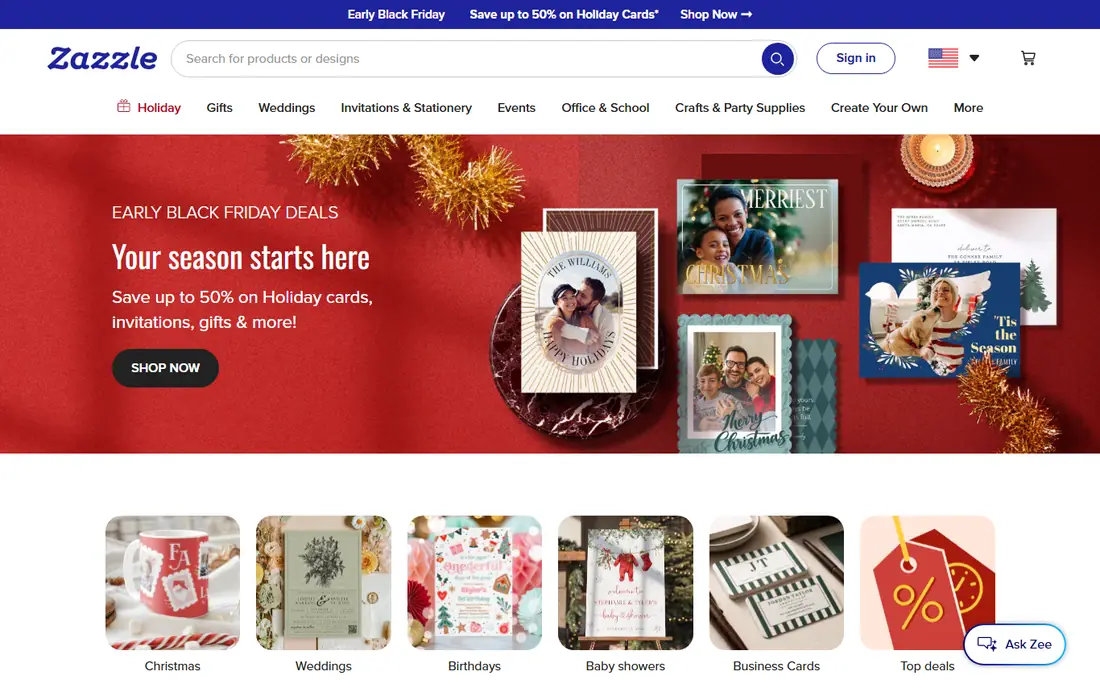
Zazzle is a marketplace with one of the largest product catalogs in print on demand, covering apparel, invitations, paper goods, gifts, home decor and office products. Buyers can personalize many products, which suits wedding, event and gift designs that Redbubble handles less well. Creators set their royalty rate, with a standard rate around 5 percent and room to go higher.
The downside is competition. With so many products and sellers, discovery takes effort, and the site design feels less modern than newer platforms. For designers who sell personalized and giftable products, though, Zazzle reaches buyers that Redbubble and TeePublic do not.
- Very large product catalog
- Deep personalization tools
- Creator-set royalties
- Marketplace is crowded
- Design tools can feel dated
Threadless offers both a marketplace and a free Artist Shop. In your shop you set your own prices and keep the margin above base cost, while the marketplace option can put designs in front of Threadless buyers. Production, shipping and customer service are handled, so you focus on art and promotion.
The catch is that marketplace reach is competitive and not automatic, so a shop without an audience still needs promotion. For indie artists who want a free, branded shop without building a full store, Threadless is a strong middle ground between Redbubble and a Shopify store.
- Free Artist Shop with your own prices
- Optional marketplace reach
- Customer service handled
- Marketplace reach is opt-in and competitive
- Margins lower than own-store printing
Spreadshirt, also known as Spreadshop for its shop product, lets designers sell through both a marketplace and a free shop. It is especially strong in Europe, which helps sellers who want reach beyond the US market. Simple, bold apparel designs tend to do well, and the upload process is straightforward.
Earnings depend on product and sales channel, with royalties commonly in the 10 to 20 percent range in marketplace listings. The design tools are basic compared with newer platforms, and you still need to drive traffic to a shop. For a designer who wants both marketplace and shop options without a monthly fee, Spreadshirt is a solid choice.
- Free shop plus marketplace listings
- Strong in Europe
- Simple bold designs sell well
- Royalties vary by channel
- Design tools are basic
Printful is not a marketplace. It prints and ships products for your own store on Shopify, Etsy, WooCommerce and similar platforms, and you set the retail price and keep the margin. It is known for in-house production, quality control and branding options such as custom labels and packaging, which suit sellers building a real brand.
The trade is traffic. Printful brings no buyers, so you must drive sales yourself, and its base costs are higher than some network-based rivals. A Growth plan at $24.99 per month adds discounts, and it becomes free after a sales threshold in some listings. For quality-focused sellers with an audience, Printful is a top pick.
- In-house production and quality control
- Branding options
- Wide store integrations
- No built-in buyers
- Base costs higher than some rivals
Printify is a print-on-demand network that connects your store to many print providers, with more than 2,000 products in its catalog. That range and provider choice let sellers compare base costs and pick the best price for each product, and a Premium plan at $39 per month adds discounts. You set prices and keep the margin, as with Printful.
The risk is variation. Quality, shipping speed and packaging can differ by provider, so testing samples before launching is essential. Printify also brings no buyers of its own. For price-sensitive sellers who test many products, it is the most flexible fulfillment option here.
- Large product range across many print providers
- Flexible pricing
- Wide integrations
- Quality varies by provider
- No built-in buyers
Fourthwall is a storefront platform for creators and artists building a branded merch business. You get a branded shop, set your own prices and keep the margin, and Fourthwall handles production, shipping and support on catalog orders. Memberships and digital products can sit alongside merch, which suits creators with an existing audience.
The limit is traffic. Fourthwall has no marketplace of buyers, so sales depend on your audience and promotion. The free plan covers the basics, while Pro at $19 per month adds more features. For a creator moving from Redbubble to a real brand, Fourthwall is one of the cleanest steps.
- Branded storefront with merch plus memberships
- You set prices
- Fulfillment handled
- No built-in marketplace traffic
- Pro plan costs $19 per month
Fine Art America, also known as Pixels for its artist sites, is a marketplace and storefront for photographers and fine artists. It offers framed prints, canvas, metal, wood and acrylic prints, plus home decor and apparel, with more control over pricing than a pure marketplace. That makes it a strong Redbubble alternative for art prints at higher price points.
The audience is niche compared with Redbubble or TeePublic, so apparel-led sellers will find less traffic. For photographers and fine artists who want print quality and pricing control, though, it is a better fit than a t-shirt marketplace, and the free account makes it easy to test.
- High-end wall art and print options
- Custom pricing control
- Storefront plus marketplace
- Niche audience
- Art focus limits apparel appeal
How we picked these
We compared official pricing pages, royalty and margin models, product ranges and traffic models, plus public reviews. We kept only platforms that are actively operating in 2026, that handle printing and fulfillment or provide a real storefront, and that offer a genuine alternative to Redbubble for artists and designers. We excluded closed platforms, and we did not claim hands-on testing or sales results.
Marketplace or own store: how to choose
Start with where your buyers already are. If you have no audience, a marketplace such as TeePublic, Society6 or Zazzle gives you a chance of discovery with no upfront cost, at the price of lower royalties and no customer list. If you have an audience on social media, video or email, an own-store route with Printful, Printify or Fourthwall keeps more margin and builds your brand.
Many artists do both. A marketplace listing tests designs and earns passive income, while a branded store sells bestsellers at higher margins to an existing audience. Check royalty rules, base costs, shipping times and return policies before you commit, and order samples of your own products. Print quality and packaging are what turn a one-time buyer into a repeat customer.
Sources
Frequently asked questions
What are the best Redbubble alternatives?
TeePublic is the closest marketplace alternative, Society6 is best for wall art and home decor, and Zazzle is best for personalized gifts. For your own store with higher margins, Printful and Printify are the leading fulfillment options.
Which Redbubble alternative pays artists the most?
Own-store platforms usually pay more per sale, since you set the price and keep the margin above base cost. Marketplaces pay a royalty or a fixed earning per product, which is lower but requires no marketing spend to reach their buyers.
Is Printful or Printify better than Redbubble?
They are different models. Redbubble brings buyers and pays a royalty, while Printful and Printify print for your own store and bring no buyers. Printful is stronger on quality control, Printify is stronger on price range and provider choice.
Can I sell on Redbubble and its alternatives at the same time?
Yes, in most cases you can list the same designs on several non-exclusive platforms. Check each platform terms for exclusivity, especially for licensed or fan art, and avoid listing licensed designs where you do not have rights.
Do I need an audience to sell on these platforms?
No for marketplaces, which bring their own buyers, though discovery is competitive. Yes for own-store platforms such as Printful, Printify and Fourthwall, where you drive traffic yourself through social media, search or email.