Best Stripe Alternatives in 2026: 9 Payment Processors Compared
By ToolNimba Editorial Team October 29, 2026 9 min read

- Top pick
 PayPal
Buyer trust at checkout
Starting price2.99% + $0.49 per transactionCheck out PayPalRead our review - Runner-up
 Square
Selling in person and online
Starting price2.9% + $0.30 per online transactionCheck out SquareRead our review - Also great
 Adyen
Large global businesses
Starting priceSee websiteCheck out AdyenRead our review
How we researched this
We compared official pricing and feature pages, app store listings, privacy policies and public user reviews. Prices change, so check the provider's site before you pay.
Key takeaways
- PayPal and Square are the easiest Stripe alternatives to start with, since both let you accept payments with no monthly fee and a published flat rate.
- Interchange-plus processors such as Helcim and Adyen can cost less at higher volumes, but their final bill depends on the cards your customers use.
- Paddle is the standout choice for software sellers that want global sales tax handled, because it acts as the merchant of record.
- Authorize.net only makes sense if you already have a merchant account or you value a long-established gateway over the lowest headline rate.
Quick comparison
| Name | Best for | Starting price | Free plan | |
|---|---|---|---|---|
| PayPal | Buyer trust at checkout | 2.99% + $0.49 per transaction | No | Visit |
| Square | Selling in person and online | 2.9% + $0.30 per online transaction | Yes | Visit |
| Adyen | Large global businesses | See website | No | Visit |
 Authorize.net | A classic standalone gateway | $25 per month | No | Visit |
 Braintree | PayPal plus cards in one checkout | See website | No | Visit |
 Checkout.com | Global online payments | See website | No | Visit |
 Paddle | Software and SaaS sales tax | 5% + $0.50 per transaction | No | Visit |
 Mollie | European payment methods | See website | No | Visit |
 Helcim | Transparent interchange-plus pricing | No monthly fee | No | Visit |
The best stripe alternatives
Stripe is a strong default, but it is not the cheapest or simplest fit for every business. These nine alternatives cover wallet checkouts, in-person sales, global payments and software tax handling.
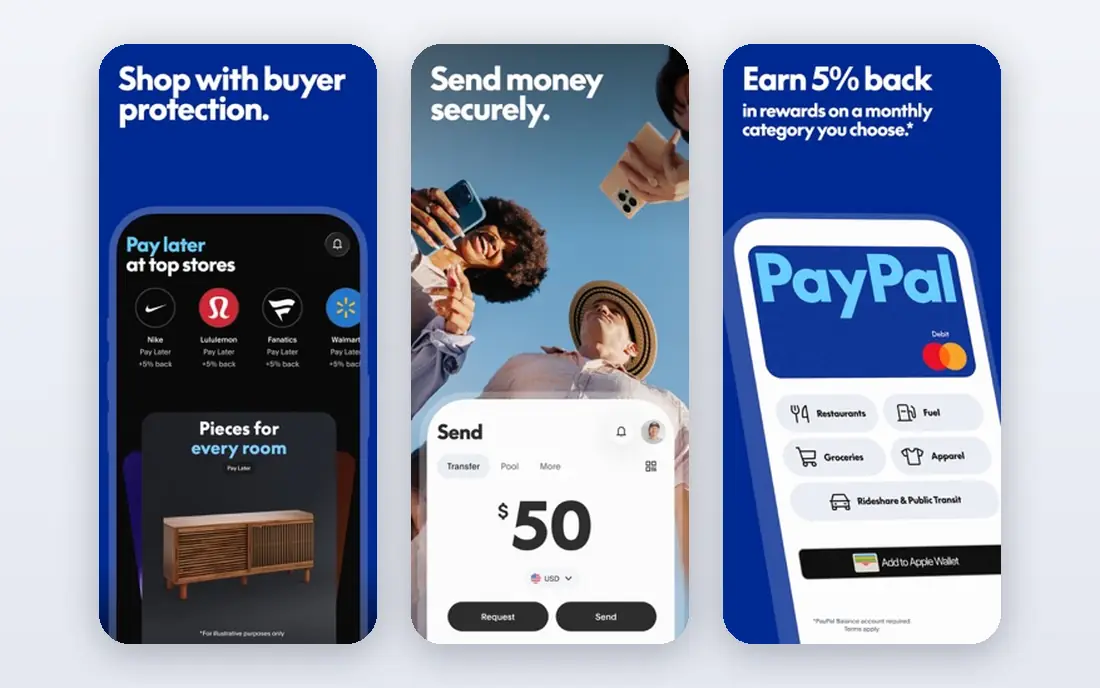
PayPal is the alternative most customers already know, and that familiarity can lift checkout completion. A shopper who already has a PayPal balance or saved cards can pay without typing card details, which removes friction on mobile in particular. The platform also covers invoicing, subscriptions and buy now, pay later options in the same account.
The trade-off is price. At 2.99% plus 49 cents per transaction, PayPal costs more than Stripe on a typical card payment, and the gap grows with volume. Businesses that mainly take cards, rather than PayPal wallet payments, should run their own numbers before switching on trust alone.
- Huge buyer recognition
- Supports PayPal, Venmo and cards
- Quick setup with no monthly fee
- Card fees run higher than Stripe for many sellers
- Account holds can frustrate growing businesses

Square wins for businesses that sell face to face as well as online. Its free point of sale app, card readers and inventory tools give a small shop a complete setup without a developer. Online payments, invoices and a simple storefront sit in the same dashboard, so one provider covers both channels.
For a purely online business, Square is less distinctive. Its online rate matches Stripe, and its checkout tools are simpler but less flexible for custom builds. Choose Square when the counter matters as much as the website, not when you only need an API.
- Free point of sale plan
- Strong in-person hardware
- Next-business-day transfers on many plans
- Online rate is no cheaper than Stripe
- Account reviews can freeze funds for some sellers

Adyen is built for companies that sell across borders and channels. It supports a long list of currencies and local payment methods, and it lets a business manage online, in-store and app payments in one place. That unified view makes reconciliation simpler when a company operates in several countries.
The catch is access. Adyen prices on an interchange-plus basis, roughly interchange plus 0.60% plus about 13 cents per transaction, and it works through a sales process rather than instant self-service signup. Small businesses will find the onboarding heavy, but larger merchants can negotiate terms that beat flat-rate pricing at scale.
- Wide range of local payment methods
- Unified online and in-person platform
- Strong fraud tools
- Pricing is quoted, not published as one flat rate
- Overkill for a small single-country store
Authorize.net is one of the oldest names in online payments, and it still suits merchants that already have a merchant account. As a gateway, it connects a website to the processor a business already uses, rather than replacing that relationship. Its fraud filters, recurring billing and customer profiles cover the basics well.
The $25 monthly fee plus 2.9% plus 30 cents per transaction on its all-in-one plan makes it poor value at low volume. It earns its place when a business values stability, already has a processor relationship, or needs a gateway that many shopping platforms already support.
- Long track record
- Works with many merchant accounts
- Solid fraud detection tools
- Monthly fee on top of transaction fees
- Dated dashboard compared with newer rivals
Braintree is PayPal's developer-focused processor, and it makes sense for businesses that want both card payments and PayPal in one integration. Its vault stores payment methods for subscriptions, and its marketplace features help platforms split payments between sellers. The documentation is thorough, which matters for teams building a custom checkout.
The downside is that Braintree feels like a middle ground. It lacks Square's in-person simplicity and Stripe's breadth of add-on products, and its published pricing is harder to pin down. Pick it when PayPal acceptance plus subscription billing is the core requirement.
- Owned by PayPal, so wallet and card payments sit together
- Good subscription and marketplace tools
- Developer friendly
- Pricing is not as transparently published as rivals
- Support can feel distant for small accounts
Checkout.com focuses on online payment performance for international sellers. It offers acquiring in many markets, local payment methods and routing that can retry a failed payment through another path. For a store with customers in several countries, that can raise approval rates in a way a single-market processor cannot match.
Smaller sellers may find the sales-led onboarding slow, and pricing is quoted rather than published as a flat rate. Checkout.com is a strong shortlist pick for digital businesses with real cross-border volume, and a poor fit for a shop that only sells in one country.
- Strong global acquiring
- Smart payment routing
- Detailed reporting and fraud tools
- Quote-based pricing
- Best suited to larger or fast-growing online businesses
Paddle is different from the rest of this list, because it is not just a processor. As merchant of record, it sells the software on the seller's behalf, collects and remits sales tax and VAT, and handles many compliance duties. For a small SaaS team, that can replace a tax adviser, a billing system and a payments integration in one move.
The 5% plus 50 cents fee looks steep next to Stripe, but it includes tax handling that would otherwise cost money elsewhere. Paddle only fits digital products, so shops selling physical goods should look elsewhere. For software, the comparison is total cost, not just the transaction rate.
- Acts as merchant of record
- Handles global sales tax and compliance
- Built-in subscription billing
- Higher percentage fee than a plain processor
- Only suited to digital products, not physical goods
Mollie is a popular choice for businesses selling into Europe. It bundles cards with local methods such as iDEAL in the Netherlands and Bancontact in Belgium, which matter a great deal to shoppers in those markets. Setup is straightforward, and the dashboard keeps payments, refunds and payouts in one place.
For a US-only business, Mollie adds little over Square or PayPal. Its strength shows when a meaningful share of orders comes from Europe, where offering the local payment method can be the difference between a completed sale and an abandoned cart.
- Easy setup for European sellers
- Supports iDEAL, Bancontact and other local methods
- Clear dashboard
- Less useful for US-only businesses
- Some methods carry their own per-transaction fees
Helcim appeals to sellers who want to see what they actually pay. Interchange-plus pricing passes the card network cost through and adds a disclosed margin, so the bill moves with the real card mix instead of a single blended rate. There is no monthly fee, and its margin shrinks as volume grows, which rewards growth without renegotiation.
The trade-off is reach. Helcim is smaller than the giants on this list, and its hardware and partner ecosystem are narrower. For an online or invoice-based business that processes steady volume and hates hidden fees, that transparency can still be worth more than brand size.
- Interchange-plus pricing with no monthly fee
- Volume discounts apply automatically
- Built-in invoicing
- Less name recognition than PayPal or Square
- In-person hardware range is narrower
How we picked these
We compared official pricing pages, feature lists and public reviews for processors that accept US businesses or sell widely to US customers. We kept only products that exist and work today, and we left out processors that only serve one narrow niche or one country outside the US and Europe. Where pricing is quoted rather than published, we say so instead of guessing a rate.
What to check before you switch
Start with your last three months of payments. Note your average order value, the share of international cards, and how many payments are subscriptions, because a low fixed fee matters more on small orders and interchange-plus matters more on premium cards. Then check payout timing, dispute fees and whether saved cards can move to the new provider, since card migration rules can delay a switch.
Also test the checkout yourself. A processor with a slightly higher rate can still win if its wallet options, local methods or fraud screening raise approval rates. Ask for the full fee schedule in writing, including chargeback, refund and currency conversion fees, before you sign anything. This is not financial advice, and payment terms can change, so confirm the current rates on the provider's own pricing page.