Alternatives to Animal Testing Software in 2026: 9 Tools Compared
By ToolNimba Editorial Team November 6, 2026 9 min read

- Top pick
 Simulations Plus GastroPlus
Absorption and pharmacokinetic modeling
Starting priceSee websiteCheck out Simulations Plus GastroPlusRead our review - Runner-up
 Certara Simcyp
Population pharmacokinetic simulation
Starting priceSee websiteCheck out Certara SimcypRead our review - Also great
 Optibrium StarDrop
Multi-parameter compound optimization
Starting priceSee websiteCheck out Optibrium StarDropRead our review
How we researched this
We compared official pricing and feature pages, app store listings, privacy policies and public user reviews. Prices change, so check the provider's site before you pay.
Key takeaways
- In silico tools such as Simulations Plus, Certara, and Optibrium help teams screen compounds and predict properties before any lab work.
- Organ-on-chip platforms from Emulate and CN Bio model human tissue responses that animal models may miss.
- Most tools on this list are quote-based and enterprise focused, so expect a demo and a scientific evaluation, not a simple signup.
- These tools support research and screening decisions, but they do not replace required regulatory validation or safety review on their own.
Quick comparison
| Name | Best for | Starting price | Free plan | |
|---|---|---|---|---|
| Simulations Plus GastroPlus | Absorption and pharmacokinetic modeling | See website | No | Visit |
| Certara Simcyp | Population pharmacokinetic simulation | See website | No | Visit |
| Optibrium StarDrop | Multi-parameter compound optimization | See website | Free trial | Visit |
 Schrodinger | Molecular modeling and virtual screening | See website | Free trial | Visit |
 Insilico Medicine | AI drug discovery and generative design | See website | No | Visit |
 Emulate | Organ-on-chip human tissue models | See website | No | Visit |
 CN Bio | Organ-on-chip liver and multi-organ models | See website | No | Visit |
 MatTek | Lab-grown human tissue models | See website | No | Visit |
 Epithelix | Human airway tissue models | See website | No | Visit |
The best alternatives to animal testing software
We compared official product pages, documentation, and public reviews, focusing on modeling, screening, and human tissue systems that reduce reliance on animal studies. This is a research topic, not medical advice, and regulatory acceptance varies by use case and region.
Simulations Plus GastroPlus
Best for: Absorption and pharmacokinetic modeling
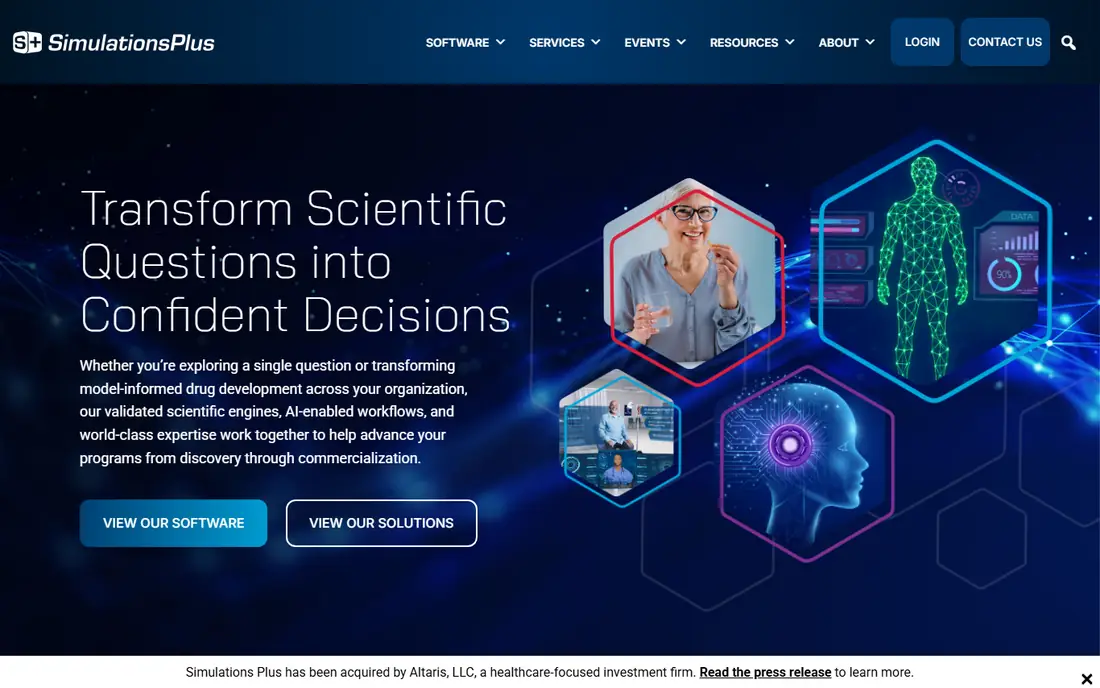
GastroPlus models how a drug is absorbed, distributed, and cleared in the body, using physiology and compound properties rather than a new animal study for every question. Teams use it to test formulation choices, food effects, and dosing ideas in simulation before lab work. That early screening can cut the number of compounds that need physical testing.
It is a specialist tool, not a casual app. Pricing is quoted, training matters, and results depend on good input data. For a pharma team with modeling staff, it is a proven way to reduce animal work in early development.
- Detailed absorption and distribution modeling
- Widely used in pharma
- Strong PBPK tools
- Quote-based pricing
- Needs trained modelers to use well
Simcyp simulates drug behavior across virtual populations, including differences in age, genetics, organ function, and interacting drugs. That lets researchers explore dosing and interaction risks in groups that would be hard or unethical to test directly. Regulators are familiar with this class of modeling, which helps when simulation supports a submission.
As with GastroPlus, the tool needs expertise and a quoted enterprise license. Small labs without modeling staff may find it heavy, but for clinical pharmacology teams, population simulation is one of the strongest animal testing alternatives available.
- Population variability modeling
- Drug interaction prediction
- Regulatory familiarity
- Enterprise pricing
- Steep learning curve for new teams
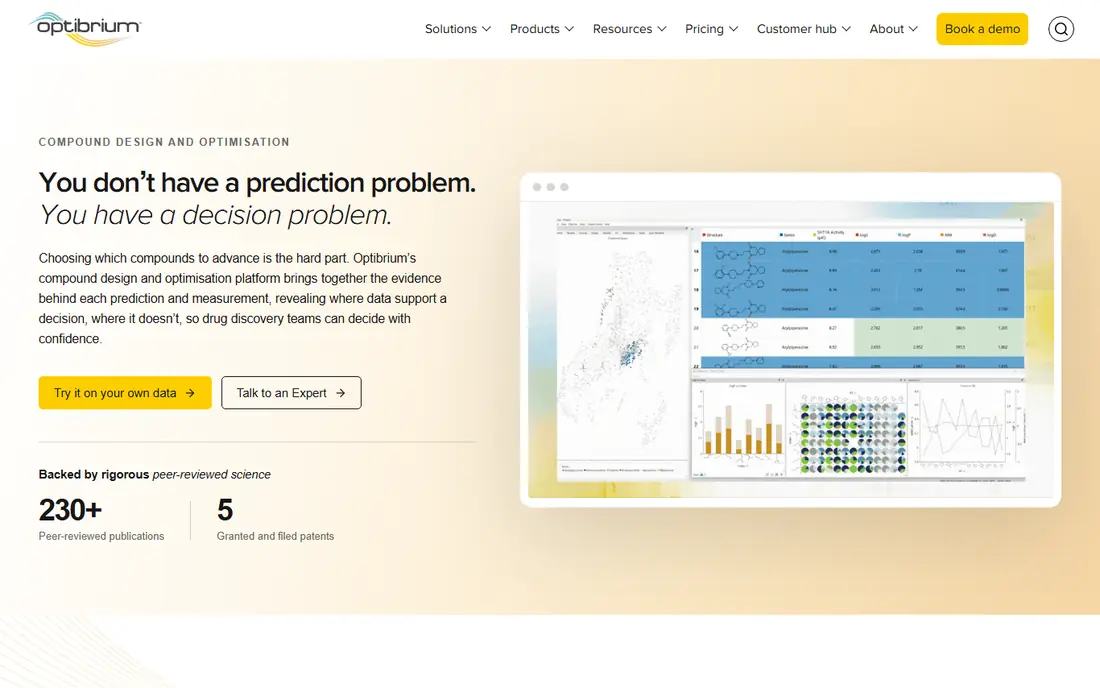
StarDrop helps chemists balance many properties at once: potency, solubility, metabolic stability, and predicted toxicity. Its visual interface shows trade-offs clearly, so a team can pick compounds with the best overall profile instead of chasing one property and failing later. Predictive models flag risky compounds early, before synthesis and testing.
The trial helps teams test it on their own data, but full pricing is quoted. It fits discovery teams that already generate compound data and want to cut synthesis and testing to the most promising candidates.
- Visual multi-property optimization
- Predictive models for ADME and toxicity
- Easy comparison
- Pricing needs a quote
- Best value comes with a compound library to work on
Schrodinger provides physics-based modeling for drug discovery and materials research, including docking, free energy calculations, and molecular dynamics. Teams can screen large virtual libraries and study how a molecule interacts with a target before making it in a lab. That screening step reduces the number of compounds that need physical assays.
It is an enterprise platform with quoted pricing and a learning curve. Academic and commercial teams with computational staff get the most from it, while small labs may prefer a simpler predictive tool first.
- Physics-based molecular modeling
- Large virtual screening scale
- Strong research record
- Enterprise pricing
- Needs computational expertise and hardware planning
Insilico Medicine uses AI to find targets and generate new molecules for drug discovery, aiming to shorten early research and reduce trial-and-error testing. Its platform combines generative chemistry with predictive models for properties and safety signals. For teams exploring novel chemistry, that generative step can open options a human chemist might not list first.
AI-designed molecules still need lab and safety validation, and the business model is enterprise and partnership based rather than a simple subscription. Treat it as a discovery engine that narrows the field, not as a replacement for testing itself.
- Generative AI for new molecules
- Target discovery tools
- End-to-end discovery platform
- Enterprise and partnership model
- Results still need lab validation
Emulate builds organ-on-chip systems that grow human cells in microfluidic chips, with flow and mechanical forces that mimic a living organ more closely than a static cell culture. Liver, lung, kidney, and other chips let researchers study toxicity and disease responses in human tissue models. That human relevance is the core argument for replacing some animal studies.
The system involves hardware, chips, and lab workflows, so cost and expertise are real barriers. Teams should plan validation against known compounds before relying on chip data for decisions, but for human toxicity questions, it is a leading alternative.
- Human organ chips for liver, lung, and other tissues
- Dynamic flow modeling
- Pharma use
- Hardware and consumable costs
- Needs lab expertise and validation work
CN Bio focuses on organ-on-chip systems with particular strength in liver models and linked multi-organ setups. Linking organs lets researchers study how a compound is metabolized in the liver and then affects another tissue, which single-organ models cannot show. That makes it useful for metabolism and toxicity questions in drug development.
Like Emulate, it is a lab platform, not software alone, with quoted pricing and specialist setup. Teams with a clear liver or metabolism question will get the most value, while general screening teams may start with in silico tools first.
- Liver-on-chip strength
- Multi-organ linking
- Useful for metabolism and toxicity
- Specialist lab setup
- Quoted pricing and limited self-serve access
MatTek produces lab-grown human tissue models, including skin, eye, airway, and intestinal tissues, used for safety and efficacy testing without animals. These models give a human tissue response for irritation, corrosion, and barrier questions that animal skin or eye tests once covered. Many are used in regulated safety workflows.
Costs are per tissue model and add up across studies, and labs need proper protocols and controls. For safety testing teams, though, MatTek models are a practical, established alternative with a clear use case.
- Established human tissue models for skin, eye, and airway
- Used for safety testing
- Consumable model costs add up
- Needs lab protocols and controls
Epithelix specializes in human airway tissue models grown from primary cells, used for respiratory research, inhalation toxicity, and disease modeling. Airway questions are hard to model in animals and in simple cell cultures, so a human airway epithelium model fills a real gap. Researchers can study barrier function, infection, and inhaled compound effects in human tissue.
Its focus is narrow by design. Teams outside respiratory research will not need it, but for inhalation and lung work, it is a strong, human-relevant alternative to animal airway studies.
- Human airway epithelium models
- Useful for inhalation and respiratory research
- Narrow focus on airway models
- Specialist lab handling required
How we picked these
We compared official product pages, documentation, and public reviews, and we kept tools that provide modeling, virtual screening, or human tissue systems used to reduce animal testing. We mixed software-only tools with organ-on-chip and tissue platforms, since the topic covers both. We did not claim hands-on testing, and prices are quote-based for most tools, so readers should request a quote and a scientific demo before buying.
What to check before you buy
Start with the exact question the tool must answer. An absorption model, a toxicity screen, and an airway tissue test are different jobs, and no single tool covers all of them well. Define the decision the tool will inform, such as which compounds to synthesize or which dose range to test, before shortlisting.
Next, check validation for your use case. Ask for published or internal validation against known compounds, and for regulatory context in your region. A model that works for one endpoint may not be accepted for another, and early clarity saves a costly mismatch.
Finally, count total cost and expertise, not just license price. Modeling tools need trained staff and good data, while tissue and chip platforms need lab time, consumables, and controls. A pilot on your own compounds, with a clear success measure, is the safest way to judge value.
Questions to ask on a demo
- Which decision will this tool inform, and what validation supports that use?
- What input data and staff skills are needed to run it well?
- What is the total cost, including consumables, training, and support?
- How do results compare with known reference compounds in our area?
Sources
Frequently asked questions
What are alternatives to animal testing software?
They include in silico modeling tools that simulate drug behavior, virtual screening tools that rank compounds, and organ-on-chip or lab-grown tissue systems that model human responses. Together they reduce, refine, or replace animal studies for many questions.
Can software fully replace animal testing today?
No, not for every use case. Simulation and human tissue models replace many early screens and some safety questions, but regulatory requirements, complex whole-body effects, and long-term safety still need other evidence in many cases.
How much do these tools cost?
Most are quote-based and enterprise priced, with tissue and chip platforms adding consumable and lab costs. Expect a demo, a pilot, and a written quote rather than a simple monthly signup price.
Which tool is best for early drug screening?
StarDrop and Schrodinger suit early compound screening and optimization, while GastroPlus and Simcyp suit absorption and pharmacokinetic questions. The best pick depends on whether the question is chemistry, dosing, or toxicity.
Are organ-on-chip models accepted by regulators?
Regulatory acceptance is growing for specific uses, but it varies by endpoint and region. Teams should check current guidance and validation for their exact use before relying on chip data in a submission.
Do these tools work for cosmetics safety testing?
Yes, in part. Human skin and eye tissue models from MatTek and similar suppliers are used for irritation and corrosion testing in cosmetics safety work, where animal testing is restricted or banned in many regions.