Alternatives to ChatGPT Enterprise in 2026: 9 Options Compared
By ToolNimba Editorial Team November 12, 2026 9 min read

- Top pick
 Claude Enterprise
Coding and long-document work
Starting price$20 per monthCheck out Claude EnterpriseRead our review - Runner-up
 Microsoft 365 Copilot
Microsoft 365 workplaces
Starting price$30 per monthCheck out Microsoft 365 CopilotRead our review - Also great
 Gemini Enterprise
Google Workspace workplaces
Starting price$14 per monthCheck out Gemini EnterpriseRead our review
How we researched this
We compared official pricing and feature pages, app store listings, privacy policies and public user reviews. Prices change, so check the provider's site before you pay.
Key takeaways
- ChatGPT Enterprise itself is not listed here; every option below is a different vendor's business AI platform.
- Claude Enterprise and Microsoft 365 Copilot are the closest direct replacements for most companies.
- Gemini Enterprise suits firms already on Google Workspace, since AI is bundled into Workspace plans.
- Enterprise pricing often mixes seat fees with token or credit usage, so compare total cost, not just the seat price.
Quick comparison
| Name | Best for | Starting price | Free plan | |
|---|---|---|---|---|
| Claude Enterprise | Coding and long-document work | $20 per month | No | Visit |
| Microsoft 365 Copilot | Microsoft 365 workplaces | $30 per month | No | Visit |
| Gemini Enterprise | Google Workspace workplaces | $14 per month | No | Visit |
 Perplexity Enterprise | Sourced business research | $40 per month | No | Visit |
 Cohere Enterprise | Enterprise search and retrieval | See website | No | Visit |
 Writer | Brand-controlled business writing | See website | No | Visit |
 Jasper Business | Marketing content at scale | See website | No | Visit |
 Azure OpenAI Service | Builders on Microsoft cloud | See website | No | Visit |
 Amazon Q Business | Companies on AWS | See website | No | Visit |
The best alternatives to ChatGPT Enterprise
Companies looking beyond ChatGPT Enterprise usually want stronger data controls, a better fit with their existing suite, or a specialist for coding, research, or marketing. The platforms below are enterprise-grade alternatives from other vendors, and none of them is ChatGPT Enterprise itself.

Claude Enterprise, from Anthropic, is the closest alternative for teams that value writing quality, long-document work, and coding. Seats start near $20 per seat per month on annual billing, with model usage billed at API rates and capped by organization, group, or user spend limits. Enterprise controls include SSO, audit logs, SCIM, and compliance tools that Team plans lack.
The pricing model needs care: the seat fee is only part of the bill, and heavy agent or API use adds token costs. For engineering, legal, and research teams that live in documents and code, Claude Enterprise is often the strongest replacement, even with that metered extra.
- Strong coding and document analysis
- SSO, audit logs, and admin controls
- API usage controls
- Seat fee plus token usage can raise total cost
- Smaller office suite integration
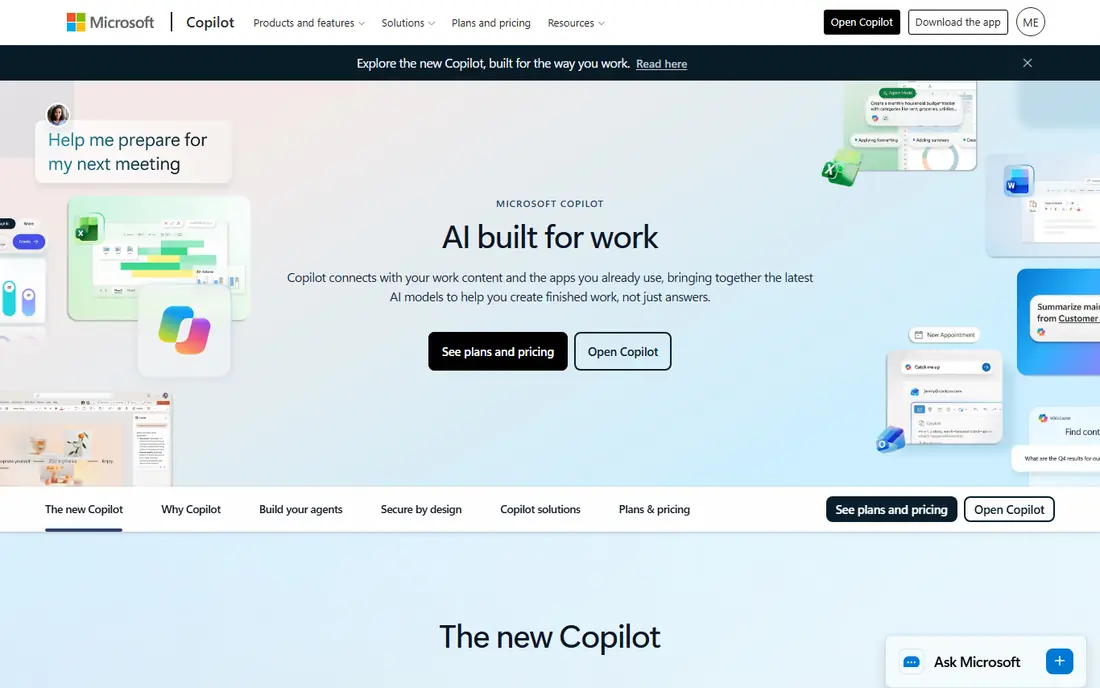
Microsoft 365 Copilot is the natural replacement for companies already on Microsoft 365. The enterprise add-on costs $30 per user per month on an annual term, on top of a qualifying Microsoft 365 plan, and it brings AI into the apps staff already use daily, with data governed by Microsoft's enterprise controls. Copilot Studio lets teams build custom agents without a separate platform.
All-in cost is higher than the add-on alone once base licenses are counted, and newer agent features can consume Copilot Credits. For a Microsoft shop, though, the integration depth and admin familiarity make Copilot the lowest-friction enterprise switch.
- Works inside Word, Excel, Teams, and Outlook
- Inherits Microsoft security and Purview controls
- Copilot Studio for custom agents
- Add-on sits on top of a base license
- Agent work can add credit costs
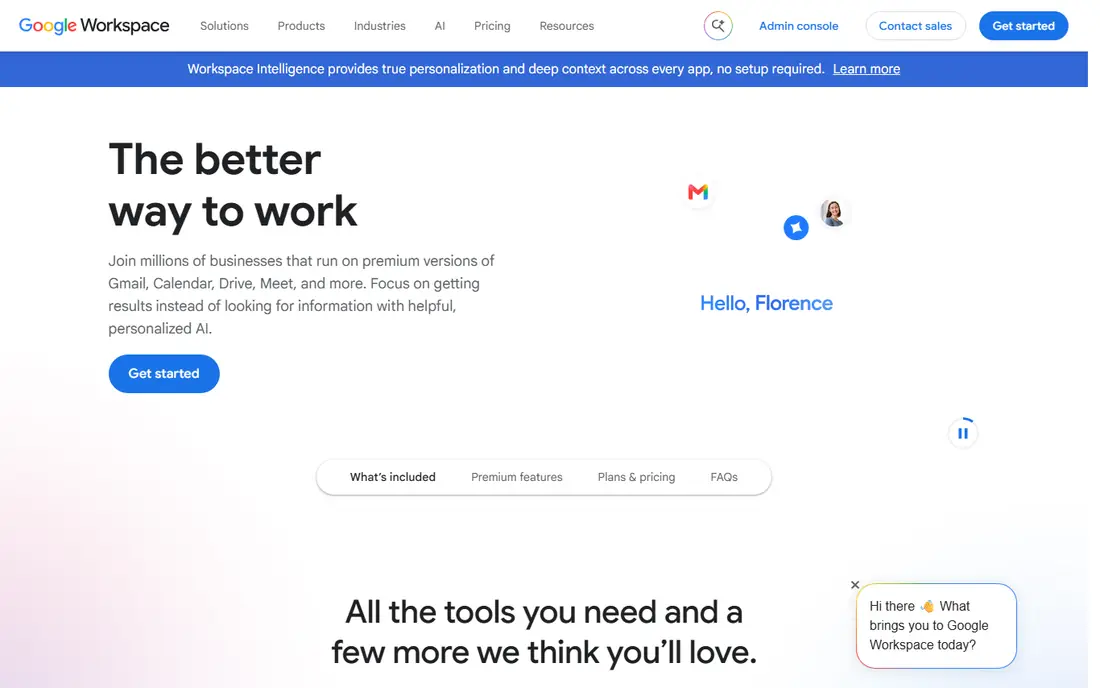
Gemini Enterprise, delivered through Google Workspace, suits firms already using Gmail, Docs, Drive, and Meet. Business Standard, which includes Gemini, is listed near $14 per user per month, with Business Plus near $22, so the incremental AI cost is low for existing Workspace customers. Gemini adds research, drafting, and multimodal help inside the suite, plus Vertex AI options for builders.
The less-defined part is agent billing, where Google has been slower to publish coworker-agent pricing than rivals. Check the edition's compliance scope and agent terms before a large rollout. For Workspace firms, Gemini Enterprise is usually the cheapest credible alternative.
- AI bundled into Workspace
- Strong search and multimodal tools
- Competitive per-seat cost
- Agent pricing details are less defined
- Controls vary by edition
Perplexity Enterprise brings Perplexity's sourced search to companies that need research staff can verify. Enterprise Pro seats are listed near $40 per seat per month in recent comparisons, with admin controls, SSO, and data handling suited to business use. Analysts, consultants, and strategy teams benefit most, since every answer can be traced to sources.
It is not a full replacement for a general enterprise assistant: long writing, coding, and office integration are thinner than on Claude or Copilot. As a research layer alongside a suite assistant, Perplexity Enterprise is excellent, and for research-heavy firms it can be the primary tool.
- Cited answers for research
- Enterprise security and admin controls
- Model choice
- Weaker as a general writing and coding platform
- Seat price is higher than Claude Team
Cohere Enterprise targets companies that need AI over their own documents: enterprise search, retrieval-augmented generation, and classification, deployed in their cloud or privately. That focus appeals to regulated firms that cannot route sensitive data through a public chatbot, and its multilingual models suit global teams. Pricing runs through sales, so we list it as See website.
Cohere is not a drop-in chat replacement for every employee, since it lacks a famous office assistant. For a company building AI into products or internal search, it is a serious, engineering-grade alternative.
- Retrieval and search over company data
- Private and cloud-neutral deployment
- Multilingual strength
- No mainstream office chatbot
- Pricing is sales-led
Writer is an enterprise AI platform built around controlled business writing: it learns a company's voice, style, and terminology, then helps marketing, support, and sales teams produce on-brand content at scale. Guardrails, approval flows, and enterprise security are central, which matters when AI drafts reach customers. Pricing is quoted through sales.
General reasoning and coding are not its strengths compared with Claude or Gemini, so it works best as a specialist alongside a general assistant. For brand-sensitive content teams, Writer's controls justify a place on the shortlist.
- Brand voice and style controls
- Enterprise security
- Built for marketing and support teams
- Narrower general reasoning than Claude or Gemini
- Pricing is sales-led
Jasper Business serves marketing teams that produce large volumes of on-brand content: campaigns, product copy, social posts, and email, with brand voice settings and team workflows. It is easier for non-technical marketers to adopt than a developer platform, and its templates speed up routine content work. Business pricing is quoted, so we list it as See website.
It is not a general enterprise AI platform for engineering or research, and its admin controls are less deep than Microsoft's or Anthropic's. For a marketing department seeking a ChatGPT Enterprise alternative for content, Jasper is a focused, practical pick.
- Marketing templates and brand voice
- Campaign workflows
- Team collaboration
- General enterprise controls trail Microsoft and Anthropic
- Pricing is sales-led for business tiers
Azure OpenAI Service lets companies use OpenAI models through Microsoft's Azure cloud, with enterprise security, private networking, and compliance controls that a consumer chat product cannot offer. It suits builders who want to embed AI into their own apps, workflows, and data pipelines, rather than giving every employee a chat window. Pricing is usage-based by tokens, so we list it as See website.
It is not a ready-made employee assistant: teams must build interfaces, prompts, and guardrails themselves. For companies with engineering capacity that want OpenAI-class models under their own cloud controls, Azure OpenAI is a strong enterprise path.
- OpenAI models inside Azure with enterprise controls
- Private networking
- Compliance scope
- Needs engineering to build on
- Usage billed by tokens, not a simple seat
Amazon Q Business is AWS's enterprise assistant, designed to answer questions over company data, documents, and connected systems inside an AWS environment. It suits firms already running on AWS, where data residency, IAM controls, and existing integrations matter more than a standalone chat app. Pricing varies by tier and usage, so we list it as See website.
Outside AWS, its appeal fades, and its general conversational depth trails the leading chat models. For an AWS-centered company that wants an assistant grounded in its own systems, Amazon Q Business is a natural alternative to evaluate.
- Answers over company data in AWS
- Connects to enterprise systems
- AWS security model
- Best value only inside AWS
- General chat depth trails Claude and Copilot
How we picked these
We compared official enterprise pages, pricing pages, and reviewer comparisons of seat fees, token billing, and admin controls. We favored platforms that serve businesses today in the US, cover distinct needs (suite fit, coding, research, marketing, building), and are not ChatGPT Enterprise itself. We did not claim hands-on testing; our notes reflect vendor pages and reviewer findings.
How to choose an enterprise alternative
Start with your existing suite: Microsoft shops should test Copilot first, Google shops Gemini first, and AWS shops Amazon Q. Next, map the real workloads: coding and documents favor Claude, research favors Perplexity, and marketing favors Writer or Jasper. Then model total cost, including seat fees plus token or credit usage, for a pilot group before a company-wide rollout.
Run the pilot on real work with real data controls, and check exit terms: how prompts, custom agents, and connected data move if you switch later. A short pilot with measured total cost beats a long vendor comparison on paper.
Sources
- https://www.anthropic.com
- https://www.microsoft.com/en-us/microsoft-365-copilot
- https://workspace.google.com
- https://www.perplexity.ai/enterprise
- https://cohere.com
- https://writer.com
- https://www.jasper.ai
- https://azure.microsoft.com/en-us/products/ai-services/openai-service
- https://aws.amazon.com/q/business/
- https://www.layer3labs.io/comparisons/gemini-vs-copilot-vs-claude-for-business
- https://codingscape.com/blog/claude-vs-chatgpt-vs-copilot-vs-gemini-choosing-an-ai-work-os
Frequently asked questions
What is the best alternative to ChatGPT Enterprise?
For most companies, Claude Enterprise or Microsoft 365 Copilot are the closest replacements, with Gemini Enterprise best for Google Workspace firms. The right pick depends on your suite, your workloads, and your data controls, so pilot two options before committing.
Is Claude Enterprise cheaper than ChatGPT Enterprise?
Claude Enterprise publishes a seat fee near $20 per month on annual billing, while ChatGPT Enterprise is quoted by sales with no list price, so a direct comparison needs a quote for both. Remember that Claude adds token usage on top of seats, which can raise its total cost for heavy use.
Does Microsoft 365 Copilot replace ChatGPT Enterprise?
For Microsoft 365 companies, yes in practice: Copilot covers drafting, meetings, email, and custom agents inside Office apps, with enterprise controls. Teams that need Claude-level coding or Perplexity-level sourced research may still add a second tool for those jobs.
What data controls should an enterprise AI platform offer?
Look for SSO, SCIM, audit logs, role-based access, data residency options, and a clear promise not to train on your business data. Regulated firms should also check compliance certifications and whether a business associate agreement is available for health data.
Can I use more than one enterprise AI platform?
Yes, and many companies do: a suite assistant for daily work plus a specialist for coding, research, or marketing. Keep the count low, govern data access centrally, and measure total cost across seats and usage, since overlapping subscriptions add up fast.