Best AEO Analysis Tools in 2026: 8 Tools Compared
By ToolNimba Editorial Team November 9, 2026 11 min read

- Top pick
 Profound
Enterprise AI visibility tracking
Starting priceSee websiteCheck out ProfoundRead our review - Runner-up
 Semrush
AI visibility inside an SEO suite
Starting price$139.95 per monthCheck out SemrushRead our review - Also great
 Scrunch
AI monitoring plus site audits
Starting priceSee websiteCheck out ScrunchRead our review
How we researched this
We compared official pricing and feature pages, app store listings, privacy policies and public user reviews. Prices change, so check the provider's site before you pay.
Key takeaways
- Profound and Scrunch lead for teams that need broad AI engine coverage and regular prompt tracking.
- Otterly.ai is the lowest-cost entry point for small teams that only need to watch a short prompt list.
- Semrush and Ahrefs suit teams that already pay for SEO software and want AI visibility added to that workflow.
- Prompt count alone is a poor comparison, since engines, check frequency and citation tracking change the real workload.
- Content tools such as Surfer help you write answer-ready pages, but they do not by themselves track what AI engines say.
Quick comparison
| Name | Best for | Starting price | Free plan | |
|---|---|---|---|---|
| Profound | Enterprise AI visibility tracking | See website | Free trial | Visit |
| Semrush | AI visibility inside an SEO suite | $139.95 per month | Free trial | Visit |
| Scrunch | AI monitoring plus site audits | See website | Free trial | Visit |
 Otterly.ai | Low-cost AI answer monitoring | $29 per month | Free trial | Visit |
 Peec AI | Citation and sentiment analytics | See website | Free trial | Visit |
 Ahrefs | Brand tracking for existing users | $129 per month | No | Visit |
 AthenaHQ | Content optimization for AI answers | See website | Yes | Visit |
 Surfer | Answer-ready content scoring | $89 per month | Free trial | Visit |
The best AEO analysis tools
Answer engine optimization, often shortened to AEO, is the work of getting your brand named and your pages cited when someone asks ChatGPT, Perplexity, Gemini or Google AI a question. We compared official pricing pages, feature pages and recent independent comparisons for the tools below, focusing on which engines they track, whether they show cited sources, and how their pricing scales with prompts.
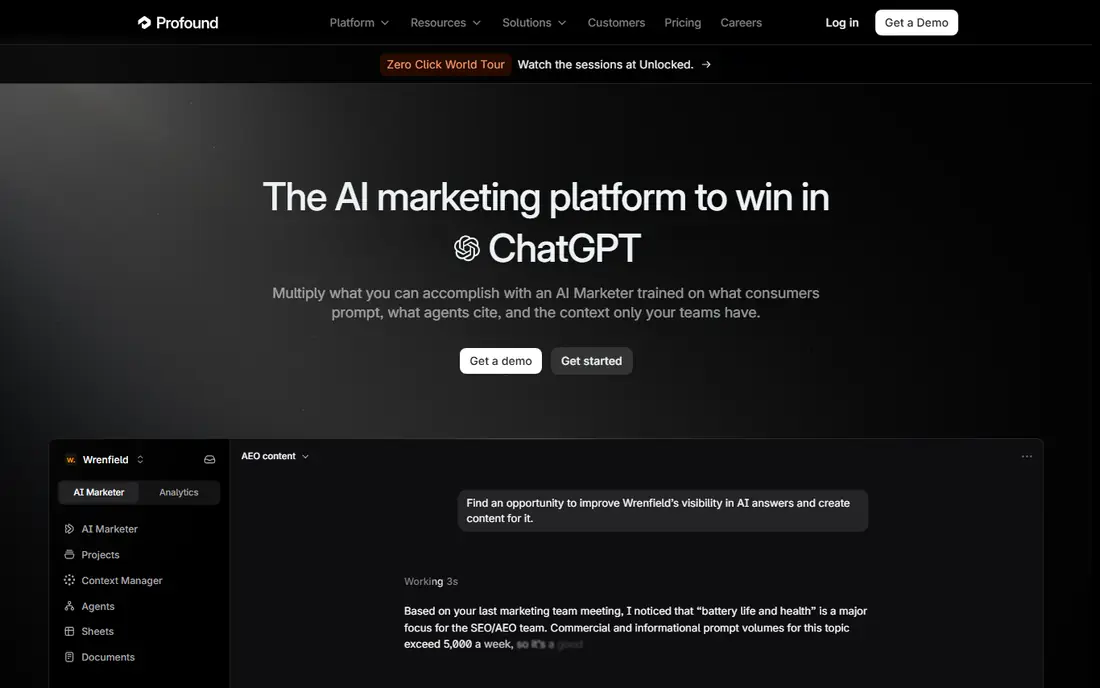
Profound is built for brands that need to know, week after week, how AI answers describe them and their competitors. It tracks prompts across major AI engines, records citations and share of voice, and adds reporting that a marketing team can share with leadership. That depth is why it appears at the top of many enterprise shortlists in 2026.
The drawback is access. Full pricing is quote-based, and the free trial covers only a limited set of engines. A small business with ten prompts to watch will get more value from a cheaper tracker. A larger brand with hundreds of prompts, multiple markets and a need for integrations will find the structure easier to justify.
- Broad engine coverage on enterprise plans
- Detailed reporting and integrations
- AI research and writing help
- Pricing is not published for full plans
- Likely too costly for a solo site
- Setup takes time for large prompt sets

Semrush makes sense if your team already lives in Semrush for classic search work. Its AI Visibility toolkit adds mentions and source views for AI answers, so you can see search rankings and AI citations in the same place. That shared view helps when a page ranks well in Google but never gets cited by an AI answer, since the fix may be structure or clarity rather than authority.
The cost adds up once you include the add-on, and prompt allowances are lower than some dedicated trackers at the same price. Still, for a team that would pay for Semrush anyway, adding AI tracking there is simpler than buying, learning and reporting from a second tool.
- AI visibility sits beside keyword, backlink and site audit data
- Familiar workflow for SEO teams
- Strong reporting options
- AI toolkit is an add-on cost on some plans
- Prompt limits apply
- Less focused than a dedicated AEO tool
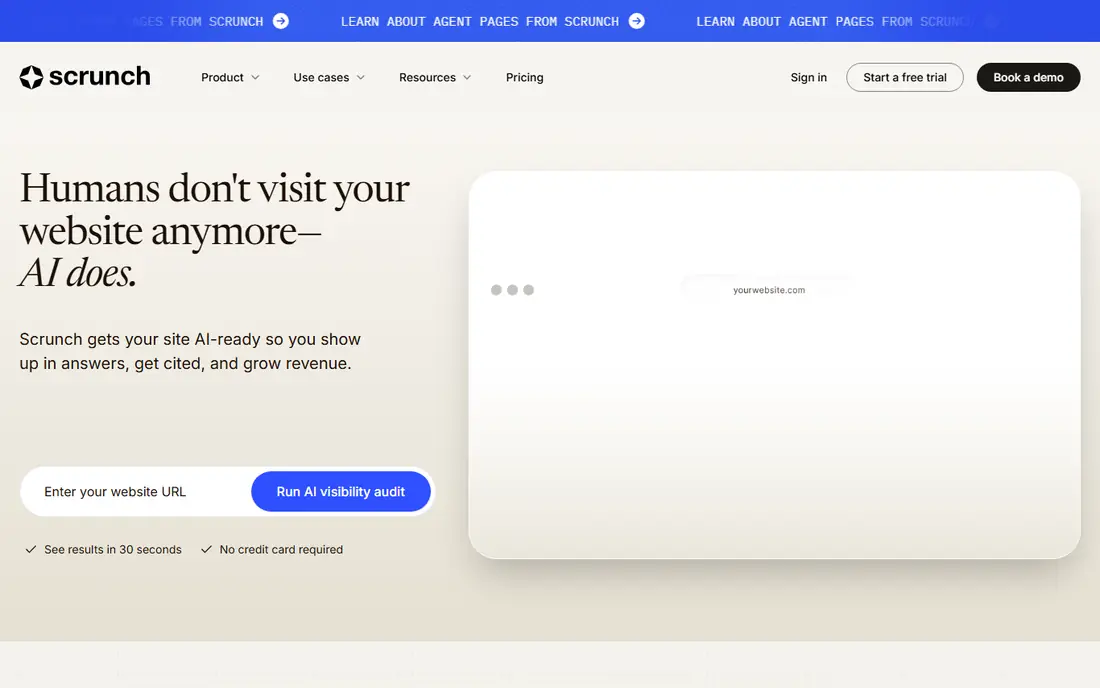
Scrunch pairs answer monitoring with the technical work that helps AI crawlers read your site. It tracks how your brand appears in AI answers, audits pages for gaps, and reports on agent and crawler traffic that classic analytics often miss. That combination suits mid-size teams that want both measurement and a fix list, not just a chart.
Pricing starts in the mid-hundreds per month on public plans, which puts it out of reach for a single blogger or a very small shop. If you have a content team that can act on weekly audits, the extra cost can pay for itself in faster fixes. If no one owns the audit list, a simpler tracker will serve you better.
- Covers several AI platforms on public plans
- Page audits and crawler analytics included
- Agent traffic reporting
- Entry price is high for small teams
- Pricing is annual on some plans
- Interface rewards teams that act on audits
Otterly.ai is the starting point we would suggest to a small team that wants proof of AI visibility without a large contract. For around $29 per month, you can track AI Overviews, ChatGPT and Perplexity for a focused set of prompts, see which sources get cited, and run basic content audits. That is enough to learn whether AI answers mention you at all, and where competitors are winning citations.
The limits show up as soon as your prompt list grows. You will need a higher plan for more prompts, more engines or deeper reporting. Even so, starting small is a strength here: pick your ten most valuable buyer questions, watch them for a month, and only upgrade when the data starts shaping content decisions.
- Lowest entry price on this list
- Daily checks on a short prompt list
- Citation and content audits included
- Prompt limits are tight on the entry plan
- Fewer engines than enterprise tools
- Reporting is simpler
Peec AI focuses on the details inside an AI answer: who is mentioned, which pages are cited, how sentiment reads, and where your brand is missing. Those gap reports are practical, because they turn a vague goal like "get cited more" into a list of questions and pages to improve. Teams that already write regularly will find the reports easy to turn into briefs.
The trade-off is price and scope. Peec AI costs more than the cheapest trackers, and it is stronger on measurement than on writing or publishing the fix. Pair it with a content tool if your bottleneck is production, not diagnosis. Used on its own, it still gives a clear weekly picture of where you stand.
- Clear source and gap reports
- Sentiment tracking beside mentions
- Lets teams pick the models they track
- Entry pricing is higher than Otterly.ai
- Content help is thinner than some rivals
- Best value needs regular use
Ahrefs Brand Radar brings AI prompt tracking into a tool many SEO teams already use daily. You can watch how ChatGPT, Perplexity and Gemini mention your brand, then check the same brand in keyword and backlink data without switching tools. That joined-up view helps when an AI answer cites a competitor page that also ranks well, since you can study that page in full.
Buying Ahrefs only for AEO would be wasteful, since the entry plan starts at $129 per month and the AI feature is not the whole product. For an existing Ahrefs user, though, it is the simplest way to add AI visibility. Start with the prompts your buyers already ask, compare your citations with two or three rivals, and expand only if the reports change your content plan.
- Brand Radar adds AI prompt tracking to a proven SEO suite
- Strong backlink and keyword data
- Good for competitor checks
- AI tracking is one feature inside a larger suite
- Entry plan limits apply
- Not ideal as a standalone AEO purchase
AthenaHQ leans toward the content side of AEO. It produces briefs tuned for answer extraction, tracks prompts across AI engines, and adds a content agent on higher plans. That mix suits a content team whose main problem is not knowing what to write, but writing pages that AI engines can quote cleanly and confidently.
Credit pricing is the catch. Costs depend on how many models, prompts and checks you run, so a busy month can cost more than a quiet one. The free essential tier helps you test the workflow before committing. Use it to build two or three answer-first pages, track their citations for a few weeks, and then decide whether the paid coverage is worth the variable cost.
- AEO-focused content briefs
- Wide model coverage on paid plans
- Free essential tier for basic checks
- Credit-based pricing can be hard to forecast
- Enterprise features need a higher plan
- Newer brand than Semrush or Ahrefs
Surfer does a different job from the trackers above, and that difference matters. It scores a draft against top-ranking pages and suggests structure, terms and headings that make a page easier to quote. For AEO, that means clearer answers near the top of the page, direct FAQ sections and tables that an AI engine can lift without confusion.
Do not buy Surfer expecting a dashboard of AI mentions, because that is not its core job. Pair it with a tracker such as Otterly.ai or Peec AI: use the tracker to find questions where you are missing, then use Surfer to shape the page that should win the citation. On its own, Surfer improves the content; with a tracker, you can prove whether the improvement worked.
- Content score guides structure, headings and entities
- Useful for FAQ and answer-first pages
- Integrates with common editors
- Does not directly track AI engine answers
- Score is a guide, not a citation guarantee
- Cost adds up with add-ons
How we picked these
We compared official pricing and feature pages, plus independent AEO comparisons published in 2026, and kept only tools that track AI answers or help pages get cited in them. We excluded customs software that shares the AEO initials but has nothing to do with AI search, and we favored tools with published engine coverage, citation tracking or answer-focused content help. Prices change often in this fast-moving market, so check the vendor page before you buy, and treat any price here as a starting point.
How to choose the right AEO tool
Start with the job, not the feature list. A tracker answers the question "what do AI engines say about us", while a content tool answers "what should we publish next". Many teams need both, but buying both at once without a clear prompt list wastes money. The steps below keep the choice grounded.
Build your prompt list first
List the questions your buyers actually ask, in their words, including comparison questions, price questions and "best" questions for your category. Aim for 10 to 30 prompts to start. A tool trial is far more useful when it tracks those real questions, rather than a generic set the vendor suggests.
Compare checks, not just prompts
A plan with 100 prompts checked once a month gives a thinner picture than 30 prompts checked weekly across three engines. Ask how often checks run, which engines are included, whether cited URLs are shown, and whether competitor tracking costs extra. Those four answers explain most price differences between tools on this list.
Run a one-month test with one owner
Give one person ownership of the tool for a month, with a weekly check and a short note on what changed. If no one reads the reports, the tool will not help, however good its coverage is. After a month, keep the tool only if its reports led to at least one published or updated page that earned a citation or a clear ranking gain.
Sources
Frequently asked questions
What is the best AEO analysis tool?
There is no single best tool for every team. Profound and Scrunch suit larger teams that need broad coverage and reporting, Otterly.ai suits small teams on a budget, and Semrush or Ahrefs suit teams already using those suites. Match the tool to your prompt count, your engines and who will act on the reports.
What is an AEO tool?
An AEO tool tracks how your brand appears in AI-generated answers from engines such as ChatGPT, Perplexity, Gemini and Google AI Overviews. It runs a set of prompts on a schedule and records brand mentions, cited URLs, sentiment and share of voice against competitors. Some tools also suggest content fixes to improve those results.
How much do AEO tools cost?
Entry prices in 2026 run from free tiers and around $29 per month for Otterly.ai to several hundred dollars per month for mid-market trackers, with enterprise plans priced on request. Compare plans by monthly checks, meaning prompts times engines times runs, not by prompt count alone, and watch for add-on costs.
Is AEO the same as SEO?
No, though they overlap. SEO tracks where your pages rank in classic search results for keywords, while AEO tracks what AI engines say in their answers, including whether your brand is mentioned and which sources are cited. Most teams need both views, since Google AI features are built on its core search systems.
Do I need an AEO tool if I am just starting?
Not always. If you have only a few prompts to watch, you can ask the engines manually, log whether you appear, and check Google Search Console for AI-surface impressions. A paid tool earns its keep once tracking eats hours each week, or once you need competitor trends and scheduled reports.
What is the difference between AEO and GEO?
The terms are often used for the same job. AEO stands for answer engine optimization, while GEO stands for generative engine optimization. Both describe getting your brand named and cited in AI answers. Do not pay twice for two labels on the same tracking work; check engine coverage and citation reporting instead.