Best AI Automation Testing Tools in 2026: 9 Tools Compared
By ToolNimba Editorial Team November 6, 2026 8 min read

- Top pick
 mabl
Self-healing web tests
Starting priceSee websiteCheck out mablRead our review - Runner-up
 Testim
Low-code AI test creation
Starting priceSee websiteCheck out TestimRead our review - Also great
 Katalon
All-in-one test platform
Starting price$70 per monthCheck out KatalonRead our review
How we researched this
We compared official pricing and feature pages, app store listings, privacy policies and public user reviews. Prices change, so check the provider's site before you pay.
Key takeaways
- mabl, Testim, and Katalon lead for AI self-healing tests that survive UI changes.
- Selenium and Playwright remain free, code-based foundations, with AI features added through other tools.
- Applitools is the specialist pick for visual testing, while LambdaTest covers broad browser and device coverage.
- Functionize and Autify suit smaller teams that want lower entry costs and less code.
- Price models vary widely, from free frameworks to quote-based enterprise platforms, so test on your real app before signing.
Quick comparison
| Name | Best for | Starting price | Free plan | |
|---|---|---|---|---|
| mabl | Self-healing web tests | See website | Free trial | Visit |
| Testim | Low-code AI test creation | See website | Free trial | Visit |
| Katalon | All-in-one test platform | $70 per month | Yes | Visit |
 Selenium | Free code-based testing | Free | Yes | Visit |
 Playwright | Modern browser automation | Free | Yes | Visit |
 Applitools | Visual testing | See website | Free plan | Visit |
 LambdaTest | Cross-browser cloud testing | $19 per month | Yes | Visit |
 Functionize | Agentic test creation | $20 per month | Free trial | Visit |
 Autify | No-code web and mobile tests | See website | Free plan | Visit |
The best AI automation testing tools
These tools cover self-healing tests, visual checks, cross-browser runs, and no-code creation for web and mobile apps.
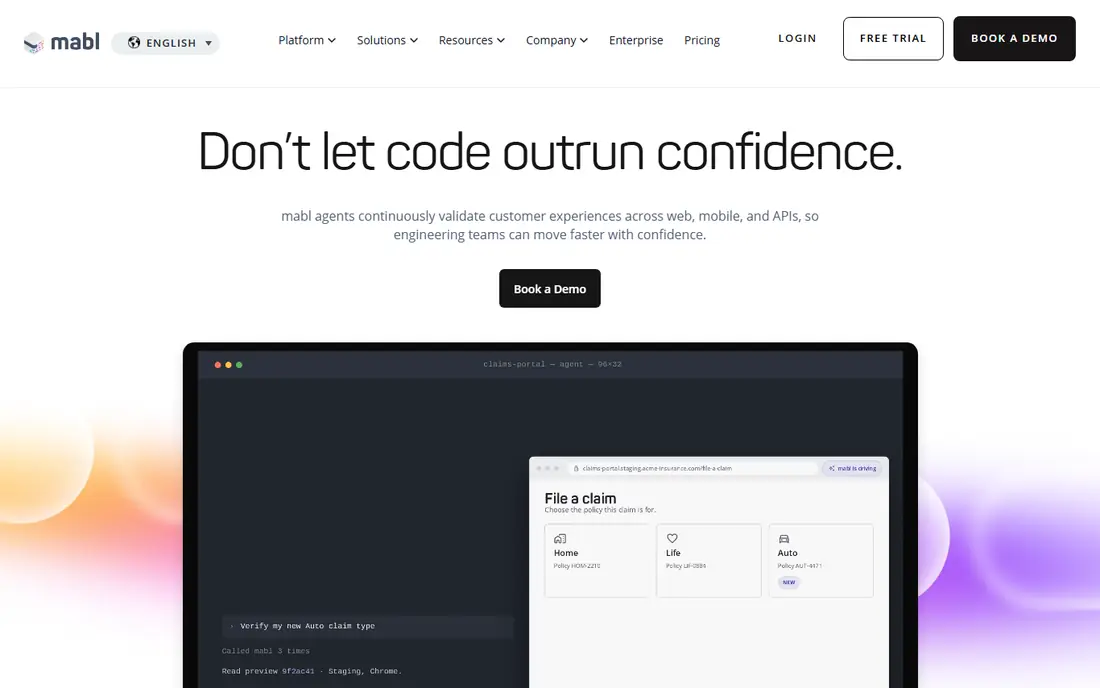
mabl uses machine learning to auto-heal tests when the user interface changes, updating element references instead of failing on renamed buttons or moved fields. That matters most for teams shipping several times a week, where test maintenance can eat more time than writing new tests. Visual regression testing, API testing, and detailed run reporting are included.
Pricing is quote-based and aimed at larger teams, so small startups may find it hard to justify. Auto-healing can also add noise on highly dynamic pages, where a healed test still needs human review. For mature teams with large suites, mabl is a strong choice.
- AI auto-healing
- Visual testing included
- Strong CI integration
- Quote-only pricing
- Can be costly for small teams
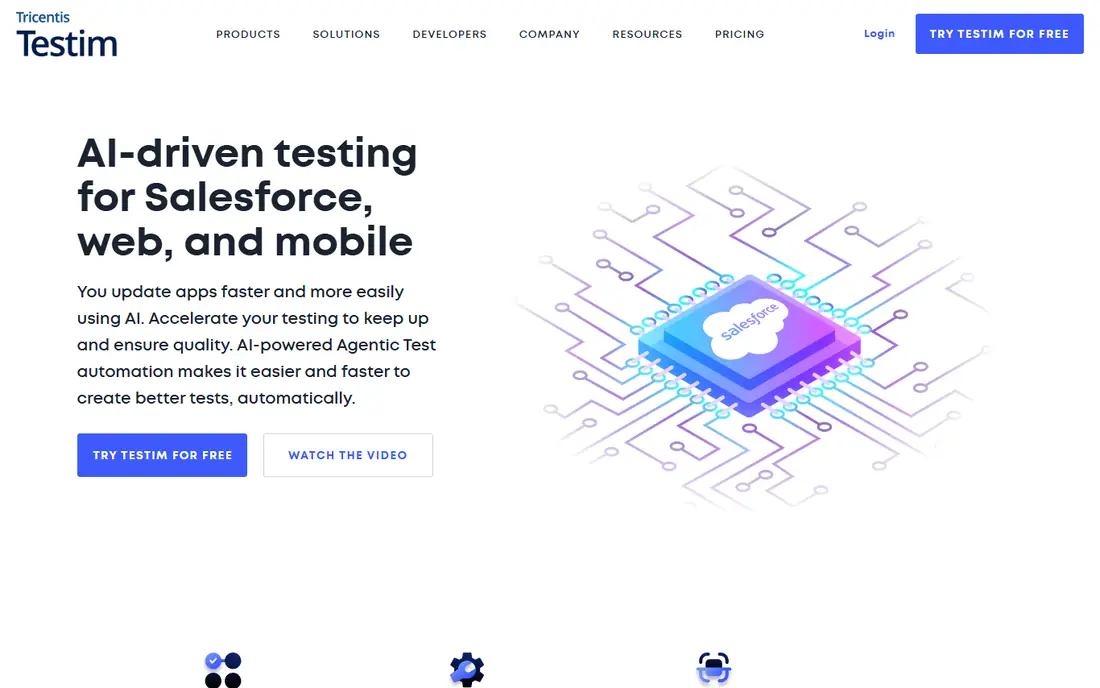
Testim, now part of Tricentis, lets teams record tests in a browser and stabilize them with AI, while still allowing code for custom logic. That mix suits teams with mixed skills, since QA staff can build tests visually and engineers can extend them when needed. It supports web and mobile testing, plus integrations with common CI tools.
Pricing is quote-based, which makes budgeting harder for small teams. Advanced features also take time to learn, especially for teams new to test automation. For mid-size to large web teams, Testim offers a practical balance of speed and control.
- Low-code recording
- AI stabilization
- Code extensibility
- Quote-based pricing
- Learning curve for advanced features
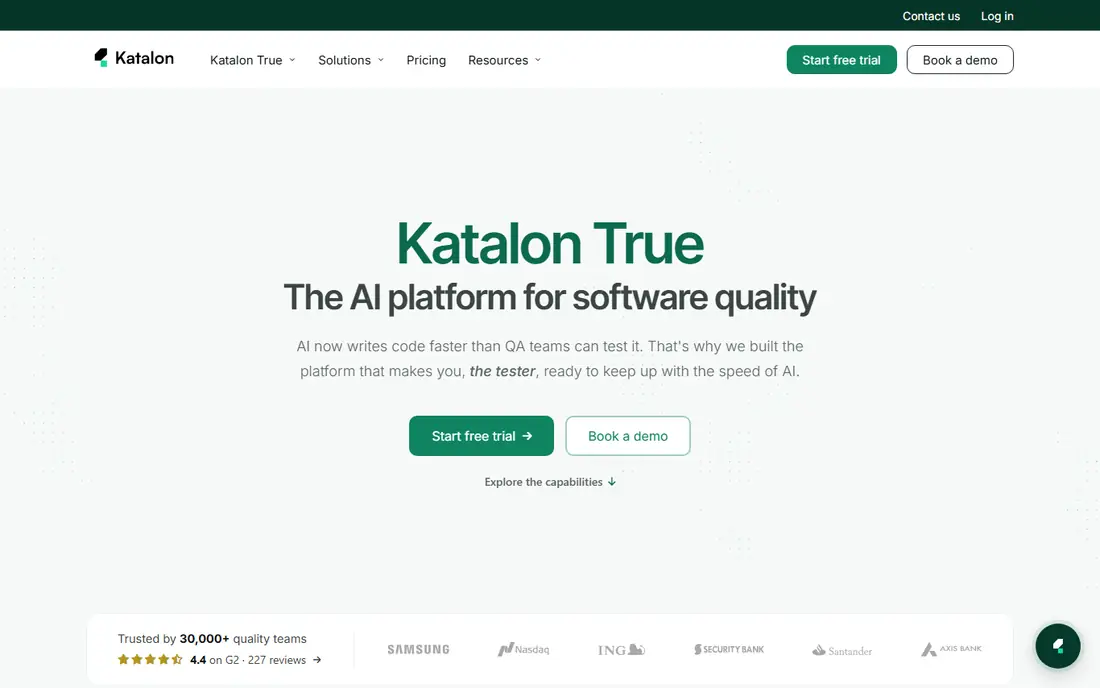
Katalon covers web, mobile, desktop, and API testing in one platform, with both low-code recording and scripting for engineers. Its published pricing, starting at $70 per seat per month, makes it easier to budget than quote-only rivals. Self-healing features and integrations with CI tools help teams keep suites stable as apps change.
Per-seat pricing can add up quickly for large QA teams, and the full platform can feel heavy for simple web projects. Still, Katalon is a good fit for teams that want one vendor for most testing types without building a custom framework from scratch.
- Published pricing
- Web, mobile, and API testing
- Low-code and script modes
- Per-seat costs add up
- Interface can feel heavy
Selenium is the long-standing free framework for browser automation, and it remains the foundation for many test suites. It supports major browsers, many programming languages, and grid-based parallel runs. The community, documentation, and third-party tools around Selenium are extensive.
It does not include built-in AI self-healing, so teams must handle locator maintenance themselves or pair Selenium with an AI tool. It also requires coding skill and setup time. For engineering-led teams that want full control and no license cost, Selenium is still a solid base.
- Free and open source
- Huge community
- Broad browser support
- No built-in AI healing
- Requires coding and maintenance
Playwright, from Microsoft, is a modern free framework for Chromium, Firefox, and WebKit testing. Its auto-waiting, tracing, and parallel execution features reduce flaky tests compared with older frameworks. It supports TypeScript, JavaScript, Python, Java, and .NET, which helps teams use a language they already know.
Like Selenium, Playwright is code-based and does not bundle AI test generation or self-healing by itself. Teams add AI through copilots, recorders, or commercial layers. For developers who want a fast, free, and reliable framework, Playwright is an excellent starting point.
- Free and open source
- Fast and reliable
- Auto-waiting and tracing
- Code-based
- AI features come from other tools
Applitools specializes in visual AI, comparing screenshots across browsers, devices, and screen sizes to catch layout shifts, broken styles, and rendering bugs. It integrates with Selenium, Playwright, Cypress, and other frameworks, so teams can add visual checks without replacing their existing tests. That focus makes it strong for design-heavy apps and storefronts.
It is not a full test creation tool, so teams still need a framework or recorder for functional tests. Paid pricing is quote-based, though a free plan exists for small use. For teams where visual regressions are costly, Applitools is the specialist to evaluate first.
- AI visual comparison
- Cross-browser visual checks
- Works with existing frameworks
- Quote-based paid pricing
- Visual focus means less test creation help
LambdaTest, now branded in part as TestMu AI, provides a cloud grid for testing websites and apps across browsers, operating systems, and real devices. Its AI features include test generation and analysis, plus integrations with CI tools and popular frameworks. That breadth helps teams that cannot maintain a large device lab themselves.
Cloud execution costs rise with parallel runs and test volume, so large suites need careful budgeting. AI features also vary by plan, so confirm which features are included before buying. For cross-browser coverage without hardware, LambdaTest is a practical choice.
- Broad browser and device cloud
- AI test features
- Good CI integration
- Cloud runs cost more at scale
- AI features vary by plan
Functionize uses agentic AI to create, run, and fix tests from natural language descriptions and recorded flows. Its published starting price of $20 per month makes it one of the cheapest AI testing options to try. For small teams that want AI help without a large enterprise contract, that entry point matters.
Agentic pricing is metered by actions such as creating and fixing tests, so heavy use can raise costs beyond the base plan. The agentic approach is also newer, so teams should test it on their real app and review generated tests carefully. For small teams open to AI-led creation, Functionize is worth a trial.
- Low published starting price
- Agentic test creation
- Natural language inputs
- Newer agentic model
- Metered actions can add up
Autify lets teams record tests without code, then uses AI to maintain them as the app changes. It supports web and mobile apps, which suits product teams that ship on both platforms. A free tier with monthly credits lets small teams test the workflow before paying.
Paid pricing varies by plan and usage, so confirm credit limits and mobile coverage before committing. Engineers who want full code control may prefer Playwright or Selenium. For QA teams that want speed and low code, Autify offers a friendly and capable path.
- No-code recording
- AI maintenance
- Mobile app support
- Pricing varies by plan
- Less code control than frameworks
How we picked these
We compared official feature pages, pricing pages, and documentation for tools that truly use AI for test creation, healing, visual checks, or analysis. We included free frameworks, low-code platforms, and enterprise tools, and we marked pricing as See website where vendors use quotes. We did not claim hands-on testing, and we left out manual testing services and tools with no current AI features.
How to evaluate an AI testing tool
Start with your real app, not a demo site. Record or generate tests for your most changed pages, then change a button label, move a field, and see whether the tool heals the test or fails cleanly. Check how it reports failures, since a healed test that hides a real bug is worse than a clear failure.
Also compare total cost, including seats, cloud runs, credits, and mobile add-ons. A low base price can grow quickly with parallel runs. Run a pilot for two to four weeks, measure maintenance time and flaky test rates, and only then compare vendors on equal terms.
Sources
Frequently asked questions
Do AI testing tools replace QA engineers?
No. They reduce maintenance work, especially locator fixes, but engineers still design test strategy, review AI-generated tests, and investigate real failures. The tools change where QA time goes, not whether QA skill is needed.
What is self-healing test automation?
Self-healing uses machine learning to repair test locators when the UI changes, so tests keep passing after a redesign instead of failing on renamed elements. mabl, Testim, and Katalon all offer versions of it. The trade-off is explainability, since a healed failure can be harder to diagnose.
Which is cheaper for a small team, mabl or Katalon?
Katalon is easier to budget because it publishes pricing starting at $70 per seat per month. mabl is quote-only and generally aimed at larger teams. Functionize, starting at $20 per month, is cheaper than both for small teams, though metered actions can add cost.
Can these tools test mobile apps?
Most can, though coverage varies. Katalon, LambdaTest, Testim, and Autify cover native mobile testing, while mabl charges extra for native mobile as an add-on. Confirm whether mobile is included or paid extra before you sign.
Do I need coding skills to use AI testing tools?
Not for no-code options. Autify, mabl, and Testim let you record or describe tests without code. Katalon and Functionize offer a path from no-code to scripting. Selenium and Playwright require coding, while Applitools assumes you already have a framework it can watch.
How does credit-based pricing work?
Vendors meter cloud test runs with credits instead of seats. mabl, Functionize, and Autify all use credit or action metering in some plans. Local and CI runs are often free or cheaper, while vendor cloud execution is where costs rise. Check credit limits during a trial.