Best AI Investment App in 2026: 9 Options Compared
By ToolNimba Editorial Team November 4, 2026 8 min read

- Top pick
 Wealthfront
automated tax-aware portfolios
Starting priceSee websiteCheck out WealthfrontRead our review - Runner-up
 Betterment
goal-based automated investing
Starting priceSee websiteCheck out BettermentRead our review - Also great
 Fidelity Go
low-cost beginner automation
Starting priceSee websiteCheck out Fidelity GoRead our review
How we researched this
We compared official pricing and feature pages, app store listings, privacy policies and public user reviews. Prices change, so check the provider's site before you pay.
Key takeaways
- Wealthfront and Betterment suit hands-off investors who want diversified portfolios, rebalancing, and tax features.
- Fidelity Go and Schwab Intelligent Portfolios suit beginners who want low or no management fees on smaller balances.
- Magnifi, Danelfin, and Kavout suit self-directed investors who want AI research, scores, and screening.
- Trade Ideas and Tickeron suit active traders, but they carry higher costs and higher risk, and past signals do not guarantee future returns.
Quick comparison
| Name | Best for | Starting price | Free plan | |
|---|---|---|---|---|
| Wealthfront | automated tax-aware portfolios | See website | No | Visit |
| Betterment | goal-based automated investing | See website | No | Visit |
| Fidelity Go | low-cost beginner automation | See website | No | Visit |
 Schwab Intelligent Portfolios | no management fee automation | See website | No | Visit |
 Magnifi | conversational investment research | See website | Yes | Visit |
 Danelfin | explainable AI stock scores | See website | Yes | Visit |
 Kavout | quantitative stock scoring | See website | Yes | Visit |
 Trade Ideas | active trading signals | See website | Free trial | Visit |
 Tickeron | pattern and trend signals | See website | Free trial | Visit |
The best AI investment apps
This is not financial advice; investing carries risk, and you can lose money. AI investment apps fall into two groups: automated portfolios that invest for you, and research tools that help you decide for yourself.
This is not financial advice; investing carries risk, and past performance does not guarantee future results.
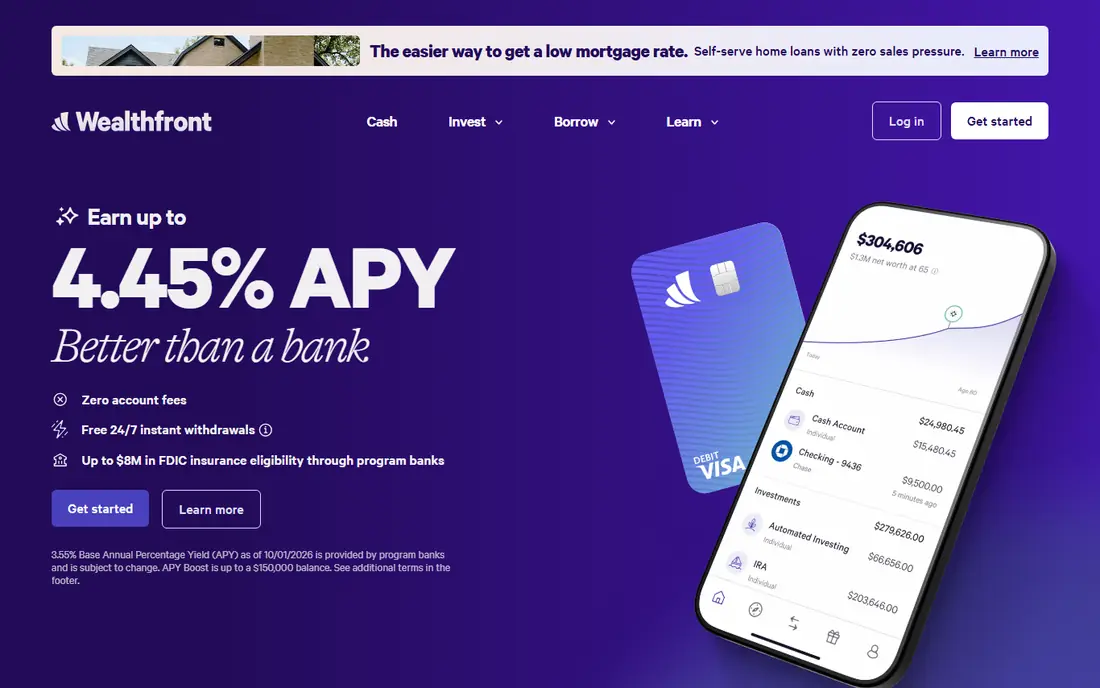
Wealthfront suits hands-off investors who want automation and tax features without daily decisions.
Its portfolios diversify across asset classes, rebalance automatically, and offer tax-loss harvesting on eligible taxable accounts. The catch is human help. Core investors get digital planning tools rather than a dedicated adviser, so investors who want regular human advice should compare premium options.
Before you commit to Wealthfront, check the current plan limits, renewal price, and cancellation terms on its official site, and test it with a small real task that matches how you will use it every week.
- Automated portfolios
- Daily tax-loss harvesting on eligible accounts
- Rebalancing
- No human adviser access on core plan
- Minimums apply to some features

Betterment suits beginners who think in goals, such as retirement, a home deposit, or education.
You set a goal and risk level, and Betterment builds and rebalances a diversified portfolio for that goal. The catch is fee tiers. Core fees are modest, but unlimited human adviser access sits on a premium tier with a higher balance requirement.
Before you commit to Betterment, check the current plan limits, renewal price, and cancellation terms on its official site, and test it with a small real task that matches how you will use it every week.
- Goal-based portfolios
- Automatic rebalancing
- Tax coordination features
- Premium human advice needs higher balances
- Fees vary by plan

Fidelity Go suits beginners who want a trusted broker name and low starting costs.
It builds a diversified portfolio based on your goals and risk tolerance, with coaching tools in the Fidelity app. The catch is thresholds. Check the current fee schedule, since the no-fee terms apply only up to a published balance.
Before you commit to Fidelity Go, check the current plan limits, renewal price, and cancellation terms on its official site, and test it with a small real task that matches how you will use it every week.
- No management fee under some balances in published terms
- Fidelity backing
- Diversified portfolios
- Management fee applies above a threshold
- Human advice is limited
Schwab Intelligent Portfolios
Best for: no management fee automation
Schwab Intelligent Portfolios suits investors who want automation without a percentage advisory fee.
Its core portfolios diversify across asset classes and rebalance automatically, backed by a large US broker. The catch is cash. Portfolios hold a cash allocation that earns interest but may drag returns compared with fully invested portfolios, so read the allocation details.
Before you commit to Schwab Intelligent Portfolios, check the current plan limits, renewal price, and cancellation terms on its official site, and test it with a small real task that matches how you will use it every week.
- No advisory fee on core portfolios
- Schwab backing
- Automatic rebalancing
- Cash allocation can be high
- Premium advice costs extra
Magnifi suits self-directed investors who want to ask questions about stocks and ETFs in plain language.
You can search for investment ideas, compare holdings, and analyse a portfolio without building complex screens manually. The catch is scope. Magnifi helps research, but it does not manage your portfolio for you, so you still make every trade decision.
Before you commit to Magnifi, check the current plan limits, renewal price, and cancellation terms on its official site, and test it with a small real task that matches how you will use it every week.
- Natural-language search
- Portfolio analysis
- Screening tools
- Research only, not automated investing
- Subscription needed for full features
Danelfin suits investors who want to understand why a stock scores well, not only the score itself.
Its AI rates stocks and ETFs and explains the factors behind each score, which helps learning and screening. The catch is uncertainty. A high score is a model output based on past data, not a promise of future gains, and scores can change as data changes.
Before you commit to Danelfin, check the current plan limits, renewal price, and cancellation terms on its official site, and test it with a small real task that matches how you will use it every week.
- AI scores from 1 to 10
- Explanations for scores
- Stock screening
- Scores are not advice
- Full features need a paid plan
Kavout suits advanced investors who like quantitative rankings and screening.
Its Kai Score ranks stocks using quantitative factors, and screening tools help narrow a large market to a watchlist. The catch is complexity. Beginners may find the data and terminology harder to use than a simple robo-adviser portfolio.
Before you commit to Kavout, check the current plan limits, renewal price, and cancellation terms on its official site, and test it with a small real task that matches how you will use it every week.
- Kai Score rankings
- Quantitative screening
- Market data
- Interface is technical
- Full data needs a paid plan
Trade Ideas suits experienced active traders who want real-time signals and scanners.
Its AI assistant and scanners surface trading ideas, patterns, and alerts during market hours, with backtesting for strategies. The catch is risk and cost. Active trading can lose money quickly, and the monthly price is high, so it is not a beginner portfolio tool.
Before you commit to Trade Ideas, check the current plan limits, renewal price, and cancellation terms on its official site, and test it with a small real task that matches how you will use it every week.
- AI-assisted trading signals
- Scanners and backtesting
- Real-time alerts
- High monthly cost
- Active trading carries high risk
Tickeron suits traders who want pattern and trend signals across stocks, ETFs, and crypto where offered.
Its tools scan for chart patterns, trends, and breakout signals, and present them in a dashboard for review. The catch is interpretation. Signals need human judgement, risk controls, and position sizing, and past patterns do not predict future prices reliably.
Before you commit to Tickeron, check the current plan limits, renewal price, and cancellation terms on its official site, and test it with a small real task that matches how you will use it every week.
- Pattern recognition
- Trend and breakout signals
- AI robots for some strategies
- Signals are not guarantees
- Subscription tiers vary by feature
How we picked these
We compared official feature pages, pricing pages, app store listings, privacy and support pages, and public reviews for each option. We checked whether each product still exists, fits the topic, and offers a clear price or free tier, and we marked prices as See website where vendor pricing varies by plan, region, or account type.
We did not claim hands-on testing we did not do. Instead, we weighed plan limits, ease of setup, and honest weaknesses alongside strengths, so the list mixes well-known leaders with smaller options that suit specific needs.
How to choose an AI investment app safely
Decide first whether you want automation or research. Automated portfolios suit long-term investors who will not trade often, while research tools suit investors who want to pick stocks themselves and accept the extra risk. Compare management fees, fund fees, minimums, and account types, and check whether the app is offered by a regulated broker or adviser where relevant. Be sceptical of any tool that promises market-beating returns, and never invest money you cannot afford to lose. Start small, diversify, and review fees and performance regularly rather than chasing daily signals.
It also helps to write down your must-have features before you look at prices, because a low headline price can hide limits on users, records, exports, or support that matter later. Compare at least two options side by side on the same task, such as creating a record, sending a message, or completing a booking, and note where each one feels slow, confusing, or incomplete. Ask support a real question during the trial, since response quality often predicts how a problem will be handled after you pay.
Check the vendor pricing page again before you buy, since plans, limits, and promotions change. A short trial with your real workflow will tell you more than any feature list.