Best AI Marketing Automation Platform in 2026: 9 Tools Compared
By ToolNimba Editorial Team November 6, 2026 9 min read

- Top pick
 HubSpot Marketing Hub
All-in-one B2B marketing
Starting priceSee websiteCheck out HubSpot Marketing HubRead our review - Runner-up
 ActiveCampaign
Automation depth on a budget
Starting priceSee websiteCheck out ActiveCampaignRead our review - Also great
 Klaviyo
Ecommerce email and SMS
Starting priceFreeCheck out KlaviyoRead our review
How we researched this
We compared official pricing and feature pages, app store listings, privacy policies and public user reviews. Prices change, so check the provider's site before you pay.
Key takeaways
- HubSpot Marketing Hub is our pick for teams that want marketing, CRM and reporting in one place, though its professional tier is a major investment.
- ActiveCampaign offers strong automation depth for smaller budgets, with paid plans starting lower than most all-in-one platforms.
- Brevo and Mailchimp are the friendliest starting points for small teams, since both offer free tiers for basic email work.
- Klaviyo is the standout for online stores, because it ties email and SMS closely to purchase behavior.
- Adobe Marketo Engage and Salesforce Account Engagement suit large B2B teams with long sales cycles, and both are priced by quote or high monthly fees.
Quick comparison
| Name | Best for | Starting price | Free plan | |
|---|---|---|---|---|
| HubSpot Marketing Hub | All-in-one B2B marketing | See website | Yes | Visit |
| ActiveCampaign | Automation depth on a budget | See website | Free trial | Visit |
| Klaviyo | Ecommerce email and SMS | Free | Yes | Visit |
 Brevo | Budget email and SMS | Free | Yes | Visit |
 Mailchimp | Small business email | Free | Yes | Visit |
 Adobe Marketo Engage | Enterprise B2B and account based marketing | See website | No | Visit |
 Salesforce Account Engagement | Salesforce based B2B teams | See website | No | Visit |
 Customer.io | Product led lifecycle messaging | See website | Free trial | Visit |
 Keap | Small service businesses | See website | Free trial | Visit |
The best AI marketing automation tools
AI features now show up in almost every marketing platform, from subject line suggestions to send time prediction and lead scoring. The difference between these tools is less about whether they mention AI and more about what data the AI can use, and how much you pay to reach it. We compared official pricing and feature pages, and we weighed automation depth, pricing model and ease of setup for each platform below.
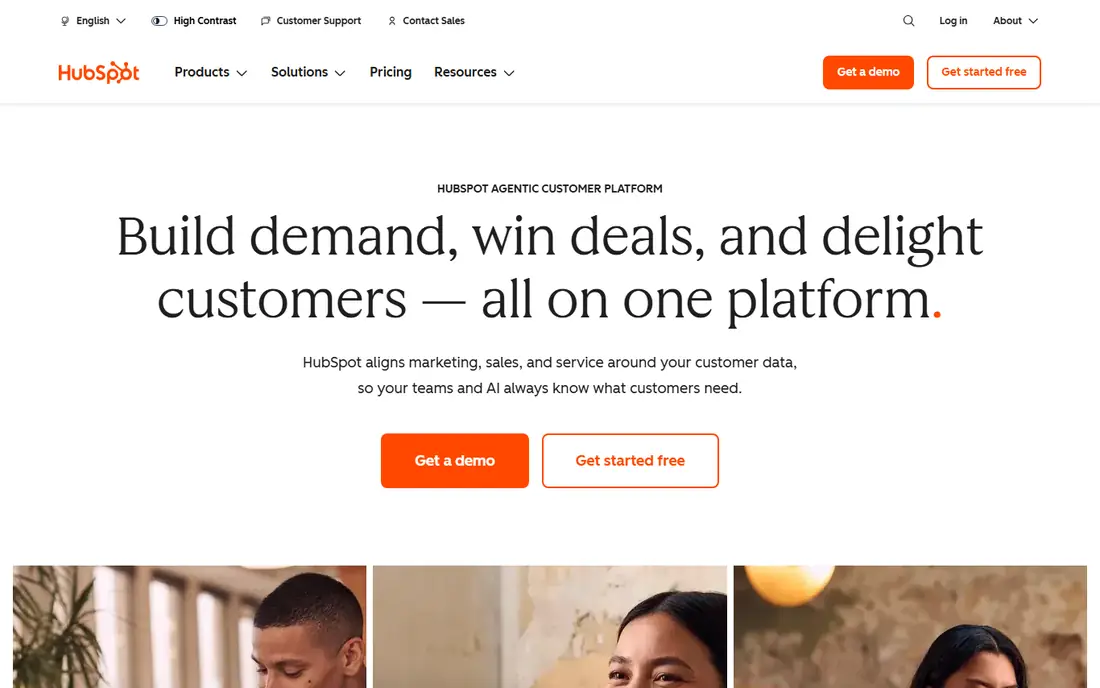
HubSpot is the easiest platform on this list to explain to a boss. Contacts, campaigns, landing pages, email and reporting live in one system, and the AI assistant, called Breeze, can help draft content and summarize records. For a B2B team that wants lead scoring, workflows and revenue reporting without stitching five tools together, that unity is a real advantage.
The catch is price. The free tools cover basics, and the starter tier is affordable, but the professional tier that most growing teams actually need is a large monthly commitment, often with onboarding fees. Start free, prove the workflows work, and only move up when the reporting and automation limits start to hurt.
- Built-in CRM keeps marketing and sales data together
- Wide automation and reporting tools
- Free tools for small teams
- Professional tier pricing rises fast
- Onboarding can add cost
- Some AI features sit on higher tiers
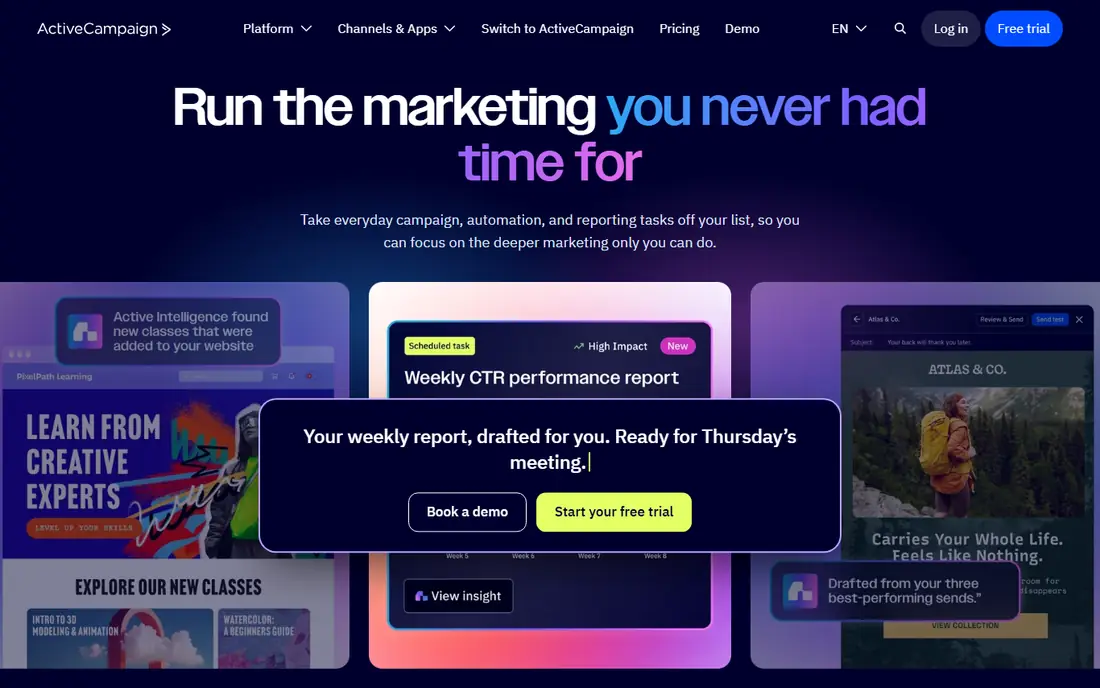
ActiveCampaign has long been the favorite of small teams that want real automation without enterprise pricing. Its visual builder handles branching journeys, site tracking, lead scoring and split testing, and its AI features include predictive sending and content suggestions. If your main job is email and lifecycle automation, it punches above its price.
It is not the simplest tool here, and new users should expect a few days of learning before their first complex journey feels natural. Contact based pricing also means a messy list costs money, so clean your contacts before you import them.
- Flexible visual automation builder
- Predictive sending on higher tiers
- Good value at small contact counts
- No permanent free plan
- Interface takes time to learn
- Costs rise with contact count

Klaviyo is built for stores. It pulls order, browsing and cart data into segments and ready-made flows for welcome series, abandoned carts and post-purchase follow-up, and its AI tools help with subject lines, send timing and product recommendations. For a Shopify or WooCommerce store, that tight link between store data and messaging is hard to match.
Pricing follows active profiles, so a growing store pays more even if it mails rarely. B2B teams without a store will find much of its strength wasted. If you sell online and email drives real revenue, Klaviyo is usually worth the cost, but model your profile count before you commit.
- Strong ecommerce integrations
- Purchase based segments and flows
- Email plus SMS in one place
- Costs grow quickly with active profiles
- Less suited to non-ecommerce B2B work
- Learning curve for advanced flows
Brevo suits teams that mail a large list infrequently, because its paid plans are priced by email volume rather than contact count. The free tier covers basic sending, and the platform also handles SMS, WhatsApp campaigns and a simple CRM. Its AI assistant can help draft subject lines and email copy.
It will not replace a full B2B automation suite for complex lead scoring or account based work. For newsletters, announcements and straightforward welcome flows on a tight budget, Brevo is one of the best value options available.
- Free tier for getting started
- Pricing based on sends rather than contacts
- Email, SMS and WhatsApp in one tool
- Automation depth is lighter than ActiveCampaign
- Some advanced features need higher tiers
- Templates are less polished
Mailchimp remains the default first email tool for many small businesses, and for good reason. Setup is quick, templates look decent, and the free tier lets a new business send to a small audience without paying. Its AI features include content suggestions, send time optimization and basic journey building.
Larger or more complex teams will hit limits. Multi-step journeys, advanced scoring and deep CRM reporting are thinner here than in ActiveCampaign or HubSpot. Treat Mailchimp as a strong starting point, and move on when your automation needs outgrow its builder.
- Very easy to start
- Large template library
- Free tier for small lists
- Automation is simpler than specialist tools
- Costs rise with contacts
- Advanced segmentation sits on higher tiers
Adobe Marketo Engage
Best for: Enterprise B2B and account based marketing
Marketo Engage is the enterprise workhorse of this list. It handles complex lead lifecycles, account based campaigns, multi-touch attribution and large databases, and its AI features support predictive audiences and content personalization. Large B2B teams with long sales cycles and dedicated marketing operations staff get the most from it.
Smaller teams should stay away. Pricing is by quote and sits at enterprise levels, implementation often takes weeks or months, and you will likely need specialist help. If you are choosing between Marketo and HubSpot at scale, compare implementation cost and staffing, not just the license fee.
- Deep B2B lead management and scoring
- Strong account based marketing tools
- Mature Salesforce and CRM integrations
- Quote only pricing
- Implementation usually needs specialists
- Interface feels dated in places
Salesforce Account Engagement
Best for: Salesforce based B2B teams
Account Engagement, formerly Pardot, makes the most sense if your sales team already lives in Salesforce. Campaigns, lead scoring and engagement history sync directly with Salesforce records, and AI features help with lead grading, content and agent assisted work. That native link removes a whole class of sync problems.
For teams outside Salesforce, the price is hard to justify, since you pay enterprise rates for integration value you will not use. It also rewards careful setup, so budget time for mapping fields and scoring rules before launch.
- Native Salesforce integration
- Strong B2B automation and scoring
- AI features through Agentforce and Einstein
- High starting price
- Best value only for existing Salesforce users
- Setup needs care
Customer.io is built for software and app teams that want messages triggered by what users actually do in a product. You can build journeys around signups, feature use, inactivity and billing events, and send across email, push and SMS. Its AI tools help with content and journey work, and unlimited seats make it friendly for larger product teams.
It is not a general CRM, and marketing teams without clean event data will get less from it. If your product already tracks events well, Customer.io turns that data into timely lifecycle messages better than most email-first tools.
- Event based journeys driven by product behavior
- Email, push and SMS in one place
- Unlimited seats on core plans
- Needs product event data to shine
- Pricing is usage based
- Less built-in CRM than HubSpot
Keap combines a small business CRM, email automation, landing pages and payments, which suits coaches, consultants, trades and agencies that sell services. Its AI and automation tools help with follow-up sequences, appointment reminders and lead capture, and the templates give new users a faster start than a blank builder.
It costs more than Brevo or Mailchimp, and enterprise B2B teams will find HubSpot or Marketo a better fit. For a service business that wants one system to capture, follow up and get paid, Keap is a practical all-in-one choice.
- CRM plus automation plus payments in one tool
- Good for service businesses
- Helpful onboarding and templates
- Higher starting price than email-only tools
- Less suited to large B2B teams
- Contact limits need checking
How we picked these
We compared official pricing pages, feature documentation and AI feature descriptions for platforms that are actively sold and supported, and we favored tools with clear automation builders, published pricing or a clear quote process, and real AI features beyond a single writing helper. We excluded tools that only send newsletters with no automation, and tools that could not be verified as currently available. Prices and plan limits change often, so confirm the current tier and contact or profile limits before you sign up.
How to choose the right platform for your team
Start with your data, not the feature list. A store should pick a tool that reads purchase data well, a B2B team should pick one that fits its CRM, and a product team should pick one that reacts to product events. Next, model the real cost at your list size, send volume and team size, since per-contact, per-profile, per-send and per-seat pricing behave very differently as you grow.
Run a pilot before you migrate everything. Build one welcome flow, one nurture flow and one report, and check how long each takes and how clean the data looks. Pay attention to deliverability tools, unsubscribe handling and data controls, since a platform that mails badly will hurt you no matter how clever its AI looks in a demo.
Sources
- https://www.hubspot.com
- https://www.activecampaign.com
- https://www.klaviyo.com
- https://www.brevo.com
- https://mailchimp.com
- https://business.adobe.com
- https://www.salesforce.com
- https://customer.io
- https://keap.com
- https://www.spotsaas.com/blog/5-best-marketing-automation-tool-for-2025
- https://dupple.com/blog/best-marketing-automation-tools
Frequently asked questions
What is the best AI marketing automation platform for small businesses?
For most small teams, ActiveCampaign offers the best balance of automation depth and price, while Brevo and Mailchimp are cheaper starting points. HubSpot is worth it if you also need its CRM and reporting, but check the professional tier price before you commit.
What are the best AI tools for marketing automation?
The strongest options combine an automation builder with AI help for content, send timing and audience prediction. HubSpot, ActiveCampaign, Klaviyo and Customer.io all offer AI features, but the value depends on whether the AI can use your CRM, store or product data.
How much does AI marketing automation software cost?
Costs range from free tiers for small lists to thousands of dollars per month for enterprise platforms. Small teams often pay under 50 dollars a month to start, growing B2B teams may pay hundreds, and enterprise tools such as Marketo are quote only.
Is there a best AI marketing automation software with a free plan?
Yes. HubSpot, Klaviyo, Brevo and Mailchimp all offer free tiers, though each limits contacts, sends or features. Free plans are good for learning and small audiences, but most growing teams move to a paid tier for automation and reporting.
Can AI marketing automation replace a marketing team?
No. AI can draft copy, suggest timing and score leads, but it still needs clean data, a clear offer and human review. The best results come when a team uses AI to speed up routine work and spends the saved time on strategy, creative work and customer conversations.