Best AI Mode SEO Rank Tracking Software in 2026: 9 Tools Compared
By ToolNimba Editorial Team November 1, 2026 10 min read

- Top pick
 ZipTie
AI Mode and AI Overviews value tracking
Starting price$42.75 per monthCheck out ZipTieRead our review - Runner-up
 Peec AI
Readable AI Mode and multi-engine reports
Starting priceSee websiteCheck out Peec AIRead our review - Also great
 Otterly.AI
Budget AI Mode tracking for small teams
Starting price$29 per monthCheck out Otterly.AIRead our review
How we researched this
We compared official pricing and feature pages, app store listings, privacy policies and public user reviews. Prices change, so check the provider's site before you pay.
Key takeaways
- Google AI Mode gives conversational answers with citations, so tracking must cover mentions and cited pages, not just classic rankings.
- ZipTie is the strongest value pick for AI Mode and AI Overviews tracking, while Profound suits enterprise teams with large prompt sets.
- AI Mode results vary by query, location, and account context, so track the same prompts over time and watch trends, not single snapshots.
- Shortlist tools that name AI Mode coverage clearly, since some tools track AI Overviews or ChatGPT but not AI Mode itself.
Quick comparison
| Name | Best for | Starting price | Free plan | |
|---|---|---|---|---|
| ZipTie | AI Mode and AI Overviews value tracking | $42.75 per month | Free trial | Visit |
| Peec AI | Readable AI Mode and multi-engine reports | See website | Free trial | Visit |
| Otterly.AI | Budget AI Mode tracking for small teams | $29 per month | Free trial | Visit |
 Profound | Enterprise AI search analytics | See website | Free trial | Visit |
 Scrunch AI | Monitoring plus content fixes | See website | Free trial | Visit |
 Semrush AI Visibility Toolkit | AI data inside a full SEO suite | $99 per month | Free trial | Visit |
 Ahrefs Brand Radar | AI metrics inside an Ahrefs workflow | $199 per month | No | Visit |
 SE Ranking | AI Overviews inside an existing rank tracker | $52 per month | Free trial | Visit |
 Cituna | Price-sensitive core AI tracking | $39 per month | No | Visit |
The best AI Mode SEO rank tracking software
Google AI Mode is a conversational search experience that answers questions in full, with links and citations, rather than only listing pages. For SEO teams, that changes what to measure: a brand can appear in an AI Mode answer, be cited as a source, or be left out entirely, even when its classic ranking looks fine. We compared tools that state AI Mode or Google AI coverage, show citations, and track prompts over time. Scores in this category are directional, since AI answers shift with query wording and model updates.
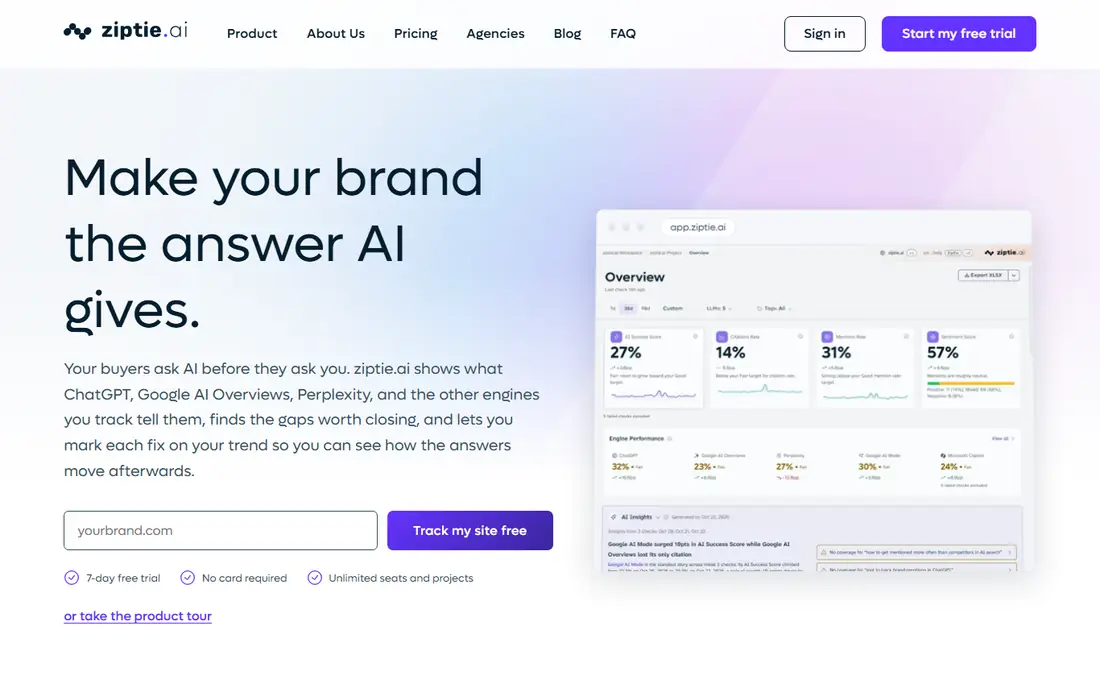
ZipTie earns the top spot for AI Mode tracking on value and focus. It tracks brand mentions and citations across seven engines, including Google AI Mode, AI Overviews, ChatGPT, Gemini, Perplexity, and Copilot, and it shows organic positions beside AI answers. Usage-based pricing means a team pays for the prompts and engines it checks, which suits agencies and in-house teams with uneven needs.
The limits are worth noting. Reports follow a refresh cycle, so ZipTie is a trend tool, not a live monitor for every minute. It also focuses on tracking and reporting rather than deep sentiment or crawler analytics. For most SEO teams, though, the mix of AI Mode coverage, citation detail, and fair pricing is hard to beat.
- Covers Google AI Mode plus AI Overviews and other engines
- Usage-based pricing
- Unlimited seats and projects
- Reports update on a set cycle rather than constantly
- Lighter on sentiment and agent analytics
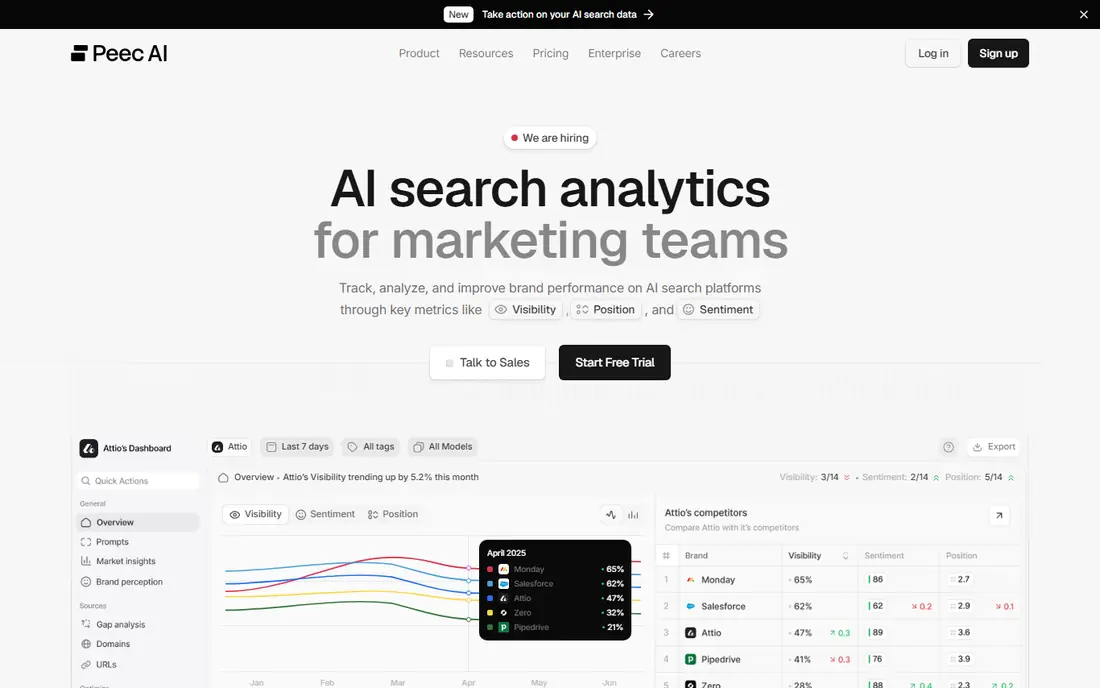
Peec AI is a strong choice for marketers who want AI Mode data they can read and share without a data team. Reports show mentions, position, and sentiment per prompt, with competitors in the same answers. Regional tracking helps teams that serve several countries, since AI answers can differ by market.
Check plan limits before buying. Starter plans cover a set prompt count and a subset of engines, with extra engines as add-ons. List your AI Mode prompts first, confirm they fit the plan, and trial the tool on real queries from your category. For mid-market teams, Peec AI balances clarity and depth well.
- Clear brand, competitor, and sentiment reports
- Multi-region tracking
- Browser-based capture for core engines
- Starter plans limit prompts and engine choices
- Prices vary by currency and billing term
Otterly.AI is the budget pick for a small team that wants to start tracking AI Mode and AI answers without a large contract. Daily monitoring shows movement over time, and the setup is simple enough for a solo marketer. For a first project, that low cost and fast start matter more than enterprise depth.
The catch is add-on pricing. Core engines are included, but Google AI Mode, Gemini, and Claude sit as paid add-ons on some plans, so the total cost depends on your engine list. Count your AI Mode prompts and add-on costs before comparing Otterly.AI with ZipTie, which prices engines alike.
- Lowest entry price in this list
- Daily monitoring
- Simple setup for a first AI tracking project
- Google AI Mode and some engines are paid add-ons
- Entry plan covers few prompts
Profound is the enterprise standard for AI search analytics, with deep data on citations, conversation demand, and prompt volumes. For AI Mode work, its value is showing which pages get cited and what users actually ask, so content teams can target real questions rather than guessed keywords. Agent analytics also show how AI crawlers interact with a site, a growing concern for larger publishers.
Small teams should be realistic about fit. After a free trial, pricing is custom, and the platform assumes a content program large enough to act on deep data. Enterprise SEO teams will get the most from Profound, while smaller teams may get similar tracking value from ZipTie or Otterly.AI at a clearer price.
- Deep citation, conversation, and prompt-volume data
- Wide engine coverage on enterprise plans
- Agent analytics
- Brand pricing is custom after the trial
- More tool than a small SEO team needs
Scrunch pairs AI Mode and AI search monitoring with guidance on what to fix, which helps teams that want action, not just a score. It shows how AI systems describe a brand, which sources they cite, and where site content may be hard for AI systems to use. Persona tracking adds a useful angle, showing how answers differ for different buyer types.
The price sits above budget tools, and entry plans limit prompt counts. Scrunch suits a content team ready to publish fixes and remeasure over weeks. A team that only needs a mention count should choose a cheaper tracker and spend the saving on content work.
- Monitoring tied to content and site guidance
- Persona tracking
- Citation graph detail
- Higher entry price than budget trackers
- Prompt limits on entry plans
Semrush AI Visibility Toolkit
Best for: AI data inside a full SEO suite
Semrush AI Visibility Toolkit fits teams already paying for Semrush. AI mention and citation data sit beside classic SEO reports, so a team can see AI Mode visibility in the context of rankings, traffic, and content performance. Per-domain pricing is easy to budget for a single brand, and the toolkit covers ChatGPT, Google AI, Gemini, and Perplexity today.
Dedicated tools go deeper on engine count, citation graphs, and prompt volume. Semrush is the convenience pick for a team that wants AI Mode data without a second dashboard. If AI Mode becomes your main channel, compare Semrush with ZipTie or Profound on your exact prompts before renewing.
- AI visibility next to keyword, traffic, and backlink data
- Clear per-domain pricing
- Familiar reporting
- Per-domain cost adds up for many brands
- AI engine coverage is narrower than dedicated tools
Ahrefs Brand Radar suits SEO teams that already trust Ahrefs for links and keywords. Its AI visibility index tracks brand presence across AI platforms, and custom prompts let teams track their own questions. That pairing helps a team judge whether AI mentions line up with strong content and links, or whether one side needs work.
The cost is higher than budget trackers, and there is no free plan, though trials and standalone options exist in some plans. Ahrefs is best for a team already in its ecosystem that wants AI Mode and AI search data in the same workflow. Teams outside Ahrefs should compare total cost with ZipTie first.
- AI visibility index plus custom prompts
- Strong backlink and SEO data alongside
- Clear index pricing
- No free plan
- Custom prompt pricing adds cost for large prompt sets
SE Ranking appeals to SEO teams that want AI features without leaving their rank tracker. Its suite covers classic rankings, site audits, and backlink checks, with AI Overview tracking added for teams watching Google AI features. The entry price is affordable for a small agency or in-house team.
Before buying for AI Mode specifically, confirm which Google AI surfaces your plan tracks and how often data refreshes. SE Ranking is a solid all-round SEO pick with useful AI data, but a dedicated AI tracker such as ZipTie may cover AI Mode more directly. Trial both on the same prompts to compare.
- AI Overview data inside a familiar rank tracker
- Affordable entry for SEO teams
- Classic rank tracking included
- AI Mode coverage should be confirmed on your plan
- AI features are an add-on to a classic SEO suite
Cituna is the low-cost alternative for teams that need core AI metrics and cannot stretch to a larger tool. It covers the basics: brand mentions across AI answers, prompt tracking, and trend views. For a small site or a freelancer, that core view may be enough to spot whether AI visibility is rising or falling.
Depth is the trade-off. Citation detail, sentiment analysis, and competitor views are thinner than in Profound, Scrunch, or Peec AI. Cituna suits a team that wants a simple, affordable tracker and will do content fixes from its own judgment. Larger teams should shortlist it only as a budget backup.
- Low price for core AI metrics
- Simple tracking for small teams
- Useful when budget is the main constraint
- Less depth than larger tools on citations and sentiment
- Smaller vendor with less public documentation
How we picked these
We compared vendor pricing pages, feature pages, and recent AI tracking comparisons, and we kept tools that state Google AI coverage, track prompts over time, and show mentions or citations. We favored tools that name AI Mode coverage clearly and marked quote-based pricing as See website. We left out classic rank trackers with no AI answer tracking, and content writers that do not query AI systems. Prices in this category change often, so confirm the current plan and engine list before buying.
How to track AI Mode well
Start with prompts your buyers actually ask, not with keyword volume alone. Include brand questions, comparison questions, best-of questions, and buying questions, since AI Mode answers differ sharply across those types.
Build a stable prompt set
Use the same prompts, in the same wording, for at least a month, and record mentions, citations, and cited pages each cycle. Change one variable at a time, such as a page update or a new FAQ, so you can judge what moved the result. Avoid judging success from one answer, since AI Mode output varies by wording and context.
Turn citations into content work
When a competitor page is cited and yours is not, read that page and ask what facts, structure, or evidence it offers that yours lacks. Add clear facts, comparisons, and source notes to your own pages, then remeasure over several cycles. AI Mode visibility rewards pages that answer a question directly and completely.