Best AI Orchestration Tools in 2026: 8 Tools Compared
By ToolNimba Editorial Team November 11, 2026 10 min read

- Top pick
 LangChain
Stateful agent workflows
Starting priceFreeCheck out LangChainRead our review - Runner-up
 CrewAI
Role-based agent teams
Starting priceFreeCheck out CrewAIRead our review - Also great
 AutoGen
Conversational multi-agent research
Starting priceFreeCheck out AutoGenRead our review
How we researched this
We compared official pricing and feature pages, app store listings, privacy policies and public user reviews. Prices change, so check the provider's site before you pay.
Key takeaways
- LangChain and LangGraph suit teams that want fine control over stateful agent steps.
- CrewAI is the fastest route to role-based multi-agent teams for many prototypes.
- Microsoft tools suit teams already built on Azure, .NET or Microsoft 365.
- Haystack and LlamaIndex are strongest when retrieval and search sit at the center of the job.
- Most frameworks are free and open source, so model and hosting costs matter more than licence fees.
Quick comparison
| Name | Best for | Starting price | Free plan | |
|---|---|---|---|---|
| LangChain | Stateful agent workflows | Free | Yes | Visit |
| CrewAI | Role-based agent teams | Free | Yes | Visit |
| AutoGen | Conversational multi-agent research | Free | Yes | Visit |
 Microsoft Semantic Kernel | Microsoft and enterprise agent apps | Free | Yes | Visit |
 Haystack | Retrieval and search pipelines | Free | Yes | Visit |
 LlamaIndex | Data frameworks for LLM apps | Free | Yes | Visit |
 Flowise | Visual agent and chatbot building | Free | Yes | Visit |
 n8n | Workflow automation with AI steps | Free | Yes | Visit |
The best AI orchestration tools
AI orchestration tools connect models, tools, memory and steps into work that runs in order and can be checked. The best ai orchestration software depends on how much control you want, how many agents you run, and how strict your checks must be.
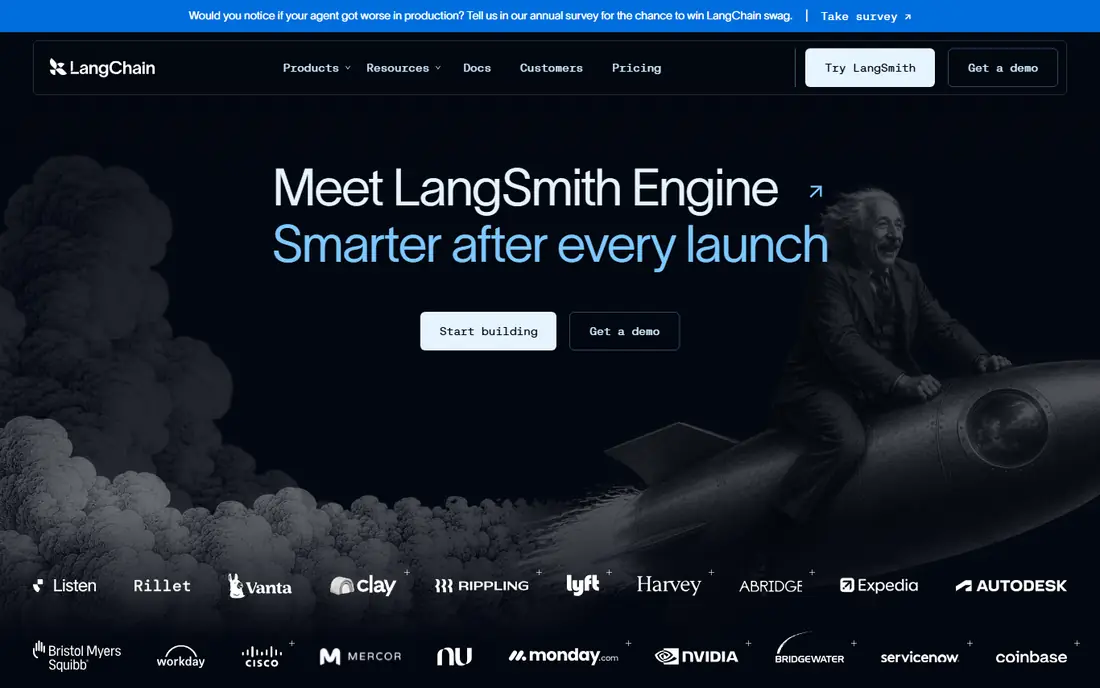
LangChain fits teams building custom agent logic. Its main strength is the largest integration library in this group. LangGraph lets you draw steps as a graph, add branches, and pause for human review. The catch is its breadth can feel heavy for a simple chatbot. Start with one narrow workflow and add branches only when you need them. We would shortlist it if you need control over state, retries and human review. When you trial LangChain, test it on the exact job you listed for stateful agent workflows. Use real data, real users and real deadlines, and write down what worked, what failed and what cost extra. That short trial record will tell you more than a demo, and it makes the final choice easier to defend to colleagues or family.
- Large integration library
- LangGraph for explicit state
- Python and JavaScript support
- Learning curve is steep
- Setup takes care to keep stable
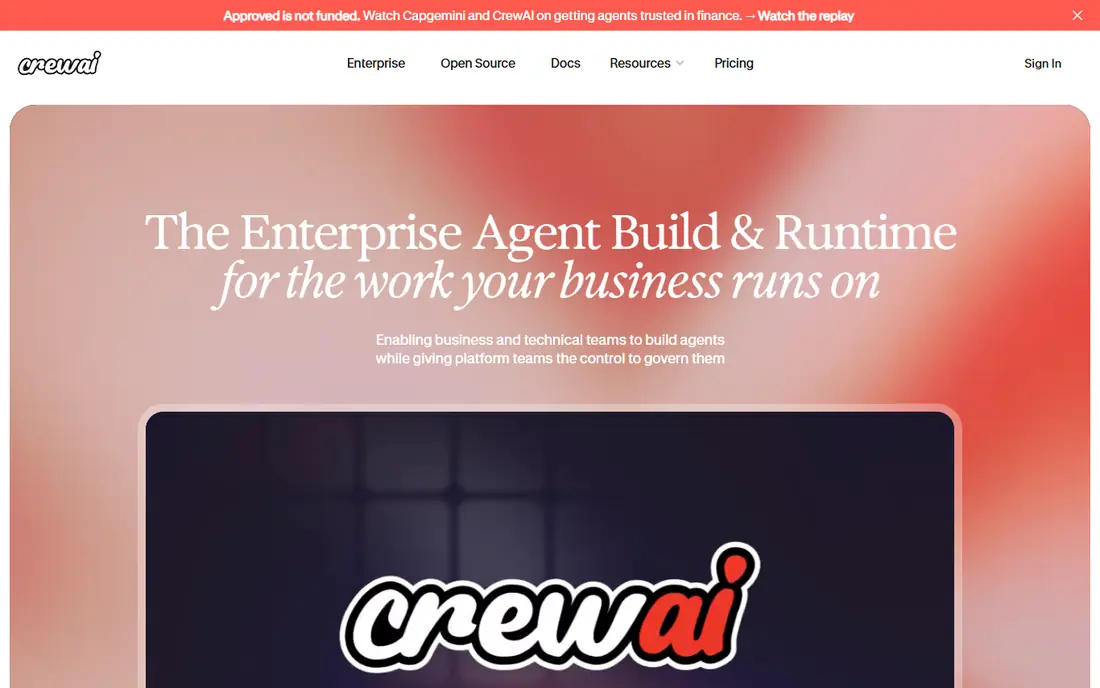
CrewAI fits teams that want a working multi-agent crew fast. Its main strength is role-based design that reads clearly to non-specialists. You assign roles, hand tasks to agents, and watch the crew pass work along in order. The catch is complex branching still needs careful design and testing. Prototype with two or three agents before you scale to a large crew. We would shortlist it if your job looks like a small team with clear roles. When you trial CrewAI, test it on the exact job you listed for role-based agent teams. Use real data, real users and real deadlines, and write down what worked, what failed and what cost extra. That short trial record will tell you more than a demo, and it makes the final choice easier to defend to colleagues or family.
- Agents defined by role, goal and backstory
- Quick multi-agent prototypes
- Growing cloud option
- Paid cloud pricing adds up at scale
- Less fine control than a graph model
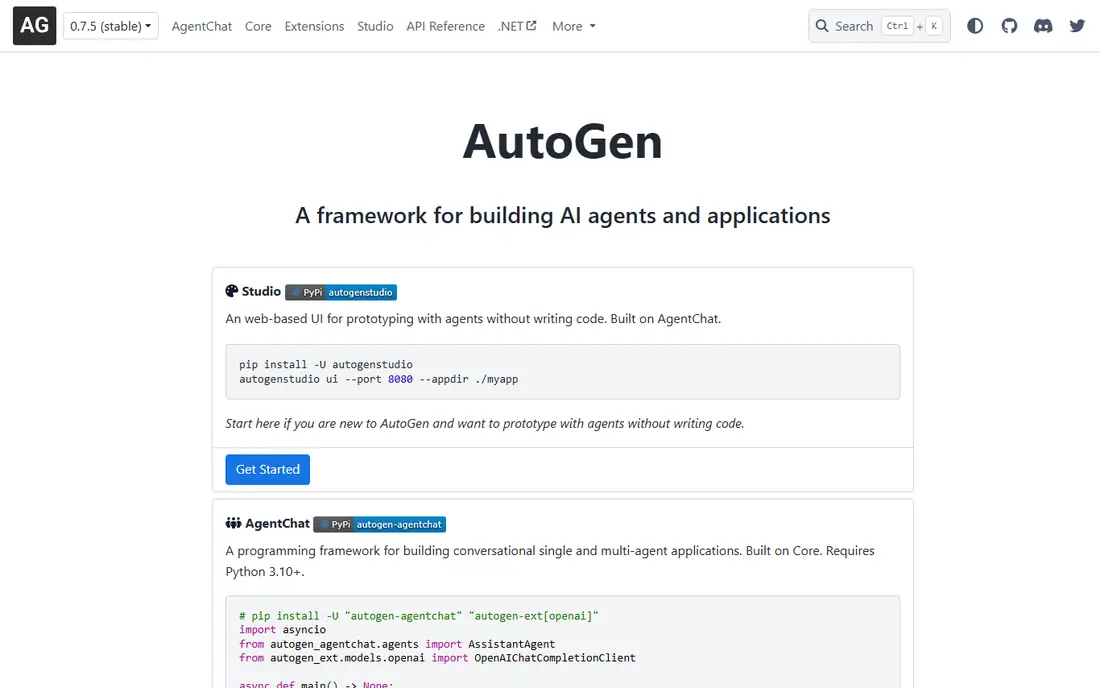
AutoGen fits research teams and Microsoft shops. Its main strength is flexible conversational coordination between agents. Agents can discuss, critique and revise work, which suits open-ended tasks with review steps. The catch is the move to a newer framework can confuse newcomers. Confirm which package your team should start with before you build. We would shortlist it if you want agents that talk through a problem rather than follow a fixed script. When you trial AutoGen, test it on the exact job you listed for conversational multi-agent research. Use real data, real users and real deadlines, and write down what worked, what failed and what cost extra. That short trial record will tell you more than a demo, and it makes the final choice easier to defend to colleagues or family.
- Event-driven agent chats
- Strong research history
- Python and .NET options
- Project direction shifted toward Microsoft Agent Framework, so check current docs first
Microsoft Semantic Kernel
Best for: Microsoft and enterprise agent apps
Microsoft Semantic Kernel fits enterprise teams on Microsoft platforms. Its main strength is deep links to Azure services and business apps. Plugins let agents call your own functions and data sources under your existing access rules. The catch is teams outside Microsoft may find fewer ready examples. Map your plugins and permissions before you add agents. We would shortlist it if your data and identity already live in Microsoft services. When you trial Microsoft Semantic Kernel, test it on the exact job you listed for microsoft and enterprise agent apps. Use real data, real users and real deadlines, and write down what worked, what failed and what cost extra. That short trial record will tell you more than a demo, and it makes the final choice easier to defend to colleagues or family.
- Strong Azure and Microsoft 365 links
- C# and Python support
- Plugin model for tools
- Best value shows mainly inside Microsoft stacks
- Smaller community than LangChain
Haystack fits teams where search quality decides the result. Its main strength is a pipeline model made for retrieval-augmented generation. You can test retrievers, rankers and readers as separate parts, which makes faults easier to find. The catch is you will still need other code for complex agent behaviour. Benchmark retrieval on your own documents, not on demo data. We would shortlist it if accurate answers from your documents matter most. When you trial Haystack, test it on the exact job you listed for retrieval and search pipelines. Use real data, real users and real deadlines, and write down what worked, what failed and what cost extra. That short trial record will tell you more than a demo, and it makes the final choice easier to defend to colleagues or family.
- Pipeline design built for retrieval
- Strong document search
- Clear component model
- Agent features are less central than in CrewAI or LangGraph
LlamaIndex fits teams turning private data into answers. Its main strength is indexing that turns files into searchable, structured data. Its loaders and indexes help an agent find the right passage before it answers. The catch is large agent teams may need a second orchestration layer. Start from your document types and query patterns. We would shortlist it if your main job is connecting data to a model. When you trial LlamaIndex, test it on the exact job you listed for data frameworks for llm apps. Use real data, real users and real deadlines, and write down what worked, what failed and what cost extra. That short trial record will tell you more than a demo, and it makes the final choice easier to defend to colleagues or family.
- Strong indexing and query tools
- Many data connectors
- Good for RAG prototypes
- Orchestration beyond retrieval needs extra design
- Agent tooling is secondary
Flowise fits small teams and non-specialists who want a visual builder. Its main strength is a canvas that makes agent flows visible. You can link models, prompts, memory and tools without writing a full app first. The catch is very large flows are harder to review than code. Keep each flow small and name every node clearly. We would shortlist it if you want to prototype visually and self-host. When you trial Flowise, test it on the exact job you listed for visual agent and chatbot building. Use real data, real users and real deadlines, and write down what worked, what failed and what cost extra. That short trial record will tell you more than a demo, and it makes the final choice easier to defend to colleagues or family.
- Drag-and-drop canvas
- Open source
- Can self-host
- Quick chatbot prototypes
- Visual flows can get messy at large scale
- Advanced logic still needs code
n8n fits automation teams adding AI to business workflows. Its main strength is workflow automation that now includes AI agent steps. You can trigger work from apps, webhooks and schedules, then add a model step where it helps. The catch is pure agent research may fit a code framework better. Use n8n where the trigger and the destination app already matter. We would shortlist it if your agents must live inside wider business automation. When you trial n8n, test it on the exact job you listed for workflow automation with ai steps. Use real data, real users and real deadlines, and write down what worked, what failed and what cost extra. That short trial record will tell you more than a demo, and it makes the final choice easier to defend to colleagues or family.
- Visual workflows
- Hundreds of app nodes
- Self-hosting option
- Fair-code licence
- AI agent use is newer than its automation core
- Node setup takes practice
How we picked these
We compared official feature pages, pricing pages and app store listings, and we kept only products that exist and work in October 2026 and truly fit the topic. We favoured clear pricing, usable free plans or trials where they exist, and features that match the main job. We did not claim hands-on testing, and we left out products that had closed, changed focus or did not fit, even when they were well known nearby. Prices change, so treat the figures here as a snapshot from October 2026 and confirm the current price on the vendor site before you pay. Where we could not verify a price, we wrote See website rather than guessing.
What to check before you pick an orchestration tool
Start from the workflow, not the framework
Write the steps on paper first. If the job is a fixed chain with a review step, a graph tool fits well. If the job is a team of specialists, a role-based tool may be faster. If retrieval decides quality, pick the retrieval strength first and add agents around it.
Count the real costs
The framework may be free, but model calls, hosting, observability and maintenance are not. Multi-step agents can use many more tokens than a single chat call. Set a budget per run, add logging early, and test with real traffic before you promise a launch date.
Plan for failure and review
Agents make mistakes, tools fail, and prompts drift. Look for retries, timeouts, human review points and clear logs. A tool that makes those easy will save more time than one with a longer feature list.
Sources
Frequently asked questions
Which ai orchestration platform is best for beginners?
For most beginners, CrewAI or Flowise are the easiest starting points. CrewAI gives you role-based agents with little boilerplate, while Flowise gives you a visual canvas. LangChain offers more control, but it asks for more code and design skill up front.
What is the best ai orchestration software for production agents?
LangChain with LangGraph is a strong default for production work because state, branching and human review are explicit. Semantic Kernel is also strong for Microsoft estates. In both cases, add observability, retries and tests before you scale.
Which ai orchestration platforms are best for retrieval-heavy apps?
Haystack and LlamaIndex lead here. Haystack is built around pipelines for search and retrieval, while LlamaIndex is strong at indexing and querying private data. Pick Haystack for pipeline control and LlamaIndex for fast data-to-answer work.
Do I need to pay for an AI orchestration tool?
Most frameworks in this list are free and open source. You still pay for model API calls, hosting and any paid cloud or observability tier you add. Check the paid tier only when you need hosted runs, team features or higher limits.
What is the difference between orchestration and a single agent?
A single agent follows one loop of thought, tool use and answer. Orchestration coordinates several steps or agents, passes state between them, and handles branches, retries and review. Use orchestration when one loop cannot safely cover the whole job.