Best AI Search Visibility Tools Companies in 2026: 9 Tools Compared
By ToolNimba Editorial Team November 10, 2026 10 min read

- Top pick
 Profound
Enterprise brands with large prompt sets
Starting priceSee websiteCheck out ProfoundRead our review - Runner-up
 Peec AI
Mid-market teams tracking several regions
Starting priceSee websiteCheck out Peec AIRead our review - Also great
 Otterly.AI
Small teams starting on a budget
Starting price$29 per monthCheck out Otterly.AIRead our review
How we researched this
We compared official pricing and feature pages, app store listings, privacy policies and public user reviews. Prices change, so check the provider's site before you pay.
Key takeaways
- AI visibility tools track how often AI answers mention and cite your brand, which classic rank trackers do not show.
- Otterly.AI is the lowest-cost entry point in this list, while Profound and Brandlight target larger brands with deeper data.
- Visibility scores are directional, not exact, since AI answers change with each prompt, location, and model version.
- Pick a tool by prompt volume, engines covered, and whether you need competitor and citation detail, not by headline score alone.
Quick comparison
| Name | Best for | Starting price | Free plan | |
|---|---|---|---|---|
| Profound | Enterprise brands with large prompt sets | See website | Free trial | Visit |
| Peec AI | Mid-market teams tracking several regions | See website | Free trial | Visit |
| Otterly.AI | Small teams starting on a budget | $29 per month | Free trial | Visit |
 Scrunch AI | Teams that want monitoring plus fixes | See website | Free trial | Visit |
 Brandlight | Large brands wanting an execution partner | See website | No | Visit |
 AthenaHQ | Teams that want a free starting tier | See website | Yes | Visit |
 Goodie | Brands that want tracking tied to actions | $399 per month | Free trial | Visit |
 Rankscale | Teams that want flexible, credit-based tracking | See website | Free trial | Visit |
 Semrush AI Visibility Toolkit | Teams already using Semrush | $99 per month | Free trial | Visit |
The best AI search visibility tools companies
Search is changing fast, and a brand can rank well on Google yet stay invisible in AI answers. AI visibility tools run your chosen prompts through chat and search AI systems, then report mentions, citations, sentiment, and share of voice against competitors. We compared official pricing and feature pages for tools that query live AI systems, not tools that only give a static score. Treat every score as a trend to watch over weeks, not a precise grade.
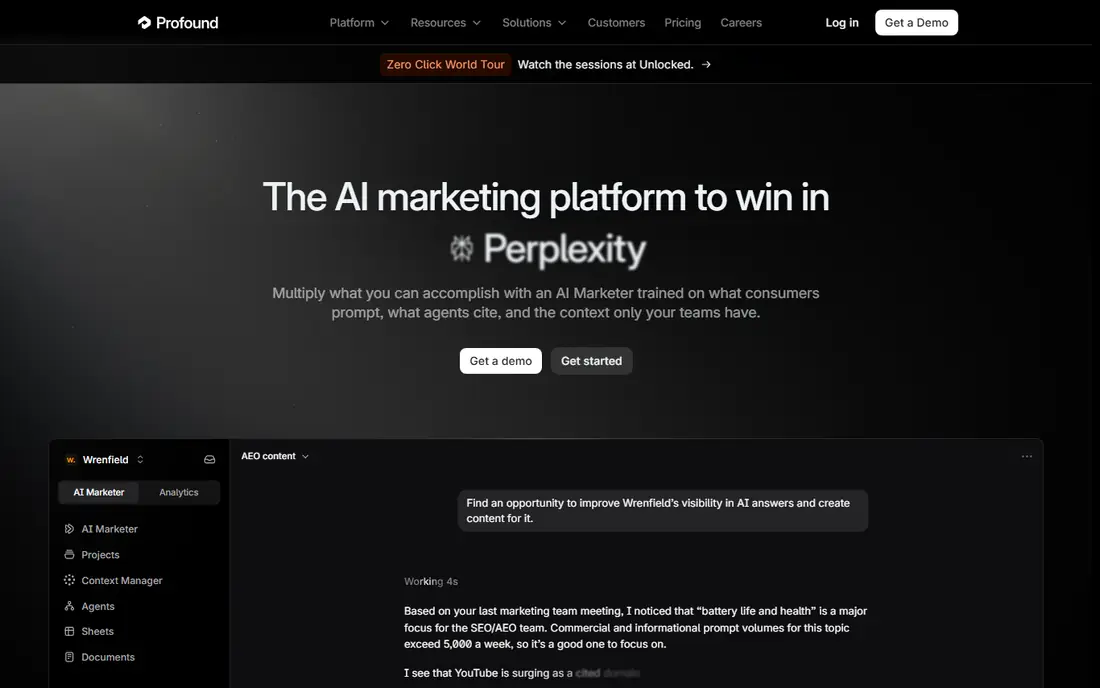
Profound is the enterprise pick in this list, and its strength is depth. It tracks which pages AI systems cite when they answer category questions, and it shows conversation demand, meaning what people actually ask about your topic. That pairing helps a content team write pages that AI systems are more likely to cite, rather than guessing at topics.
The trade-off is price transparency. After a free trial, brand pricing is custom, so a small business cannot budget from the website alone. Profound suits a brand with a real content budget and many prompts to track. Smaller teams should trial it, but compare the quote with Otterly.AI or Peec AI before signing.
- Deep citation and conversation data
- Wide engine coverage on enterprise plans
- Agency and enterprise controls
- No simple published brand price after the trial
- More tool than a small team needs

Peec AI is a practical middle option for marketing teams that need readable reports without an enterprise contract. It tracks mentions, position, and sentiment per prompt, and it compares your brand with named competitors in the same answers. Teams working across countries will like the regional tracking, which shows where visibility differs by market.
Watch the plan limits. Starter plans cover a set number of prompts and a subset of engines, with more engines as add-ons. Before you buy, list your must-track prompts and engines, then check that the plan covers them. For many mid-market teams, that check keeps Peec AI good value.
- Clean reports for brand and competitor tracking
- Multi-region and multi-engine coverage
- Unlimited seats on many plans
- Entry plans limit prompt counts and engine choices
- Published prices vary by currency and billing term
Otterly.AI is our pick for a first AI visibility tool. The entry plan is affordable, the setup is simple, and daily monitoring shows movement over time rather than a single snapshot. For a small business or a solo marketer, that is enough to learn which prompts mention the brand and which pages get cited.
The limits are real. The entry plan covers a small prompt set, and adding engines raises the cost. Otterly.AI also focuses on tracking and reporting, so teams that want hands-on content fixes may need a second tool. Even with those limits, it is the easiest low-risk way to start.
- Lowest published entry price in this list
- Daily monitoring
- Simple setup for a first AI visibility project
- Entry plan covers few prompts
- Some engines, including Google AI Mode, are paid add-ons
Scrunch AI goes a step past tracking by linking visibility data to what to fix. It shows how AI systems describe your brand, which sources they cite, and where your site may be hard for AI crawlers to read. Persona tracking adds another angle, showing how answers differ for different buyer types. That mix suits content teams that want a work list, not just a chart.
The price reflects that scope. Scrunch sits above budget trackers, and its entry plan covers a limited prompt count. A team that only needs a mention count should pick a cheaper tool. A team ready to act on the findings will get more from Scrunch.
- Monitoring paired with site and content guidance
- Citation graph detail
- Persona-based tracking
- Entry price is higher than budget tools
- Some advanced engines sit on higher plans
Brandlight targets large brands that treat AI search as a reputation channel, not just a traffic source. Its reports cover sentiment and narrative, meaning how AI answers frame your brand, not only whether they mention it. That view matters for brands where a wrong or negative framing can travel widely.
The catch is access. Pricing is quote only, and there is no free plan, so a small team cannot trial it cheaply. Brandlight is best for a large company with a communications or brand team that will act on sentiment findings. Smaller brands will find better value elsewhere in this list.
- Brand sentiment and narrative analysis
- Enterprise reporting
- Partner-style support for large teams
- Quote-only pricing with no free plan
- Overkill for small brands and single-site owners
AthenaHQ is a useful low-risk starting point because it offers a free tier. You can run a small prompt set, see how your brand appears in AI answers, and judge whether the data is useful before paying. The interface is built for quick onboarding, which helps teams that do not want a long setup project.
Paid plans are where larger tracking lives, and the price climbs with prompt volume. AthenaHQ also competes in a crowded field, so compare its engine list and citation detail with Peec AI and Otterly.AI on your exact prompts. For a first test, though, the free tier is hard to beat.
- Free tier for trying AI visibility tracking
- Prompt and competitor tracking
- Simple onboarding
- Free tier limits prompt volume and depth
- Paid plans rise fast for larger prompt sets
Goodie pairs AI visibility tracking with recommended actions, so a team gets a work list alongside its scores. That matters because many tools show a gap but leave the fix unclear. Goodie points to content, citation, and page changes that may improve how AI systems describe a brand, then tracks whether those changes move the numbers.
The entry price puts Goodie out of reach for many small sites. It also cannot guarantee that an AI system will cite a changed page, since model answers shift for many reasons. Treat its actions as a prioritized list to test, not as a promise, and check results over several weeks.
- Tracking wired to optimization actions
- Clear next steps for content teams
- Competitor visibility views
- High entry price for small teams
- Action lists still need human review before publishing
Rankscale appeals to teams whose prompt needs change month to month. A credit-based model lets you scale checks up for a campaign and down in a quiet month, rather than paying for a fixed tier you do not use. Multi-model tracking covers the main AI systems, and the structure suits agencies managing several clients.
The downside is clarity. Published prices differ across sources and currencies, so confirm the current plan, credit rules, and engine list on the vendor site before budgeting. Rankscale is worth a trial if flexibility matters more than a big-brand name, but shortlist it against Otterly.AI on total monthly cost.
- Credit-based model that can suit uneven prompt volumes
- Multi-model tracking
- Agency-friendly structure
- Pricing details vary by plan and currency, so quotes need care
- Smaller vendor with less public documentation
Semrush AI Visibility Toolkit
Best for: Teams already using Semrush
Semrush AI Visibility Toolkit makes sense if your team already lives in Semrush. AI mention and citation data sit next to keyword, backlink, and traffic data, so you can judge AI visibility in context instead of in a separate dashboard. Per-domain pricing is also easy to budget for a single brand.
For a team that needs the widest engine coverage or the deepest citation analysis, a dedicated tool such as Profound or Scrunch may go further. Semrush is the convenience pick: good enough AI data, inside a suite you already pay for, without a second contract to manage.
- AI visibility data next to classic SEO data
- Per-domain pricing is clear
- Familiar Semrush reporting
- Priced per domain, so multi-brand costs add up
- AI coverage is narrower than dedicated tools
How we picked these
We compared vendor pricing pages, feature pages, and recent comparison summaries, and we kept only tools that query live AI systems on prompts you choose. We favored tools that name their engines, show citations, and compare competitors, and we marked quote-based pricing as See website rather than guessing a fee. We left out content writers and static scoring tools that never ask an AI system a question. Prices change often in this fast-moving category, so confirm the current plan before buying.
How to choose an AI visibility tool
Start with your prompt list, not with a vendor demo. Write down the 20 to 50 questions your buyers actually ask, including comparison and recommendation questions, then check which tools cover those prompts on the engines your buyers use.
Match the tool to your budget and team size
A solo founder or small team should start with Otterly.AI or AthenaHQ and learn from a small prompt set. A mid-market team with several regions should compare Peec AI and Scrunch on prompt limits and engine coverage. An enterprise brand with a large content program should shortlist Profound and Brandlight and ask for a scoped quote.
Read the data with care
AI answers vary by prompt wording, user location, and model updates, so week-to-week moves matter more than a single score. Track the same prompts over time, watch citation sources, and pair AI visibility with traffic, leads, and sales data before changing your whole content plan on one report.
Sources
Frequently asked questions
What is AI search visibility?
AI search visibility measures how often AI answers mention, cite, and recommend your brand when people ask questions in your category. It covers chat systems and AI search features, not just classic blue-link rankings.
How is AI visibility different from SEO rankings?
Classic SEO tracks where your pages rank for keywords. AI visibility tracks whether AI systems mention your brand, which pages they cite, and how they describe you, even when no click follows.
Which AI engines should I track?
Start with the systems your buyers use most, typically ChatGPT, Google AI features, Gemini, and Perplexity today. Add others, such as Claude or Copilot, only if your audience uses them or your competitors appear there.
How many prompts do I need to track?
A small brand can start with 15 to 50 core prompts covering brand, category, comparison, and buying questions. Larger brands need hundreds of prompts to cover products, regions, and buyer types.
Can an AI visibility tool guarantee better AI rankings?
No tool can guarantee that an AI system will mention or cite you. Tools show where you stand and what to improve, but model behavior, source quality, and prompt wording all affect the result.