Best AI Tools for Restaurants in 2026: 10 Tools Compared
By ToolNimba Editorial Team November 10, 2026 11 min read

- Top pick
 ChatGPT
Menu copy, review replies, social posts
Starting priceFreeCheck out ChatGPTRead our review - Runner-up
 7shifts
Labor scheduling for restaurants
Starting priceFreeCheck out 7shiftsRead our review - Also great
 MarketMan
Inventory and food cost control
Starting price$249 per monthCheck out MarketManRead our review
How we researched this
We compared official pricing and feature pages, app store listings, privacy policies and public user reviews. Prices change, so check the provider's site before you pay.
Key takeaways
- The two biggest costs in a restaurant are labor and food, so the most useful AI tools target scheduling, ordering, and food cost rather than novelty features.
- ChatGPT and 7shifts are the cheapest starting points, with free plans that cover menu copy, review replies, and scheduling for one location.
- Phone-answering AI from Slang AI and Popmenu pays for itself fast if missed calls currently cost you bookings.
- Always verify AI-written allergen and food-safety information yourself, since a wrong ingredient line can harm a guest and your business.
Quick comparison
| Name | Best for | Starting price | Free plan | |
|---|---|---|---|---|
| ChatGPT | Menu copy, review replies, social posts | Free | Yes | Visit |
| 7shifts | Labor scheduling for restaurants | Free | Yes | Visit |
| MarketMan | Inventory and food cost control | $249 per month | No | Visit |
 Toast | POS with growing AI features | See website | No | Visit |
 Popmenu | AI marketing and phone answering | $149 per month | No | Visit |
 Owner.com | Website, email, and SMS marketing | $99 per month | No | Visit |
 Slang AI | 24/7 voice AI phone answering | See website | No | Visit |
 MarginEdge | Food cost and invoice automation | $330 per month | No | Visit |
 Winnow | Camera-based food waste tracking | See website | No | Visit |
 SevenRooms | Reservations and guest data with AI | See website | No | Visit |
The best AI tools for restaurants
Restaurant AI works best when it removes a specific daily headache: a phone that rings during service, a schedule that takes hours to build, or food cost that drifts upward unnoticed. The tools below each solve one of those problems, and the best stack usually mixes two or three of them rather than buying everything.
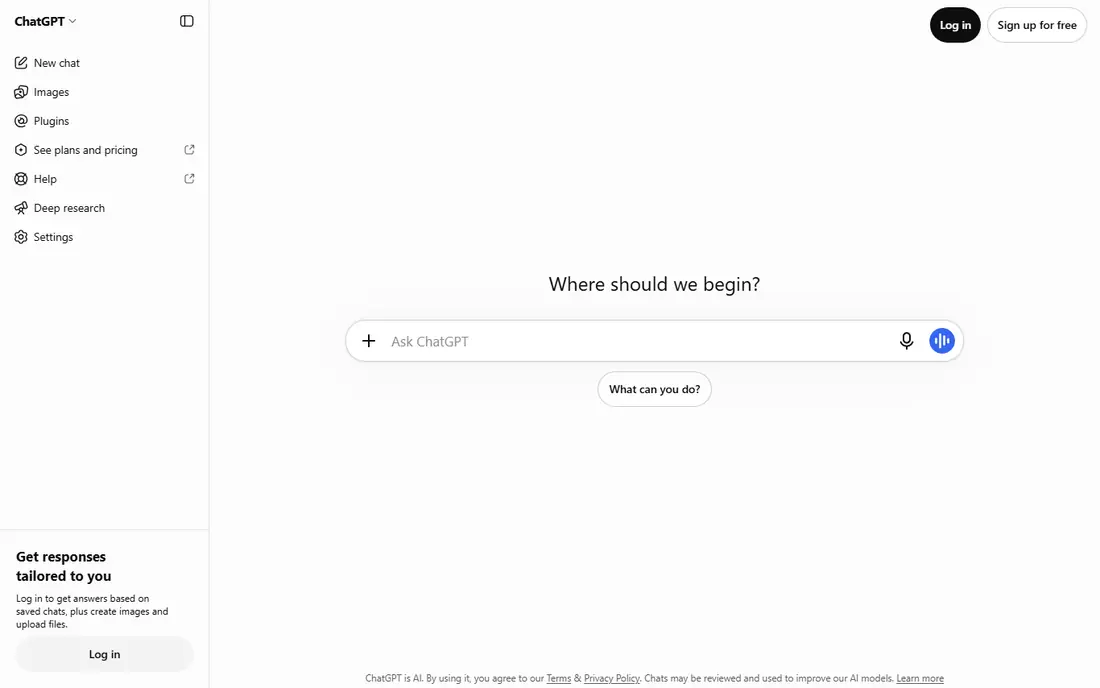
ChatGPT is the tool most restaurant owners already have, and it earns its place by doing the evening admin work. It writes menu descriptions, drafts replies to reviews, turns a specials list into social posts, and translates a menu for a bilingual neighborhood. The free plan handles most of that, with a $20 per month Plus plan for higher limits.
The catch is accuracy. ChatGPT can invent an ingredient, a price, or a dish detail that sounds right, so every allergen line and price must be checked by a person before it reaches a guest. Used as a drafting helper with human review, it saves hours a week. Used without review, it creates risk.
- Free plan covers most writing tasks
- Fast for menu descriptions, captions, and review replies
- Useful for translating menus
- Can invent details, so allergen and price facts need checking
- No restaurant-specific integrations on the free plan
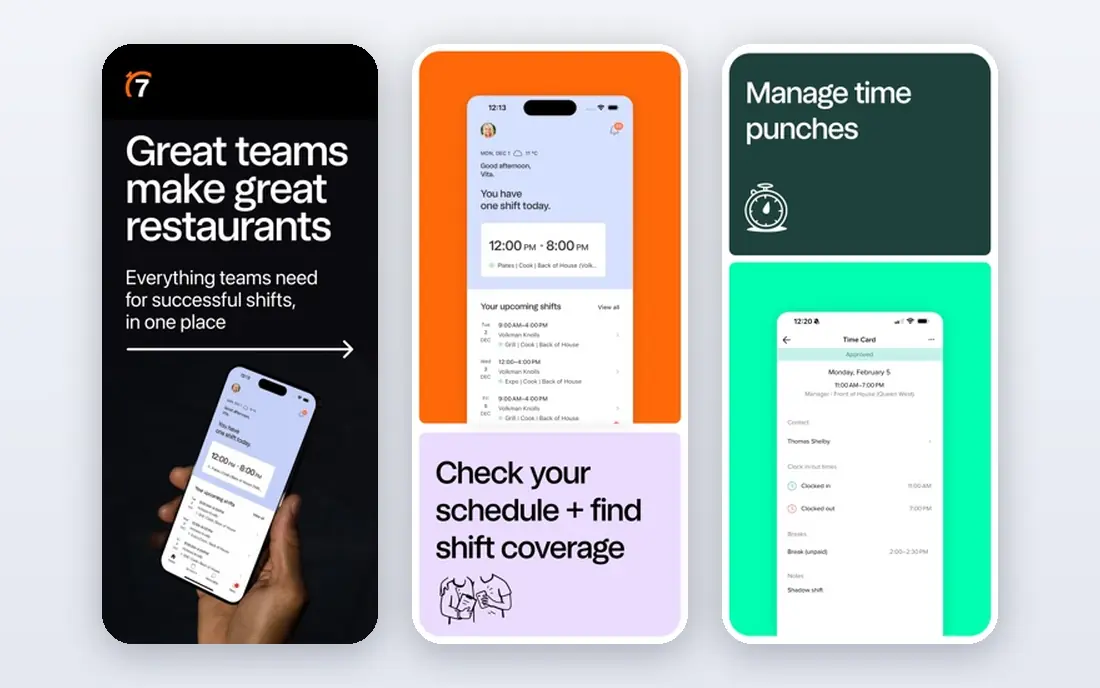
7shifts is the best free starting point for restaurant scheduling. The free plan covers one location, and the platform handles the realities of restaurant work: varied roles, shift swaps, availability, and labor cost tracking. Paid plans from $29.99 per month add forecasting and deeper labor tools that help managers build schedules around expected demand rather than guesswork.
The limit is that the free plan is deliberately simple, and the smartest forecasting sits on higher tiers. Still, for an independent restaurant that still builds schedules in a spreadsheet, 7shifts removes hours of weekly work and reduces the overtime that comes from poor planning.
- Free plan for one location
- Built for restaurant roles and shift swaps
- Labor cost forecasting
- AI scheduling depth grows with paid tiers
- Best value comes with more locations and staff
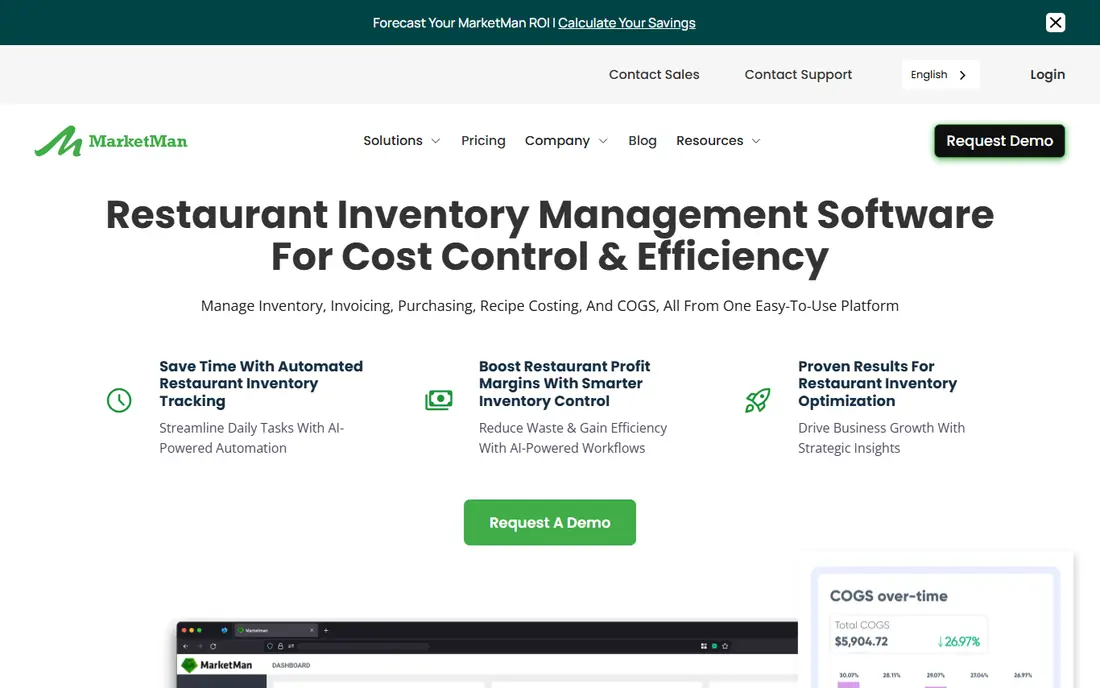
MarketMan attacks food cost, which is where many restaurants quietly lose money. It scans supplier invoices with AI, ties ingredient prices to recipes, and shows the real cost of each dish as prices change. The Starter plan starts at $249 per month and includes a set number of AI invoice scans, with more on higher tiers.
The price is the barrier for a small cafe, and the system only works as well as the supplier data fed into it. But for a mid-size restaurant or a small group, knowing the true cost of every plate, and catching a supplier price rise early, can save far more than the subscription costs.
- Real-time recipe costing
- AI-powered invoice scanning
- Ordering and supplier management in one place
- High entry price for a small restaurant
- Needs clean supplier data to work well
Toast is the point-of-sale system many US restaurants already run on, and its AI features now reach into ordering, upsell suggestions, and team tools. Recent coverage points to AI scheduling built into the Toast platform, with beta results showing lower overtime, and the ordering analytics help managers see which items sell and when.
Toast pricing is quoted rather than a single published number, and comparison pages report hardware and software bundles starting in the $69 to $165 per month range depending on setup. Switching a POS is a bigger project than adding an app, so Toast suits restaurants already on it or opening fresh, rather than anyone looking for a quick add-on.
- POS, ordering, and payments in one system
- AI features for upsells and analytics
- Large restaurant customer base
- Pricing is quoted and varies by setup
- Switching POS systems takes time and training
Popmenu started as a digital menu platform and grew into a marketing stack with AI features built for restaurants. Its menu intelligence tracks which dishes guests view and order, suggests what to feature, and rewrites descriptions for local search, so a brunch dish shows up when someone searches for brunch nearby. AI phone answering catches calls during service.
Pricing starts near $149 per month and scales with locations and features. The overlap with Toast or Square ordering is the main drawback, since some restaurants will pay twice for similar functions. For a restaurant with a complex menu that changes often, Popmenu earns its fee. For a coffee shop with a static menu, it is more than needed.
- Menu intelligence that tracks what guests view and order
- AI phone answering
- SEO-friendly menu pages
- Overlaps with Toast or Square ordering for some restaurants
- Value grows with menu complexity
Owner.com is built for the restaurant that dislikes marketing but needs direct orders. It handles the website, email marketing, SMS, and local search presence, with AI automation that sends win-back emails to guests who have not ordered in a while and posts specials to social channels. Pricing starts near $99 per month and scales with revenue.
The trade-off is ownership. Owner.com hosts the website, so you do not own the code, and the platform pays back fastest at higher revenue levels. For a busy restaurant doing strong delivery and takeout volume, the direct orders it drives can beat marketplace commissions quickly. For a small cafe, the fee takes longer to justify.
- Restaurant website, email, and SMS in one platform
- AI automation for win-back messages
- Built for direct orders
- You do not own the website code
- Value is slower for restaurants under about $500K in yearly revenue
Slang AI answers the phone when your team cannot, which is most of service. A large share of restaurant calls arrive outside opening hours or during the dinner rush, and every missed call can be a lost booking. Slang AI takes reservations, answers common questions about hours and menus, and hands off tricky calls to staff.
Pricing is quoted rather than published, so you will need a conversation to size the cost. Setup also matters, since the AI must know your reservation rules, party sizes, and policies to avoid bad bookings. For a busy full-service restaurant, the recovered bookings usually cover the fee. For a quiet cafe with few calls, it is harder to justify.
- Answers calls around the clock
- Books reservations and answers common questions
- Reduces missed bookings
- Pricing is quoted
- Setup needs care to match your menu and policies
MarginEdge focuses on the back office: it processes supplier invoices, tracks food cost against sales, and shows which menu items make money. It integrates with Toast, Square, and Lightspeed, so sales and cost data meet in one place. Comparison pages report plans from $330 per month.
The price puts it in mid-market territory, and its AI features are narrower than the marketing tools on this list. But for an operator who suspects food cost is drifting and cannot prove where, MarginEdge gives a clear answer. It is a finance tool first, and it should be judged on the money it finds, not on novelty.
- Automated invoice processing
- Recipe costing tied to real prices
- Works with Toast, Square, and Lightspeed
- High entry price
- Limited AI features beyond invoice and cost tools
Winnow takes a different approach to food cost: it watches what gets thrown away. A camera and scale system in the kitchen records waste as staff discard it, and the reports show which items, prep steps, and services waste the most. A peer-reviewed study has reported waste reductions near 54 percent in kitchens using the system.
Pricing is quoted, and the system only helps if the team acts on the reports. A kitchen that ignores the data will keep wasting food. But for hotels, large restaurants, and groups where waste is a real cost line, Winnow turns an invisible loss into a number a manager can work on.
- Camera system measures kitchen waste automatically
- Peer-reviewed studies report large waste reductions
- Clear waste reports
- Pricing is quoted
- Needs staff buy-in to change waste habits
SevenRooms, now a DoorDash company, combines reservations, guest profiles, and marketing, with newer AI features for voice answering and table management. Its seating algorithm checks thousands of table combinations, and the Voice AI answers and books calls when hosts are busy. Plans run from Starter to Premium and are sold through a demo, with no public prices.
The lack of published pricing is the main drawback, since you cannot budget without a sales conversation. The platform is also more than a small restaurant needs. But for busy full-service restaurants and groups that live on reservations and repeat guests, SevenRooms ties the front door to the guest record in a way simpler tools do not.
- Reservations, guest data, and marketing in one platform
- Voice AI answers and books calls
- AI table management
- No public pricing
- Plans are sold through a demo
- More than a small restaurant needs
How we picked these
We compared official pricing pages and recent 2026 roundups of restaurant AI tools, and we favored tools with a clear restaurant job, published or widely reported pricing, and a track record with real operators. We checked starting prices against vendor sites and October 2026 comparison pages, and we left out general AI tools with no restaurant angle, except ChatGPT, which restaurant owners use daily for menu and marketing work. Prices change often, so confirm the current rate before you buy.
What to check before you buy
Start with your biggest cost. If labor eats your margin, fix scheduling first with 7shifts or your POS tools. If food cost drifts, fix invoices and recipe costing with MarketMan or MarginEdge. If missed calls cost bookings, fix the phone with Slang AI or Popmenu. Buying a tool for a problem you do not have wastes money no matter how good the demo looks.
Next, check integrations. A tool that does not talk to your POS will need manual data entry, and manual entry dies during a busy service. Confirm the integration with your exact POS and version before paying, not just on a marketing page.
Finally, run a small trial with real data. Schedule one real week, cost one real menu, or answer real calls, and judge the tool on that week. A demo with perfect data tells you little. Your own messy week tells you everything.
Sources
- https://www.menucapture.com/best/ai-tools-for-restaurant-owners
- https://www.theaitools.tech/2026/10/best-ai-tools-for-restaurants-2026.html
- https://ainexte.com/best-ai-tools-for-restaurants-usa-2026/
- https://aichef.pro/en/blog/menu-engineering-software-complete-guide
- https://chatgpt.com
- https://www.7shifts.com
- https://marketman.com
- https://pos.toasttab.com
- https://popmenu.com
- https://www.owner.com
- https://www.slang.ai
- https://www.marginedge.com
- https://www.winnow.solutions
- https://www.sevenrooms.com
Frequently asked questions
What is the best AI software for restaurants?
There is no single winner, since restaurants need different tools for different jobs. ChatGPT is the best free starting point for writing, 7shifts is the best free scheduler, and MarketMan or MarginEdge suit operators focused on food cost. Most restaurants end up with two or three tools, not one.
How much do AI tools for restaurants cost?
Prices run from free for ChatGPT and the 7shifts starter plan to $149 per month for Popmenu, $249 for MarketMan, and $330 for MarginEdge, with phone AI and reservation platforms quoted per business. Add up the full stack before comparing, since several small subscriptions add up fast.
Can AI answer my restaurant phone?
Yes. Slang AI, Popmenu, and SevenRooms all offer voice AI that answers calls, books reservations, and answers common questions around the clock. Setup matters, since the AI needs your hours, party-size rules, and reservation policies to avoid bad bookings.
Is AI safe for menu allergen information?
No, not without human review. AI writing tools can invent ingredients or miss allergens, so a person must check every allergen line, ingredient list, and price before it reaches guests. Treat AI as a draft writer, not a source of food-safety truth.
Do AI tools replace restaurant staff?
The useful ones shift staff time rather than replacing people. Phone AI frees hosts to serve guests in the room, scheduling AI frees managers from spreadsheets, and cost tools free operators from invoice data entry. The guest-facing work still needs people.