Best API Management Platforms in 2026: 9 Tools Compared
By ToolNimba Editorial Team November 11, 2026 8 min read

- Top pick
 Kong
Cloud-native and multi-cloud teams
Starting price$25 per monthCheck out KongRead our review - Runner-up
 Apigee
Large enterprises on Google Cloud
Starting priceSee websiteCheck out ApigeeRead our review - Also great
 Tyk
Predictable flat-rate pricing
Starting priceSee websiteCheck out TykRead our review
How we researched this
We compared official pricing and feature pages, app store listings, privacy policies and public user reviews. Prices change, so check the provider's site before you pay.
Key takeaways
- Kong is our pick for most cloud-native teams, thanks to a mature gateway, a large plugin library and a managed control plane.
- Tyk suits teams that want flat, predictable pricing without per-request surprises as traffic grows.
- AWS API Gateway and Azure API Management are the natural picks if you already live on those clouds.
- Apigee and MuleSoft fit large enterprises that need deep governance, analytics and integration, at enterprise prices.
- Open-source gateways are free to run, but you pay in engineering time for hosting, updates and monitoring.
Quick comparison
| Name | Best for | Starting price | Free plan | |
|---|---|---|---|---|
| Kong | Cloud-native and multi-cloud teams | $25 per month | Yes | Visit |
| Apigee | Large enterprises on Google Cloud | See website | No | Visit |
| Tyk | Predictable flat-rate pricing | See website | Yes | Visit |
 AWS API Gateway | AWS-based apps | See website | Yes | Visit |
 Azure API Management | Azure-based apps | See website | Yes | Visit |
 Gravitee | Event-driven and multi-protocol APIs | $2,500 per month | Yes | Visit |
 WSO2 API Manager | Open-source full lifecycle | $119 per month | Yes | Visit |
 Postman | API design and developer workflows | Free | Yes | Visit |
 Zuplo | Fast developer-friendly gateway | $25 per month | Yes | Visit |
The best API management platforms
An API management platform does more than route requests. It handles auth, rate limits, developer portals, versioning, analytics and monetisation, so teams can publish APIs safely and partners can use them without constant hand-holding. These nine cover open-source gateways, cloud services and full enterprise suites.
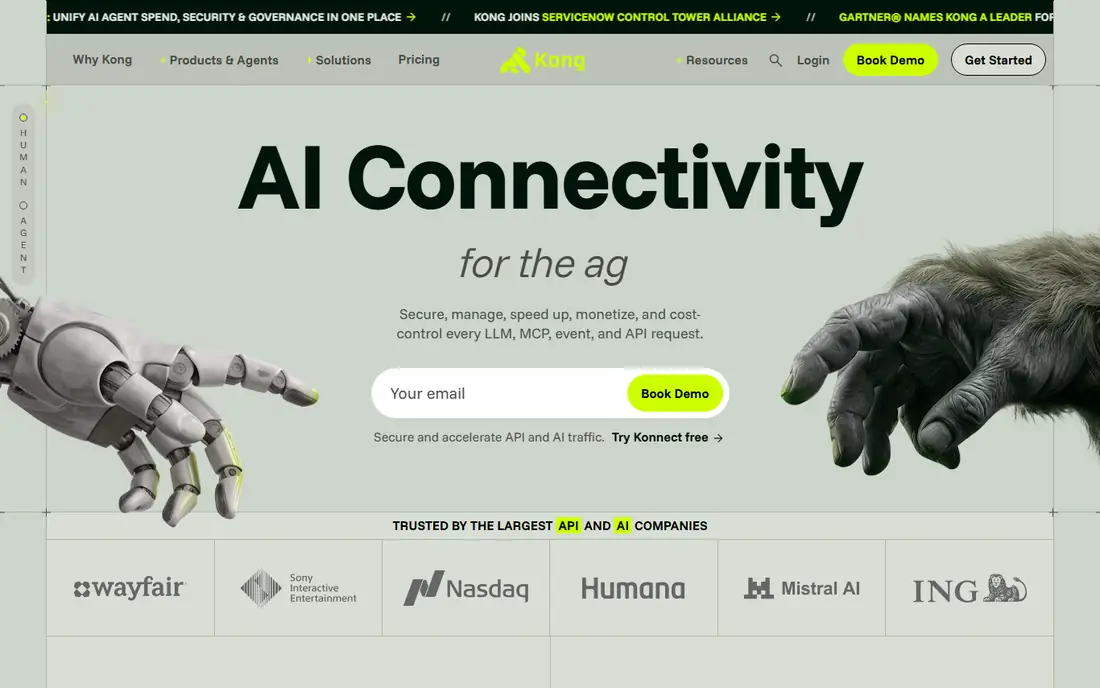
Kong starts as a fast, open-source gateway and grows into a managed platform through Konnect. Plugins cover auth, rate limiting, caching, logging and transformation, and Kubernetes-native deployment fits modern teams well. That mix explains why so many cloud-native firms standardise on it.
The free gateway is genuinely useful, but the managed and enterprise tiers are where portals, analytics and governance live. Budget for engineering time if you self-host, and for a sales conversation if you need enterprise features.
- Mature open-source gateway
- Large plugin library
- Managed Konnect control plane for multi-cloud use
- Enterprise features need a quote
- Custom plugins need engineering skill
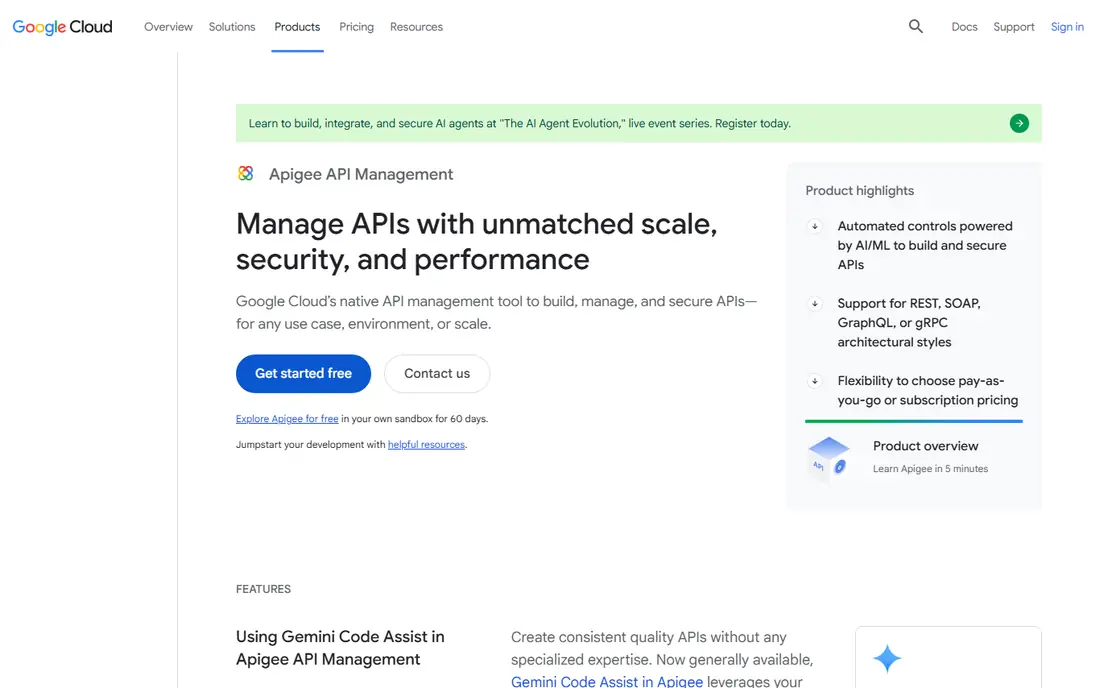
Apigee, from Google Cloud, is a full lifecycle platform: design, secure, publish, analyse and monetise APIs. Its policy engine and analytics are among the strongest in this category, which matters when APIs serve partners and paying customers. Pay-as-you-go options start with a per-environment charge plus per-call costs.
That power comes with cost and complexity. Small teams will find it heavy, and pricing needs careful modelling against expected traffic. Choose Apigee when governance and analytics justify an enterprise platform.
- Strong analytics and policy tools
- Developer portal and monetisation
- Deep Google Cloud integration
- Pricing is complex and can be costly at scale
- Setup suits larger teams
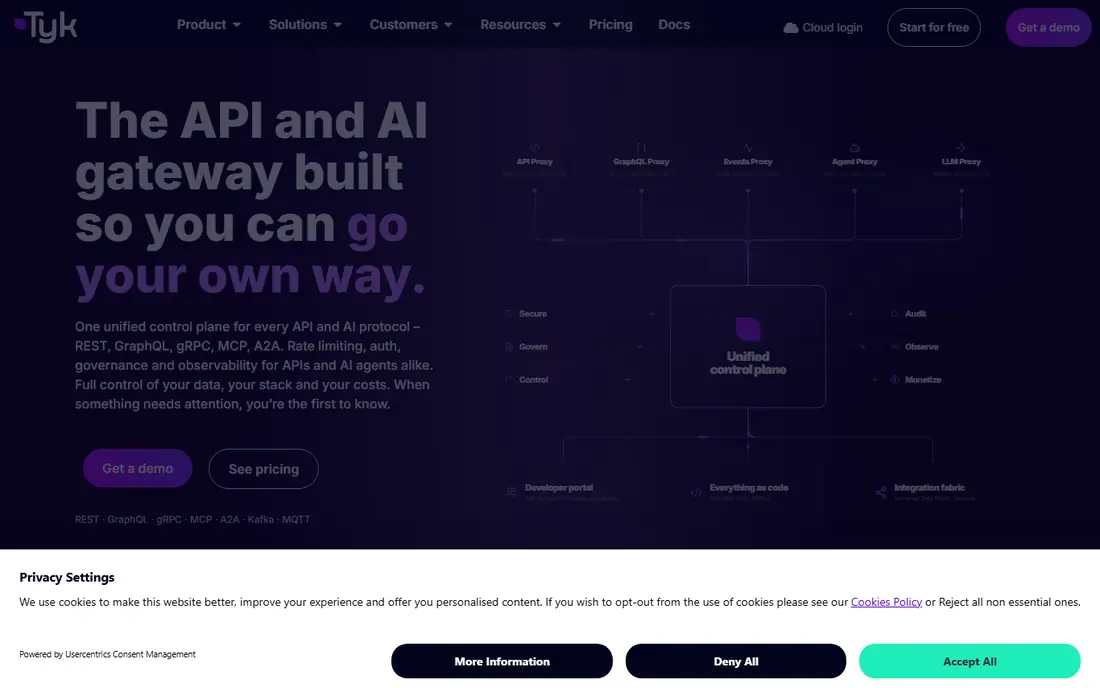
Tyk appeals to teams tired of per-request billing surprises. Its professional plan charges a flat rate with unlimited requests in the model described by current roundups, which makes budgeting easier as traffic grows. It runs the same gateway in cloud, hybrid and fully self-managed setups.
The catch is transparency: some prices still need a sales call, and the ecosystem is smaller than Kong. If predictable cost and deployment flexibility matter more than plugin count, Tyk is a strong trial.
- Same codebase across cloud and self-hosted use
- Flat-rate professional option
- Strong GraphQL support
- Published prices are limited
- Plugin ecosystem is smaller than Kong
AWS API Gateway is the default for many AWS teams because it needs no servers to manage and scales with traffic. It pairs naturally with Lambda, auth services and monitoring in AWS, and the free tier helps prototypes start cheap. REST, HTTP and WebSocket APIs are all supported.
At very high volume, per-request pricing can outgrow a flat-rate gateway, so model costs at your expected traffic, not just at launch. If you are already on AWS, though, the integration savings often outweigh that risk.
- Pay-per-request pricing with a free tier
- Tight Lambda and AWS integration
- Managed scaling
- Costs can rise fast at high volume
- Tied closely to the AWS ecosystem
Azure API Management mirrors the AWS story for Microsoft shops. It fronts back-end services with auth, throttling, caching and a developer portal, and it fits naturally with Azure functions, identity and monitoring. A consumption tier suits low-volume or spiky APIs.
Enterprise tiers are unit-based, so cost depends on capacity, not just calls. If your stack is Azure-based, this is the path of least resistance; multi-cloud teams may prefer Kong or Tyk instead.
- Consumption tier with pay-per-call option
- Strong Azure and Microsoft integration
- Developer portal included
- Higher tiers are priced per unit and add up
- Self-hosted gateway adds setup work
Gravitee stands out for event-driven APIs. Native support for Kafka, MQTT and other streaming protocols makes it a natural fit when APIs and events live side by side. The community edition is free and open source for self-hosting, while paid plans add management, analytics and support.
The paid starting price puts it out of reach for tiny projects, which is fine: Gravitee targets teams with real event workloads. If your architecture is event-heavy, shortlist it alongside Kong.
- Open-source community edition
- Native Kafka and MQTT support
- Published paid pricing from $2,500 per month
- Paid entry price is high for small teams
- Smaller community than Kong
WSO2 API Manager covers design, publishing, governance and analytics in one open-source package. Teams can build and self-host from source without licence fees, while paid subscriptions cover supported production binaries and help. The Bijira SaaS service offers a lower-cost managed entry point.
Self-hosting still needs engineering effort, and the platform feels enterprise-grade rather than lightweight. For organisations that value open source and full lifecycle control, WSO2 is a credible alternative to the big vendors.
- Full open-source API lifecycle
- Bijira SaaS option from $119 per month
- Strong for hybrid deployments
- Production support needs a paid subscription
- Setup can be heavy for small teams
Postman is where most developers start: design, test, document and share APIs in one workspace. Solo use is free, and team plans are affordable, which makes it the easiest entry point on this list. Its API network, collections and mock servers speed up development and partner onboarding.
Postman is not a drop-in replacement for a production gateway like Kong or Apigee, though it now covers more of the lifecycle. Use it alongside a gateway, or as your main platform if design and developer experience matter more than high-volume traffic management.
- Best-known API design and testing workspace
- Free plan for solo use
- Team plans from $9 per user per month
- Not a full production gateway on its own
- Governance features sit on enterprise tiers
Zuplo targets developers who want a gateway up fast without enterprise weight. You can define routes, auth and rate limits quickly, deploy at the edge, and iterate from code. That speed suits startups, side projects and teams publishing their first public API.
It does not match Apigee or MuleSoft on governance, monetisation or deep analytics. If your needs are gateway-first and developer-friendly, Zuplo is a low-friction place to start, with a clear upgrade path as needs grow.
- Quick setup with a developer-first workflow
- Published entry price from $25 per month
- Edge deployment
- Smaller feature set than enterprise suites
- Best for simpler gateway needs
How we picked these
We compared official pricing pages, documentation and current platform roundups for gateways and full lifecycle tools available in 2026. We favoured platforms with a live product, clear deployment options and a distinct use case, and we marked pricing as See website where vendors quote rather than publish rates. We did not claim hands-on testing; this reflects published features and pricing.
How to choose the right platform
Start with your cloud and deployment model. AWS or Azure teams usually save time with the native service. Multi-cloud or Kubernetes teams should trial Kong or Tyk. Enterprises with partner APIs, monetisation and strict governance should talk to Apigee or MuleSoft, and budget accordingly.
Then model cost at three traffic levels: launch, expected growth and a busy month. Per-request pricing looks cheap early and dear later, while flat-rate or unit pricing behaves the opposite way. Also check developer experience: a portal, good docs and easy onboarding decide whether partners actually adopt your API.
Questions to ask vendors
Ask what counts toward the bill: requests, environments, gateways, users or data transfer. Ask how auth, rate limits and versioning work in practice, and how you migrate an API without downtime. A trial with your real API, not a demo dataset, will reveal gaps fast.
Sources
Frequently asked questions
What is the difference between an API gateway and API management?
A gateway routes, authenticates and rate-limits live traffic. API management adds the full lifecycle around it: developer portals, versioning, governance, analytics and monetisation. Kong, Apigee and Tyk cover both, while a pure gateway covers mainly traffic.
Which API management platform is cheapest to start with?
Postman is free for solo use, and Kong Konnect and Zuplo publish entry prices from $25 per month. Open-source gateways from Kong, Tyk, Gravitee and WSO2 are free to self-host, though you still pay for servers and engineering time.
Is Kong or Apigee better?
Kong suits cloud-native and multi-cloud teams that want plugin flexibility and lower entry cost. Apigee suits large enterprises on Google Cloud that need deep analytics, governance and monetisation, and can accept enterprise pricing.
Do I need API management for a small app?
Not always. A small internal app may only need auth and rate limits in code or a simple gateway. API management earns its keep when you publish APIs to partners, need versioning and analytics, or must enforce consistent security across many services.
What does API management pricing depend on?
It depends on requests, environments, gateway units, users and support level, and the model varies by vendor. Always model cost at your expected traffic and ask what is excluded from the quoted price.