Best API Security Platforms in 2026: 9 Platforms Compared
By ToolNimba Editorial Team November 1, 2026 10 min read

- Top pick
 Salt Security
Runtime API protection
Starting priceSee websiteCheck out Salt SecurityRead our review - Runner-up
 Traceable
Trace-based runtime defense
Starting priceSee websiteCheck out TraceableRead our review - Also great
 Akamai API Security
Edge-integrated protection
Starting priceSee websiteCheck out Akamai API SecurityRead our review
How we researched this
We compared official pricing and feature pages, app store listings, privacy policies and public user reviews. Prices change, so check the provider's site before you pay.
Key takeaways
- The best API security platforms split into discovery, runtime protection, design-time testing and edge defense, so most teams need more than one layer.
- Salt Security and Traceable lead on runtime behavior analysis, while Akamai API Security suits teams that already use Akamai at the edge.
- Cequence adds bot and fraud protection alongside API defense, while Wallarm and Imperva suit teams that want a unified web application and API platform.
- 42Crunch and StackHawk help teams fix API problems before release, which is cheaper than fixing them after an incident.
- Most enterprise API security pricing is quote-based, so run a proof of concept on your real API traffic before signing a long contract.
Quick comparison
| Name | Best for | Starting price | Free plan | |
|---|---|---|---|---|
| Salt Security | Runtime API protection | See website | No | Visit |
| Traceable | Trace-based runtime defense | See website | No | Visit |
| Akamai API Security | Edge-integrated protection | See website | No | Visit |
 Cequence | API and bot protection | See website | No | Visit |
 Wallarm | Unified WAAP protection | See website | Free trial | Visit |
 Imperva API Security | Enterprise WAAP protection | See website | No | Visit |
 Cloudflare API Security | Edge API defense | See website | Yes | Visit |
 42Crunch | Design-time API security | See website | Free trial | Visit |
 StackHawk | API testing in CI | See website | Yes | Visit |
The best API security platforms
We compared platforms that discover APIs, test them, or protect them at runtime, not just general web firewalls. The nine below cover enterprise runtime defense, edge protection and developer testing, with different strengths for different API estates.
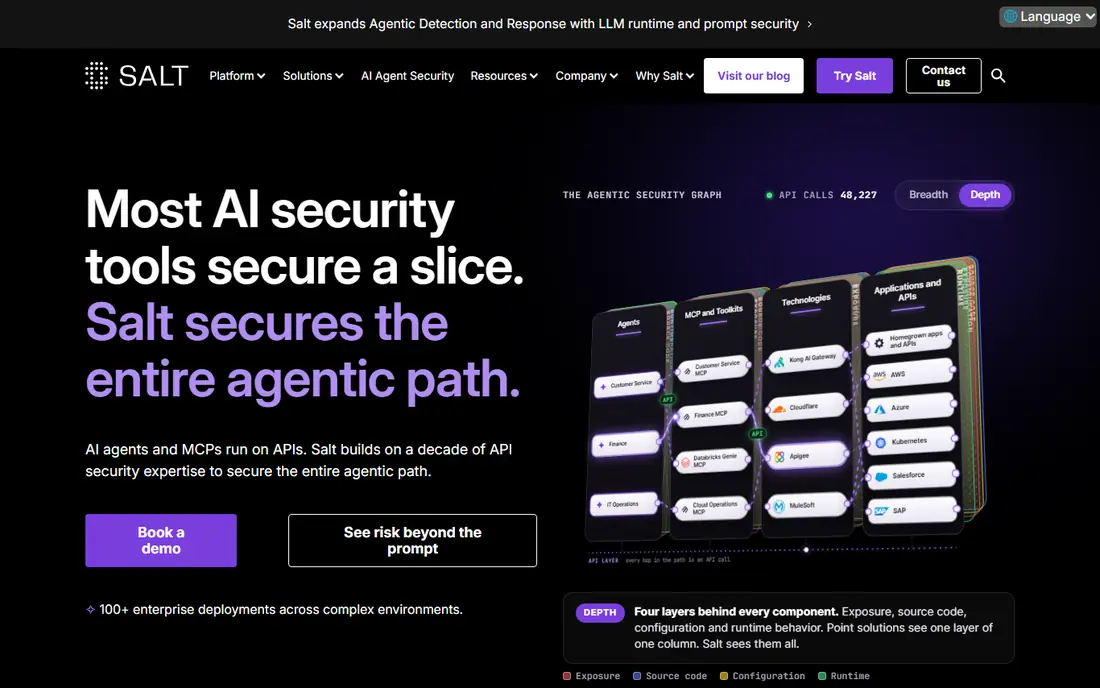
Salt Security is our pick for teams that need runtime API defense against logic abuse, not just signature matching. It builds an inventory from API traffic, learns normal behavior, and flags attacks such as credential stuffing, data scraping and broken object-level authorization patterns. Its integrations let security teams feed findings into gateways, WAFs and SOC workflows.
The catch is enterprise scope and price. Salt is sold as an enterprise platform with quote-based pricing, and it works best as part of a wider application security stack. Smaller teams may prefer a testing tool or an edge platform first, then add runtime defense for their most sensitive APIs.
- Strong behavioral runtime detection for API abuse
- API discovery from traffic
- Integrations with gateways, WAFs and SOC tools
- Enterprise pricing is quote-based
- Runtime protection works best alongside existing gateways and WAFs, not as a lone control
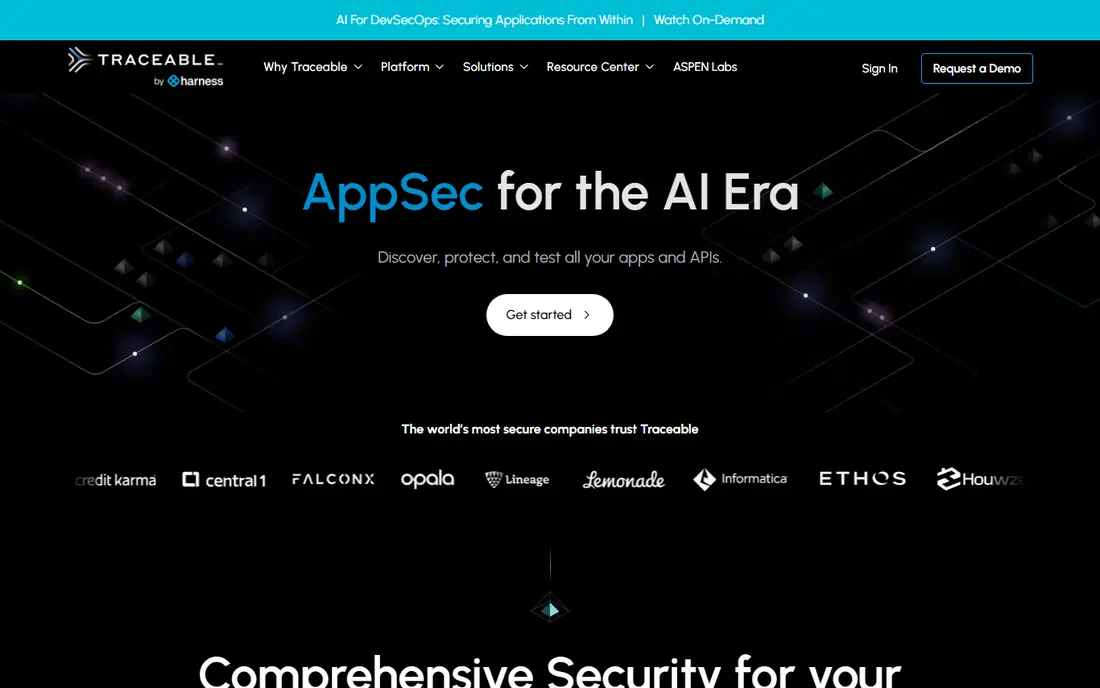
Traceable suits teams that want runtime protection with trace context. By linking API calls across services, it helps security teams see how a request moves, where sensitive data flows, and which endpoints are abused. That context makes it easier to block attacks without blocking legitimate traffic.
The limits are cost and effort. Pricing is quote-based, and large estates need tuning to reduce false positives. Teams should run a proof of concept on their highest-risk APIs first, and measure detection accuracy before rolling out to every service.
- Deep API discovery with distributed tracing context
- Runtime blocking for abuse
- Sensitive data flow visibility
- Enterprise pricing is quote-based
- Deployment and tuning take time for large API estates
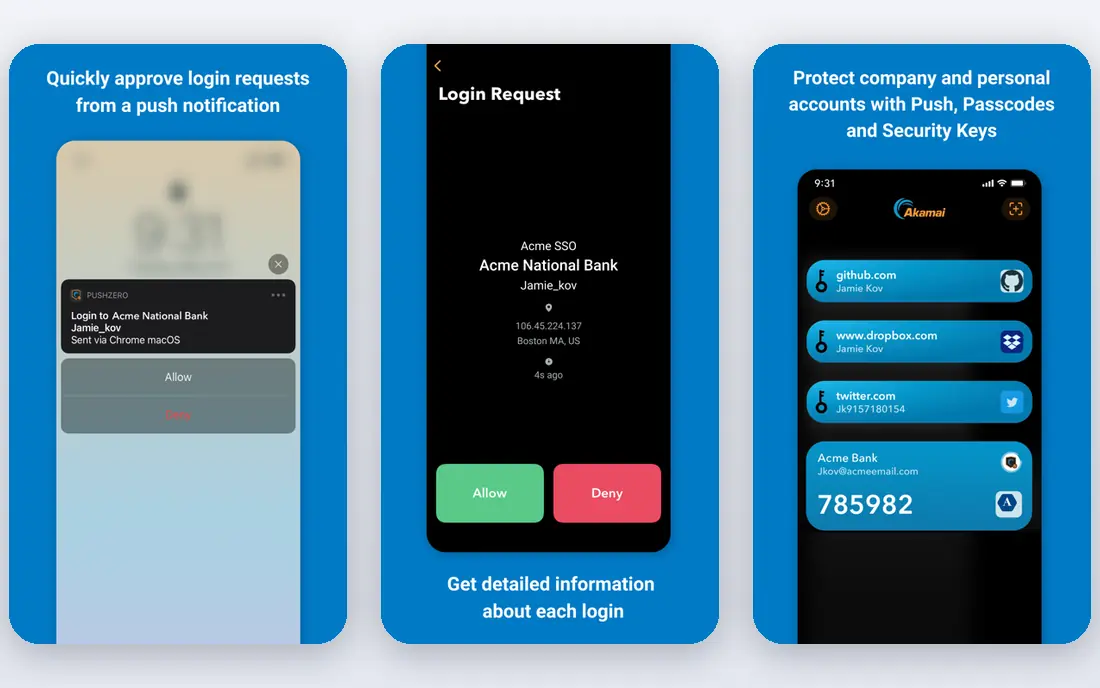
Akamai API Security suits teams that already run Akamai at the edge. It combines API discovery, runtime protection and analytics with edge blocking, so attacks can be stopped before they reach origin servers. Teams that already use Akamai for content delivery or web application protection can often add API security to an existing deal.
The trade-off is standalone value. As a separate purchase, it is less distinct from other enterprise platforms, and pricing depends on the wider Akamai relationship. It is strongest when edge placement and existing Akamai use are already part of the architecture.
- Edge-native blocking through Akamai infrastructure
- Discovery technology from Noname Security
- Bundles with existing Akamai contracts
- Less differentiated as a standalone purchase
- Pricing is quote-based and tied to broader platform deals
Cequence is a good fit for public APIs that face both logic abuse and automated bot traffic. It discovers APIs, monitors behavior, and blocks abusive traffic natively, which helps teams protect login, search and checkout APIs from scraping, credential stuffing and fraud. That combined focus saves teams from running separate bot and API tools for the same endpoints.
The catch is tuning. Bot rules and API rules need different thresholds, and a setting that stops bots can also block legitimate clients if it is too strict. Teams should test with real traffic patterns and review false positives during the proof of concept.
- Combines API discovery, runtime protection and bot mitigation
- Native blocking
- Useful for public APIs facing automated abuse
- Enterprise pricing is quote-based
- Bot and API use cases need separate tuning for best results
Wallarm suits teams that want web application and API protection in one platform. It offers API discovery, vulnerability detection and runtime blocking, with deployment options that fit cloud-native and hybrid setups. Its published threat research also helps security teams explain API risk to leadership.
The limit is pricing complexity. Tiered pricing can be hard to compare for small teams, and some advanced features sit on higher tiers. Use the trial to test discovery and blocking on your real APIs, and confirm which tier covers the endpoints you need to protect.
- Unified web application and API protection with native blocking
- Flexible agent and inline deployment
- Published API threat research
- Pricing is tiered and can be complex for small teams
- Enterprise features need higher tiers
Imperva API Security suits large enterprises that already need web application, DDoS and API protection together. It adds API discovery, schema enforcement and runtime protection to a broad application security platform, which helps teams standardize controls across many applications. Regulated industries often value that breadth and support structure.
The trade-off is focus and cost. An API-only team may find the wider platform more than it needs, and pricing requires a sales process. It is best judged as a platform decision, not as a single API tool purchase.
- Enterprise-grade API protection within a broad WAAP platform
- Strong for large, regulated estates
- Global edge and data center coverage
- Enterprise pricing is quote-based
- Platform breadth can mean longer deployment for API-only use cases
Cloudflare API Security is the practical edge choice for teams already using Cloudflare. It offers API discovery, schema validation, rate limiting and protection features that run at the edge, close to attackers. For teams that already route traffic through Cloudflare, adding API controls can be faster than deploying a separate runtime platform.
The limit is depth by plan. Basic edge controls are widely available, while deeper API security features sit on higher plans. Teams with high-risk APIs should compare the plan features carefully and test schema enforcement and abuse detection on their own traffic.
- Edge-native API discovery and blocking
- Bundles with Cloudflare application security
- Easy start for teams already on Cloudflare
- Deep runtime behavior features vary by plan
- Enterprise API features need higher plans
42Crunch suits teams that want to fix API security before release. It audits OpenAPI contracts for design flaws, tests APIs against common attack patterns, and enforces contracts at runtime with a micro-firewall. That design-first approach helps developers catch authentication, data exposure and schema problems early, when fixes are cheaper.
The catch is that contract quality matters. If an OpenAPI spec is incomplete or out of date, audit results will miss real endpoints. Teams should keep specs current and pair 42Crunch with runtime protection for public or sensitive APIs.
- Strong OpenAPI contract auditing and testing
- Security checks in CI pipelines
- Runtime micro-firewall for enforcement
- Design-time focus means it does not replace runtime behavior platforms alone
- Contract quality affects results
StackHawk is the developer-friendly pick for API testing in continuous integration. It runs dynamic tests against APIs in CI, using specs to find vulnerabilities before deployment. A free tier lets small teams start testing without a sales process, which makes it easy to add to a pipeline.
The limit is scope. StackHawk tests APIs before release, but it does not provide the same runtime blocking as Salt, Traceable or Cequence. Use it as the pre-release layer, and add runtime or edge protection for APIs that face real attackers in production.
- API and application testing in CI pipelines
- Free tier for getting started
- Spec-driven testing for REST and GraphQL
- Testing focus, not full runtime protection
- Coverage depends on specs and test scope
How we picked these
We compared official feature pages, product documentation and pricing information for API security platforms that are available in 2026. We grouped tools by job, discovery, runtime protection, edge defense and testing, and favored platforms with clear API-specific features rather than generic firewall claims. Where pricing was quote-based, we wrote See website rather than guessing, and we noted consolidation where a product now sits inside a larger platform.
How to choose an API security platform
Start with discovery. Most teams find shadow, zombie and undocumented APIs when they first map traffic, and those endpoints are often the weakest. Run a discovery phase before buying blocking tools, since you cannot protect an API you do not know exists.
Separate testing, edge and runtime needs
Testing tools catch flaws before release, edge tools block attacks early, and runtime tools catch logic abuse that signatures miss. A mature setup often uses all three, but the order matters: test in CI first, add edge controls for public APIs, then add runtime defense for sensitive endpoints. Buying runtime tools before fixing basic authentication and schema flaws wastes budget.
Run a proof of concept on real traffic
Vendor demos use clean APIs, while real estates have legacy endpoints, inconsistent specs and unusual client behavior. Test discovery coverage, false positive rates and blocking impact on your own traffic for at least a few weeks. Measure how many shadow APIs are found, how many alerts need tuning, and whether legitimate clients are ever blocked.
Plan for ownership and upkeep
API security fails when no team owns specs, alerts and rule tuning. Assign owners for API inventory, CI testing and runtime alerts, and review the inventory when services change. A platform that fits your gateway, SIEM and ticketing workflow will last longer than a stronger tool that sits outside daily operations.