Best App Bank Accounts in 2026: 8 Accounts Compared
By ToolNimba Editorial Team November 10, 2026 12 min read

- Top pick
 SoFi
All round app banking and investing
Starting priceFreeCheck out SoFiRead our review - Runner-up
 Chime
Simple no fee app banking
Starting priceFreeCheck out ChimeRead our review - Also great
 Varo
Chartered bank app with no fees
Starting priceFreeCheck out VaroRead our review
How we researched this
We compared official pricing and feature pages, app store listings, privacy policies and public user reviews. Prices change, so check the provider's site before you pay.
Key takeaways
- SoFi and Chime suit everyday US banking with no monthly fees, early direct deposit and large fee free ATM networks.
- Varo and Current suit users who want overdraft help or early pay features without branch banking.
- Cash App suits users who already send money and invest in the same app, while Revolut suits travel and multi currency spending.
- Check whether the provider is a bank or a fintech with partner banks, because deposit protection and support differ.
Quick comparison
| Name | Best for | Starting price | Free plan | |
|---|---|---|---|---|
| SoFi | All round app banking and investing | Free | Yes | Visit |
| Chime | Simple no fee app banking | Free | Yes | Visit |
| Varo | Chartered bank app with no fees | Free | Yes | Visit |
 Current | Early pay and paycheck advances | Free | Yes | Visit |
 Cash App | Payments plus banking and investing | Free | Yes | Visit |
 Revolut | Travel and multi currency spending | Free | Yes | Visit |
 Ally Bank | Online bank with savings tools | Free | Yes | Visit |
 Capital One | App banking with branch backup | Free | Yes | Visit |
The best app bank accounts
We compared official feature pages, pricing pages, app store listings and public reviews for app first bank accounts that US users can open and manage on a phone. This is not financial advice, and rates, fees and eligibility can change, so check the provider page before you apply. The list below mixes full banks, fintech accounts and travel friendly accounts, so you can match the app to how you get paid and spend.
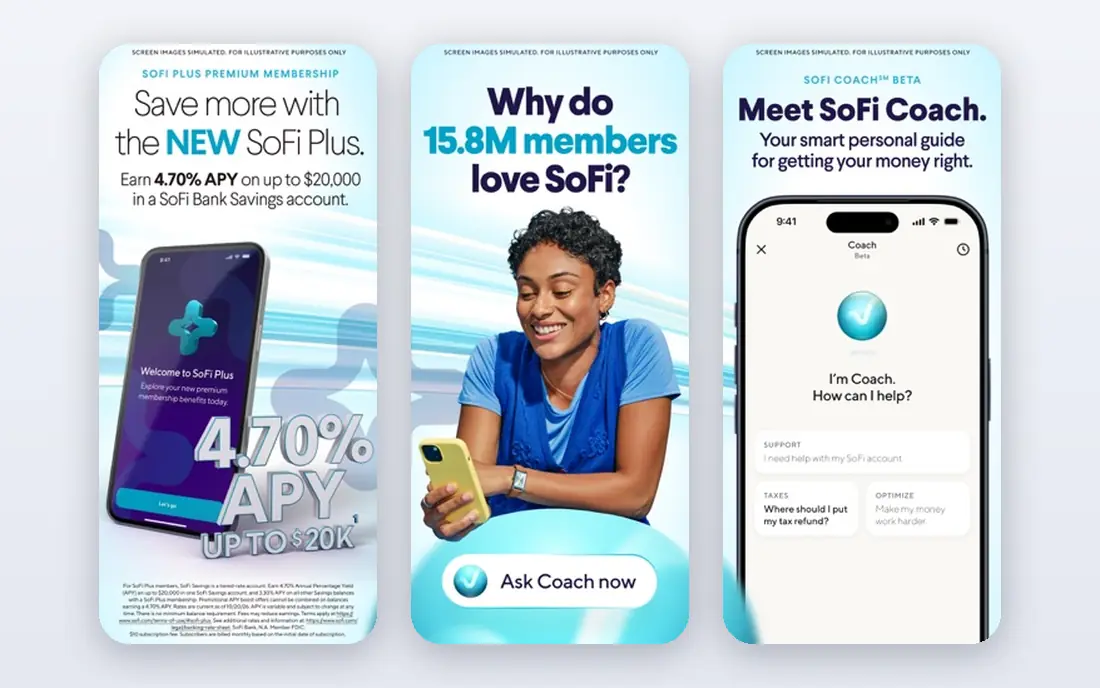
If users who want banking and investing together is the main job, SoFi deserves a close look. It offers checking and savings with no account fees, early pay, a large ATM network and investing in the same app. That approach suits teams that repeat the same task each week and want fewer manual steps.
In day to day use, SoFi works best for users who want banking and investing together. Banking plus investing in one app is the reason most buyers pick it over a generic editor or a manual process. The value shows up when you repeat the same job often, because saved settings and templates cut repeat work and keep output consistent.
The catch is branch users will miss in person service. That limit does not rule it out, but it does mean you should test it on a real job before you pay. Check the free plan or trial where one is offered, try a sample that matches your real work, and compare it with one rival before you commit.
- No account fees
- Early direct deposit
- Banking, investing and loans in one app
- Savings rate depends on direct deposit and membership tiers
- No branches
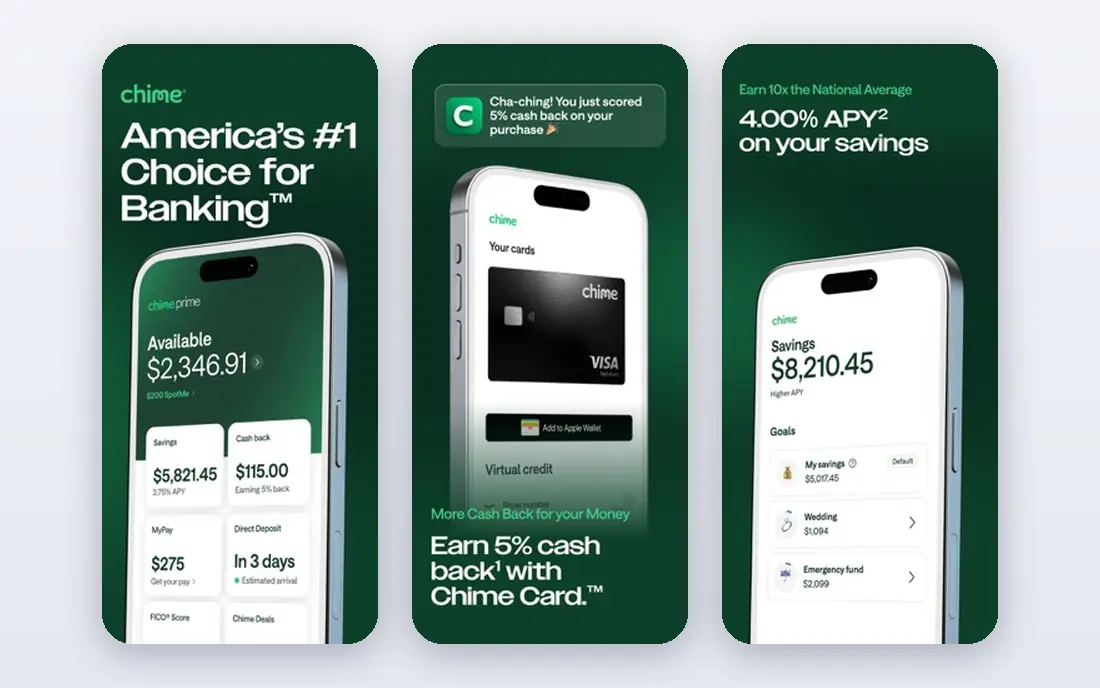
Chime stands out for simple fee free banking with overdraft help. It offers checking and savings through partner banks, with early pay, a debit card and SpotMe cover that starts small and can grow. It also helps when one person handles design, copy and publishing, because less switching is needed.
In day to day use, Chime works best for users who want simple banking and overdraft help. Simple fee free banking with overdraft help is the reason most buyers pick it over a generic editor or a manual process. The value shows up when you repeat the same job often, because saved settings and templates cut repeat work and keep output consistent.
The catch is cash deposit users need another option. That limit does not rule it out, but it does mean you should test it on a real job before you pay. Check the free plan or trial where one is offered, try a sample that matches your real work, and compare it with one rival before you commit.
- No monthly fees
- Early direct deposit
- SpotMe overdraft cover for eligible users
- Fintech, not a bank, with partner banks
- No branches
- Cash deposits are limited
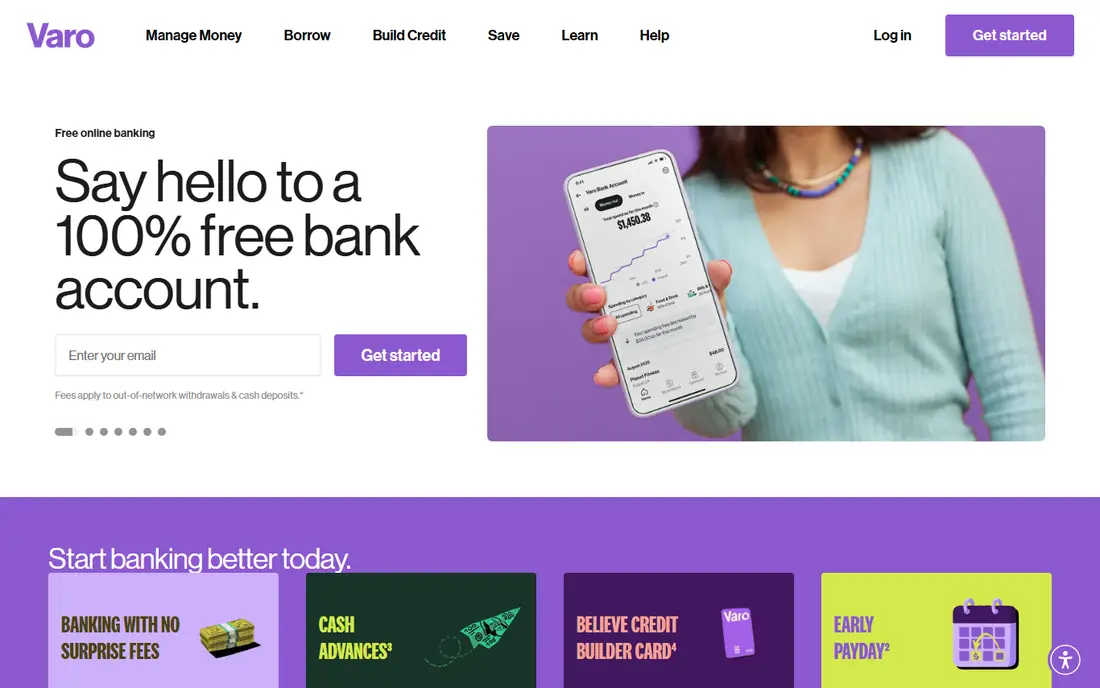
Teams that want no fee banking from a chartered bank without a long setup often land on Varo. It is a chartered bank app with checking, savings, early pay and budgeting tools, without branch banking. The benefit is clearest on a tight deadline, when a usable first draft beats a blank page.
In day to day use, Varo works best for users who want a bank app with no monthly fee. No fee banking from a chartered bank is the reason most buyers pick it over a generic editor or a manual process. The value shows up when you repeat the same job often, because saved settings and templates cut repeat work and keep output consistent.
The catch is heavy cash users may need a branch bank too. That limit does not rule it out, but it does mean you should test it on a real job before you pay. Check the free plan or trial where one is offered, try a sample that matches your real work, and compare it with one rival before you commit.
- No monthly fees
- Early direct deposit
- Savings tools and cash advance options
- ATM network is smaller than large banks
- Advance limits depend on eligibility
For users who need pay flexibility, Current offers a practical mix of speed and control. It focuses on getting paid early, with advance options, savings pods and budgeting tools for users who live paycheck to paycheck. For small teams, that kind of focus keeps costs down and keeps the work moving.
In day to day use, Current works best for users who need pay flexibility. Early pay with advance options is the reason most buyers pick it over a generic editor or a manual process. The value shows up when you repeat the same job often, because saved settings and templates cut repeat work and keep output consistent.
The catch is users who want investing or lending need another app. That limit does not rule it out, but it does mean you should test it on a real job before you pay. Check the free plan or trial where one is offered, try a sample that matches your real work, and compare it with one rival before you commit.
- Early direct deposit
- Paycheck advance options
- Budgeting and savings tools
- Advance limits depend on eligibility
- No branches
- Some features need direct deposit
Cash App is a good fit when users who already send money on Cash App matters more than having every extra feature. It started as a payment app and now offers a debit card, direct deposit, savings and investing in the same account. It works well as a starting point, and you can refine the result by hand where it matters most.
In day to day use, Cash App works best for users who already send money on Cash App. Payments, banking and investing together is the reason most buyers pick it over a generic editor or a manual process. The value shows up when you repeat the same job often, because saved settings and templates cut repeat work and keep output consistent.
The catch is full bank features and branches are limited. That limit does not rule it out, but it does mean you should test it on a real job before you pay. Check the free plan or trial where one is offered, try a sample that matches your real work, and compare it with one rival before you commit.
- Easy peer payments
- Debit card
- Investing and Bitcoin options in one app
- Banking features are simpler than SoFi
- Overdraft and borrowing depend on eligibility
Start with Revolut if travellers and international spenders is your priority and you want a result quickly. It offers multi currency balances, cards and exchange tools that suit travel and international spending from one app. That balance is useful when quality matters but you cannot wait days for each new version.
In day to day use, Revolut works best for travellers and international spenders. Travel spending and multi currency use is the reason most buyers pick it over a generic editor or a manual process. The value shows up when you repeat the same job often, because saved settings and templates cut repeat work and keep output consistent.
The catch is US users should check which features apply locally. That limit does not rule it out, but it does mean you should test it on a real job before you pay. Check the free plan or trial where one is offered, try a sample that matches your real work, and compare it with one rival before you commit.
- Multi currency accounts
- Travel cards
- Budgeting and exchange tools
- US features differ from UK and EU plans
- Some features need paid plans
What sets Ally Bank apart is online banking with strong savings tools, paired with a workflow that stays simple. It offers checking and savings with buckets for goals, no monthly maintenance fee and a large ATM network. It keeps the core job in one place, which makes training a new team member simpler.
In day to day use, Ally Bank works best for savers who want an online bank app. Online banking with strong savings tools is the reason most buyers pick it over a generic editor or a manual process. The value shows up when you repeat the same job often, because saved settings and templates cut repeat work and keep output consistent.
The catch is branch deposit users will need another bank. That limit does not rule it out, but it does mean you should test it on a real job before you pay. Check the free plan or trial where one is offered, try a sample that matches your real work, and compare it with one rival before you commit.
- No monthly fee checking
- Savings buckets
- Large ATM network and support
- No branches
- Rates and fees can change
- App investing is separate
When budget and speed both matter, Capital One is worth testing for users who want an app plus branch backup. It pairs a strong mobile app with no fee checking options and physical locations for cash and in person help. That simplicity is the point, and it is why many smaller teams prefer it to a larger suite.
In day to day use, Capital One works best for users who want an app plus branch backup. App banking plus branch access is the reason most buyers pick it over a generic editor or a manual process. The value shows up when you repeat the same job often, because saved settings and templates cut repeat work and keep output consistent.
The catch is online only users may prefer a simpler fintech app. That limit does not rule it out, but it does mean you should test it on a real job before you pay. Check the free plan or trial where one is offered, try a sample that matches your real work, and compare it with one rival before you commit.
- No fee checking options
- Strong app
- Branches and cafes in many cities
- Savings rates vary by account
- Some features need a Capital One account type
How we picked these
We compared official feature pages, pricing pages, app store listings and public reviews for each account, and we kept only accounts available to US users in October 2026. We checked monthly fees, ATM access, early pay, overdraft options, savings features and deposit protection. We did not claim hands-on testing that did not happen. This is not financial advice. Prices marked Free mean no monthly fee for the basic checking account, and overdraft or advance limits are up to amounts that depend on eligibility.
How to choose an app bank account
Check fees, ATMs and pay timing first
A no fee account can still charge for out of network ATMs, instant transfers or paper checks, so read the fee schedule. Check ATM network size near home and work, whether direct deposit arrives early, and whether overdraft cover is optional or automatic. Those daily details matter more than a savings rate you may rarely use.
Decide whether you need branches, investing or travel features
Some users need a branch for cash deposits or certified checks, while others need investing, budgeting or travel spending in the same app. SoFi covers banking plus investing, Cash App covers payments plus investing, and Revolut covers multi currency travel. Pick the extra features you will use weekly, not the longest list.
Confirm protection and support
Check whether deposits are FDIC insured directly or through partner banks, and how support works when a payment fails or a card is lost. App only support can be fast for simple issues and slow for complex holds, so check support hours and in app help options. Keep a second account for backup if this will be your only account.
Sources
Frequently asked questions
What is the best app bank account?
SoFi is a strong all round pick for US users because it is a real bank with no account fees, early pay and investing in one app. Chime is a strong simple pick with SpotMe overdraft cover, while Varo suits users who want a chartered bank app with no monthly fees. The best pick depends on pay timing and ATM needs.
What are the best app bank accounts for no fees?
SoFi, Chime, Varo, Current and Ally all offer checking with no monthly fee for basic accounts. Fees can still apply for out of network ATMs, instant transfers or other services, so read the fee schedule. A no fee account is only cheap if your normal use stays inside the free network and limits.
Are app bank accounts safe?
Accounts at FDIC member banks are insured up to legal limits, and many fintech accounts hold deposits at partner FDIC banks. Check the provider page for the bank name and coverage, use strong passwords and two factor authentication, and keep records of deposits. This is not financial advice, and coverage terms can change.
Can I get paid early with an app bank account?
Yes, SoFi, Chime, Varo and Current all offer early direct deposit, often up to two days early depending on when the payer sends funds. Early pay is not guaranteed, because it depends on payer timing and account eligibility. Do not budget as if early pay will always arrive on the same day.
Do app bank accounts work for cash deposits?
Some do, through ATMs or retail partners, but cash deposit options are narrower than branch banks. Check deposit locations, fees and hold times before you switch if you handle cash often. Users who deposit cash weekly may still need a branch bank as a second account.