Best App for Learning Italian in 2026: 9 Apps Compared
By ToolNimba Editorial Team November 10, 2026 10 min read

- Top pick
 Duolingo
free daily habit building
Starting priceFreeCheck out DuolingoRead our review - Runner-up
 Babbel
structured grammar and conversation
Starting price$8.95 per monthCheck out BabbelRead our review - Also great
 Pimsleur
audio-first speaking practice
Starting price$20.99 per monthCheck out PimsleurRead our review
How we researched this
We compared official pricing and feature pages, app store listings, privacy policies and public user reviews. Prices change, so check the provider's site before you pay.
Key takeaways
- Duolingo is the easiest free start, but its grammar explanations are thin and speaking practice is limited.
- Babbel is our pick for structured learners who want grammar explained in English and lessons built around real conversations.
- Pimsleur suits commuters and travelers who learn by listening and speaking, rather than by reading screens.
- No single app makes you fluent alone, so pair an app with live conversation on italki or regular Italian media once you reach basic level.
Quick comparison
| Name | Best for | Starting price | Free plan | |
|---|---|---|---|---|
| Duolingo | free daily habit building | Free | Yes | Visit |
| Babbel | structured grammar and conversation | $8.95 per month | No | Visit |
| Pimsleur | audio-first speaking practice | $20.99 per month | Free trial (7 days) | Visit |
 Rosetta Stone | immersion without translation | $11.99 per month | Free trial | Visit |
 Busuu | community feedback on writing and speaking | See website | Yes | Visit |
 Memrise | vocabulary with native-speaker video | $24.99 per month | Yes | Visit |
 italki | live one-to-one lessons with tutors | See website | No | Visit |
 Mondly | short daily lessons and phrase practice | See website | Yes | Visit |
 LingQ | reading and listening to real Italian content | $14.99 per month | Yes | Visit |
The best app for learning italian
We compared official pricing, app store listings, and course descriptions, focusing on Italian specifically rather than language apps in general. The best choice depends on whether you need a daily habit, clear grammar, speaking confidence, or travel phrases in a hurry.
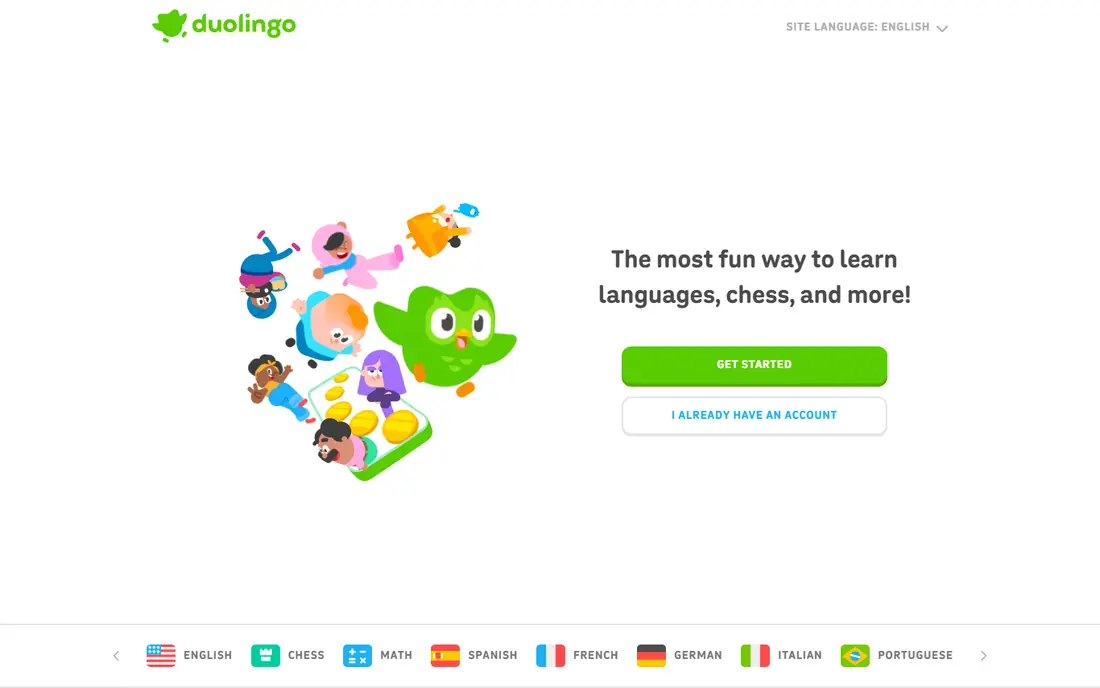
Duolingo is the lowest-friction way to start Italian. Lessons are short, the streak system keeps many learners coming back, and the free tier covers the core course, so you can test whether daily practice fits your life before paying. Super, the paid tier, removes ads and adds extra features, with prices varying by billing cycle and app store.
The honest limit is depth. Duolingo teaches vocabulary and patterns well for the first months, but it explains grammar less clearly than Babbel, and it will not by itself prepare you for a real conversation in Italy. Use it to build a habit and a base vocabulary, then add speaking practice or a structured course when you plateau.
- Free core course with ads
- Short gamified lessons that build a daily habit
- Wide language catalogue if you later add another language
- Grammar explanations are shallow
- Speaking practice is limited
- Free tier has energy limits that can interrupt lessons
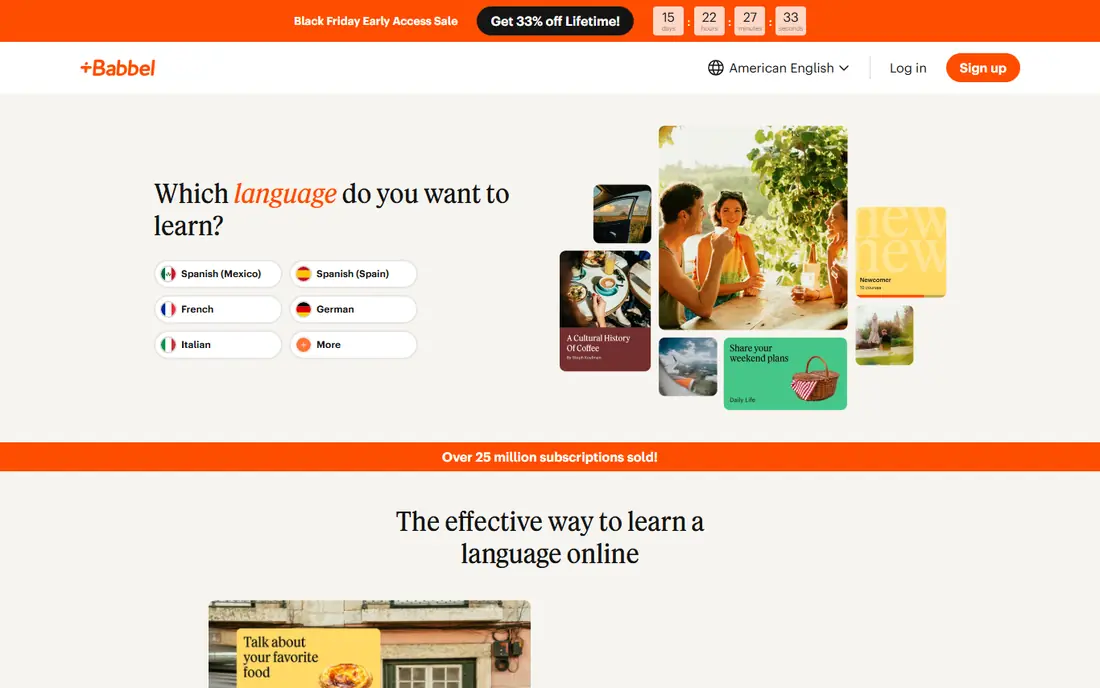
Babbel is our pick for learners who want to understand why a sentence works, not just memorize it. Its Italian courses are built by linguists, explain grammar in English, and use dialogues for travel, work, and daily life, which makes the jump to real conversation smoother than a purely gamified app. The $8.95 per month figure reflects the 12-month plan, with monthly billing costing more.
Babbel is not a complete path to fluency. Its courses reach roughly intermediate level, so advanced learners will need reading, listening, and live conversation beyond the app. For a beginner who wants structure and clear explanations, though, it is the most reliable paid starting point in this list.
- Grammar explained in your own language
- Lessons built around real-life dialogues
- Short 10 to 15 minute lessons that fit a commute
- No ongoing free tier beyond the first lesson of each course
- Italian courses top out around intermediate level
- Fewer languages than Duolingo

Pimsleur takes a different route: you listen, repeat, and answer aloud, with new words introduced gradually and reviewed at spaced intervals. That method suits travelers and commuters who want to speak before they can read Italian well, and it builds listening speed faster than a text-heavy app. A 7-day trial lets you test whether audio learning suits you.
The trade is price and breadth. At $20.99 per month on the app store listing checked in October 2026, Pimsleur costs more than Babbel or Duolingo, and it offers less reading, writing, and grammar detail. Pair it with a reading app or a tutor if you also need to read menus, signs, and messages with confidence.
- 30-minute audio lessons build speaking confidence
- Strong pronunciation and listening focus
- Works well while driving or walking
- Among the most expensive apps here
- Little visual or reading practice
- Monthly cost adds up over a long course
Rosetta Stone teaches Italian through pictures, audio, and context, without translating into English. That immersion approach helps some learners think in Italian earlier, and its pronunciation tool gives feedback on sounds that English speakers often miss. Pricing varies, with $11.99 per month cited for a yearly plan and a lifetime option for one language.
Immersion is also its weakness for many adults. If you want to know why Italian verbs change endings, or why word order shifts, Rosetta Stone expects you to infer the rule rather than read it. Visual learners and patient beginners often like it, while learners who want direct grammar teaching usually prefer Babbel.
- Immersion method avoids reliance on English translation
- Pronunciation feedback through speech recognition
- Lifetime option suits long-term learners
- No English grammar explanations by design
- Can feel slow for learners who want rules explained
- Monthly price varies by plan and store
Busuu combines structured lessons with a community that corrects your work, which is rare at this price. You submit writing or speaking exercises and get corrections from native Italian speakers, while also correcting other learners in your own language. That exchange makes mistakes visible in a way that automated grading often misses.
The free tier is limited, and Premium pricing varies enough that you should check the current price in the app store before buying. Busuu also works best when you engage with the community regularly, so shy learners may not get the same value. For learners who want human feedback without paying tutor rates, it is a strong middle ground.
- Lessons organized by CEFR levels from beginner upward
- Native speakers correct your written and spoken exercises
- Free tier for basic lessons
- Full course sits behind Premium
- Pricing varies by store and billing cycle
- Feedback quality depends on community activity
Memrise focuses on vocabulary learned through video clips of native speakers, rather than through lists alone. Hearing many voices say the same phrase helps you recognize Italian at natural speed, which is useful for travel and for following Italian media. The free tier covers core lessons, while paid plans open up more content, with $24.99 per month cited for monthly billing and a much lower yearly equivalent.
Memrise is not a full grammar course. It builds words and listening well, but learners who need verb conjugations and sentence structure explained should pair it with Babbel or a tutor. Use Memrise as a vocabulary engine beside a structured course, not as your only app.
- Short videos of native speakers show real pronunciation and rhythm
- Spaced repetition supports long-term vocabulary retention
- Free core lessons
- Monthly price is high compared with the yearly rate
- Grammar teaching is lighter than Babbel
- Course depth varies by language
italki is not an app course, but it solves the problem every app leaves open: speaking with a real person. You choose a professional Italian teacher for structured lessons or a community tutor for cheaper conversation practice, with lesson prices reported from around $4 per hour upward. Trial lessons at a discount let you test a tutor before committing.
The open structure is both freedom and work. You must pick a tutor, set goals, and keep booking, since there is no streak or curriculum to push you forward. For learners at basic level and above, that live practice is the fastest way to turn app knowledge into conversation, and it pairs well with any app in this list.
- Real conversation with professional teachers or community tutors
- Pay per lesson with no subscription
- Flexible scheduling across time zones
- Prices vary widely by tutor
- No fixed curriculum unless your tutor provides one
- Quality depends on the tutor you choose
Mondly is built for short, daily sessions that teach useful phrases first, with a chatbot for conversation practice and speech recognition to check pronunciation. That phrase-first approach suits travelers who need restaurant, hotel, and transport Italian quickly, and the free tier lets you test the style before paying.
For long-term learning, Mondly is lighter than Babbel or Pimsleur. Grammar explanations and reading depth are thinner, and some features, including augmented reality tools, feel like extras rather than core teaching. Treat Mondly as a travel companion or a second app for daily phrases, not as your main course.
- Short daily lessons suit busy schedules
- Chatbot and speech recognition give speaking practice
- Covers many languages under one account
- Advanced features sit behind a paywall
- Depth is thinner than Babbel for grammar
- Pricing varies by store and plan
LingQ flips the usual method: instead of completing set lessons, you read and listen to real Italian content, look up unknown words, and review them with spaced repetition. That approach suits intermediate learners who want to move from textbook Italian to news, stories, and podcasts, and it builds a large reading vocabulary over time.
Beginners should be cautious. Without a fixed curriculum, it is easy to pick material that is too hard or to skip grammar basics. LingQ works best after Duolingo or Babbel has given you a base, when real content becomes motivating rather than overwhelming.
- Learn from real articles, podcasts, and books at your level
- Click any word to save it for review
- Strong for building reading vocabulary
- Less structured than a traditional course
- Beginners may feel lost without a set lesson path
- Interface takes time to learn
How we picked these
We compared official pricing pages, app store listings, and course descriptions for apps that offer a real Italian course, not just a phrase list. We favored apps available now in the US, with clear free or trial options, and we mixed free, structured, audio, immersion, and live-tutor options so different learning styles are covered. We did not claim hands-on testing, and prices vary by store and billing cycle, so check the current price before buying.
What to check before you pay
Match the app to your goal and your week. A traveler with two weeks before a trip needs phrases and listening, so Pimsleur or Mondly fits better than a slow grammar course. A learner who wants steady progress over a year needs structure and grammar, so Babbel or Busuu fits better. A learner who already knows basics needs conversation and real content, so italki and LingQ add more than another beginner app.
Check three practical details. First, does the free tier include real lessons or only a sample, since Duolingo and Memrise differ sharply from Babbel here. Second, does the monthly price you see reflect monthly or yearly billing, because the gap can be large. Third, does the app teach Italian at your level, since several courses top out at intermediate and advanced learners will need live practice and media beyond any app.
Sources
- https://www.duolingo.com
- https://www.babbel.com
- https://www.pimsleur.com
- https://www.rosettastone.com
- https://www.busuu.com
- https://www.memrise.com
- https://www.italki.com
- https://www.mondly.com
- https://www.lingq.com
- https://www.mindomax.com/duolingo-cost
- https://www.uselearnai.com/blog/best-way-to-learn-italian-2026
Frequently asked questions
What is the best app to learn Italian for free?
Duolingo is the best free starting point, since its core course is free and its short lessons build a daily habit. Memrise and Busuu also offer free tiers, but with more limits, so try Duolingo first and add another app if you need more grammar or vocabulary.
Is Babbel or Duolingo better for Italian?
Babbel is better for structured learning, because it explains grammar and uses real-life dialogues. Duolingo is better for a free habit and vocabulary, but its grammar explanations are thinner. Many learners use Duolingo for daily practice and Babbel for the actual course.
Can I become fluent in Italian with an app alone?
No app alone makes you fluent. Apps build vocabulary, grammar, and listening, but fluency needs live conversation, reading, and listening to real Italian over time. Pair an app with italki lessons, Italian shows, and regular reading once you reach basic level.
What is the best app for learning Italian for travel?
Pimsleur is strong for travel speaking, since its audio lessons build pronunciation and listening for common situations. Mondly is a good backup for short phrase practice, while Babbel covers travel dialogues with more grammar support.
How long does it take to learn Italian with an app?
It depends on daily time and prior language experience, but a daily 15 to 30 minute habit usually builds basic travel Italian in a few months. Reaching comfortable conversation takes longer and almost always needs live speaking practice beyond app lessons.