Best Applicant Tracking Software in 2026: 8 Services Compared
By ToolNimba Editorial Team November 15, 2026 9 min read

- Top pick
 Greenhouse
Structured hiring at scale
Starting priceSee websiteCheck out GreenhouseRead our review - Runner-up
 Lever
ATS plus talent CRM
Starting priceSee websiteCheck out LeverRead our review - Also great
 Workable
Fast setup and sourcing
Starting price$299 per monthCheck out WorkableRead our review
How we researched this
We compared official pricing and feature pages, app store listings, privacy policies and public user reviews. Prices change, so check the provider's site before you pay.
Key takeaways
- Greenhouse suits structured hiring at scale, with interview kits and scorecards that keep decisions consistent.
- Lever suits teams that combine hiring with talent CRM work, since candidate nurturing sits inside the same system.
- Workable and Ashby suit growing teams that want clearer pricing and strong reporting without enterprise complexity.
- JazzHR, Breezy HR, and Zoho Recruit suit smaller teams and agencies that need low cost and fast setup.
- iCIMS suits large, high-volume hiring with global compliance needs, though implementation takes longer.
Quick comparison
| Name | Best for | Starting price | Free plan | |
|---|---|---|---|---|
| Greenhouse | Structured hiring at scale | See website | No | Visit |
| Lever | ATS plus talent CRM | See website | No | Visit |
| Workable | Fast setup and sourcing | $299 per month | Free trial | Visit |
 Ashby | Analytics-led hiring | $300 per month | No | Visit |
 JazzHR | Budget small-business hiring | $75 per month | Free trial | Visit |
 Breezy HR | Visual pipelines | Free | Yes | Visit |
 Zoho Recruit | Low-cost agency hiring | See website | Yes | Visit |
 iCIMS | Enterprise high-volume hiring | See website | No | Visit |
The best applicant tracking software
An applicant tracking system, often called an ATS, manages job posts, applications, interviews, and offers in one pipeline. The right system depends on hiring volume, team size, and how much structure your interviews need. These eight platforms cover small teams through global enterprises, with different pricing models to match.
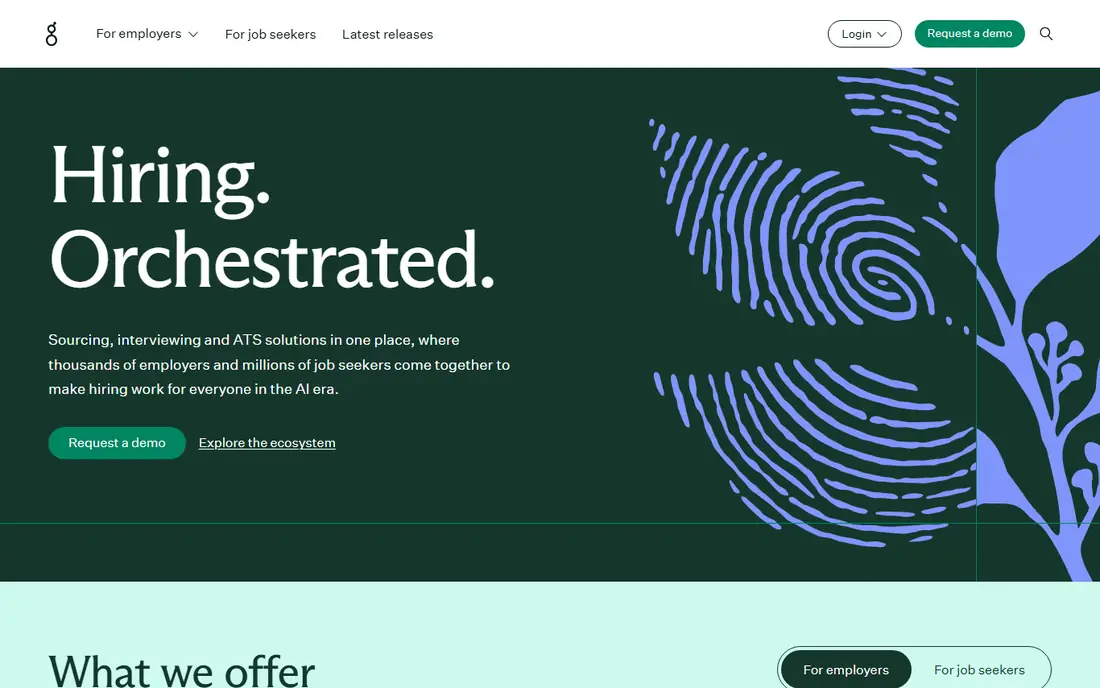
Greenhouse is built for structured hiring. Hiring teams create interview kits, scorecards, and consistent stages, so candidates are judged on the same criteria rather than on gut feeling. Reporting shows where candidates drop out, which sources work best, and how long each stage takes, which helps larger teams improve hiring over time.
Pricing is quote-based, and setup takes more effort than a simple ATS. Small teams with a handful of hires a year may find Greenhouse more than they need. For mid-size and large companies that hire regularly and care about consistent, defensible decisions, Greenhouse is a leading choice.
- Interview kits and scorecards
- Strong reporting
- Wide integration set
- Quote-based pricing
- Setup and learning curve are heavier than simpler tools
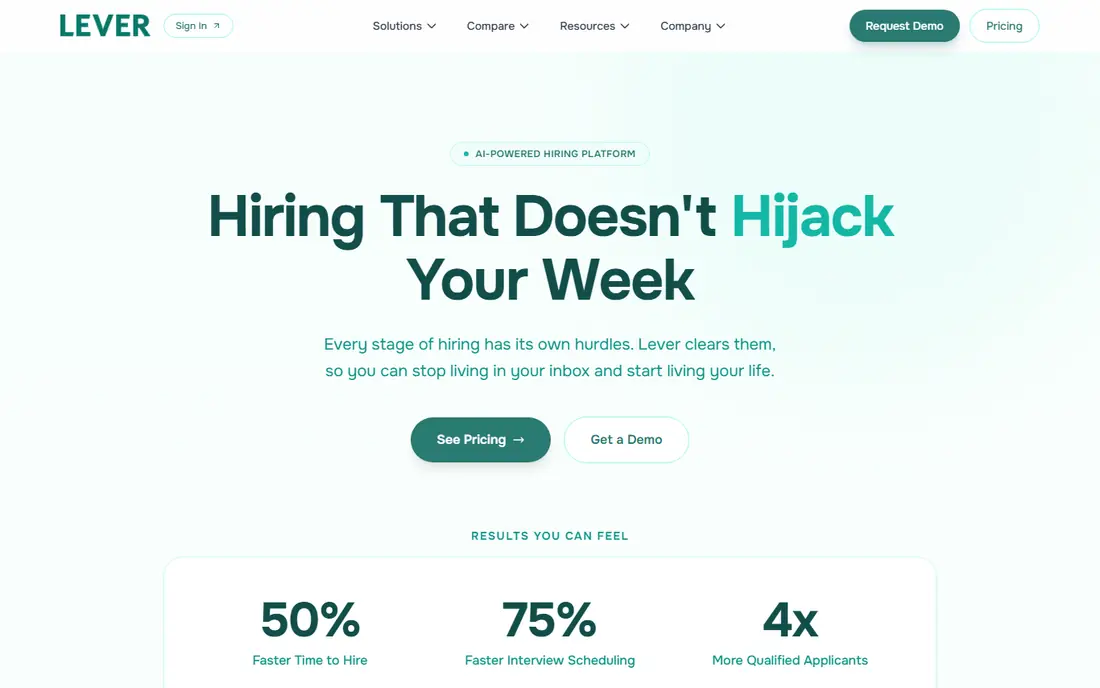
Lever combines an ATS with a talent CRM, so recruiters can nurture past applicants, referrals, and sourced candidates over time. Automated nurture flows, shared notes, and interview feedback keep a pipeline warm between roles. That CRM depth suits companies that hire repeatedly from the same talent pools.
Pricing is quote-based and sits at a premium level, which can strain a small startup budget. Teams that only hire occasionally may not use the CRM features enough to justify the cost. For growth-stage companies with ongoing hiring, Lever turns one-off applications into a reusable talent pipeline.
- Built-in talent CRM
- Nurture campaigns for past candidates
- Strong collaboration tools
- Quote-based pricing
- Premium cost suits larger teams better than startups
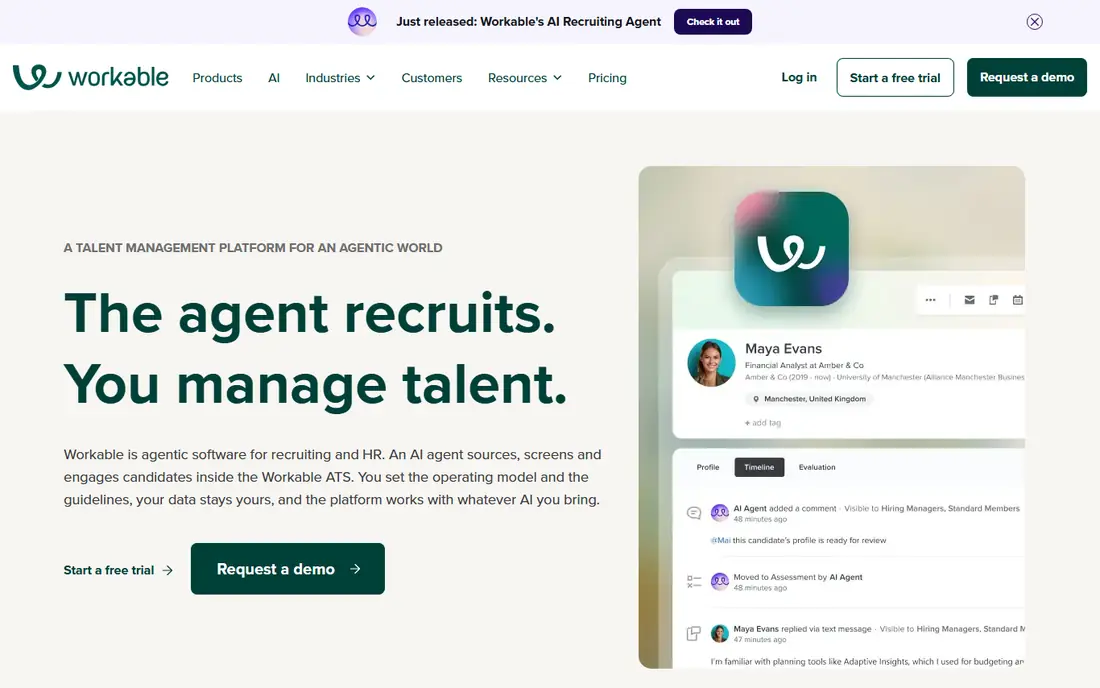
Workable is a practical pick for teams that want to post jobs and start hiring quickly. It posts to many job boards, parses resumes, and offers AI sourcing on higher tiers, with a 15-day free trial for new users. Recent listings put Standard pricing at $299 per month for small teams on annual billing, with higher tiers adding HR and advanced features.
Add-ons such as texting, video interviews, and assessments cost extra on Standard, so the total can rise above the base price. Still, published pricing makes budgeting easier than quote-only rivals. For small and mid-size teams that want speed and clarity, Workable is a strong all-round ATS.
- Fast setup
- AI sourcing tools
- Published pricing by company size
- Broad job board posting
- Add-ons cost extra on lower tiers
- Advanced automation needs higher plans
Ashby suits data-driven hiring teams that want to understand every stage of the funnel. Custom reports, scheduling, and analytics sit in one system, with published pricing bands by company size in recent listings, starting around $300 per month for smaller teams. That transparency helps a growing company plan hiring costs as headcount rises.
The reporting power assumes some comfort with data. Teams that want simple, preset reports may find Ashby deeper than needed at first. For tech and growth-stage companies that track source quality, interviewer load, and time to hire closely, Ashby is one of the best analytics-led ATS options.
- Strong custom reporting
- Scheduling and analytics in one system
- Published size-based pricing
- Reporting depth needs data familiarity
- No free plan or trial in most cases
JazzHR is a budget-friendly ATS for small businesses buying their first system. Flat-rate pricing with unlimited hiring manager users keeps costs predictable, and recent listings put entry pricing at $75 per month, with a free trial. Setup is quick, with job posting, resume review, and interview scheduling covered from the start.
Sourcing and advanced analytics are basic compared with Workable or Ashby, so high-volume teams may outgrow JazzHR. For a small business that hires a few roles a year and wants a simple pipeline without per-seat surprises, JazzHR is an easy and affordable pick.
- Flat-rate pricing
- Unlimited hiring manager users
- Fast setup for first-time buyers
- Sourcing and analytics are basic
- Less suited to complex enterprise hiring
Breezy HR appeals to teams that think in boards. Candidates move through a visual pipeline by drag and drop, with job posting, messaging, and scheduling built in. A free tier lets a very small team start without paying, and paid plans keep user seats unlimited, which suits collaborative hiring.
Reporting on entry tiers is basic, and enterprise features such as deep CRM work are limited. For startups and small teams that want a visual, low-cost ATS and do not need heavy analytics, Breezy HR is a friendly and flexible choice.
- Free tier
- Visual drag-and-drop pipelines
- Unlimited user seats on paid plans
- Reporting is basic on entry tiers
- Enterprise CRM features are limited
Zoho Recruit is a low-cost ATS that works well for agencies, staffing firms, and small in-house teams. It covers job posting, resume parsing, candidate pipelines, and client or hiring manager portals, with a free tier for basic use. Teams already using Zoho apps gain extra value from shared data and single sign-on.
The interface is less modern than Workable or Ashby, and complex workflows need careful setup. For a budget-conscious team or agency that needs core ATS features without a large monthly bill, Zoho Recruit is a practical and proven option.
- Free tier
- Low paid pricing
- Strong fit for agencies and staffing teams
- Interface feels dated in places
- Setup needs care for complex workflows
iCIMS is built for large companies hiring at scale across regions. It handles high application volumes, global compliance, text recruiting, and AI matching, with integrations for HR systems and background checks. That scale suits retail, healthcare, and other sectors with constant, high-volume hiring.
Pricing is quote-based, and implementation takes longer than a small-team ATS. A small company would find iCIMS heavy and costly for its needs. For an enterprise that hires hundreds or thousands of people a year, iCIMS offers the volume, compliance, and integration depth that simpler tools cannot match.
- High-volume and global hiring support
- Text recruiting and AI matching
- Broad integrations
- Quote-based pricing
- Implementation timeline is longer than simpler tools
How we picked these
We compared official product pages, pricing pages, and recent ATS comparisons for systems available in the US in October 2026. We kept only systems that are actively sold and that cover the full hiring pipeline, from posting to offer, rather than single-feature sourcing tools. We favored a mix of small-business, mid-market, and enterprise systems, with both published and quote-based pricing clearly noted. Where a price could not be confirmed from the vendor, we used See website rather than guessing.
How to choose applicant tracking software
Start with hiring volume and team structure. A company hiring five people a year needs a simple pipeline, while a company hiring fifty needs sourcing, scheduling, and reporting depth. Also check who will use the system daily, since recruiters, hiring managers, and interviewers have different needs from a single admin view.
Test the interviewer experience
An ATS fails when hiring managers avoid it. Test how easy it is to review a resume, leave feedback, and schedule an interview from a phone. Scorecards and interview kits help consistency, but only if interviewers actually complete them. Pick a system that managers will use without training sessions every week.
Check integrations and compliance
Confirm integrations with your HR system, background check provider, calendar, and job boards. Also check data privacy, retention, and equal opportunity reporting for your locations, since hiring data is sensitive. A system that cannot connect to your HR stack will create manual work that defeats the purpose of an ATS.
Compare total cost by hiring volume
Some systems charge per seat, some charge flat by company size, and some charge by quote. Model the cost at your current headcount and at double that size, since hiring tools often jump in price as you grow. Include add-ons for texting, video, and assessments, since those extras can change the cheapest-looking option into the most expensive one.
Sources
Frequently asked questions
What is the best applicant tracking software?
Greenhouse suits structured hiring at scale, Lever suits CRM-led hiring, and Workable suits fast setup with clear pricing. Ashby suits analytics-led teams, while JazzHR and Breezy HR suit smaller budgets. The best ATS is the one that matches your hiring volume, interview structure, and budget, not the one with the longest feature list.
What applicant tracking software is best for small businesses?
JazzHR, Breezy HR, and Zoho Recruit are strong small-business picks, with low entry prices and free tiers or trials on some plans. Workable also suits a small team that wants faster setup and broader job board reach. Start with a free tier or trial, post one real role, and judge the system by how hiring managers actually use it.
How much does applicant tracking software cost?
Entry prices in this list range from free on Breezy HR and Zoho Recruit to $75 per month for JazzHR and around $299 to $300 per month for Workable and Ashby in recent listings. Greenhouse, Lever, and iCIMS use quote-based pricing. Always request a full quote including add-ons, since texting, video, and assessments often cost extra.
What is the difference between an ATS and a talent CRM?
An ATS manages active applications through a pipeline to hire. A talent CRM nurtures past candidates, referrals, and sourced prospects for future roles. Lever combines both in one system, while other tools focus mainly on the ATS side. If you hire repeatedly from the same pools, CRM features matter more than a simple pipeline alone.
Can an ATS help reduce hiring bias?
An ATS can support fairer hiring through structured scorecards, consistent interview stages, and blind review options, but software alone does not remove bias. Train interviewers, use the same criteria for every candidate, and review hiring data regularly for patterns. Treat ATS reports as a check on process, not as proof of fairness by itself.