Best Calendar Method Apps for Women in 2026: 8 Apps Compared
By ToolNimba Editorial Team November 8, 2026 9 min read

- Top pick
 Natural Cycles
FDA-cleared contraception
Starting priceSee websiteCheck out Natural CyclesRead our review - Runner-up
 Clue
Science-based cycle tracking
Starting price$39.99 per yearCheck out ClueRead our review - Also great
 Flo
All-in-one tracking and content
Starting priceSee websiteCheck out FloRead our review
How we researched this
We compared official pricing and feature pages, app store listings, privacy policies and public user reviews. Prices change, so check the provider's site before you pay.
Key takeaways
- Natural Cycles is the only app here with FDA clearance as a contraceptive, but it requires daily temperature data and consistent use.
- Clue and Flo are the best general calendar trackers, with free tiers, symptom logging, and predictions that improve as you log more cycles.
- Fertility Friend is best for detailed charting, while Premom is best if you use ovulation test strips.
- Calendar-only predictions are least reliable for irregular cycles, so temperature, cervical mucus, or test data improves estimates.
Quick comparison
| Name | Best for | Starting price | Free plan | |
|---|---|---|---|---|
| Natural Cycles | FDA-cleared contraception | See website | Free trial | Visit |
| Clue | Science-based cycle tracking | $39.99 per year | Yes | Visit |
| Flo | All-in-one tracking and content | See website | Yes | Visit |
 Fertility Friend | Detailed BBT charting | $45.99 per year | Yes | Visit |
 Premom | Ovulation test strips | See website | Yes | Visit |
 Glow | Community and partner mode | See website | Yes | Visit |
 Ovia | Free tracking with coaching | Free | Yes | Visit |
 Read Your Body | Privacy-focused charting | See website | Yes | Visit |
The best calendar method apps for women
We compared official app pages, pricing, and privacy notes for cycle tracking apps that use calendar, symptom, and temperature data to estimate fertile days. This is not medical advice, and fertility estimates vary by person, cycle regularity, and how consistently you log data. If you need contraception or fertility care, talk to a clinician about options that fit your health history. This is not medical advice. Fertility estimates from these apps vary by person and cycle, and only a clinician can advise on contraception or fertility care for your situation.
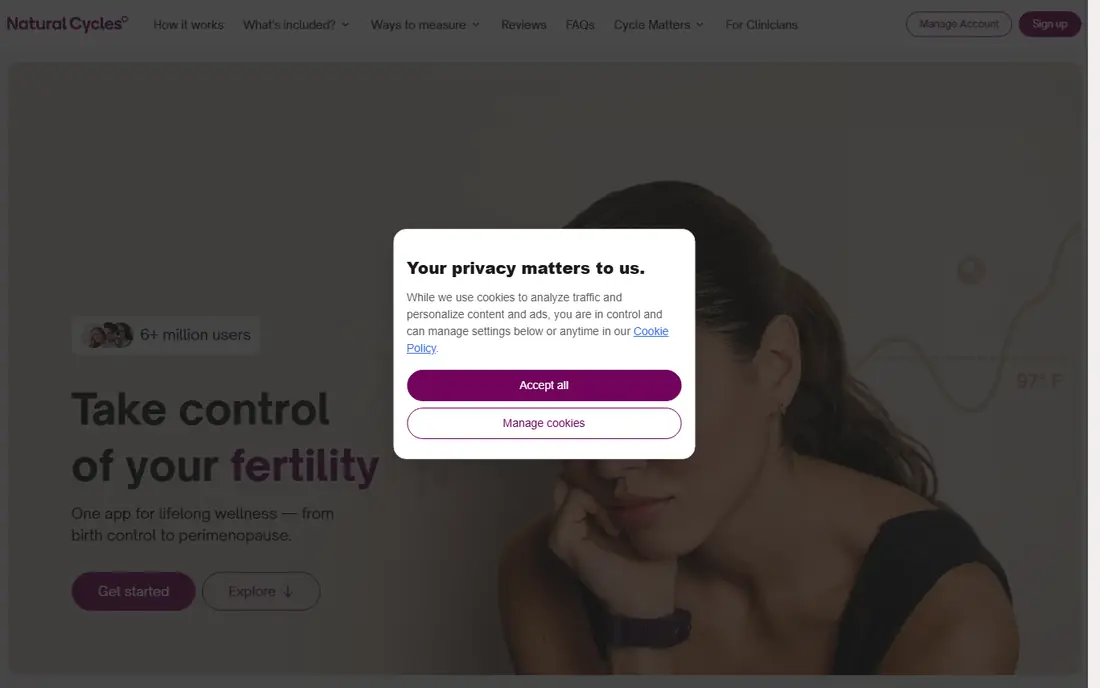
For households that want one subscription to cover the main devices, this is a sensible starting point. Natural Cycles is the only app here cleared by the FDA as a contraceptive, which sets it apart from general trackers.
It uses daily basal temperature data, plus cycle history, to classify days as fertile or not fertile. Integration with Oura Ring and other wearables can collect temperature automatically, which reduces manual logging. It requires consistent daily temperature checks, and early months include more cautious days until the algorithm learns your pattern. The price is higher than general trackers, and it is not a good fit if you cannot log temperature regularly.
- FDA-cleared as contraceptive
- Temperature-based estimates
- Works with wearables
- Requires daily temperature data
- Higher price
- Needs regular use
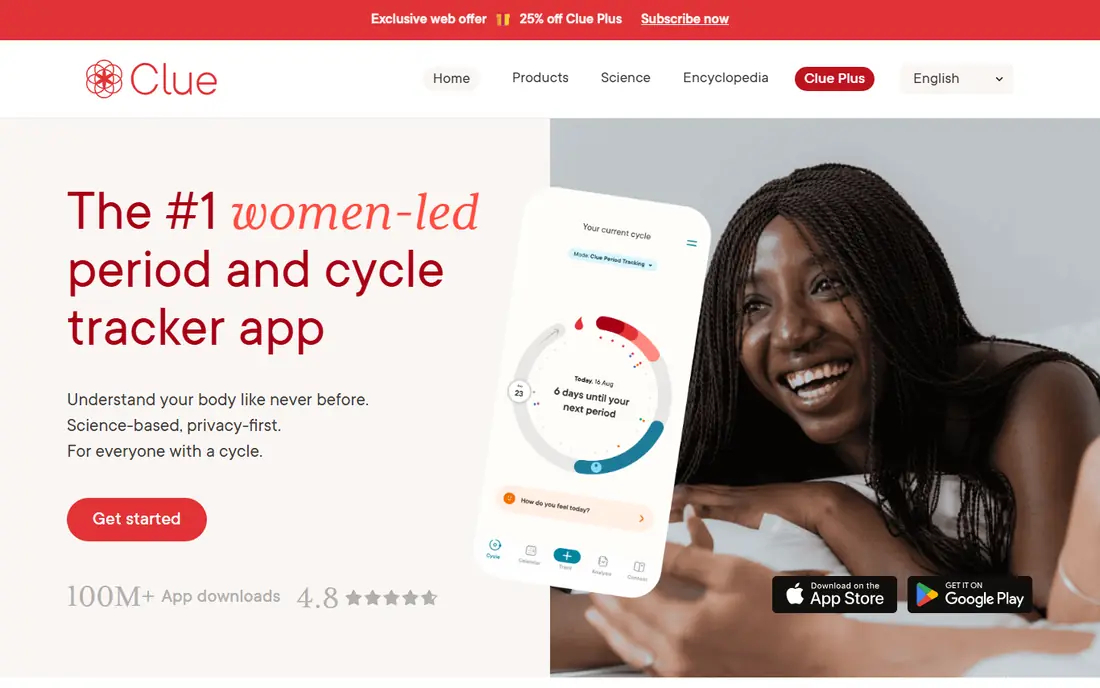
If you want strong protection without a lot of setup, this option earns a close look. Clue is a science-based tracker with a clean interface and modes for periods, conception, pregnancy, and perimenopause.
The free tier covers core cycle and symptom tracking, while Clue Plus adds advanced predictions and wearable sync. It lets you track symptoms even without regular bleeding, which helps users with irregular cycles. Advanced fertility insights sit behind the Plus subscription, and predictions improve only as you log more data. For a simple, privacy-minded tracker, the free tier is still strong.
- Clean interface
- Handles irregular cycles
- Research collaborations
- Advanced features need Plus
- Predictions improve slowly
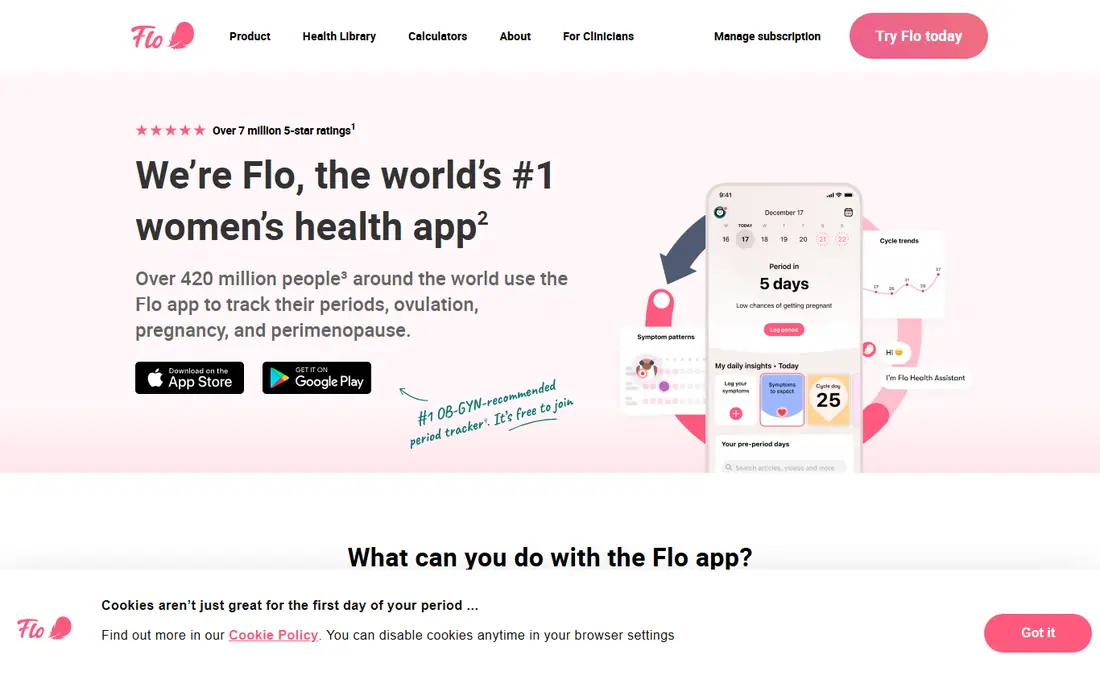
Shoppers who care most about value for a large household will find a lot to like here. Flo is the most feature-rich general tracker, with cycle predictions, pregnancy mode, community chats, and health content.
The free tier covers core tracking, while Premium adds an AI health assistant, secret chats, and in-depth pregnancy features. The large user base means community content is extensive, though quality varies. Many useful features sit behind Premium, and Flo has faced regulatory scrutiny over past data practices, so check its current privacy policy. For a full-featured tracker, the free tier is a good test.
- Large community
- Pregnancy mode
- AI health assistant on Premium
- Premium features cost more
- Privacy history to weigh
This one suits people who already know what they want and do not want extra tools in the way. Fertility Friend is the gold standard for detailed charting, with basal temperature, mucus, and test data in one chart.
VIP adds detailed analysis, chart overlays, and pregnancy monitoring tools, while the free tier covers core charting. It suits users who want to understand their cycles in detail, not just see a predicted fertile window. The interface looks dated compared with Clue or Flo, and the learning curve is steeper. If you want a simple calendar view, another app may feel easier.
- Detailed charts
- Strong analysis
- Good for irregular data
- Interface looks dated
- Learning curve
A good choice when ease of use matters more than a long list of extras. Premom is best if you use ovulation predictor kits, because its photo reader analyses test strip photos and tracks results.
The app logs tests, temperature, and symptoms, and it gives a clear fertile window based on test data rather than calendar guesses alone. That makes it useful for users trying to conceive who want more than a calendar estimate. The interface can feel busy, and some features need a premium plan. For users who do not use test strips, a simpler tracker may be enough.
- Photo reader for test strips
- Good for trying to conceive
- Free core tools
- Premium features cost more
- Interface is busy
Consider this if you want a well-known name with support that is easy to reach. Glow suits users who want community support and partner sharing alongside cycle tracking.
The free tier covers tracking and forums, while Premium adds more insights and removes ads. One membership can cover Glow, Eve, Nurture, and Baby apps, which helps users moving from trying to conceive to pregnancy. Ads appear on the free tier, and some features need Premium. The community is a strength, but forum advice is not medical advice, so check health questions with a clinician.
- Community forums
- Partner sharing
- One membership across apps
- Ads on free tier
- Premium needed for full features
This pick stands out for a specific strength that the broader suites do not match as well. Ovia is a good free option, with cycle, fertility, and pregnancy tracking plus coaching through some employers.
The core app is free, with kick counters, contraction timers, and health content for pregnancy users. Employer-sponsored coaching can add personal support for some users. Ads support the free model, and charting is less detailed than Fertility Friend. For a free, easy tracker with pregnancy tools, it is a practical choice.
- Free core app
- Pregnancy and fertility modes
- Employer coaching options
- Ads
- Less detailed charting than Fertility Friend
For buyers on a tighter budget, this is worth checking before paying for a full suite. Read Your Body is the privacy-focused pick for fertility awareness users who want control over their data.
It supports fertility awareness charting with temperature and mucus data, and it emphasises data ownership and export. That focus appeals to users who want to chart without ad-driven models. The feature set is smaller than Flo or Clue, and full use needs a subscription. For a simple, private charting app, the trade-off is reasonable.
- Privacy focused
- Fertility awareness friendly
- Data ownership
- Smaller feature set
- Subscription for full use
How we picked these
We reviewed official app store listings and vendor pages for cycle tracking apps that offer calendar predictions, symptom logging, temperature charting, or ovulation test support. We kept only apps that are still available on iOS and Android in October 2026, or on the web where noted.
We compared free tiers, annual prices, prediction methods, privacy options, and whether an app is cleared as a contraceptive. We did not claim hands-on testing, and we treated fertility estimates as estimates, not guarantees.
How to use a calendar method app safely
Start with your goal. Tracking periods, trying to conceive, and avoiding pregnancy need different levels of accuracy, and an app that is fine for period tracking may not be enough for contraception. Only Natural Cycles on this list is FDA-cleared as a contraceptive, and even it requires daily temperature checks and careful use. ### Calendar versus temperature. Calendar-only predictions use past cycle lengths to guess ovulation, which works best for regular cycles. Temperature and cervical mucus data add real body signals, which can improve estimates, especially when cycles vary. Log data at the same time each day for the most consistent results. ### Irregular cycles and health conditions. If your cycles are irregular, very short, or very long, or if you have a condition that affects ovulation, predictions will be less reliable. Talk to a clinician if you have concerns, missed periods, or difficulty conceiving, rather than relying on an app alone. ### Privacy. Cycle data is sensitive, so check whether an app offers anonymous mode, on-device storage, or data deletion, and read its privacy policy. Apple Health keeps data on device by default, while other apps store data on servers with varying controls.
Sources
Frequently asked questions
What is the calendar method?
The calendar method estimates fertile days from past cycle lengths, usually by tracking period start dates over several months. It assumes ovulation happens about two weeks before the next period, which is not true for every person or every cycle. Temperature, mucus, and ovulation tests can improve estimates beyond calendar data alone.
Are calendar method apps accurate for birth control?
Calendar apps alone are not reliable birth control for most people, because ovulation timing varies and cycles can change. Natural Cycles is FDA-cleared as a contraceptive when used as directed with temperature data, but its typical-use effectiveness is lower than hormonal methods. Talk to a clinician about contraception that fits your needs.
Which app is best for irregular cycles?
Clue is a good pick for irregular cycles, because it lets you track symptoms even without regular bleeding and offers modes for different life stages. Fertility Friend also handles irregular data well through detailed charting. Calendar-only predictions will be weaker for irregular cycles, so add temperature or test data if you can.
Is my cycle data private in these apps?
Privacy varies: Clue is based in Europe under GDPR, Flo offers an anonymous mode, and Apple Health stores data on device. Read each privacy policy, check data deletion options, and avoid logging sensitive notes you do not want stored. If privacy is your top concern, choose an app with clear on-device or anonymous options.
Can I use a calendar app while trying to conceive?
Yes, calendar apps can help you time intercourse around estimated fertile days, especially when combined with ovulation tests or temperature data. Premom is useful for test strips, and Fertility Friend is useful for detailed charting. If conception takes longer than expected, talk to a clinician rather than relying on an app alone.