Best Credit Building Apps in 2026: 9 Apps Compared
By ToolNimba Editorial Team November 9, 2026 11 min read

- Top pick
 Kikoff
Lowest cost monthly tradeline
Starting price$5 per monthCheck out KikoffRead our review - Runner-up
 Self
Saving while you build payment history
Starting price$25 per monthCheck out SelfRead our review - Also great
 Chime Card
Spending only money you already have
Starting priceFreeCheck out Chime CardRead our review
How we researched this
We compared official pricing and feature pages, app store listings, privacy policies and public user reviews. Prices change, so check the provider's site before you pay.
Key takeaways
- Kikoff starts at $5 per month and reports to all three major bureaus, which makes it the lowest cost paid option in this list.
- Experian Boost and the Chime Card cost nothing to use for credit building, but each one covers a narrower slice of your credit file.
- A secured card or a credit builder loan adds a different kind of account than a subscription tradeline, so the best mix depends on what your file is missing.
- Late payments can hurt your score with every product here, so only sign up for a monthly cost you can pay on time every month.
- This is not financial advice. Results vary, and no app can promise a specific score increase.
Quick comparison
| Name | Best for | Starting price | Free plan | |
|---|---|---|---|---|
| Kikoff | Lowest cost monthly tradeline | $5 per month | No | Visit |
| Self | Saving while you build payment history | $25 per month | No | Visit |
| Chime Card | Spending only money you already have | Free | Yes | Visit |
 Experian Boost | A free lift from bills you already pay | Free | Yes | Visit |
 Grow Credit | Turning subscriptions into payment history | Free | Yes | Visit |
 MoneyLion Credit Builder Plus | An all-in-one banking and credit membership | $19.99 per month | No | Visit |
 Extra | Building credit with a debit card routine | $20 per month | No | Visit |
 Ava | Several tradelines under one membership | $10 per month | No | Visit |
 Kovo | A simple installment account with no interest | $10 per month | No | Visit |
The best credit building apps
Credit building apps work by adding on-time payments to your credit file, but they do it in different ways. Some report a small loan, some report a line of credit, and some report bills you already pay. We compared official pricing pages, app store listings, and bureau reporting claims to build this list.
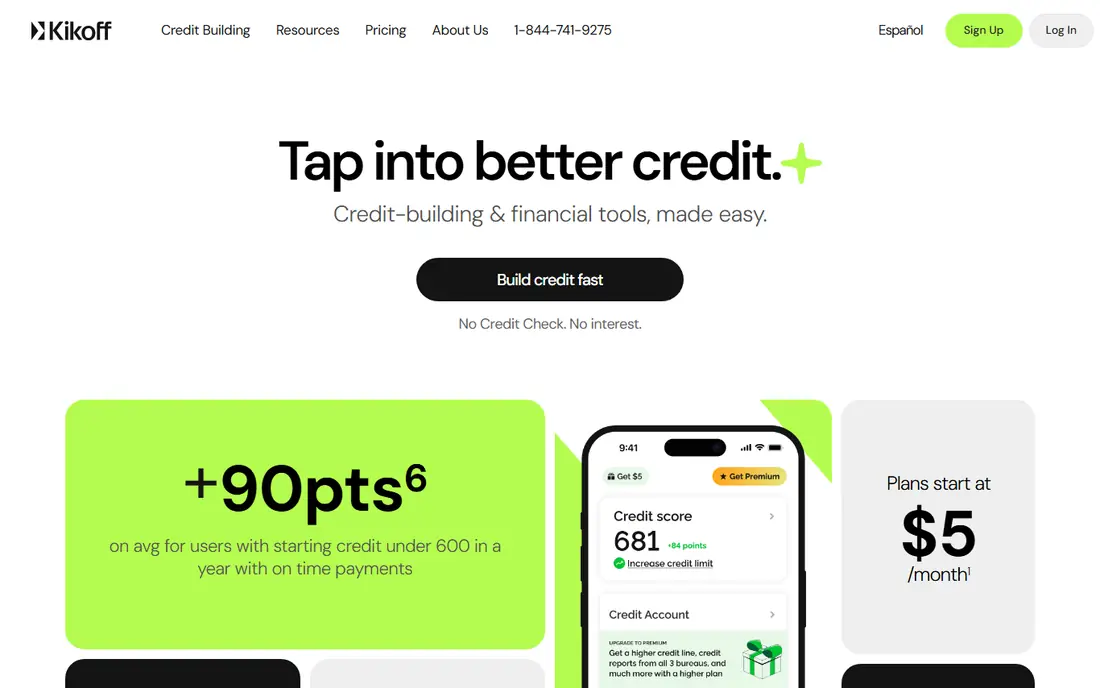
Kikoff gives you a reported line of credit that you use in its store, and your monthly payments are reported to Equifax, Experian, and TransUnion. The Basic plan costs $5 per month and reports a $750 tradeline, while Premium costs $20 per month and Ultimate costs $35 per month. That structure suits someone who wants a revolving account on their file without taking on card debt.
The catch is that Kikoff is a subscription, not savings. You do not get the fees back when you cancel, and the store purchases are the main way to use the line. Rent reporting is included on plans, and bill reporting sits on the higher tiers, so read the plan details before you upgrade. If low cost matters most, Basic is hard to beat.
- Reports to all three major bureaus
- No credit check to sign up
- No interest on the account
- Monthly fee buys no cash back at the end
- Higher tiers cost much more for added features
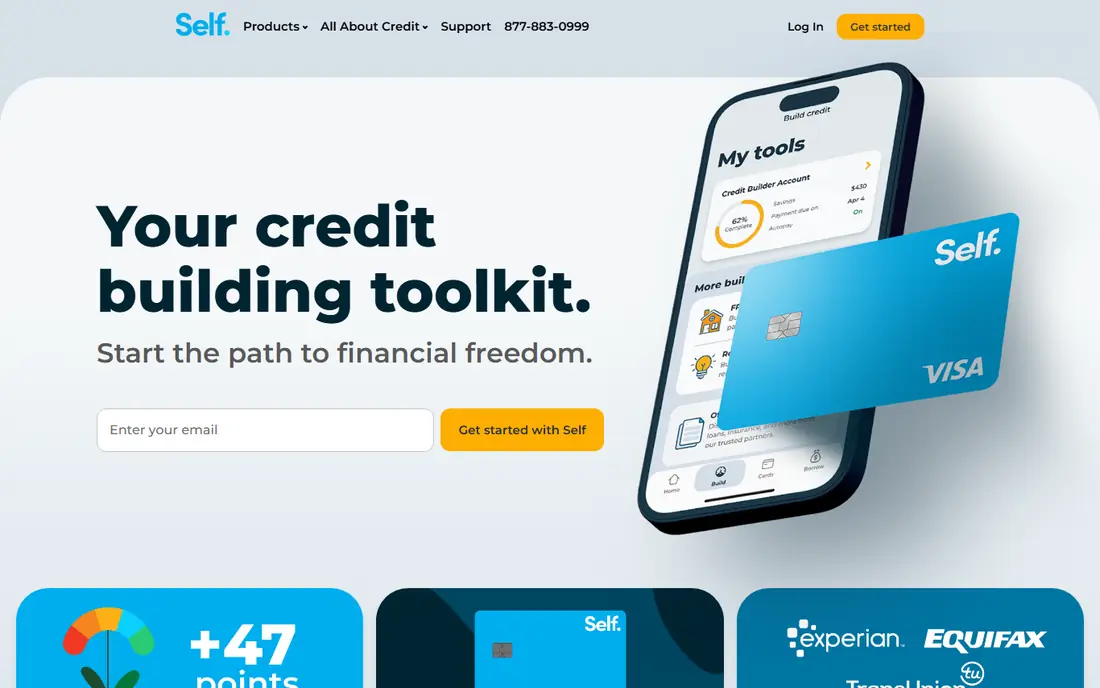
Self works like a loan in reverse. You pick a monthly payment of $25, $35, $48, or $150, and the loan amount sits in a certificate of deposit at a partner bank while you pay. Each payment is reported to all three bureaus, and when the 24 month term ends you receive the remaining balance after interest and fees. The smallest plan costs $600 in total payments and pays out about $520.
That payout gap is the honest trade-off. Self charges interest in the range of about 15.5 to 15.9 percent on its sample plans, plus a $9 administrative fee. It fits savers who like a forced monthly habit and want an installment loan on their file. It fits less well if you need access to the cash before the term ends.
- Reports to all three major bureaus
- You receive savings back at the end, minus interest and fees
- No hard credit check
- Interest reduces the payout
- Money is locked away during the 24 month term
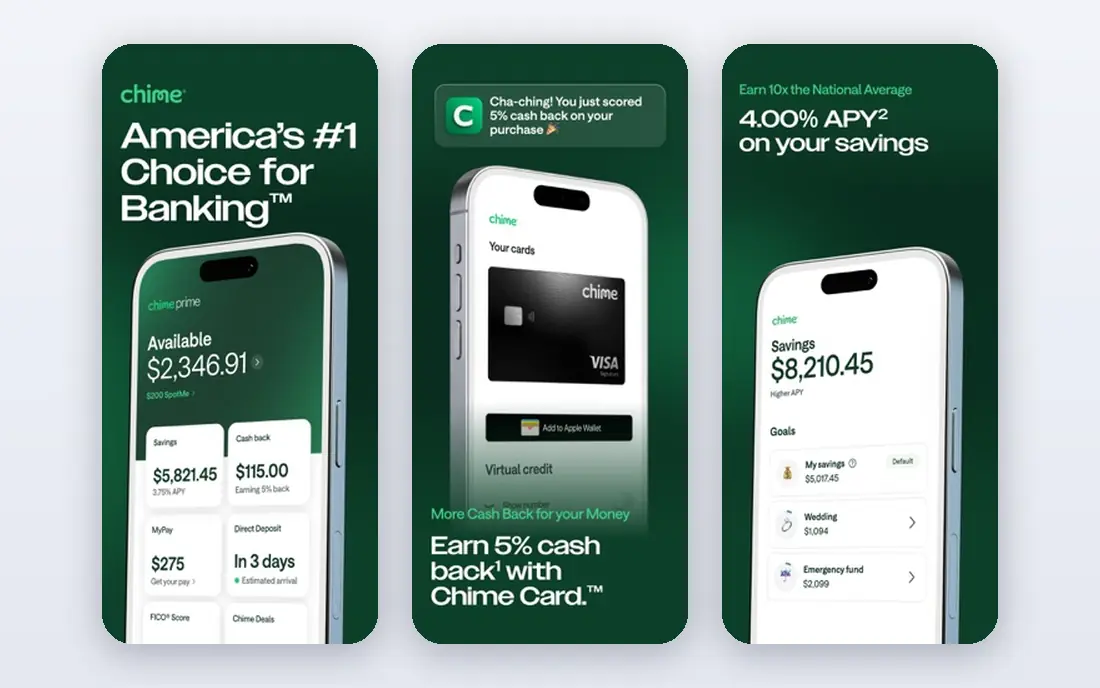
The Chime Card, formerly called Credit Builder, is a secured Visa card tied to a Chime checking account. You move money from checking into a secured account, and that amount becomes what you can spend. Chime pays the balance at month end from those secured funds and reports your payment status to all three bureaus. Because there is no preset limit, Chime does not report a utilization percentage.
That design removes one common trap, which is maxing out a low limit card. The downside is that you must bank with Chime to use it, and the card is built for control rather than rewards or large limits. For a first card, or for someone rebuilding after debt, that control is the point.
- No annual fee and no interest
- No credit check to apply
- Reports to all three major bureaus
- Requires a Chime checking account
- No preset credit limit to grow into
Experian Boost connects to your bank account and looks for eligible recurring payments, such as phone, utility, and streaming bills, then adds them to your Experian credit file. There is no fee, and you choose which payments to include. It is the simplest first step on this list because it uses spending you already do.
The limit matters. Boost only changes your Experian report, so a lender that pulls Equifax or TransUnion will not see it. Some bills will not qualify, and a thin file may still need a loan or card account to grow. Use Boost alongside another builder rather than as your only plan.
- Free to use
- Can add rent, phone, utility, and streaming payments
- No new debt
- Only affects your Experian file
- Not every bill qualifies
Grow Credit issues a virtual Mastercard that you use to pay for approved subscription services, such as streaming and music plans. You pay Grow Credit back each month, and those payments are reported to all three bureaus. The Build plan starts free for 12 months with a $17 monthly spending limit, and paid plans raise that limit to $50 or $150 per month.
This is a good fit if your budget is already full of subscriptions and you want those payments to count. It is a poor fit if you want a general purpose card, because the card cannot be used for groceries, gas, or store purchases. Check that your subscriptions are on the approved list before you sign up.
- Reports to all three major bureaus
- No interest
- Works with subscriptions you already pay for
- Card only works for approved subscriptions
- Free tier has a low monthly spending cap
MoneyLion Credit Builder Plus
Best for: An all-in-one banking and credit membership
MoneyLion Credit Builder Plus pairs a membership with a credit builder loan of up to $1,000, reported to all three bureaus over 12 months. The membership costs $19.99 per month, and loan APRs range from 5.99 percent to 29.99 percent depending on the offer. Part of the loan may go into a reserve account until the loan is paid off, so confirm how much cash you receive at the start.
At almost $240 a year in membership fees alone, this only makes sense if you also use MoneyLion banking, cash advances, or investing tools. As a standalone credit builder it costs far more than Kikoff or Grow Credit. Compare the total yearly cost, not just the monthly fee, before you commit.
- Loan reported to all three major bureaus
- Part of the loan funds may be available up front
- Banking and investing in the same app
- Membership fee is high for credit building alone
- Loan interest applies on top of the fee
Extra links to your bank account and assigns you Spend Power, a daily limit based on your balance. When you pay with the Extra card, Extra fronts the purchase and pulls the money from your bank account the next day, then reports that activity each month to Experian and Equifax. The Credit Building plan costs $20 per month or $149 per year, and a rewards version costs $25 per month or $199 per year.
The appeal is routine. You keep spending as normal and build a record without carrying a balance. The gaps are the price and the missing TransUnion reporting. If you already bank elsewhere and like debit spending, Extra can work, but a free secured card may give you broader reporting for less.
- No interest and no credit check
- No security deposit
- Spending feels like using a debit card
- Reports to Experian and Equifax only
- Annual cost is high compared with free options
Ava bundles a credit builder card, a save and build account, and rent and utility reporting under one membership. The monthly plan costs $10 per month, or less per month on an annual plan, and the card and savings account report to all three bureaus. Rent, utility, and phone reporting is limited to TransUnion, which is worth knowing before you rely on it for all three files.
Ava suits someone starting from little or no history who wants more than one new account at once. The bundle can move a thin file faster than a single tradeline, but it also means one fee for several products you may not all need. If you only need one account, a cheaper single product may do the same job.
- Card and savings account report to all three major bureaus
- No hard credit check
- No interest
- Monthly fee applies even in slow months
- Rent and bill reporting covers TransUnion only
Kovo offers a credit account that works as an installment loan with a fixed term, priced at about $10 per month. Payments are reported to Equifax, Experian, TransUnion, and Innovis, which is broader bureau coverage than most apps here. There is no interest charge, and approval does not require a credit check.
The trade-off is simplicity. Kovo does not bundle rent reporting, a card, or a savings payout in the same way some rivals do. That can be a strength if you want one clear account and one predictable payment. It can feel thin if you were hoping for a full financial app around the builder.
- Reports to all three major bureaus plus Innovis
- No interest
- No credit check
- Fixed term account with no cash back
- Fewer extra tools than larger apps
How we picked these
We compared official pricing pages, app store listings, and each company's own description of which bureaus it reports to. We kept only products that exist for US consumers in October 2026 and that truly add payment history to a credit file. We left out general budgeting apps and credit monitoring tools that do not report payments, because they do not build credit on their own.
What to check before you pay
Start with your credit file, not with an app. If you have no accounts at all, one reported account of any type helps. If you already have a card, an installment loan adds mix. If you already have loans, a revolving tradeline or a secured card may fill the gap. Check which bureaus each product reports to, since a lender may pull any of the three.
Set a monthly cost you can sustain for at least a year. Credit building rewards steady on-time payments, and a missed payment reported 30 days late can undo months of progress. Read the cancellation terms too, since some accounts close the tradeline when you stop paying. This is not financial advice, and if debt or collections are part of your picture, a nonprofit credit counselor may help more than another subscription.
Sources
- https://www.kikoff.com
- https://www.self.inc
- https://www.chime.com
- https://www.experian.com
- https://www.growcredit.com
- https://www.moneylion.com
- https://www.extra.app
- https://www.meetava.com
- https://www.kovocreditapp.com
- https://www.nerdwallet.com/personal-loans/learn/kikoff-credit-builder-loan
- https://www.crediful.com/self-review/
- https://www.finder.com/credit-building/grow-credit
- https://www.finder.com/credit-building/extra-debit-card-account
Frequently asked questions
What is the best credit building app for someone with no credit history?
Kikoff Basic or a free option such as Experian Boost is a low risk starting point. Kikoff adds a revolving tradeline to all three bureaus for $5 per month, while Boost adds bills you already pay to Experian at no cost. A secured card can be a strong second step once you have one reported account.
Are free credit building apps really free?
Experian Boost and the Chime Card have no monthly fee for credit building, though Chime requires a checking account and Boost only covers Experian. Grow Credit has a free tier with a low spending cap, and paid plans raise that cap. Always check for fees tied to linked bank accounts, such as overdraft charges from your own bank.
Which apps are best for credit building without a credit check?
Kikoff, Grow Credit, Extra, Ava, and Kovo do not require a hard credit check to start, and Self uses a soft pull. A soft pull does not affect your score in the same way a hard inquiry can. Confirm the check type on the sign-up page before you apply, since terms can change.
How long does it take for a credit builder app to help my score?
Most users need several months of on-time payments before they see a clear change, and results depend on the rest of your file. A single new account helps a thin file more than a thick file with older accounts. Keep the account open and paid on time rather than chasing a fast jump.
Do credit building apps report to all three bureaus?
Not all of them do. Kikoff, Self, Grow Credit, MoneyLion, Ava, and Kovo report to Equifax, Experian, and TransUnion. Experian Boost covers Experian only, and Extra covers Experian and Equifax. If a lender pulls a bureau your app does not cover, that payment history will not appear there.
Is a credit builder loan better than a secured credit card?
A loan adds installment history and, with Self, a savings payout at the end. A secured card adds revolving history and, with Chime, daily spending control. Many people benefit from one of each over time, but start with the one whose monthly cost and rules you understand best.