Best Data Catalog Platforms in 2026: 9 Apps Compared
By ToolNimba Editorial Team November 5, 2026 8 min read

- Top pick
 Alation
Large enterprises needing broad coverage
Starting priceSee websiteCheck out AlationRead our review - Runner-up
 Collibra
Regulated enterprises needing governance
Starting priceSee websiteCheck out CollibraRead our review - Also great
 Atlan
Modern data stacks and collaboration
Starting priceSee websiteCheck out AtlanRead our review
How we researched this
We compared official pricing and feature pages, app store listings, privacy policies and public user reviews. Prices change, so check the provider's site before you pay.
Key takeaways
- Alation, Collibra, and Atlan lead for large organizations, but all three use quote-based enterprise pricing.
- Microsoft Purview suits teams already on Azure and Microsoft 365, where usage pricing may fit better.
- Secoda and Select Star offer faster, lighter starts for mid-sized modern data teams.
- DataHub and OpenMetadata suit engineering-led teams that can run open source software.
- Lineage, search quality, and adoption matter more than catalog size alone.
Quick comparison
| Name | Best for | Starting price | Free plan | |
|---|---|---|---|---|
| Alation | Large enterprises needing broad coverage | See website | No | Visit |
| Collibra | Regulated enterprises needing governance | See website | No | Visit |
| Atlan | Modern data stacks and collaboration | See website | Free trial | Visit |
 Informatica Enterprise Data Catalog | Large hybrid estates | See website | No | Visit |
 Microsoft Purview | Azure and Microsoft 365 teams | See website | Free trial | Visit |
 data.world | Knowledge-graph catalogs | See website | No | Visit |
 Secoda | Mid-sized teams wanting fast value | Free | Yes | Visit |
 DataHub | Engineering teams wanting open source | Free | Yes | Visit |
 OpenMetadata | Open source metadata platform | Free | Yes | Visit |
The best data catalog platforms
These platforms range from enterprise governance suites to open source catalogs, so the right pick depends on team size, stack, and how much governance you need.

Alation is a long-standing choice for organizations that need a catalog people actually use. Its search, curation, and trust signals help analysts judge whether a table is safe to use, and its connector range covers legacy and modern sources alike. Large data teams value that breadth.
It is an enterprise purchase, with quote-based pricing and a rollout that needs stewardship. Smaller teams may find the cost and setup heavy for a first catalog. For a large, mixed estate, Alation remains a safe shortlist pick.
- Strong search and curation
- Broad connector coverage
- Peer trust signals
- Enterprise price and implementation effort
- Governance depth takes time to adopt
Collibra suits regulated organizations where policy, lineage, and audit trails are not optional extras. It ties catalog, governance, and data quality into one program, which helps banks, insurers, and pharma teams show how data is controlled. Its governance model is its main selling point.
That depth comes with cost and time. Full rollouts can take months, and smaller teams may pay for governance they do not yet need. Choose Collibra when compliance and control drive the decision, not when you only need a searchable data inventory.
- Unified catalog, governance, and quality
- Policy controls
- Detailed lineage
- Top-end pricing
- Longer implementation for full governance
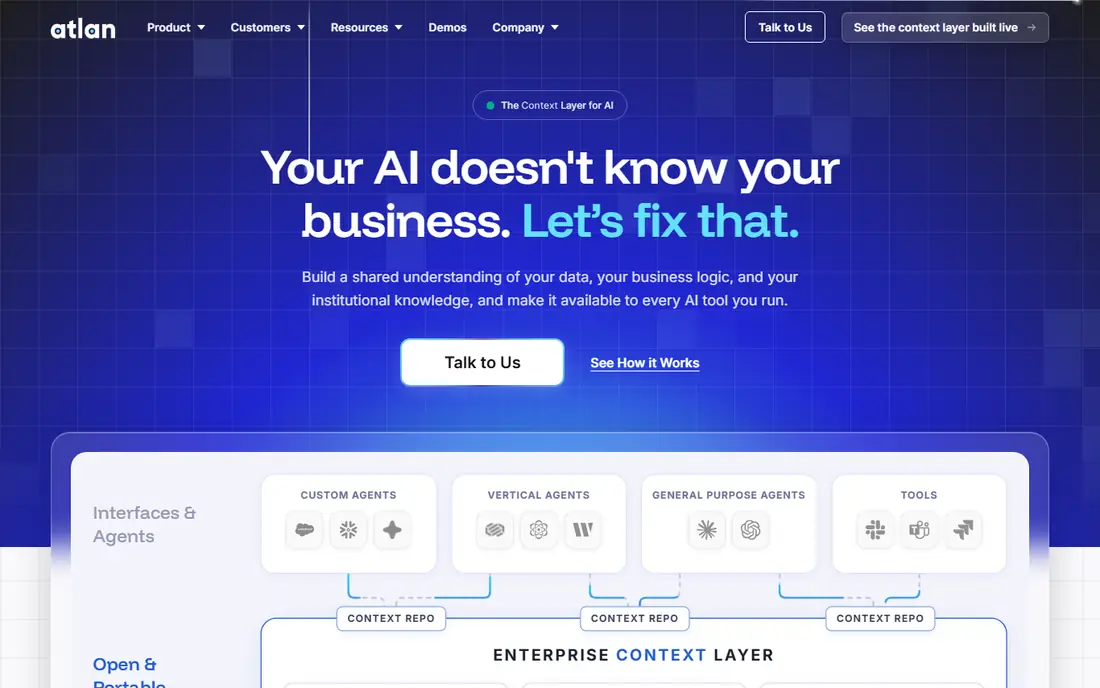
Atlan fits teams on Snowflake, dbt, Databricks, and similar modern tools. Its collaboration layer lets analysts, engineers, and owners discuss, document, and govern data in one place, rather than in scattered docs. Data product views help teams package trusted datasets for reuse.
Legacy-heavy estates get less of its headline value, and pricing is quote-based, so budget planning needs a sales conversation. For a cloud-first team that wants adoption, not just a metadata store, Atlan is a strong contender.
- Active metadata and collaboration
- Modern stack connectors
- Data product views
- Quote-based pricing
- Best on cloud-native stacks
Informatica Enterprise Data Catalog
Best for: Large hybrid estates
Informatica suits enterprises with sprawling hybrid estates, including sources newer catalogs reach poorly. Its integration depth and lineage help teams trace data across on-premises and cloud systems. Organizations already using its data management cloud gain the most.
Pricing uses consumption units, which makes early budgeting harder without a scoped estimate. Smaller teams will find the suite larger than they need. For a complex, multi-cloud estate, its coverage justifies a closer look.
- Very broad integration coverage
- Lineage across hybrid sources
- AI-assisted classification
- Consumption pricing is complex
- Suite scale suits large buyers
Microsoft Purview makes sense when Azure and Microsoft 365 already anchor the data estate. Its unified catalog sits close to the sources teams use daily, and usage-based pricing can suit organizations with existing Microsoft agreements. Governance, compliance, and catalog work share one home.
Teams outside Microsoft gain less, and Purview rewards Azure knowledge during setup. Costs also vary with scanning volume, so a pilot should measure real usage before a wide rollout. Inside a Microsoft estate, it is a natural first choice.
- Unified catalog inside Azure
- Microsoft 365 and Azure integration
- Usage-based options
- Governance setup needs Azure skill
- Costs vary with scanning and use
data.world takes a knowledge-graph approach, linking datasets, terms, and people in a way that helps analysts see context, not just table names. Its collaborative documentation suits teams that want business users involved in defining data, not only engineers. Semantic search adds depth for complex domains.
The graph model needs team buy-in, and pricing is enterprise-led, so smaller teams should confirm fit early. It is not the fastest light catalog to deploy. For organizations that value shared meaning around data, it offers a distinct and useful angle.
- Knowledge-graph search and context
- Collaborative documentation
- Semantic modeling
- Quote-based enterprise pricing
- Graph approach needs buy-in
Secoda targets the gap between spreadsheets and enterprise suites. It combines catalog, lineage, governance, and observability in a lighter package, and its AI-assisted search helps small data teams find and document assets quickly. Setup is faster than the big suites.
Paid pricing is quote-based, so teams should confirm the tier that fits their user count. It also lacks the governance depth of Collibra for heavily regulated programs. For a growing modern team, Secoda is a pragmatic, fast start.
- AI-assisted search and documentation
- Lineage and governance in one tool
- Fast setup
- Paid tiers are quote-based
- Smaller vendor than enterprise suites
DataHub appeals to engineering-led teams that want control and no license lock-in. Its open source core covers cataloging and lineage, and its connector range is broad. Teams that can run it themselves get a capable catalog for infrastructure cost alone.
Running open source well still costs engineering time, and managed cloud pricing is quoted. Teams without platform capacity may prefer a SaaS catalog. For builders who value openness, DataHub is a serious, credible option.
- Open source catalog with lineage
- Broad connectors
- Managed cloud option
- Self-hosting needs engineering time
- Support depends on setup
OpenMetadata gives engineering teams a unified metadata graph plus data contracts, which help define what a dataset promises. Its open source model suits teams that want to shape the catalog to their stack and avoid vendor lock-in. Community and managed options add paths as needs grow.
As with DataHub, the work shifts to your team: hosting, upgrades, and adoption all need owners. It is not a turnkey SaaS catalog. For teams with platform skills and a contract-minded approach, it is a flexible foundation.
- Unified metadata graph
- Data contracts
- Open source flexibility
- Self-hosting and setup effort
- Managed pricing by quote
How we picked these
We compared vendor feature pages, pricing pages, and recent buyer guides that describe deployment, connectors, lineage, and governance depth. We favored platforms with clear search, lineage, and ownership features, since those decide whether a catalog stays current after launch. We also checked whether each platform supports the warehouse, lake, and BI tools a team already runs.
We did not claim hands-on testing we did not do. Most enterprise catalogs use quote-based pricing, so we recorded See website where no public list price exists, rather than repeating third-party estimates as facts. Readers should still request a scoped quote early, since user counts and connected sources change the final price materially.
How to choose a data catalog platform
Start with adoption, not inventory size
A catalog fails when analysts do not trust or use it. Pilot with one business domain, name owners for key datasets, and measure whether search and lineage actually answer daily questions.
Check lineage for your real stack
Confirm connectors and lineage for the sources you run today, including warehouses, lakes, BI tools, and dbt models. A catalog that misses a core source will leave gaps analysts learn to work around.
Price the rollout, not just the license
Add implementation, stewardship time, and training to the quote. Open source looks free until engineering time is counted, and enterprise suites look costly until governance risk is counted. Compare total effort honestly.
Sources
Frequently asked questions
What is the best data catalog software for a mid-sized team?
Secoda, Select Star, and Atlan often fit mid-sized modern teams, depending on stack and budget. Secoda is lighter and faster to start, while Atlan suits cloud-native stacks with collaboration needs. Pilot both against your real sources.
What are the best data catalog tools for enterprises?
Alation, Collibra, and Informatica lead for large enterprises, with Collibra strongest on governance and Informatica strongest on hybrid coverage. All three need scoped quotes and planned rollouts.
Is there a free data catalog platform?
Yes. DataHub and OpenMetadata are open source and free to run, though hosting and upkeep cost engineering time. Secoda also lists a free tier. Check user, source, and support limits before relying on a free option.
How do data catalog platforms differ from data governance tools?
A catalog helps teams find, understand, and trust data, while governance adds policies, ownership, and controls around it. Many platforms now combine both, but regulated teams should check policy and audit features separately.
How long does a data catalog take to deploy?
Light SaaS catalogs can show value in one to two weeks for a scoped domain, while enterprise governance rollouts often take months. Start narrow, prove search and lineage value, then expand domain by domain.