Best Delivery App to Make Money in 2026: 9 Apps Compared
By ToolNimba Editorial Team November 9, 2026 11 min read

- Top pick
 DoorDash
Flexible food delivery in most cities
Starting priceFreeCheck out DoorDashRead our review - Runner-up
 Uber Eats
Bike, scooter, and car delivery
Starting priceFreeCheck out Uber EatsRead our review - Also great
 Instacart
Grocery shopping and delivery
Starting priceFreeCheck out InstacartRead our review
How we researched this
We compared official pricing and feature pages, app store listings, privacy policies and public user reviews. Prices change, so check the provider's site before you pay.
Key takeaways
- Amazon Flex and Walmart Spark often show higher hourly blocks, but they require scheduled blocks and offer less freedom to start and stop at will.
- DoorDash and Uber Eats offer the widest order volume and the most flexible schedules, which helps drivers fill gaps in their day.
- Grocery apps such as Instacart and Shipt can pay well in affluent areas, but shopping time and fuel costs eat into earnings.
- Net pay matters more than headline pay, since fuel, vehicle wear, and taxes come out of every delivery dollar.
Quick comparison
| Name | Best for | Starting price | Free plan | |
|---|---|---|---|---|
| DoorDash | Flexible food delivery in most cities | Free | Yes | Visit |
| Uber Eats | Bike, scooter, and car delivery | Free | Yes | Visit |
| Instacart | Grocery shopping and delivery | Free | Yes | Visit |
 Amazon Flex | Scheduled package blocks | Free | Yes | Visit |
 Grubhub | Scheduled restaurant delivery | Free | Yes | Visit |
 Spark Driver | Walmart grocery and retail delivery | Free | Yes | Visit |
 Shipt | Target and grocery shopping | Free | Yes | Visit |
 Gopuff | Short convenience deliveries | Free | Yes | Visit |
 Roadie | Larger and longer-distance deliveries | Free | Yes | Visit |
The best delivery apps to make money
Delivery pay varies by city, time of day, vehicle, and how picky a driver is about orders. The apps below are all free to join for drivers, and all are active in the US. Earnings figures here are ranges reported by driver tracking sources in 2026, not guarantees, and they are gross pay before costs.

DoorDash is the easiest starting point for most new drivers because it operates in so many cities and towns. Orders come steadily in busy areas, and drivers can often start a dash without booking a block in advance. That freedom helps people who fit delivery around another job or classes.
Pay includes base pay, tips, and occasional promotions, and drivers can see key details before accepting an order. Driver tracking data for 2026 puts DoorDash gross pay around 15 dollars per hour of engaged time in many markets, with net pay lower after fuel and vehicle costs. Peak meal times and good ratings tend to help.
The weakness is inconsistency. Slow markets, bad weather, and low-tip orders can drag an hour down quickly. Drivers who accept every order without checking distance and pay often earn less than those who decline weak offers. DoorDash rewards patience and market knowledge more than raw hours.
- Huge order volume
- Flexible scheduling
- Clear pay preview before accepting
- Pay varies widely by market
- Waiting time between orders is unpaid
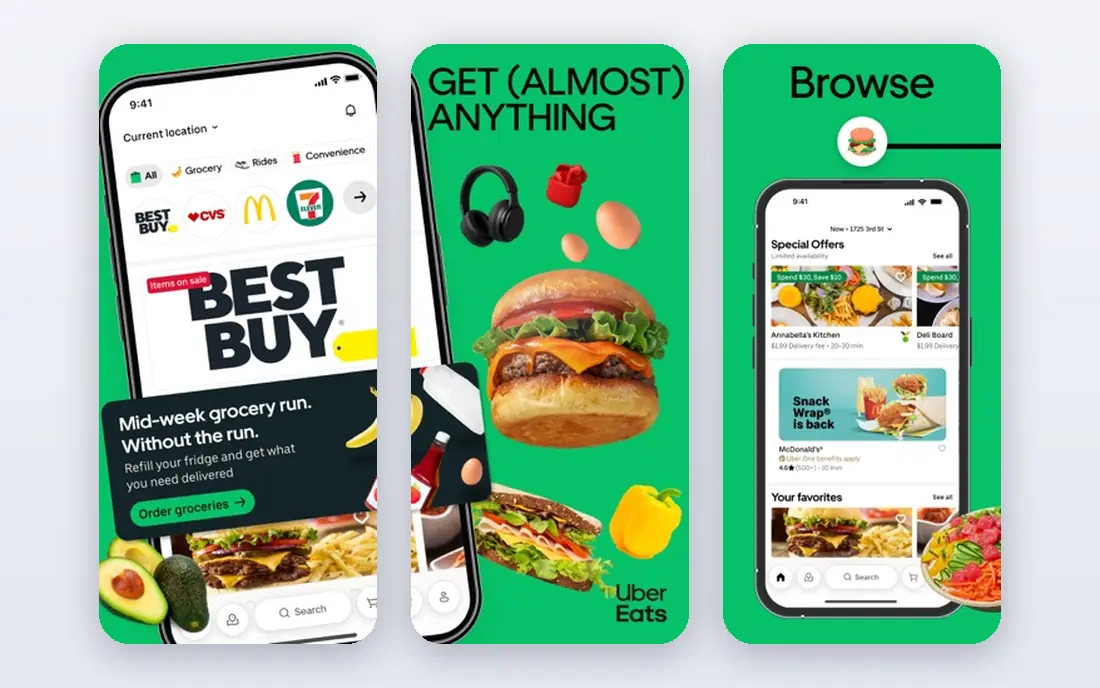
Uber Eats suits drivers who do not want to rely on a car. In many cities, bike and scooter delivery is allowed, which cuts fuel costs and parking stress. The app also lets drivers see trip details before accepting, which helps avoid long trips for small pay.
Gross pay in 2026 driver tracking data sits around 14 dollars per hour of engaged time in many markets, though dense cities and bonus quests can lift that figure. Instant pay options let drivers cash out earnings without waiting for a weekly payout, for a fee in some cases. Combining Uber Eats with rideshare driving in the same app is another plus for eligible drivers.
The catch is that base pay alone is often thin, so tips and promotions do much of the work. Drivers in spread-out suburbs may spend more time driving between pickups. Uber Eats works best in dense urban areas where restaurants and customers sit close together.
- Works with car, bike, or scooter in many markets
- Instant pay options
- Large restaurant range
- Base pay can be low
- Earnings depend heavily on tips and bonuses

Instacart pays shoppers to pick groceries and deliver them, which is different work from restaurant delivery. Full-service shoppers shop and deliver, while in-store shoppers focus on picking orders inside a store. That variety lets people choose the role that fits their stamina and vehicle.
Pay data for 2026 puts Instacart gross pay around 16 dollars per hour of engaged time in many markets, with higher results in affluent areas where tips are larger. Batch orders, where several orders come from one store, can raise earnings if the items are easy to find. Customer communication also matters, since good replacements and updates tend to protect tips.
The downside is time in store. Out-of-stock items, long lines, and heavy orders slow the job and add wear on a vehicle. Shoppers also pay their own fuel costs. Instacart rewards careful batch selection and knowledge of local stores more than speed alone.
- Higher tips in many areas
- Batch orders can boost pay
- Flexible shopper roles
- Shopping time can be slow
- Fuel and store delays cut net pay
Amazon Flex works differently from food apps. Drivers reserve delivery blocks, pick up packages at a station, and deliver them along a route. Block pay is shown before accepting, and 2026 driver data puts Flex among the higher-paying delivery options, often above 20 dollars per hour of engaged time.
That structure suits drivers who like predictable work. There is no waiting for the next restaurant order, and routes are planned in advance. Drivers using their own cars can also choose block lengths that fit their day, within availability.
The trade-off is access. Blocks in popular areas fill fast, and new drivers may struggle to get the best times. Flex also requires more planning, since a missed block can affect standing. It is a strong earner for organized drivers, but a poor fit for people who want to open an app and start instantly.
- Higher hourly block rates in many markets
- Clear block pay upfront
- Less waiting for orders
- Blocks can be hard to get
- Less flexibility than food delivery apps
Grubhub is a long-running restaurant delivery platform, and it still earns well in cities where it has strong restaurant coverage. Drivers can schedule blocks or go online when demand allows, depending on the market. That mix gives some structure without full-time commitment.
Driver tracking data for 2026 puts Grubhub gross pay around 18 dollars per hour of engaged time in many markets, though results vary a lot by city. Tips and bonuses play a large role, and scheduled blocks can help drivers plan around peak dinner hours. Instant pay options also help with cash flow.
The weakness is coverage. In towns where DoorDash dominates, Grubhub orders can be sparse, which means more waiting between trips. Drivers should check local restaurant density before relying on Grubhub as a main income source. It often works best as a second app alongside DoorDash or Uber Eats.
- Scheduled blocks in many markets
- Restaurant focus
- Instant pay options
- Order volume varies by city
- Pay can lag DoorDash in some areas
Spark Driver is Walmart delivery platform, and it focuses on grocery and general retail orders from Walmart stores. Drivers see trip details and earnings before accepting, which helps with decision making. In suburban areas with busy Walmart stores, order flow can be steady.
Pay data for 2026 puts Spark gross pay around 20 dollars per hour of engaged time in some reports, though that figure has varied over the year. Larger orders and bulk items are common, so a roomy vehicle helps. The work is also less tied to meal rushes than restaurant delivery.
The limits are location and tips. Spark works best near Walmart stores, and many orders carry smaller tips than restaurant or Instacart orders. Heavy or bulky items can also add time and effort. Drivers should weigh vehicle space and local store demand before making Spark their main app.
- Walmart order volume
- Grocery and retail mix
- Trip earnings shown upfront
- Availability depends on local Walmart stores
- Tips are less common than food apps
Shipt shoppers pick and deliver orders from retailers including Target and grocery stores. The model will feel familiar to Instacart shoppers, but Shipt has its own shopper ratings, preferred shopper system, and store partnerships. Shoppers who build a good record can get repeat customers.
Gross pay in 2026 tracking data sits around 16 dollars per hour of engaged time in many markets. Tips matter, and shoppers who communicate well about replacements tend to protect their ratings and tips. The work suits people who like shopping and do not mind carrying groceries.
The catch is batch supply. In some markets, batches are scarce or highly competitive, especially for new shoppers. Shipt also requires care with large orders and delivery windows. It works best as part of a multi-app strategy rather than a sole income source in a slow market.
- Preferred shopper perks at Target
- Consistent grocery demand
- Clear order pay
- Batch availability varies
- Pay depends on local demand and tips
Gopuff delivers snacks, drinks, and household items from its own micro-fulfillment centers. Drivers pick up orders at a hub and deliver them nearby, which keeps trips short and reduces restaurant wait times. That model suits drivers who want predictable, local work.
Pay in 2026 tracking data is lower than some rivals, around 13 dollars per hour of engaged time in many markets, though hourly pay options exist in some areas. Short trips mean less fuel per delivery, which helps net pay even when gross pay looks modest. The work is also simpler than grocery shopping, since there is no in-store picking for most orders.
The limit is coverage. Gopuff only operates where it has hubs, so many towns have no option at all. Earnings also depend on hub demand and shift availability. Gopuff is a good side app for drivers near a hub, but it rarely replaces a high-volume food or grocery app on its own.
- Short trips from local hubs
- Less waiting for restaurants
- Simple order types
- Lower hourly pay in some reports
- Hub-based model limits coverage
Roadie connects drivers with deliveries of larger items, from retail goods to bulky packages, including some same-day and longer-distance trips. Drivers see gig details and pay before accepting, which helps avoid unprofitable runs. For drivers with SUVs, trucks, or vans, Roadie opens work that small-car food apps cannot.
Pay varies widely because gigs vary widely. A short local delivery pays far less than a multi-hour trip, so drivers must check mileage and fuel before accepting. The platform suits people who like varied work and can plan routes carefully.
The downside is volume. Roadie gigs are less frequent than restaurant orders, so it works best as an extra app rather than a daily mainstay. Drivers in rural areas may also find fewer gigs. Used alongside a food app, Roadie can add higher-value trips on quiet days.
- Larger items and longer trips
- Upfront pay details
- Good for drivers with bigger vehicles
- Fewer gigs than food apps
- Long trips need careful cost checks
How we picked these
We compared driver pay tracking from 2026 sources, official driver signup pages, and app store listings, and we favored apps with broad US availability, clear pay previews, and a real driver base. We treated reported pay as gross engaged-time pay, not take-home pay, and we noted where pay varies by market. We did not claim hands-on driving experience, and we excluded apps that had shut down or serve only a single city.
How to earn more without burning out
Multi-apping is the most common way drivers raise earnings, but it needs care. Running two apps at once can lead to late deliveries and lower ratings if orders overlap. A safer approach is to use one main app during peak hours and switch to a second app when the first goes quiet.
Costs, taxes, and safety
Track mileage, fuel, and maintenance from day one, since those costs decide real profit. Delivery drivers are usually independent contractors, so taxes are not withheld and quarterly estimates may apply. Keep records, set aside a share of earnings for tax, and check insurance coverage for delivery use, since personal policies may not cover commercial driving.
Choosing by vehicle and city
A small car suits restaurant delivery, a larger vehicle suits grocery and Roadie gigs, and a bike suits dense cities on Uber Eats. Check which apps are busy locally before signing up for all of them. A driver in a college town, a suburb, and a big city will often pick a different top app.
Sources
- https://www.doordash.com
- https://www.ubereats.com
- https://www.instacart.com
- https://flex.amazon.com
- https://www.grubhub.com
- https://drive4spark.walmart.com
- https://www.shipt.com
- https://www.gopuff.com
- https://www.roadie.com
- https://www.worksolo.com/blog/gig-apps-ranked-by-hourly-pay-in-2026
- https://www.worksolo.com/blog/how-much-do-doordash-drivers-make
Frequently asked questions
What is the best delivery app to make money?
Amazon Flex and Spark Driver often show higher hourly rates in tracking data, but DoorDash and Uber Eats offer more flexibility and order volume. The best app depends on local demand, vehicle, and schedule. Many top earners use two or three apps rather than one.
What are the best delivery apps to make money without a car?
Uber Eats allows bike and scooter delivery in many markets, and some grocery apps allow walking or biking in dense areas. DoorDash also allows bike delivery in some cities. Check local rules, since vehicle options vary by market and delivery type.
What are the best paying driving apps?
Based on 2026 driver tracking, Amazon Flex, Spark Driver, and Grubhub often rank near the top for gross engaged-time pay. Food apps such as DoorDash and Uber Eats rank lower on gross pay but offer more flexibility. Net pay after fuel and vehicle costs is the fairer comparison.
How much can you make per hour delivering?
Reported gross pay in 2026 ranges roughly from 13 dollars to over 20 dollars per hour of engaged time, depending on app and market. Net pay after fuel, maintenance, and taxes is lower. Peak hours, tips, and careful order selection raise results, while slow hours and long deadhead miles lower them.
Do delivery apps pay for gas?
Most delivery apps do not pay directly for gas, though some offer fuel-related promotions or mileage estimates. Drivers cover fuel and vehicle costs themselves. Tracking mileage helps with tax deductions and with judging whether a long trip is worth accepting.
Is it better to drive for one app or several?
Using several apps can fill slow periods and raise total earnings, but juggling orders risks late deliveries. Many drivers keep one main app and add a second for backup. Start with one app, learn its peak times, then add another only if local demand supports it.