Best DevOps Platforms in 2026: 9 Platforms Compared
By ToolNimba Editorial Team November 11, 2026 9 min read

- Top pick
 GitHub Actions
Teams already on GitHub
Starting priceFreeCheck out GitHub ActionsRead our review - Runner-up
 GitLab
All-in-one DevOps platform
Starting priceFreeCheck out GitLabRead our review - Also great
 Jenkins
Self-hosted control
Starting priceFreeCheck out JenkinsRead our review
How we researched this
We compared official pricing and feature pages, app store listings, privacy policies and public user reviews. Prices change, so check the provider's site before you pay.
Key takeaways
- GitHub Actions and GitLab are the easiest starting points for most teams, because code hosting, CI, and CD live together.
- Jenkins and Spinnaker suit teams that need full control and self-hosting, at the cost of more maintenance work.
- Azure DevOps fits Microsoft shops, while CircleCI and Bitbucket Pipelines fit teams that want a managed CI service.
- Pricing is hard to compare directly, because vendors charge by minutes, credits, users, or pipelines.
- Start with where your code already lives, then check runner costs and security features before you migrate.
Quick comparison
| Name | Best for | Starting price | Free plan | |
|---|---|---|---|---|
| GitHub Actions | Teams already on GitHub | Free | Yes | Visit |
| GitLab | All-in-one DevOps platform | Free | Yes | Visit |
| Jenkins | Self-hosted control | Free | Yes | Visit |
 Azure DevOps | Microsoft and Azure teams | Free | Yes | Visit |
 CircleCI | Managed CI at speed | Free | Yes | Visit |
 Bitbucket Pipelines | Atlassian teams | Free | Yes | Visit |
 Harness | Enterprise delivery automation | See website | Free trial | Visit |
 Spinnaker | Multi-cloud continuous delivery | Free | Yes | Visit |
 Argo CD | Kubernetes GitOps delivery | Free | Yes | Visit |
The best DevOps platforms
A DevOps platform covers the path from code commit to running software: building, testing, releasing, and operating it. Some tools in this list do the whole path, while others focus on continuous integration or continuous delivery. We compared them on integration with code hosting, runner and hosting options, security features, and pricing models.
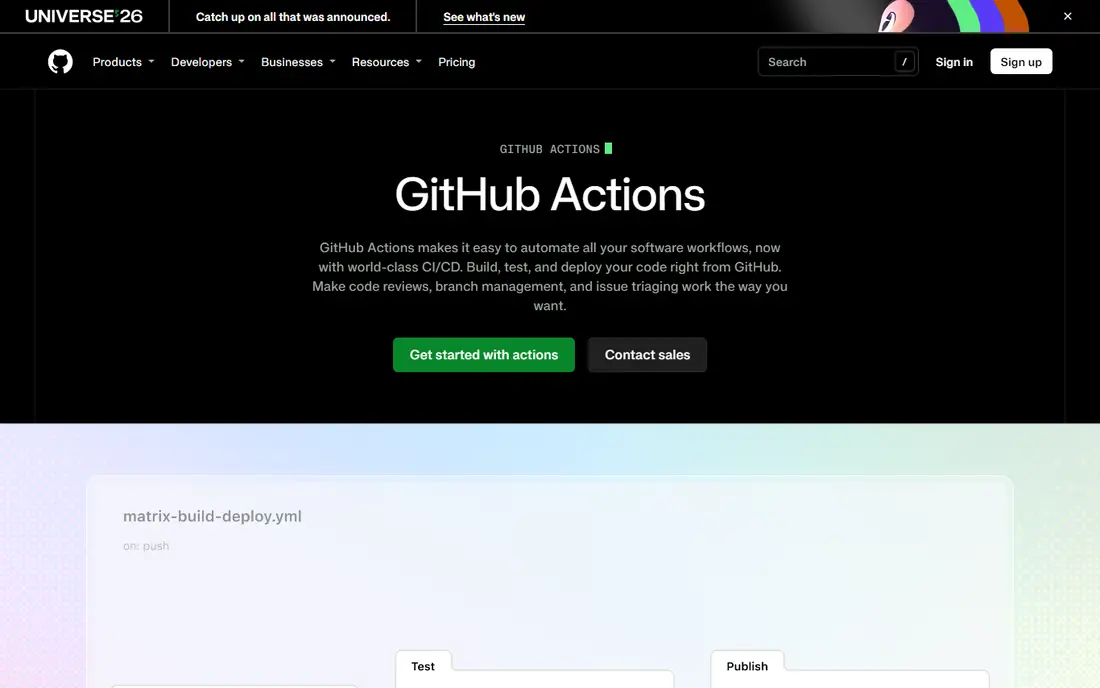
GitHub Actions is our pick for most teams whose code already lives on GitHub. Workflows live beside code in YAML files, and the marketplace offers thousands of ready actions for testing, building, and deploying. Public repositories get free hosted runners, and private repositories get a monthly minute allowance that varies by plan, with GitHub Team starting at $4 per user per month.
Costs need care. Large builds, Windows and macOS runners, and heavy parallel jobs consume minutes or credits faster than a small Linux build. Self-hosted runners can control that cost, at the price of operating your own machines. For GitHub teams, the integration advantage is hard to beat.
- Built into GitHub with a huge action marketplace
- Free for public repos
- Self-hosted runners available
- Private repo minutes are capped on free and low plans
- Costs rise with large or macOS builds
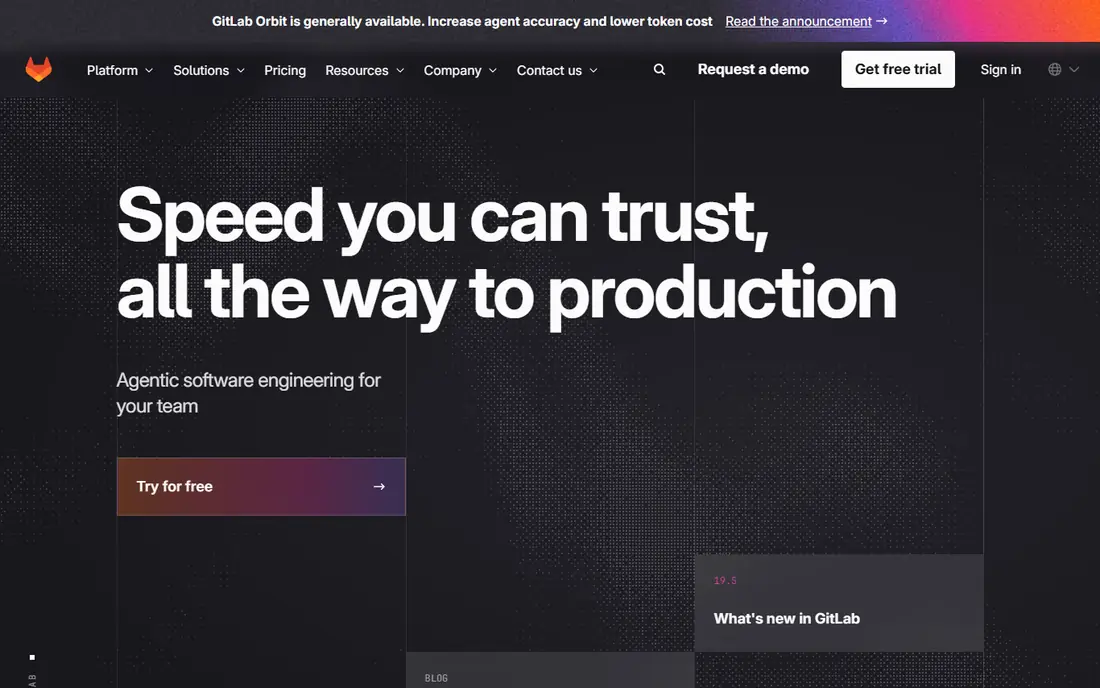
GitLab suits teams that want one platform for the whole software lifecycle. It combines repositories, CI and CD pipelines, issue tracking, security scanning, and release management, so teams avoid stitching several tools together. The free tier costs nothing and includes 400 compute minutes, while Premium costs $29 per user per month billed annually and includes 10,000 minutes.
Adopting GitLab fully means moving code and workflow habits, which takes effort for a team settled elsewhere. If you value a single system, audit trails, and self-hosting choice, GitLab is a strong platform. If you only need CI, a lighter tool may be enough.
- Code, CI, CD, security scanning, and planning in one platform
- Self-hosted option
- Strong compliance tools
- Premium costs $29 per user per month
- Free tier allows only 400 compute minutes
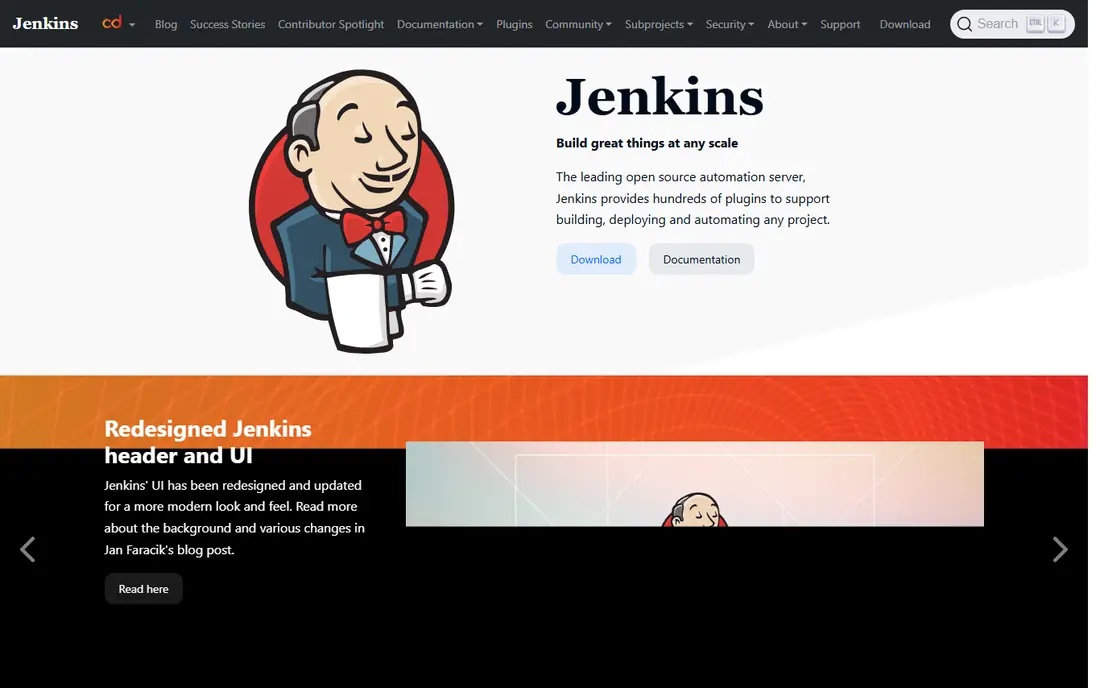
Jenkins remains the self-hosted standard for teams that need full control. The software is free and open-source, and its plugin catalog covers almost any build, test, or deployment job. You can run it on your own servers or cloud machines, with no per-user license cost for the core software.
Control is also the cost. Your team owns patching, backups, scaling, and plugin updates, and that work adds up to real engineering time. Cloud-hosted options from vendors such as CloudBees add support at a price. Pick Jenkins when control, customization, or on-premises rules matter more than a managed service.
- Open-source and free software
- Huge plugin catalog
- Runs anywhere you can host it
- You operate servers, updates, and security
- Plugin maintenance takes real time
Azure DevOps fits teams building on Microsoft tools and Azure cloud. It bundles Boards for planning, Repos for code, Pipelines for CI and CD, and Test Plans, with one free hosted parallel job and 1,800 minutes per month for small teams. Integration with Azure services, Active Directory, and Visual Studio makes it a natural choice for Microsoft shops.
Larger teams pay for extra parallel jobs at $40 per month each, and the broad suite can feel heavy for a team that only needs CI. If your stack is already Microsoft, Azure DevOps gives a coherent platform. If not, a GitHub or GitLab setup is simpler.
- Boards, repos, pipelines, and test plans in one suite
- Free for small teams under five users
- Strong Azure integration
- Extra parallel jobs cost $40 per month each
- Interface feels broad for small teams
CircleCI is a managed CI service known for speed and a clean config model. Orbs, its reusable config packages, help teams share pipeline steps without copying YAML everywhere, and caching and parallelism cut build times for large codebases. The free tier includes monthly credits, and Performance plans start at $15 per month plus usage.
Credit math takes care, because larger resource classes consume credits much faster than small ones, and macOS builds cost far more than Linux builds. Teams with long or heavy builds should estimate credits before committing. For teams that want fast managed CI without hosting runners, CircleCI is a strong pick.
- Fast managed CI with strong caching
- Orbs for reusable config
- Self-hosted runners available
- Credit use varies with resource choices
- Performance plans start at $15 per month plus usage
Bitbucket Pipelines suits teams already using Bitbucket and Jira. Pipelines run from YAML files in the repository, and build status flows back into pull requests and Jira issues without extra integration work. Free plans cover small teams up to five users, and Standard plans start at low per-user prices.
The tie to Atlassian is the limit: teams on GitHub or GitLab gain little here. Build minutes also need watching on larger projects, with extra minutes billed beyond the included allowance. For Atlassian teams, Pipelines is the path of least resistance. For others, it is not a reason to switch code hosting.
- Built into Bitbucket Cloud
- Works well with Jira
- Simple YAML config
- Tied to Bitbucket and Atlassian
- Build minutes and storage need monitoring on larger projects
Harness targets larger teams that need governed, automated delivery across clouds and Kubernetes clusters. It covers continuous delivery, feature flags, and related platform tools, with policy controls that suit regulated organizations. That breadth helps platform teams standardize releases across many services.
Pricing is quote-based rather than a simple published starting price, and setup is heavier than a basic CI tool. Small teams will find Harness more than they need. Large teams with many services, strict controls, and complex rollouts are the audience it is built for.
- Strong continuous delivery and feature flag tools
- Policy and governance features
- Multi-cloud support
- Pricing is not published as a simple starting price
- Enterprise focus means a heavier setup
Spinnaker is an open-source continuous delivery platform built for multi-cloud deployments. It supports deployment strategies such as canary releases, blue-green deployments, and rollbacks, which help teams release safely to many clusters and clouds. It has a long track record at large companies running complex delivery pipelines.
Spinnaker is CD only, so you still need a CI tool such as GitHub Actions or Jenkins to build and test code. It also needs hosting and operational care. Pick Spinnaker when safe multi-cloud delivery is the core problem. For a small team, a simpler CD tool inside GitHub or GitLab is enough.
- Open-source multi-cloud delivery
- Strong deployment strategies such as canary and blue-green
- Large-company track record
- Needs a Kubernetes cluster and setup effort
- CD only, so pair it with a CI tool
Argo CD is the GitOps delivery tool for Kubernetes teams. It watches a Git repository that describes the desired state of an application, syncs the cluster to match it, and shows drift, health, and history in a clear dashboard. Rollbacks become a Git revert, which many platform teams find easier to audit than manual deploys.
It only fits Kubernetes, so teams on virtual machines or serverless platforms need another delivery tool. Adopting GitOps also changes how teams release, which takes training. For Kubernetes teams that want declarative, auditable delivery, Argo CD is a leading free choice.
- Open-source GitOps for Kubernetes
- Desired state stored in Git
- Clear sync status and rollback
- Kubernetes only
- Needs a cluster and GitOps workflow adoption
How we picked these
We compared official pricing pages, documentation, and public reviews for DevOps platforms that are sold and supported today. We favored platforms with real CI, CD, or full lifecycle coverage, clear hosting options, and a current product page. We left out discontinued tools and narrow plugins that do not cover a delivery workflow on their own.
What to check before you choose
Start with code location, because the cheapest and simplest CI is usually the one built into your code host. Next, estimate runner costs for your real builds: language, operating system, test time, and parallelism all change the bill more than the headline seat price. Also check security features such as secrets handling, artifact signing, and audit logs, especially for production releases.
Run a pilot before a full migration. Move one service, measure build time and cost for a month, and test rollbacks and secrets handling. A platform that looks cheap on paper can cost more in engineering time if it needs constant care, and a managed platform can cost more in minutes if builds are heavy.
Sources
Frequently asked questions
What is the best DevOps platform for beginners?
GitHub Actions is the best beginner pick for teams on GitHub, because workflows live beside code and the marketplace covers common jobs. GitLab is the best all-in-one beginner platform if you want planning, code, and pipelines in one place.
Is Jenkins still worth using in 2026?
Yes, for teams that need self-hosting, deep customization, or on-premises control. Jenkins is free software with a huge plugin catalog. It costs engineering time to operate, so managed CI suits teams that prefer to avoid server care.
How much do DevOps platforms cost?
Costs vary by model. GitLab Premium costs $29 per user per month, GitHub Team starts at $4 per user per month plus runner minutes, CircleCI Performance starts at $15 per month plus credits, and Jenkins, Spinnaker, and Argo CD are free software with hosting costs. Estimate your build minutes before comparing.
What is the difference between CI and CD?
Continuous integration builds and tests code on every change, catching breaks early. Continuous delivery takes tested code and releases it to staging or production, safely and repeatedly. Many platforms do both, while Spinnaker and Argo CD focus on delivery.
Which platform is best for Kubernetes?
Argo CD is best for GitOps delivery to Kubernetes, and Spinnaker is best for multi-cloud delivery with advanced strategies. GitLab and GitHub Actions also deploy to Kubernetes, so pick a specialist only when Kubernetes delivery is a central need.
Can I use more than one DevOps tool together?
Yes, and many teams do. A common pattern pairs GitHub Actions or Jenkins for CI with Argo CD or Spinnaker for CD. Mixing tools adds integration work, so keep the split simple and document who owns each stage.