Best Email Marketing Companies in 2026: 9 Companies Compared
By ToolNimba Editorial Team November 10, 2026 10 min read

- Top pick
 Mailchimp
All-round small business email
Starting priceFreeCheck out MailchimpRead our review - Runner-up
 Klaviyo
Ecommerce stores
Starting priceFreeCheck out KlaviyoRead our review - Also great
 ActiveCampaign
Advanced automation
Starting priceSee websiteCheck out ActiveCampaignRead our review
How we researched this
We compared official pricing and feature pages, app store listings, privacy policies and public user reviews. Prices change, so check the provider's site before you pay.
Key takeaways
- Mailchimp is the best-known starting point, but its free plan is now small, at 250 contacts and 500 sends per month.
- Creators and newsletter writers often get better value from Kit or MailerLite, which price more simply for a growing list.
- Stores that sell online should weigh Klaviyo and ActiveCampaign, since purchase data and automation drive more revenue than templates alone.
- Brevo and HubSpot suit teams that also need SMS, CRM, or sales tools under one login.
- Price rises with contact count on almost every platform, so compare the price at your list size in six months, not just today.
Quick comparison
| Name | Best for | Starting price | Free plan | |
|---|---|---|---|---|
| Mailchimp | All-round small business email | Free | Yes | Visit |
| Klaviyo | Ecommerce stores | Free | Yes | Visit |
| ActiveCampaign | Advanced automation | See website | Free trial (14 days) | Visit |
 Brevo | Email plus SMS on a budget | Free | Yes | Visit |
 Kit | Creators and newsletters | Free | Yes | Visit |
 MailerLite | Simple, low-cost campaigns | Free | Yes | Visit |
 Constant Contact | Small businesses needing support | See website | Free trial | Visit |
 HubSpot | Email plus CRM | Free | Yes | Visit |
 GetResponse | Email plus funnels and webinars | Free | Yes | Visit |
The best email marketing companies
Email still drives sales for small businesses because you own the list, unlike a social feed that changes its rules. We compared official pricing pages and feature pages for platforms that send marketing email, build automations, and report on opens, clicks, and sales.

Mailchimp remains the default recommendation for a reason: almost every store, form, and booking tool connects to it, and the builder is easy for a first-time user. Paid plans start at $13 per month for Essentials with 500 contacts, and $20 per month for Standard, which adds more automation flows and audiences. That breadth makes Mailchimp a safe choice when you are not sure what you will need next.
The cost curve is the catch. Because Mailchimp bills by contact count, a list that grows from 500 to 5,000 contacts moves Essentials to $75 per month and Standard to $100 per month. The free plan, at 250 contacts and 500 sends per month, is now a trial in practice rather than a long-term plan. Archive inactive contacts regularly, since unsubscribed contacts can still count toward your limit.
- Huge template and integration library
- Easy builder for beginners
- Strong reporting and testing tools
- Free plan is now limited to 250 contacts
- Price rises fast with contact count
- Automation is limited on lower plans
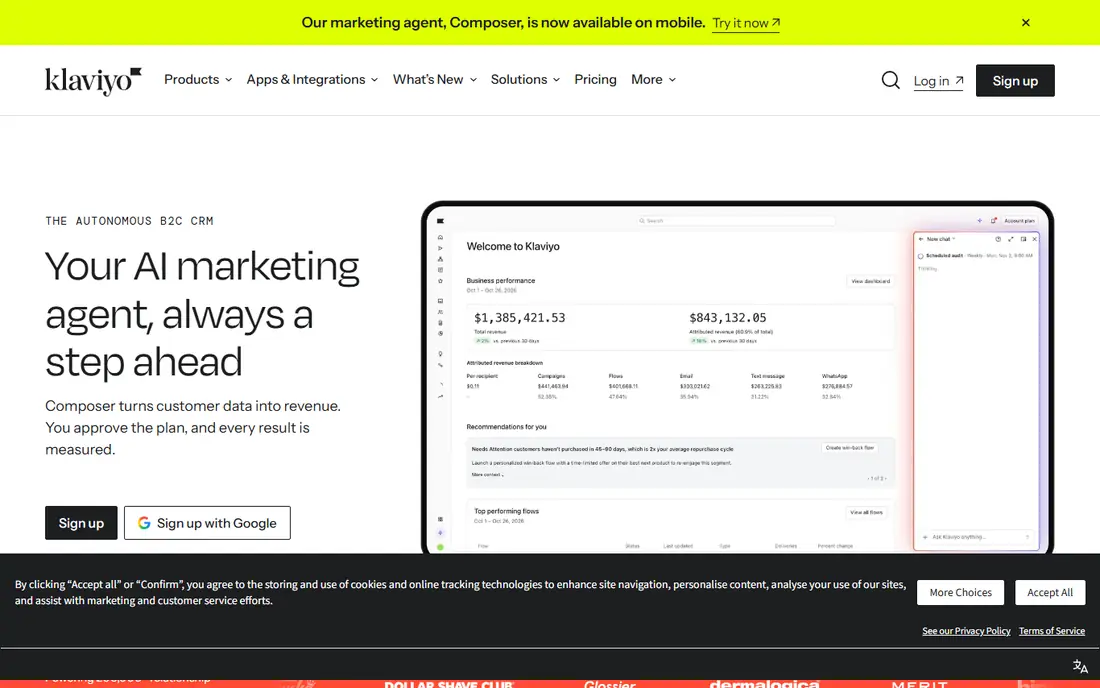
Klaviyo is built for stores, not general newsletters. It pulls purchase history, browsing behavior, and product data into segments, so you can send a different message to a first-time buyer, a repeat buyer, and a cart abandoner without manual lists. The free plan covers small lists, and paid email plans scale with contacts, with SMS billed separately.
For a store, that data focus often pays for itself through recovered carts and repeat orders. For a simple newsletter, Klaviyo is more tool than you need, and its price will feel high compared with MailerLite or Kit. Choose Klaviyo when revenue per email matters more than the monthly subscription.
- Deep Shopify and WooCommerce data
- Strong flows for abandoned carts and post-purchase email
- Good segmentation
- Price rises quickly with list size
- Learning curve for advanced flows
- SMS costs are separate

ActiveCampaign suits teams that want email to do more than send a weekly newsletter. Its automation builder handles branching, tagging, lead scoring, and CRM tasks in one workflow, which helps service businesses follow up with leads over weeks rather than days. That depth is why agencies and growing service firms often choose it over simpler tools.
The downside is complexity. A beginner can send a campaign quickly, but building a good automation takes planning and testing. Pricing also depends on contact count and plan, so use the pricing calculator on the vendor site for your list size. If you only send a monthly newsletter, a simpler tool will be faster and cheaper.
- Powerful visual automation builder
- CRM and sales tools included
- Strong tagging and scoring
- Pricing varies by plan and contacts, so confirm at checkout
- Steeper learning curve
- Lower plans limit some features
Brevo, formerly Sendinblue, is attractive because it prices partly by email volume rather than only by contact count. That model helps a business with a large list that emails rarely, since you are not paying a high tier just to store contacts. The free plan allows a daily sending limit, and paid plans add more sends, automation, and landing pages.
The design experience is less polished than Mailchimp or Kit, and some advanced automation features require higher plans. For a budget-conscious business that also wants SMS, Brevo is a practical choice. For a design-led brand that lives in templates, look at Mailchimp or MailerLite first.
- Free plan includes daily sending allowance
- Email plus SMS and WhatsApp in one account
- Prices by sends, not only contacts
- Template library is smaller than Mailchimp
- Advanced automation sits on higher plans
- Interface feels utilitarian
Kit, formerly ConvertKit, is made for writers, podcasters, and course creators. It keeps the focus on subscribers, sequences, and landing pages, without the store and CRM layers that complicate other platforms. The free plan covers up to 1,000 subscribers with basic sending, and paid plans add automation, reporting, and monetization tools.
The plain design is deliberate, since plain emails often perform well for newsletters, but brands that want rich visual templates may find Kit limiting. Kit also lacks the deep purchase automation of Klaviyo. For a creator building an audience and selling a course or paid newsletter, Kit hits the right balance.
- Simple creator-focused tools
- Landing pages and forms included
- Paid newsletter and commerce features
- Design options are plainer than Mailchimp
- Ecommerce features are lighter than Klaviyo
- Price rises with subscribers
MailerLite is our pick for a small business that wants low cost without a confusing interface. The builder is clean, automation covers welcome series and basic journeys, and the free plan supports up to 1,000 subscribers with a monthly send limit. Paid plans stay competitive as the list grows, which makes budgeting easier than on contact-heavy platforms.
New accounts go through an approval check, which can delay a first send, and the integration library is smaller than Mailchimp. Those are fair trade-offs for the price. If you send regular campaigns, want simple automation, and do not need a full CRM, MailerLite is hard to beat on value.
- Clean, easy builder
- Low prices for small lists
- Good automation for the price
- Approval process for new accounts can be strict
- Fewer integrations than Mailchimp
- Advanced CRM features are limited
Constant Contact has long served local businesses, nonprofits, and event organizers, and its support is a real selling point. If you want a person to help you set up a campaign, Constant Contact is more hands-on than most rivals. Templates cover restaurants, salons, shops, and community groups, and event tools help with invitations and registrations.
The price reflects that support, and automation is simpler than ActiveCampaign or Klaviyo. For a business that emails a local list a few times a month and values help over advanced features, that trade is reasonable. For a store that needs purchase-driven flows, Klaviyo will do more.
- Strong phone and chat support
- Easy templates for local businesses
- Event and social tools included
- Pricing is higher than budget rivals
- Automation is simpler than ActiveCampaign
- Confirm current prices at checkout
HubSpot makes sense when email is part of a wider sales system. The free plan includes a CRM with unlimited contacts, up to 2,000 emails per month, forms, and live chat, which is generous for a business starting out. As you upgrade, email connects to deals, tickets, and workflows, so a lead that opens an email can move through your sales pipeline without manual work.
Paid Marketing Hub plans start higher than standalone email tools and rise with contacts and seats, so HubSpot is not the cheapest email-only choice. Choose HubSpot when you need CRM, sales, and service tools together. Choose a standalone email tool when you only need campaigns and automation.
- Free CRM with unlimited contacts
- Email plus forms, chat, and sales tools
- Strong reporting as you upgrade
- Paid marketing plans get expensive fast
- Free email sends are capped
- Setup takes time
GetResponse suits a business that sells through funnels and live sessions. Beyond email, you get landing pages, signup funnels, and webinars, which helps a course creator or coach run a launch without stitching together several tools. Automation templates cover welcome series, cart recovery, and webinar follow-up.
That breadth makes the dashboard busier than MailerLite, and webinar attendee limits vary by plan, so check the tier that fits your audience size. For a simple newsletter, GetResponse is more than you need. For a business built around launches and live teaching, the bundled tools can save money overall.
- Funnels, landing pages, and webinars in one account
- Good automation templates
- Free plan for small lists
- Interface has many features to learn
- Pricing tiers can confuse
- Webinar limits vary by plan
How we picked these
We compared official pricing pages, feature pages, and plan limits for email platforms that are widely available in the United States in 2026, and we favored platforms with a free plan or trial, clear automation tools, and deliverability features such as authentication and list hygiene. Prices shown are starting prices and rise with contacts, sends, or seats, so confirm the price at your list size before you buy.
How to choose the right platform
Start with your list size and your main goal. A newsletter writer needs subscribers, sequences, and landing pages. A store needs purchase data and cart flows. A service business needs lead follow-up and CRM. A local business needs simple templates and support. Matching the tool to that goal matters more than picking the tool with the longest feature list.
Watch the billing model
Some platforms bill by contacts, some by sends, and some by seats. A large list that emails rarely may do better on a send-based plan such as Brevo, while a small list that emails often may do better on a contact-based plan. Always model the price at twice your current list size, since email lists grow and prices follow.
Check deliverability basics
Before you send at scale, set up domain authentication, use a real reply address, and clean bounced and inactive contacts. No platform can fix a purchased list or a misleading subject line, and poor sending habits will hurt deliverability on any tool in this list.
Sources
Frequently asked questions
What is the best email marketing company for a small business?
Mailchimp and MailerLite are the safest small business picks. Mailchimp offers the widest integrations, while MailerLite offers lower prices and a simpler builder. Choose Mailchimp if integrations matter most, and MailerLite if cost and simplicity matter most.
What is the best email automation software?
ActiveCampaign and Klaviyo lead on automation. ActiveCampaign suits service businesses with CRM and lead scoring, while Klaviyo suits stores with purchase-driven flows. Both need more setup time than a simple campaign tool.
Is there a free email marketing platform?
Yes. Mailchimp, Brevo, Kit, MailerLite, HubSpot, and GetResponse all offer free plans with limits on contacts or sends. Free plans work for starting out, but most growing lists move to a paid plan within months.
How much does email marketing cost per month?
It depends on list size. Small lists often start free or at $13 to $20 per month, while lists of 5,000 contacts often cost $75 to $100 per month on contact-based platforms. Always check the price at your list size, since starting prices assume a small list.
Can I switch email platforms later?
Yes, in most cases you can export contacts and import them into a new tool, but automations, templates, and reports usually need to be rebuilt. Before switching, export your list, note your automation steps, and test a small campaign on the new platform first.