Best Enterprise Asset Management Software in 2026: 8 Tools Compared
By ToolNimba Editorial Team November 12, 2026 9 min read

- Top pick
 IBM Maximo
Large industrial asset operations
Starting price$3,150 per monthCheck out IBM MaximoRead our review - Runner-up
 SAP EAM
SAP-native enterprises
Starting priceSee websiteCheck out SAP EAMRead our review - Also great
 Oracle EAM
Oracle-centric enterprises
Starting price$164 per user per monthCheck out Oracle EAMRead our review
How we researched this
We compared official pricing and feature pages, app store listings, privacy policies and public user reviews. Prices change, so check the provider's site before you pay.
Key takeaways
- IBM Maximo, SAP EAM and Oracle EAM suit large asset-heavy enterprises, but they need serious implementation time and budget.
- IFS Cloud and HxGN EAM suit firms that need EAM plus field service or GIS-linked linear assets in one system.
- Fiix, UpKeep and MaintainX suit mid-size teams that need maintenance execution now, with lower cost and faster setup.
- EAM covers the full asset lifecycle, while CMMS focuses on work orders and preventive maintenance, so match scope to need.
- Budget for implementation, training and data migration, not just licenses, since those costs often exceed the first year of software fees.
Quick comparison
| Name | Best for | Starting price | Free plan | |
|---|---|---|---|---|
| IBM Maximo | Large industrial asset operations | $3,150 per month | No | Visit |
| SAP EAM | SAP-native enterprises | See website | No | Visit |
| Oracle EAM | Oracle-centric enterprises | $164 per user per month | No | Visit |
 IFS Cloud | EAM plus field service | See website | No | Visit |
 HxGN EAM | Utilities and government | See website | No | Visit |
 Fiix | Mid-size maintenance teams | $45 per user per month | Yes | Visit |
 UpKeep | Mobile-first maintenance | $24 per user per month | Free trial | Visit |
 MaintainX | Frontline work orders | $20 per user per month | Yes | Visit |
The best enterprise asset management software
Enterprise asset management software tracks assets from purchase through operation, maintenance and disposal, with work orders, preventive maintenance, inventory and reliability data in one system. True EAM suites serve large, asset-heavy firms, while CMMS tools serve smaller maintenance teams with a narrower scope. We compared vendor pages, pricing reports and feature coverage to sort these tools by scale and fit.
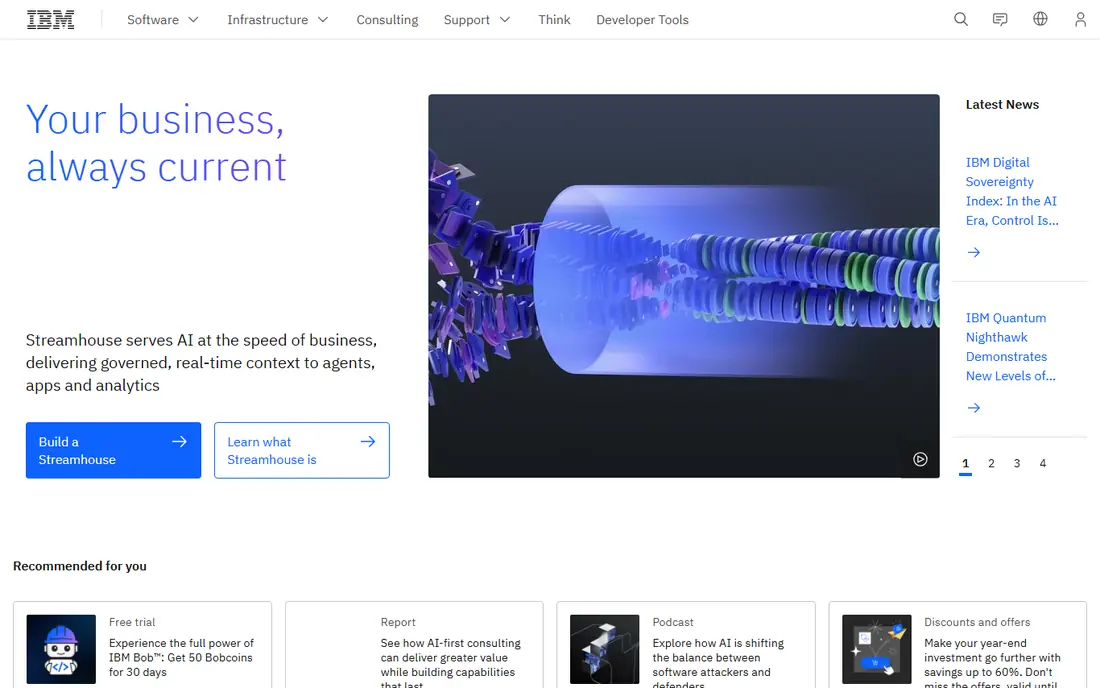
IBM Maximo Application Suite is the best-known EAM platform for large industrial operations. It covers asset registers, work orders, preventive maintenance, inventory and condition monitoring across energy, utilities, aviation, transport and manufacturing. AI-driven monitoring and IoT data help teams move from reactive repairs to planned maintenance.
The trade-offs are complexity and cost. Implementation is a major project, the interface needs training, and licensing grows with users and modules. Maximo suits asset-heavy enterprises with internal IT strength and a clear maintenance strategy. Smaller firms will find it too heavy and too costly for basic work order needs.
- Deep asset and work management
- AI-driven monitoring
- Broad industry coverage
- Complex interface
- Steep implementation
- Licensing costs rise with scale
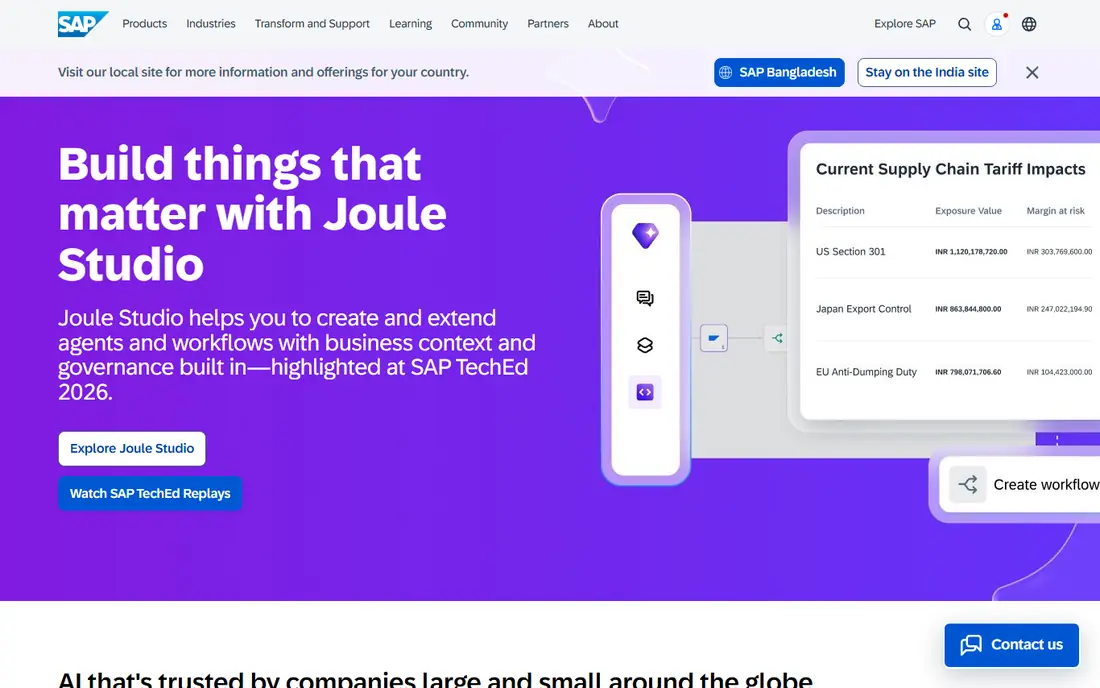
SAP EAM suits firms already running SAP S/4HANA, since maintenance shares the same data model as finance, procurement and inventory. That native link avoids duplicate asset records and gives finance a clear view of maintenance cost against asset value. At enterprise scale, that integration is the main reason to choose SAP EAM over a standalone tool.
Outside SAP, the case weakens. Pricing is custom and ERP-led, implementation is a large program, and usability lags behind modern CMMS tools. Firms not on SAP should compare a best-of-breed EAM or CMMS tool before committing to an ERP-led path. SAP users, by contrast, usually gain more from staying native.
- Native finance and procurement links
- Strong for SAP S/4HANA users
- Enterprise scale
- Custom, ERP-led pricing
- Implementation is large
- Weak fit outside SAP
Oracle EAM, part of Oracle maintenance and supply chain products, suits firms already centered on Oracle ERP. Maintenance, inventory and finance share data, which helps asset-heavy manufacturers track cost, spares and downtime in one system. Links to Oracle IoT monitoring and analytics add condition data for larger fleets.
Users report a steep learning curve and an interface that needs heavy training. Integrations outside Oracle are harder than with standalone tools, and licensing costs sit at the high end. Oracle EAM fits Oracle-centric enterprises that value native integration over ease of use. Others should test a standalone EAM first.
- Tight links to Oracle SCM and finance
- Strong for asset-heavy manufacturing
- Analytics links
- Interface feels overwhelming
- Non-Oracle integrations are harder
- Licensing cost is high
IFS Cloud combines enterprise asset management with ERP and field service management in one composable suite. That matters for firms that both own assets and send technicians to service customer assets, since work, parts and billing can share one flow. Modules can be adopted in stages, which helps firms that do not want a full ERP replacement at once.
Pricing is quote-only, and rollout still needs careful planning, data cleanup and training. Breadth can slow adoption if teams try to deploy every module at once. IFS suits mid-size to large service-heavy firms that need EAM and field service together, rather than a pure maintenance tool.
- Combines EAM, ERP and field service
- Composable modules
- Strong for service-heavy firms
- Quote-only pricing
- Implementation needs planning
- Breadth can slow rollout
HxGN EAM, formerly Infor EAM and now owned by Hexagon, suits utilities, government and transport firms with linear and network assets. GIS-native tracking helps manage pipes, lines, roads and other assets that stretch across geography, not just single sites. Compliance and work history tracking support regulated environments where audit trails matter.
Pricing is quote-only, and buyers should confirm the roadmap with Hexagon, since older documents still say Infor EAM. The focus is narrower than Maximo or SAP, which is a strength for utilities and a limit for general manufacturing. Choose HxGN EAM when linear assets and compliance drive the decision.
- GIS-native linear asset support
- Strong compliance tracking
- Utility and public sector fit
- Quote-only pricing
- Older documentation still references Infor EAM
- Niche focus
Fiix is a CMMS that suits mid-size maintenance teams moving from spreadsheets to structured work. Work orders, preventive maintenance scheduling, asset history and parts tracking cover daily maintenance well. A free plan lets small teams start with core work orders before paying, which lowers adoption risk.
Fiix does not offer the full asset lifecycle, procurement and depreciation depth of true EAM suites. Large enterprises with complex reliability engineering will outgrow it. For plants, facilities and fleets that need solid maintenance execution without enterprise overhead, Fiix is a practical step up.
- Clear work order and preventive maintenance tools
- Free plan to start
- Good reporting
- Lacks full EAM lifecycle depth
- Advanced features need higher tiers
UpKeep suits frontline teams that live on mobile devices. Technicians can create and close work orders, add photos, scan barcodes and check asset history from a phone, which speeds adoption among staff who rarely sit at desks. Multi-site views help managers compare maintenance across locations.
Depth is the limit. Reporting, inventory and reliability features are lighter than Maximo or SAP EAM, and costs rise as teams add users and modules. UpKeep fits facilities, hospitality and light manufacturing teams that need mobile-first maintenance now, not a full enterprise lifecycle system.
- Strong technician mobile app
- Easy work order creation
- Good for multi-site teams
- Reporting and inventory depth lag enterprise suites
- Costs rise with users and features
MaintainX helps frontline teams digitize work orders, procedures and communication quickly. A free plan covers core work orders, and paid plans add preventive maintenance, parts and reporting. Built-in messaging lets technicians and managers discuss a job without separate chat apps. Setup is fast compared with enterprise suites.
MaintainX is a CMMS, not a full EAM suite, so procurement, depreciation and complex reliability modeling sit outside its core. Teams that need those functions should look at Maximo, SAP or IFS. For operations teams that need clean work execution and fast adoption, MaintainX offers strong value at a low entry price.
- Free plan for core work orders
- Built-in messaging
- Fast setup for frontline teams
- Less EAM depth for procurement and lifecycle
- Advanced analytics need higher tiers
How we picked these
We compared vendor pages, pricing reports and scope, favoring tools that cover asset registers, work orders and preventive maintenance at their stated scale. We included both true EAM suites and strong CMMS tools, since many buyers search for EAM but need CMMS scope. We left out pure asset tracking apps with no maintenance workflow, since they do not cover the core EAM job.
What to check before you choose
First, decide whether you need EAM or CMMS. If you need procurement, depreciation, reliability engineering and compliance across a large portfolio, you need EAM. If you mainly need work orders, preventive maintenance and parts for one or several sites, a CMMS will be faster and cheaper. Buying EAM scope for a CMMS job wastes budget and slows rollout.
Budget for data and training
Asset data cleanup, hierarchy design, spare parts records and technician training often cost more than first-year licenses. Plan a pilot on one site or asset class, clean the data there, and prove the workflow before rolling out widely. Check mobile offline behavior for technicians in plants or remote sites with weak signal.
Test reporting for your decisions
Ask vendors to show the reports you will actually use: overdue preventive maintenance, downtime by asset, cost per asset, and compliance status. A tool that stores data well but cannot report it clearly will frustrate managers. Also check integrations with your ERP, finance and IoT systems before signing, since those links decide long-term value.
Sources
Frequently asked questions
What is the difference between EAM and CMMS?
CMMS manages work orders, preventive maintenance and spare parts for maintenance teams. EAM covers the full asset lifecycle, including procurement, depreciation, reliability engineering and compliance at enterprise scale. Small teams usually need CMMS, while asset-heavy enterprises need EAM.
How much does enterprise asset management software cost?
CMMS tools publish prices from about $20 to $45 per user per month, with free plans at Fiix and MaintainX. Enterprise EAM is usually quote-only, with Maximo starting around $3,150 per month and Oracle EAM around $164 per user per month in published comparisons. Implementation and training add significant cost on top of licenses.
Can I start with a free CMMS and move to EAM later?
Yes. Fiix and MaintainX offer free plans that cover work orders and asset basics, which let teams prove the workflow before paying. Moving to EAM later still needs data migration and process redesign, so keep asset hierarchies and naming clean from the start to ease a future move.
Do I need EAM if I already have an ERP?
If your ERP is SAP S/4HANA or Oracle Fusion, its native EAM module often makes sense, since it shares finance and procurement data. Otherwise, a best-of-breed CMMS integrated with your ERP usually offers better usability and lower cost, except in regulated industries where the ERP vendor EAM is the audited standard.
How long does EAM implementation take?
It varies widely. CMMS tools can go live in weeks for a single site. Enterprise EAM rollouts often take months, with data cleanup, integration and training driving the timeline. A phased pilot on one site or asset class reduces risk and gives a realistic timeline for wider rollout.