Best EV Charging Apps in 2026: 9 Apps Compared
By ToolNimba Editorial Team November 1, 2026 10 min read

- Top pick
 PlugShare
Knowing which plugs actually work
Starting priceFreeCheck out PlugShareRead our review - Runner-up
 A Better Route Planner
Road trip planning
Starting priceFreeCheck out A Better Route PlannerRead our review - Also great
 Google Maps
Everyday driving and navigation
Starting priceFreeCheck out Google MapsRead our review
How we researched this
We compared official pricing and feature pages, app store listings, privacy policies and public user reviews. Prices change, so check the provider's site before you pay.
Key takeaways
- PlugShare is the best all-round finder because driver reports show which plugs actually work, not just which stations exist.
- A Better Route Planner is the best trip planner, since it factors in battery, weather, and charger speed before you leave.
- Network apps such as Tesla, ChargePoint, Electrify America, and EVgo are needed to start and pay for charging on their own chargers.
- Most drivers need two or three apps: one finder, one trip planner, and the app for the network they use most.
- Charging prices vary by site, time, and membership, so check the price in the app before plugging in.
Quick comparison
| Name | Best for | Starting price | Free plan | |
|---|---|---|---|---|
| PlugShare | Knowing which plugs actually work | Free | Yes | Visit |
| A Better Route Planner | Road trip planning | Free | Yes | Visit |
| Google Maps | Everyday driving and navigation | Free | Yes | Visit |
 Tesla | Supercharger access and payment | Free | Yes | Visit |
 ChargePoint | Workplace and destination Level 2 charging | Free | Yes | Visit |
 Electrify America | Highway DC fast charging | Free | Yes | Visit |
 EVgo | City and metro fast charging | Free | Yes | Visit |
 ChargeHub | One app for the US and Canada | Free | Yes | Visit |
 Blink Charging | Blink network charging and payment | Free | Yes | Visit |
The best EV charging apps
EV charging apps do three different jobs: finding a charger, planning a route around chargers, and starting and paying for a charge. No single app does all three perfectly across every network, which is why most drivers carry more than one. We compared official app and network pages and recent EV charging comparisons.
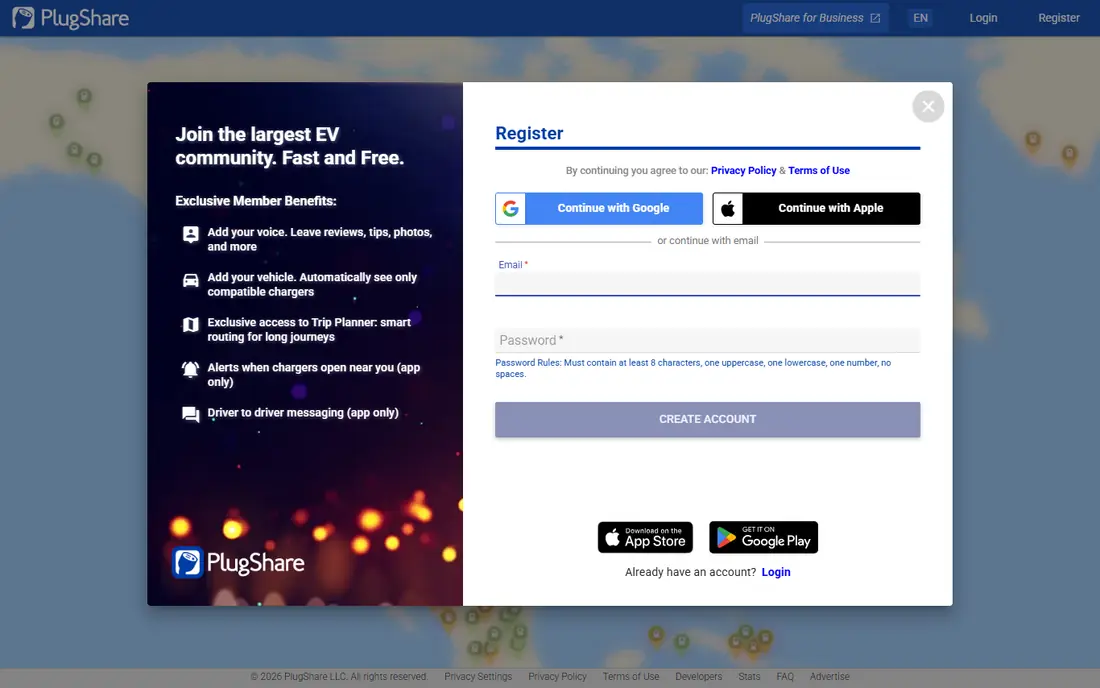
PlugShare is the app most US EV drivers open first, and for a simple reason: it tells you whether a charger worked recently. Drivers check in, leave photos and comments, and report broken stalls, so you can avoid a station that looks fine on a map but has two dead plugs. Filters cover plug type, charging speed, network, and amenities, which matters when you drive a car with a specific connector.
The limit is payment. PlugShare can start charging at some participating sites, but at most stations it is a finder, not a payment app. Use it to choose where to go, then open the network app to pay. For everyday driving and for avoiding wasted trips, it is still the most valuable free app on this list.
- Largest driver-reported station database
- Check-ins and photos show broken stalls
- Filters by plug type, speed, and network
- Cannot start a charge at most stations
- Data quality depends on driver reports in quiet areas
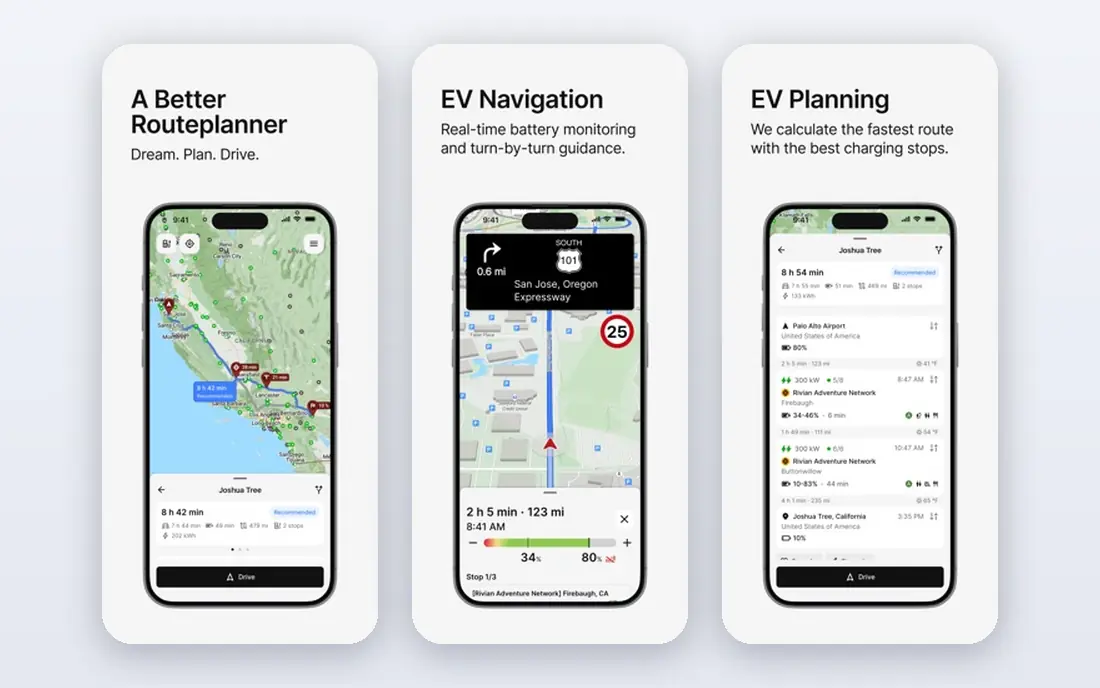
A Better Route Planner, often called ABRP, is the best tool for a road trip. You enter your car, battery level, and destination, and it plans charging stops based on charger speed, elevation, weather, and your driving preferences. That planning avoids the two classic road trip mistakes: stopping too often, and arriving at a charger with too little range left.
Premium costs $4.99 per month and adds extra vehicle data, weather detail, and live features. The free version covers most trips well. ABRP will not start a charge for you, so pair it with PlugShare for station checks and a network app for payment. For any trip over 200 miles, plan it in ABRP first.
- Plans routes around battery level, charger speed, and weather
- Live traffic and charger data
- Premium adds more vehicle and weather detail
- Interface takes time to learn
- Does not start or pay for charging itself
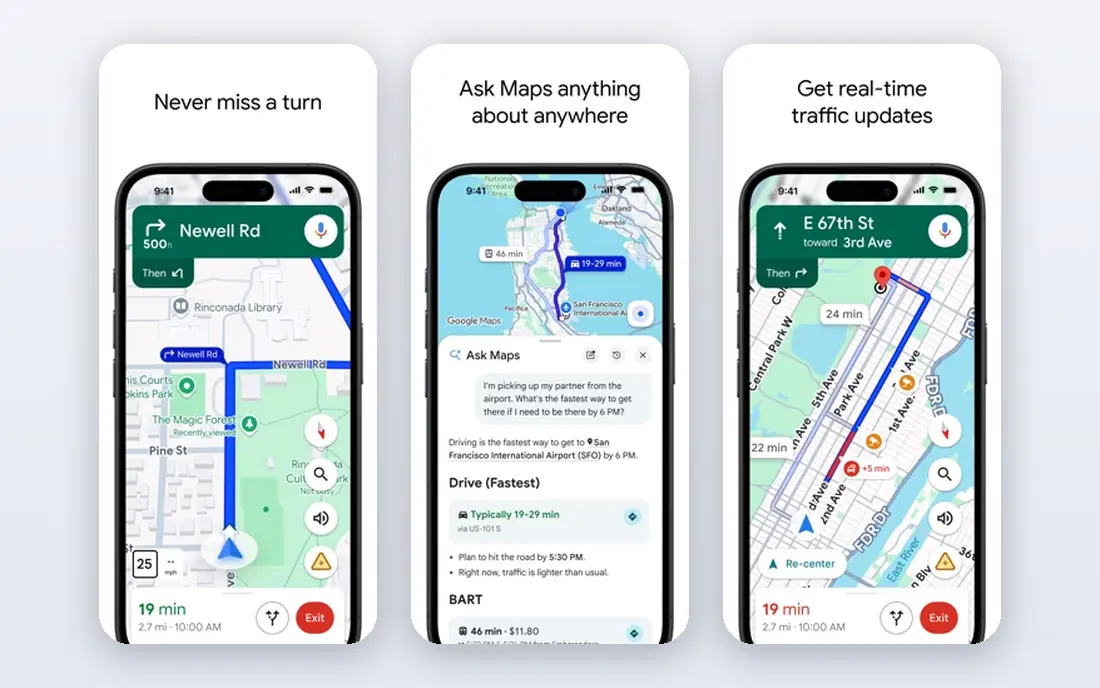
Google Maps is the best everyday option because it is already there. It shows EV chargers along your route, filters by plug type and speed, and works with Android Auto and CarPlay without extra setup. For a short trip to a known charger, that convenience beats opening a specialist app.
The trade-off is depth. Google Maps lacks the driver check-ins, stall-level reports, and battery-aware planning that PlugShare and ABRP offer. It also cannot pay for most sessions. Use Google Maps for daily driving and for finding a nearby charger fast, and switch to PlugShare or ABRP when the trip is long or the charger is unfamiliar.
- Already on most phones
- Shows chargers along a route
- Integrates with Android Auto and CarPlay
- Less EV-specific detail than PlugShare or ABRP
- Cannot pay for most charging sessions
The Tesla app is essential if you use Superchargers, whether you drive a Tesla or another EV with a NACS port or adapter. It shows live availability and pricing, lets you start and pay for sessions, and routes Tesla owners to chargers with preconditioning. With around 40,300 Supercharger ports in the US, it is the largest fast charging network by a wide margin.
Non-Tesla drivers pay more per kilowatt-hour without a membership, which costs $12.99 per month and lowers the rate. Tesla owners get the smoothest experience, with the car and app working together. Even if you rarely use Superchargers, keep the app installed for road trips, since it is often the fallback when other networks are full or broken.
- Largest fast charging network in the US
- In-app pricing and availability
- Optional membership lowers prices for non-Tesla EVs
- Best experience is for Tesla owners
- Non-Tesla pricing is higher without membership
ChargePoint operates one of the largest public charging footprints in the US, with around 84,000 public ports, most of them Level 2. That makes it the go-to app for charging at work, at a hotel, or while shopping, where a slower Level 2 charge over several hours is exactly right. The app finds stations, shows availability, and starts and pays for sessions.
The catch is that prices are set by each site host, not by ChargePoint, so the same app can show very different rates at different stations. DC fast charging is also thinner here than on highway-focused networks. Use ChargePoint for destination charging, and keep a fast charging app for road trips.
- Huge Level 2 network at workplaces, shops, and hotels
- App starts and pays for sessions
- Station hosts set local prices
- DC fast charging coverage is thinner than Tesla or Electrify America
- Prices vary widely by host
Electrify America is the main non-Tesla highway fast charging network, with over 1,190 locations and chargers up to 350 kW. That peak power suits 800-volt cars such as the Hyundai Ioniq 5 and Kia EV6, which can charge much faster than on a 50 kW charger. The app shows station status, starts sessions, and handles payment.
Pricing is the complication. Electrify America publishes no single national rate, and prices vary by state and station, with average peak rates around $0.615 per kWh in October 2026 according to third-party trackers. Pass+ membership, at $7 per month in recent comparisons, lowers the per-kWh rate for frequent users. Check the station price in the app before you plug in, especially on a long trip.
- High-power highway chargers up to 350 kW
- Wide corridor coverage
- Pass+ membership lowers per-kWh prices
- No published national rate, so prices vary by state and station
- Some stations bill by time in certain states
EVgo focuses on where city drivers actually charge: grocery stores, parking garages, and malls. With around 5,300 chargers including co-branded sites, it is a strong option for drivers without home charging who need a fast top-up during errands. The app finds stations, shows pricing, and starts sessions, and its rewards membership lowers rates for frequent users.
The gap is highway coverage. EVgo has fewer interstate stations than Electrify America or Tesla, so it is less suited as a sole road trip app. For city and suburban drivers, especially those who charge weekly at retail sites, EVgo is one of the most useful network apps to carry.
- Dense city and suburban coverage at grocery and retail sites
- Fast chargers up to 350 kW
- Rewards membership lowers prices
- Fewer interstate highway stations than Electrify America
- Prices vary by region
ChargeHub is the best cross-border option for drivers who travel between the US and Canada. It maps chargers in both countries, includes a trip planner, and can start and pay for charging at over 100,000 chargers through partner networks. That single-app coverage simplifies a trip that would otherwise need several network apps.
The trade-off is community size. PlugShare has a larger driver reporting community in the US, so station condition reports are often richer there. Use ChargeHub as your main app for cross-border trips, and check PlugShare for stall-level reports before relying on an unfamiliar station.
- Covers the US and Canada in one app
- Can pay at over 100,000 chargers
- Trip planner included
- Smaller driver community than PlugShare
- Payment coverage varies by network
Blink Charging is a network app for drivers who regularly use Blink stations. The app finds Blink chargers, shows availability, starts sessions, and handles payment, with a membership option that lowers rates for frequent users. Recent comparisons put Blink pay-as-you-go rates around $0.49 per kWh, with member rates near $0.39 per kWh.
The network is smaller than the leaders above, so Blink alone will not cover every trip. It earns a place here because drivers who live or work near Blink stations use it weekly, and having the right network app avoids fumbling with a card reader at the charger. Keep it if Blink stations are on your regular routes, and skip it if they are not.
- App starts and pays for Blink sessions
- Membership lowers per-kWh rates
- Growing Level 2 and DC network
- Smaller network than Tesla, ChargePoint, or Electrify America
- Prices vary by site
How we picked these
We compared official network and app pages with recent EV charging comparisons and price trackers, favoring apps that are actively supported in the US in 2026. We included finders, trip planners, and network payment apps, since no single app covers all three jobs well. Charging prices vary by site, state, time of use, and membership, so the figures here are guides, not quotes, and the in-app price at the station is the one that matters.
What to check before a trip
Carry at least three apps: a finder, a trip planner, and the payment app for the network you will use most. Download offline maps or save your route before leaving, since cell service at rural chargers is not guaranteed. Check plug type and adapter needs for your car before you go, especially if you drive a CCS car using NACS stations or vice versa.
Check station condition, not just location
A station on a map is not a working station. Read recent PlugShare check-ins for the exact stalls you plan to use, and have a backup charger within range. On a road trip, plan your backup before you need it, not when your battery is low.
Compare membership math honestly
Memberships such as Tesla's $12.99 per month, Electrify America Pass+, and EVgo rewards only save money if you charge enough on that network each month. Divide the monthly fee by your saving per kilowatt-hour to find your break-even point, and cancel memberships for networks you rarely use.
Sources
- https://www.plugshare.com
- https://abetterrouteplanner.com
- https://maps.google.com
- https://www.tesla.com
- https://www.chargepoint.com
- https://www.electrifyamerica.com
- https://www.evgo.com
- https://chargehub.com
- https://blinkcharging.com
- https://editorialge.com/ev-charging-station-finder-apps/
- https://thechargeport.com/ev-charging-networks
- https://dcfctracker.com/reports/electrify-america