Best Extended Auto Warranty Companies in 2026: 9 Companies Compared
By ToolNimba Editorial Team November 9, 2026 11 min read

- Top pick
 Endurance
Best overall coverage
Starting price$99 per monthCheck out EnduranceRead our review - Runner-up
 CarShield
High-mileage vehicles
Starting price$99 per monthCheck out CarShieldRead our review - Also great
 Olive
No waiting period
Starting priceSee websiteCheck out OliveRead our review
How we researched this
We compared official pricing and feature pages, app store listings, privacy policies and public user reviews. Prices change, so check the provider's site before you pay.
Key takeaways
- Endurance is our pick for most drivers, because it administers its own plans, pays repair shops directly, and covers a wide range of vehicles.
- CarShield is the fallback when age or mileage rules out other providers, with approval for vehicles up to 300,000 miles.
- Olive suits newer, lower-mileage cars and stands out for no waiting period and fully digital signup.
- Most prices are quotes, not fixed rates, so your vehicle, mileage, coverage level, and deductible will change the monthly cost.
- Coverage terms vary by contract, so read the exclusions, waiting period, and deductible carefully. This is not financial advice.
Quick comparison
| Name | Best for | Starting price | Free plan | |
|---|---|---|---|---|
| Endurance | Best overall coverage | $99 per month | No | Visit |
| CarShield | High-mileage vehicles | $99 per month | No | Visit |
| Olive | No waiting period | See website | No | Visit |
 CARCHEX | Comparing multiple underwriters | $85 per month | No | Visit |
 American Dream Auto Protect | Value for older vehicles | $99 per month | No | Visit |
 autopom | High-mileage and flexible terms | See website | No | Visit |
 Omega Auto Care | Maintenance benefits | See website | No | Visit |
 Concord Auto Protect | Flexible coverage tiers | See website | No | Visit |
 Toco | Simple month-to-month plans | See website | No | Visit |
The best extended auto warranty companies
We compared official plan pages, coverage tiers, mileage and age limits, waiting periods, and public reviews, with a focus on how claims work and what each contract actually excludes.

Endurance earns the top spot because it controls the whole process. As a direct provider rather than a broker, it administers claims itself and pays licensed repair shops directly, which removes one layer of dispute when a repair is approved. Plans range from basic powertrain cover for engine, transmission, and drive axle, up to Supreme exclusionary cover that lists what is not covered rather than what is.
Eligibility is broad, with cover for vehicles up to 20 years old in many cases, and plans are transferable. The main limits are the waiting period and the quote. You must wait 30 days and drive up to 1,000 miles before most claims qualify, and your monthly price will depend on your vehicle and chosen tier. Get a written quote and read the contract before you sign.
- Direct administrator with direct payment to shops
- Plans from powertrain to near bumper-to-bumper
- Roadside, rental, and trip interruption benefits
- Quote-based pricing varies widely
- Waiting period of 30 days and up to 1,000 miles on many plans
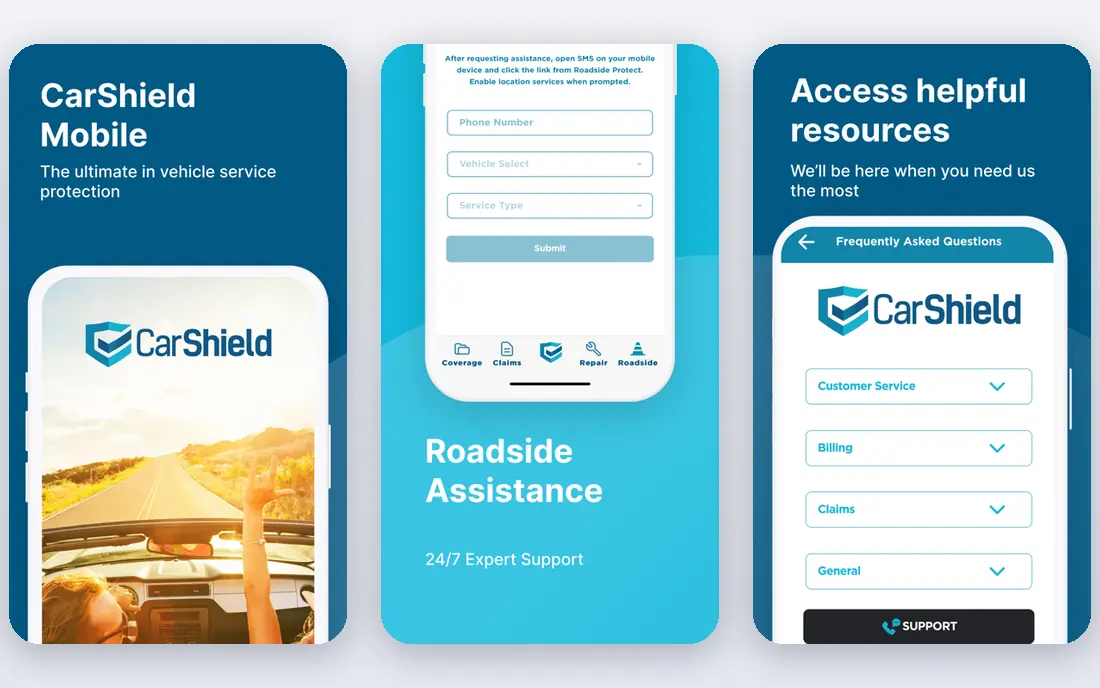
CarShield is the company to check when other providers say no. It has no strict vehicle age limit in many plans and approves vehicles with up to 300,000 miles, including some motorcycles, ATVs, and specialty vehicles that rivals decline. Month-to-month contracts also make it easier to stop paying if you sell the car or decide the cover is not worth it.
That breadth has a cost. Public reviews report more disputes over wear-and-tear exclusions and pre-existing conditions than with direct providers, so the contract wording matters more here. Keep maintenance records, follow the claims authorization process, and confirm in writing whether a specific part is covered before authorizing a repair.
- Covers vehicles up to 300,000 miles
- Month-to-month plans with no long lock-in
- Wide range of coverage tiers
- Claim denials for wear and tear are a common complaint
- Pricing varies by vehicle and plan

Olive takes the friction out of buying cover. You can get a quote and sign up online without a phone call, and many plans have no waiting period, so cover can start right away. That combination suits drivers who want protection quickly and prefer to manage everything online.
Eligibility is the catch. Olive generally requires a vehicle under 10 years old with under 140,000 miles at signup, and coverage often ends at 150,000 miles. If your car fits, Olive can be one of the cheapest and simplest options. If it does not, Endurance or CarShield will be more realistic choices.
- No waiting period on many plans
- Fully digital signup and claims
- Month-to-month terms
- Only for vehicles under 10 years old and 140,000 miles at signup
- Coverage ends around 150,000 miles in many plans
CARCHEX works as a broker, which changes how you should judge it. Instead of selling one house plan, it compares plans from several underwriters and helps you pick the tier that fits your vehicle and budget. That can produce a better price or a better match for high-mileage cars than a single-provider quote.
The trade-off is that claims are handled by the underwriter, not by CARCHEX itself, so service quality can vary by plan. Waiting periods also vary, with some plans requiring 90 days and 200 miles. Ask which underwriter backs your contract, get the full contract before paying, and compare the same term length across quotes.
- Quotes from multiple underwriters in one place
- Covers vehicles up to 250,000 miles and 25 years old
- 30-day money-back guarantee on some plans
- Broker model means claims go through a third-party administrator
- Waiting period up to 90 days on some plans
American Dream Auto Protect
Best for: Value for older vehicles
American Dream Auto Protect positions itself as a value option for older vehicles. It covers model years from 2006 onward in many plans, with mileage cover up to 250,000 miles, and starting prices around $99 per month. Public reviews often praise its customer support, which is a useful signal in a market where claims help matters.
Availability is limited by state, with California and Washington often excluded, and the final price still depends on your vehicle and coverage level. It fits drivers who want a straightforward quote for an older car and are willing to compare it against Endurance and CarShield on the same terms.
- Plans from $99 per month in many cases
- Covers vehicles from model year 2006 onward
- Covers up to 250,000 miles
- Not available in California and Washington in many cases
- Pricing is quote-based
autopom, often written as autopom with an exclamation mark in branding, is known for flexible terms for higher-mileage cars. Some plans have no mileage limit, and payment plans can be interest-free, which helps if you want to spread the cost without extra financing charges. That flexibility makes it a useful quote to get alongside the bigger names.
Because pricing is quote-based, do not judge it on a headline figure. Ask for the total contract cost, the term, the deductible, and the exact coverage tier. Also confirm whether your preferred repair shop is accepted and how claims authorization works, since those details decide whether a plan feels easy or frustrating when a repair is needed.
- No mileage limit on some plans
- Interest-free payment plans
- Covers a wide range of vehicle ages
- Pricing is quote-based and varies widely
- Plan details must be checked in the contract
Omega Auto Care offers a useful mix of repair cover and maintenance benefits, which sets it apart from plans that only pay for breakdowns. Its New Exclusionary plan is the highest tier, for vehicles up to seven years old and under 100,000 miles, while Used Stated Coverage and Powertrain plans extend to older and higher-mileage vehicles, up to 15 years and 250,000 miles for powertrain cover.
The downside is pricing opacity. Omega does not publish standard rates, so you must get a quote, and third-party figures vary widely. Maintenance benefits also have their own limits and claim rules. Read those terms closely, and compare the total cost with a simpler plan if you would not use the maintenance perks.
- Three main plan families with clear tiers
- Maintenance benefits on some plans
- Roadside, rental, and trip interruption cover
- No published standard pricing
- Eligibility tightens sharply for the best tiers
Concord Auto Protect is a solid mid-size option for drivers who want to choose a tier rather than accept a single plan. Its range runs from powertrain cover for the core drivetrain parts up to premium tiers with broader component cover. That range helps if you want to protect an engine and transmission without paying for near bumper-to-bumper cover.
As with most providers here, the final price, waiting period, and mileage cap depend on the exact contract. Get quotes for at least two tiers, check the deductible per claim, and look at how the contract treats wear items, seals, gaskets, and electronics. Those small print items often decide whether a claim succeeds.
- Multiple tiers from powertrain to premium cover
- Flexible terms by vehicle
- Straightforward quote process
- Pricing is quote-based
- Coverage limits and waiting periods vary by plan
Toco keeps the buying decision simple. Its month-to-month structure means you are not locked into a multi-year contract, and its tiers are easy to compare by coverage level. That suits drivers who want cover for a year or two, or who are unsure how long they will keep a car.
The ceiling is lower than the most flexible providers, with some plans ending around 200,000 miles, and monthly pricing varies by vehicle and tier. Toco is best as a short-term, flexible option rather than a long-term plan for a very high-mileage vehicle. Compare its total cost over your expected ownership period, not just the first monthly payment.
- Month-to-month plans with no long contract
- Simple tier structure
- Covers vehicles up to 200,000 miles on some plans
- Lower mileage ceiling than CarShield
- Pricing and cover vary by tier
How we picked these
We compared official coverage pages, plan tiers, eligibility limits, waiting periods, and public reviews for each company. We favored companies that state their mileage and age limits, explain how claims are authorized, and offer a written contract before payment. We also looked at whether the company administers its own plans or works through a broker, since that affects how claims are handled.
We did not claim hands-on testing or access to private claims data. Where third-party figures differed, we used ranges or quote-based pricing and said so, rather than presenting one sample quote as a fixed price. Any company that did not publish a clear product page or current plan details was left out.
How to compare quotes without getting caught out
Start with the same vehicle details for every quote: year, make, model, mileage, and how long you plan to keep the car. Then compare the same things in each contract, not just the monthly payment. Look at the coverage tier, the deductible per claim, the waiting period, the mileage and term limits, and whether the plan is exclusionary or stated-component cover.
Exclusionary plans list what is not covered and tend to cover more, while stated-component plans only cover listed parts. Check wear-and-tear rules, pre-existing condition rules, maintenance requirements, and whether you can use your own licensed shop. Ask for the total contract cost, the cancellation terms, and a copy of the full contract. A cheap monthly price with a high deductible and narrow cover can cost more than a higher monthly price with broader cover.
Who should skip an extended warranty
An extended warranty is not right for every driver. If your car is still under factory cover, if you can comfortably pay for a major repair, or if you plan to sell the car soon, saving the monthly payment may be smarter. Older cars with very high mileage, poor maintenance history, or known pre-existing faults may also be hard to cover, or may face exclusions that limit the value. This is not financial advice, and the right choice depends on your budget, your car, and your tolerance for repair risk.
Sources
Frequently asked questions
What is the best extended auto warranty company?
Endurance is our pick for most drivers, thanks to direct administration, broad eligibility, and direct payment to repair shops. CarShield is often the best option for very high-mileage or older vehicles that other providers decline. The best company for you still depends on your vehicle, mileage, and the exact contract terms.
What is the best car warranty company for used cars?
For used cars, look at age and mileage limits first. Endurance covers vehicles up to 20 years old in many plans, CarShield covers up to 300,000 miles, and American Dream Auto Protect covers model years from 2006 onward. Get quotes from at least three providers for the same coverage tier before you decide.
How much does an extended car warranty cost?
Most drivers see quotes from around $85 to $150 per month for mid-tier cover, with total costs varying by vehicle age, mileage, make, coverage level, deductible, and term. Luxury and high-mileage vehicles usually cost more. Always ask for the total contract cost, not just the monthly figure, and check whether the price changes after an introductory period.
What does an extended warranty usually not cover?
Most vehicle service contracts exclude pre-existing conditions, wear-and-tear items such as brakes and tires in many plans, routine maintenance, and damage from misuse or lack of maintenance. Exclusionary plans cover more than stated-component plans, but even they have exclusions. Read the full contract, especially the exclusions section, before you pay.
Is an extended auto warranty worth it?
It can be worth it if a single major repair would strain your budget and your car is in the age and mileage range where breakdowns become more likely. It is less useful if you have savings for repairs, still have factory cover, or drive a car with a strong reliability record. Compare the total contract cost with likely repair costs for your model.
Can I cancel an extended warranty?
Most providers allow cancellation, often with a refund based on time or mileage used, minus a fee in some cases. Month-to-month plans are the easiest to stop. For longer contracts, check the cancellation clause in writing before you sign, including any fees and how refunds are calculated.