Best Home Finance Software in 2026: 10 Tools Compared
By ToolNimba Editorial Team November 12, 2026 10 min read

- Top pick
 Quicken Simplifi
Low-cost all-round tracking
Starting price$6.99 per monthCheck out Quicken SimplifiRead our review - Runner-up
 Quicken Classic
Long-term desktop finance
Starting priceSee websiteCheck out Quicken ClassicRead our review - Also great
 YNAB
Hands-on zero-based budgeting
Starting price$14.99 per monthCheck out YNABRead our review
How we researched this
We compared official pricing and feature pages, app store listings, privacy policies and public user reviews. Prices change, so check the provider's site before you pay.
Key takeaways
- Quicken Simplifi is the cheapest capable all-rounder for households that want automatic tracking without a steep learning curve.
- YNAB suits people who overspend and need a hands-on method, while Monarch Money is the stronger shared dashboard for couples.
- Empower is genuinely free for net worth and investment tracking, but it is not a full budgeting app.
- Spreadsheet fans should look at Tiller, and privacy-minded households should look at Goodbudget or Moneydance.
Quick comparison
| Name | Best for | Starting price | Free plan | |
|---|---|---|---|---|
| Quicken Simplifi | Low-cost all-round tracking | $6.99 per month | Free trial | Visit |
| Quicken Classic | Long-term desktop finance | See website | Free trial | Visit |
| YNAB | Hands-on zero-based budgeting | $14.99 per month | Free trial | Visit |
 Monarch Money | Couples and household dashboards | $14.99 per month | Free trial | Visit |
 Copilot Money | Apple users who value design | $13 per month | Free trial | Visit |
 Tiller | Spreadsheet budgeting | $59 per year | Free trial | Visit |
 PocketSmith | Cash flow forecasting | $14.95 per month | Yes | Visit |
 Moneydance | Offline desktop finance | See website | Free trial | Visit |
 Goodbudget | Envelope budgeting | Free | Yes | Visit |
 Empower Personal Dashboard | Free net worth tracking | Free | Yes | Visit |
The best home finance software
Home finance software should answer three questions fast: where did the money go, what is left, and what is coming next. The tools below do that in different ways, from strict budgeting methods to quiet dashboards that mostly watch. This is not financial advice; these are tracking tools, not advisers, and investment features do not guarantee returns.

Simplifi is our pick for most households because it covers budgeting, bills, subscriptions and investments in one calm interface. Its spending plan subtracts bills and savings goals from income, so the number it shows is money you can actually spend. Accounts sync automatically, and projected cash flow shows future balances before a tight month arrives.
The catch is that Simplifi guides rather than disciplines. If you regularly blow past categories, YNAB will push back harder. The list price is $6.99 per month billed annually, with introductory offers often lower for the first year. Check the renewal price at checkout, since promos do not last.
- Spending plan shows safe-to-spend money
- Automatic account sync
- Cash flow projections and reports
- Annual billing only
- No free tier
- Less strict than YNAB for overspenders
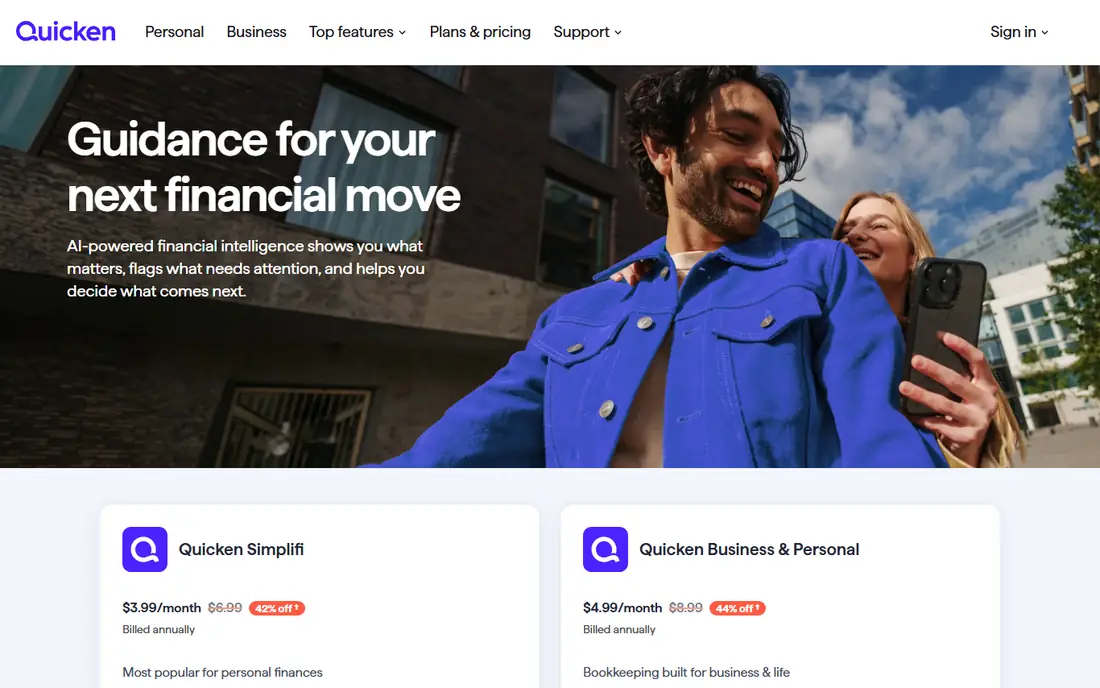
Quicken Classic is the desktop program many households have used for years, now sold in Deluxe, Premier and higher tiers. It handles multiple budgets, debt reduction plans, detailed investment tracking and tax-line reports, and it can pay bills to thousands of US billers. If you keep decades of records, its history and reporting depth are hard to leave.
The downside is the model. You pay annually, and connected downloads depend on an active subscription. Newer users may find Simplifi or Monarch easier to live with day to day. Classic is best for people who want a full desktop ledger and do not mind its older look.
- Deep desktop feature set
- Strong bill pay and tax reports
- Decades of bank compatibility
- Desktop-first design
- Subscription required to keep downloads working
- Interface shows its age
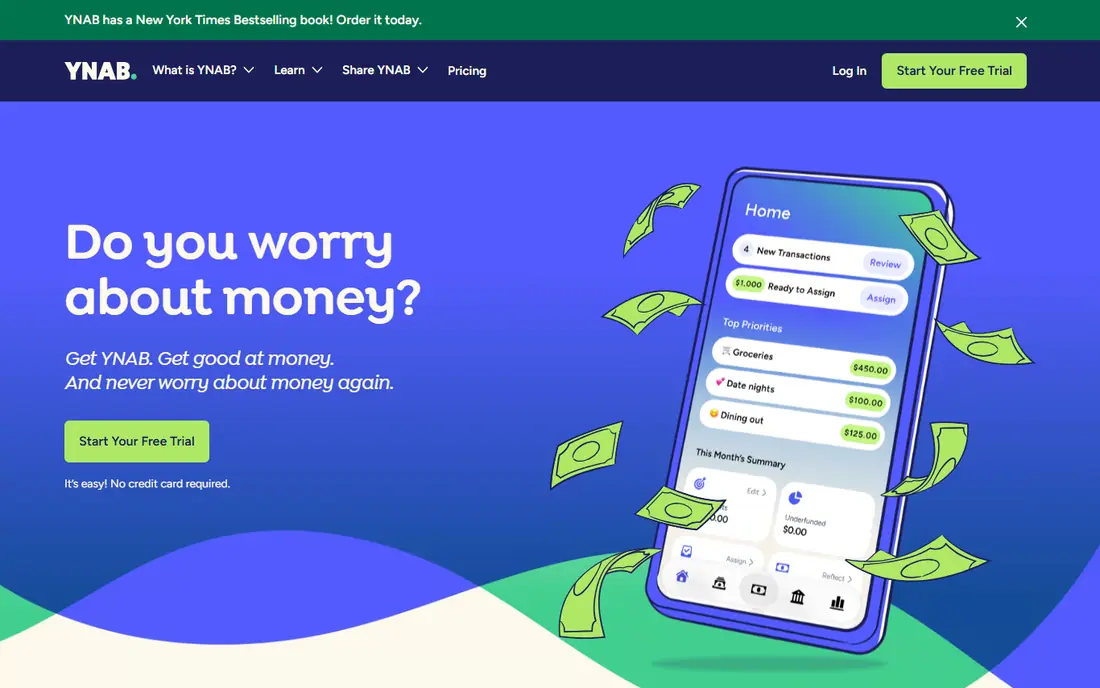
YNAB, short for You Need A Budget, asks you to give every dollar a job before you spend it. That discipline is the point: you plan with money you already have, adjust when life changes, and watch overspending move money out of another category. A 34-day trial gives you time to learn the method, and annual pricing works out at $109 per year.
YNAB is not a passive tracker, and that is both its strength and its demand. If you will not open it a few times a week, you will not get your moneys worth. Households that stick with it often say it changes spending behavior in a way dashboards do not.
- Proven zero-based method
- Forces a plan for every dollar
- Good debt paydown tools
- No free tier
- Learning curve for new budgeters
- Investment tracking is basic
Monarch Money is the closest thing to a modern Mint successor, built for households that share money. It connects to thousands of institutions, tracks budgets, cash flow, investments and net worth, and lets partners share one view without extra seat charges on the Core plan. Core costs $14.99 per month or $99.99 per year, with a 7-day trial.
Monarch is less strict than YNAB, which suits couples who want a shared picture rather than a daily discipline routine. The newer Plus tier at $199 per year adds forecasting and planning tools most households can skip. Start with Core unless you know you need the extras.
- Clean shared dashboard
- Flexible budgets
- Strong investment and net worth views
- No free tier
- Monthly price matches YNAB
- Some features sit on a higher Plus tier
Copilot Money is built for Apple households, with iPhone, iPad, Mac and web apps and no Android version. It syncs accounts automatically, categorizes transactions well, and presents spending in clean charts that make a monthly review painless. Pricing is $13 per month or $95 per year, with about a month of trial.
The design is the selling point, and the limit is the platform. Android users should rule it out at once, and couples who want separate logins will find Monarch stronger. For a solo Apple user who wants tracking to feel effortless, it is a fine choice.
- Beautiful, fast interface
- Smart categorization
- Good subscription tracking
- No Android app
- No free tier
- Household sharing is limited
Tiller feeds bank transactions into Google Sheets or Microsoft Excel automatically, then lets you build exactly the budget you want. Its Essentials plan starts at $59 per year, with Core at $99 per year adding more institutions and spreadsheets. A 30-day trial lets you test your bank connections.
This is the pick for people who already live in spreadsheets and distrust app dashboards. You get total control over categories, reports and charts, but you also get total responsibility for building them. If you want an app that tells you what to do, pick Simplifi or Monarch instead.
- Bank feeds into Google Sheets or Excel
- Fully customizable templates
- Strong community templates
- No dedicated mobile app
- You build your own dashboards
- Spreadsheet skills needed
PocketSmith stands out for looking forward rather than backward. Its forecasts project your bank balance months or years ahead, and scenario tools let you model a job change, a mortgage or a big purchase. A free tier covers manual imports and limited budgets, while Foundation with automatic feeds starts at $14.95 per month.
The interface takes longer to learn than Simplifi or Monarch, and it rewards users who enjoy planning. If your main question is whether you can afford a decision six months from now, PocketSmith answers it better than any dashboard on this list.
- Long-range cash forecasts up to decades
- Scenario planning
- Free tier for manual use
- Interface is dense
- US bank feed coverage varies
- Paid tiers are pricey
Moneydance is a desktop finance program for people who want their data on their own computer rather than in a cloud dashboard. It covers accounts, budgets, investments, reminders and reports, and it supports multiple currencies for households with accounts abroad. Pricing is a one-time purchase model with a trial, so check the current price on the vendor site before buying.
The trade-off is convenience. Automatic downloads work well with some banks and poorly with others, and the mobile companion is not a full app. For privacy-minded users who are happy to import files by hand, that is a fair exchange.
- Desktop software with no required subscription for basic use
- Strong privacy story
- Handles investments and multiple currencies
- Interface feels dated
- Bank sync depends on your bank supporting direct connections
- Mobile app is limited
Goodbudget turns the old cash envelope system into an app. You fill envelopes for groceries, rent, transport and savings at the start of the month, and spending drains the envelope until it is empty. The free plan includes 10 regular envelopes, 10 annual envelopes, one account and two devices, which is enough to test the method properly.
Premium at $10 per month or $80 per year removes the caps and adds bank sync for US banks. Note that even Premium is manual-first compared with Simplifi or Monarch. Couples who want a shared, simple system and do not mind entering transactions will like it.
- Genuine free tier
- Envelope method prevents overspending
- Syncs across household devices
- Free tier caps envelopes and accounts
- Bank sync needs Premium
- Manual entry by default
Empower, formerly Personal Capital, offers a free dashboard that pulls checking, savings, credit cards, loans and investments into one net worth view. Its retirement planner and investment fee analyzer are stronger than anything else free on this list, which makes it a good companion to a budgeting app rather than a replacement for one.
The catch is the business model. Empower sells wealth management services, so free users should expect occasional adviser outreach. If you can ignore that, it is the best free way to watch your overall financial picture.
- Free dashboard
- Strong investment and retirement planning views
- Net worth across all accounts
- Not a full budgeting app
- Expect wealth management marketing
- No envelope budgeting
How we picked these
We compared official pricing pages, feature lists and public reviews for software that US households can use in 2026 to budget, track accounts or plan cash flow. We excluded Mint, which shut down, and apps that only track investments or only find subscriptions. Prices are starting prices checked in October 2026, and introductory offers change often, so confirm the renewal price before subscribing.
How to choose for your household
Match the tool to your habit, not to a feature list. If you will open an app daily and want discipline, YNAB earns its price. If you want a shared dashboard you check weekly, Monarch or Simplifi will serve you better. If you love spreadsheets, Tiller will beat every app here, and if you want to spend nothing, Goodbudget or Empower will cover the basics.
Also check your banks before paying. Connection quality varies by institution, and a tool that cannot sync your main checking account will frustrate you no matter how good its charts look. Use the trial period to connect every account, import a month of history, and run one real budget cycle before committing for a year.
Security and privacy notes
All of the syncing tools here use bank-grade encryption and read-only connections through aggregators, but they still hold a copy of your transaction history. Turn on two-factor authentication, review connected accounts quarterly, and revoke access for tools you stop using. If that trade-off bothers you, Goodbudget free or Moneydance keeps more data in your hands.
Sources
- https://www.quicken.com/products/simplifi/
- https://www.quicken.com/products/classic/
- https://www.ynab.com/pricing
- https://www.monarchmoney.com/pricing
- https://copilot.money/pricing
- https://www.tillerhq.com/pricing
- https://www.pocketsmith.com/pricing
- https://moneydance.com/
- https://goodbudget.com/pricing
- https://www.empower.com/
Frequently asked questions
What is the best home finance software for beginners?
Quicken Simplifi is the easiest capable starting point, since its spending plan does most of the math for you. Goodbudget is the best free starting point if you prefer the envelope method and do not mind manual entry.
Is there good free home finance software?
Yes. Empower is free for net worth and investment tracking, Goodbudget is free for envelope budgeting, and PocketSmith has a free tier for manual tracking. Free tiers usually limit accounts, envelopes or automatic syncing.
Can home finance software replace a financial adviser?
No. These tools track, budget and project, but they do not give regulated personal advice for your situation. For tax, retirement or investment decisions with real stakes, talk to a qualified professional. This article is not financial advice.
What happened to Mint?
Mint shut down in 2024, and its users were pointed toward Credit Karma, which does not offer the same budgeting tools. Monarch Money, Simplifi and Copilot are the most common replacements former Mint users choose.
Should couples share one finance app?
Sharing one dashboard helps when both partners spend from joint accounts, and Monarch and Goodbudget handle sharing well. YNAB also supports shared budgets. If one partner prefers privacy for personal spending, agree on which accounts are shared before connecting everything.