Best Internal Audit Management Software in 2026: 9 Tools Compared
By ToolNimba Editorial Team November 11, 2026 11 min read

- Top pick
 Optro
Large companies running SOX and internal audit
Starting priceSee websiteCheck out OptroRead our review - Runner-up
 TeamMate+
Traditional audit teams wanting proven workflows
Starting priceSee websiteCheck out TeamMate+Read our review - Also great
 Workiva
Connecting audit work to financial reporting
Starting priceSee websiteCheck out WorkivaRead our review
How we researched this
We compared official pricing and feature pages, app store listings, privacy policies and public user reviews. Prices change, so check the provider's site before you pay.
Key takeaways
- Optro, formerly AuditBoard, is our pick for large companies running SOX and internal audit together, because it is built around the audit workflow.
- Most enterprise audit tools do not publish prices, so budget for a quoted annual license and ask what modules and users are included.
- Smaller teams should look at GoAudits or LogicGate first, since enterprise suites can be more tool than a small audit function needs.
- Audit software organizes evidence and testing, but it does not replace auditor judgment or an independent external audit.
Quick comparison
| Name | Best for | Starting price | Free plan | |
|---|---|---|---|---|
| Optro | Large companies running SOX and internal audit | See website | No | Visit |
| TeamMate+ | Traditional audit teams wanting proven workflows | See website | No | Visit |
| Workiva | Connecting audit work to financial reporting | See website | No | Visit |
 ServiceNow Integrated Risk Management | Enterprises already using ServiceNow | See website | No | Visit |
 Archer | Highly regulated firms with complex risk programs | See website | No | Visit |
 LogicGate Risk Cloud | Teams wanting flexible risk workflows | See website | No | Visit |
 MetricStream | Very large enterprises with AI-driven risk programs | $75,000 per year | No | Visit |
 GoAudits | Smaller teams wanting simple checklists and reports | See website | Free trial | Visit |
 Ideagen Internal Audit | Audit teams wanting a dedicated audit platform | See website | No | Visit |
The best internal audit management software
Internal audit software runs the audit cycle: risk-based planning, workpapers, testing, findings, follow-up, and reporting to management and the board. We compared official product pages, pricing pages, and public reviews for tools active in 2026, and we focused on platforms that truly support internal audit rather than generic task tools. Pricing in this category is mostly quote-based, so where a vendor does not publish a price, we wrote See website. AuditBoard rebranded as Optro in March 2026, and we use the new name below, noting the former name so long-time users can follow the change.
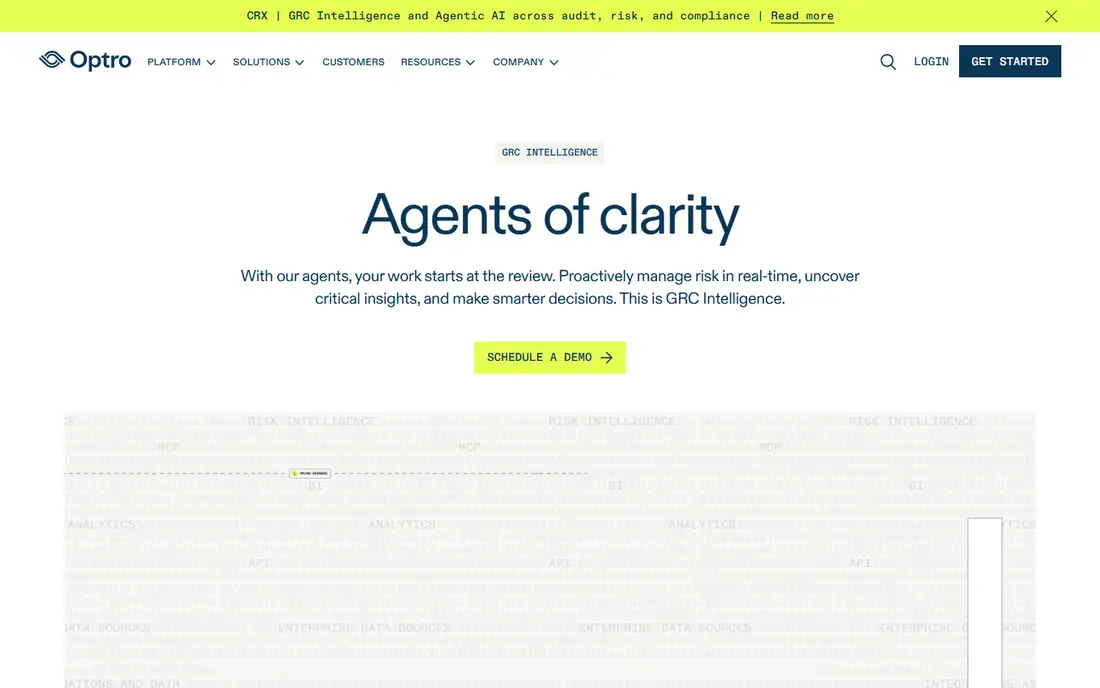
Optro, formerly AuditBoard, is the reference point in this category, and it is built around the internal audit workflow rather than adapted from a generic risk tool. It covers risk-based audit planning, workpapers linked to controls, SOX testing, issue tracking, and reporting, with related modules for enterprise risk and IT compliance. For a public company running a serious SOX program alongside internal audit, that connected design is the main reason to shortlist it first.
The honest catch is scale. Pricing is quoted and implementation suits organizations with real audit complexity, so a small team may pay for breadth it never uses. Smaller firms should weigh whether they need the full platform or a simpler tool. If you run SOX and internal audit together at enterprise scale, Optro is our pick.
- Built around internal audit and SOX
- Connected risk and compliance modules
- Board-ready reporting
- Enterprise pricing and implementation
- Needs scoping for smaller teams

TeamMate+ is one of the most established names in internal audit, with decades of use by large audit departments. It offers audit planning, detailed workpaper templates, and controls that help standardize work across locations, which matters for teams with auditors in several offices or countries. If your team values proven process over flashy design, TeamMate+ is a safe, familiar choice.
The interface is the main complaint, since it feels older than newer cloud tools, and rollout can be slow for large teams. Pricing is also quote-based, so you will need a vendor conversation to budget. For a traditional audit function that wants a dependable, well-understood platform, TeamMate+ remains a strong option.
- Long track record with large audit functions
- Standardized workpaper templates
- Strong governance controls
- Interface feels less modern than newer rivals
- Implementation can take time
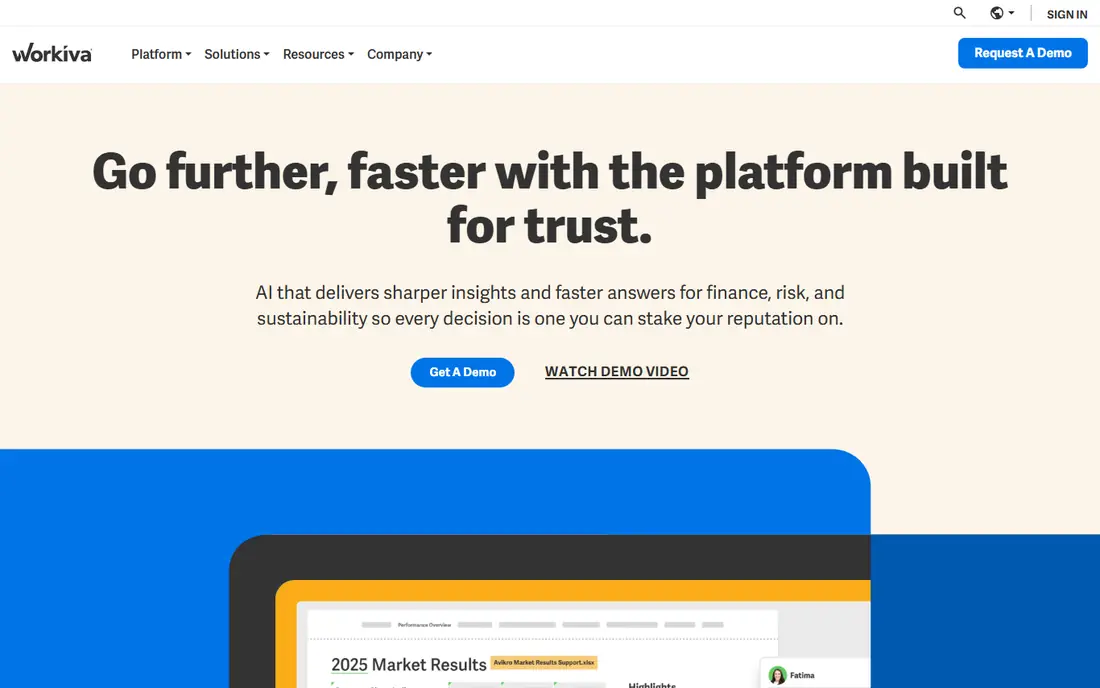
Workiva is best known for financial reporting, and its audit strength comes from connecting audit work directly to the reports and filings that work supports. That link reduces copy-and-paste between systems and makes it easier to trace a number in a report back to the test behind it. Teams that already use Workiva for reporting will find the audit modules a natural extension.
Pricing is quoted, and the platform covers more than audit alone, so scoping matters: be clear about which modules you need and which you do not. For companies where audit and financial reporting must stay tightly linked, Workiva is a compelling choice, even if it is not the cheapest route to basic audit management.
- Links audit evidence to financial reports
- Strong reporting and collaboration
- Used for SOX and regulatory filings
- Quote-based pricing
- Breadth can mean a longer setup
ServiceNow Integrated Risk Management
Best for: Enterprises already using ServiceNow
ServiceNow Integrated Risk Management suits companies that already run ServiceNow for IT or operations, since audit, risk, and compliance work can sit on the same platform and workflows. That shared setup helps when audit findings need to trigger IT or business tasks, and it avoids adding yet another standalone system. The workflow engine is a real strength for routing issues and tracking remediation.
The catch is commitment. If your company does not already use ServiceNow, adopting it just for audit is a large step, and you will need ServiceNow skills in-house or from a partner. Pricing is enterprise and quote-based. For ServiceNow shops, though, this is often the most practical audit option.
- Fits into an existing ServiceNow setup
- Broad risk and compliance coverage
- Strong workflow automation
- Needs ServiceNow expertise to get full value
- Quote-based enterprise pricing
Archer, long known as RSA Archer, is a governance, risk, and compliance suite with strong internal audit support for highly regulated industries such as banking, insurance, and healthcare. Its data model can handle complex risk relationships, third-party risk, and policy management alongside audit work, which suits firms whose audit program is part of a much larger risk effort.
That depth comes with complexity. Archer needs careful configuration, and smaller teams can find it heavy. Pricing is quoted and enterprise-level. If your audit program sits inside a complex, regulated risk function, Archer is worth evaluating. If you only need audit planning and workpapers, a narrower tool will be faster to adopt.
- Deep risk and compliance coverage
- Suited to regulated industries
- Flexible data model
- Complex to configure
- Enterprise pricing and implementation effort
LogicGate Risk Cloud appeals to teams that want to shape their own audit and risk workflows without heavy coding. Business users can build applications for audit planning, issue tracking, and risk assessments, which helps when standard templates do not match how your team actually works. The cloud design feels modern next to older audit tools, and the platform covers risk and compliance beyond audit alone.
Flexibility has a downside: without clear ownership, different teams can build inconsistent workflows, so governance matters. Pricing is quoted, so budget needs a vendor discussion. For mid-sized teams that want to tailor the tool to their process, LogicGate is a flexible and practical pick.
- Business users can build their own workflows
- Flexible risk and audit applications
- Modern cloud design
- Flexibility needs governance to stay consistent
- Quote-based pricing
MetricStream is built for very large enterprises running broad governance, risk, and compliance programs, with internal audit as one part of that whole. Its AI-driven features aim to surface risk patterns across large data sets, and the platform handles the scale and complexity that global firms face. Published comparisons put its starting price around $75,000 per year, which signals the enterprise market it serves.
That price and scale rule it out for most small and mid-sized audit teams. Implementation for a large deployment also takes time and planning. If you run a global, multi-entity audit and risk program and need a platform that can grow with it, MetricStream belongs on the shortlist. For smaller programs, look elsewhere first.
- Broad enterprise GRC coverage
- AI-driven risk features
- Suited to very large programs
- High starting price
- Implementation effort for large deployments
GoAudits is the accessible end of this list: it helps teams run audits with customizable checklists, real-time data collection, instant reports, and corrective actions, without the weight of an enterprise suite. That simplicity suits smaller audit teams, operational audits, and firms that need to move from spreadsheets to a proper tool quickly. A free trial lets you test the workflow before committing.
The limit is depth. GoAudits does not match Optro or TeamMate+ for SOX programs, complex risk planning, or enterprise reporting. If your audit work is mostly operational checks and site audits, that may not matter. For a small team that wants a fast, affordable start, GoAudits is the most approachable option here.
- Simple checklist and report workflow
- Fast to start
- Lower cost than enterprise suites
- Less depth for SOX and enterprise risk
- Not a full GRC platform
Ideagen Internal Audit
Best for: Audit teams wanting a dedicated audit platform
Ideagen Internal Audit is a dedicated audit platform from a vendor with a broad compliance and quality background. It covers risk-based audit planning, fieldwork, findings, and reporting, and it suits audit teams that want a focused tool without buying a full GRC suite. Ideagen's wider product range also helps firms that need quality or safety tools alongside audit.
Pricing is quoted, and Ideagen is less prominent in US audit discussions than Optro or TeamMate+, so ask for US references and a demo matched to your audit types. For teams that want a dedicated audit tool from an established compliance vendor, Ideagen is a solid alternative to the two market leaders.
- Dedicated internal audit focus
- Risk-based planning and reporting
- Established vendor in compliance
- Quote-based pricing
- Less well known in the US than Optro or TeamMate+
How we picked these
We compared official product pages, pricing information, and public reviews for audit management tools active in 2026. We favored platforms with real internal audit features, such as risk-based planning, workpapers, findings tracking, and reporting, rather than generic project tools. Where a vendor does not publish pricing, we wrote See website, and we noted the AuditBoard to Optro rebrand so readers are not confused by older articles. We did not test these enterprise tools hands-on, and we based our judgment on vendor documentation and public user feedback.
What to check before you buy
Start with your audit types. A SOX program needs control testing and evidence links that an operational checklist tool may not provide, while a site audit program needs mobile checklists and fast reporting more than GRC depth. Map your top three audit workflows and ask each vendor to demo those exact flows, not a generic sales presentation.
Pricing and users
Enterprise pricing usually depends on modules and user counts, so get a written quote that lists what is included and what costs extra. Ask about implementation fees, training, and renewal terms, since year-two price rises are common in this category. Also confirm who counts as a user, since auditor, reviewer, and read-only roles are often priced differently.
Migration and reporting
Ask how your existing workpapers, templates, and findings will move into the new tool, and what reporting the board will actually receive. A tool that cannot produce a clear audit committee report will create extra work, no matter how good its fieldwork features are. Test the export options too, so you are not locked in if you switch later.
Sources
Frequently asked questions
What is the best internal audit management software?
For large companies running SOX and internal audit, Optro is our top pick, with TeamMate+ close behind for traditional audit teams. Smaller teams may do better with GoAudits or LogicGate, depending on whether they need simple checklists or flexible workflows.
What is the best audit management software for small teams?
GoAudits is the most approachable option for small teams, thanks to its simple checklist workflow and trial. LogicGate is a good step up if you want more flexibility without enterprise pricing. Enterprise suites like Optro and MetricStream are usually more tool than a small team needs.
How much does internal audit software cost?
Most enterprise tools are quote-based, with mid-market programs often running into five figures per year and large SOX programs much higher. MetricStream lists a starting point around $75,000 per year in published comparisons. Smaller tools cost far less, so get a written quote for your user count and modules.
Did AuditBoard change its name?
Yes, AuditBoard rebranded as Optro in March 2026, and the platform continues under the new name. Older articles and reviews that mention AuditBoard refer to the same product line, now sold as Optro.
Can audit software replace an external audit?
No, audit software prepares evidence, organizes testing, and tracks issues, but an external audit opinion must come from an independent, qualified auditor. The software makes the audit easier and better organized, but it does not replace professional judgment or independence.
What features matter most in audit software?
Risk-based planning, workpapers linked to controls, findings and remediation tracking, and board-ready reporting matter most for most teams. Mobile checklists matter for site audits, while SOX teams should prioritize control testing and evidence links. Pick the tool that handles your top workflows well, not the one with the longest feature list.