Best Internet Service in 2026: 9 Providers Compared
By ToolNimba Editorial Team November 9, 2026 10 min read

- Top pick
 Google Fiber
Best overall fiber
Starting price$70 per monthCheck out Google FiberRead our review - Runner-up
 AT&T Fiber
Widely available fiber
Starting price$55 per monthCheck out AT&T FiberRead our review - Also great
 Verizon Fios
Reliable fiber for the Northeast
Starting price$49.99 per monthCheck out Verizon FiosRead our review
How we researched this
We compared official pricing and feature pages, app store listings, privacy policies and public user reviews. Prices change, so check the provider's site before you pay.
Key takeaways
- Fiber is the best choice when you can get it, because it usually offers equal upload and download speeds and no data cap.
- Google Fiber and AT&T Fiber stand out for simple pricing, while Xfinity and Spectrum win on sheer availability in many towns.
- Promotional prices change after the first year, so always ask for the standard rate, equipment fees, and contract terms before you sign.
- T-Mobile Home Internet and Starlink fill gaps where wired service is weak, but speeds vary more with location and network load.
Quick comparison
| Name | Best for | Starting price | Free plan | |
|---|---|---|---|---|
| Google Fiber | Best overall fiber | $70 per month | No | Visit |
| AT&T Fiber | Widely available fiber | $55 per month | No | Visit |
| Verizon Fios | Reliable fiber for the Northeast | $49.99 per month | No | Visit |
 Xfinity | Widest cable coverage | See website | No | Visit |
 Spectrum | Cable without a data cap | $30 per month | No | Visit |
 T-Mobile Home Internet | No-contract wireless home internet | $50 per month | No | Visit |
 Cox | Cable in the West and South | See website | No | Visit |
 Frontier Fiber | Budget fiber in its footprint | $29.99 per month | No | Visit |
 Starlink | Rural and remote homes | See website | No | Visit |
The best internet service providers
There is no single best internet service for every address in the United States, because availability decides most of the contest before price does. The providers below cover fiber, cable, fixed wireless, and satellite, and we note where each one is strong and where its limits show up.
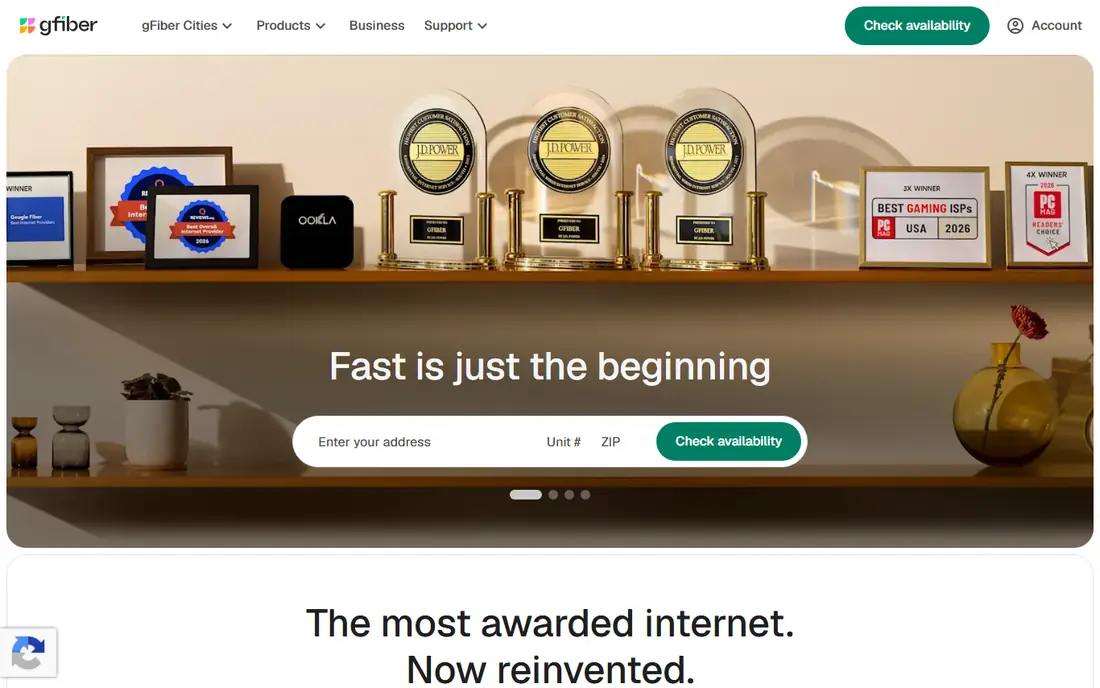
Google Fiber, now often called GFiber, is our pick when it is available at your address. The 1 Gig plan starts at $70 per month with equal upload and download speeds, no data cap, and equipment included. That simple structure avoids the promo-rate jump that makes many other bills hard to predict.
The problem is reach. Google Fiber serves a limited set of cities, so most readers cannot order it at all. If you live in one of those cities, check availability first and move quickly, because it is often the clear winner. If you do not, AT&T Fiber or Verizon Fios are the closest alternatives in their regions.
- Symmetrical gigabit speeds
- No data cap
- Equipment included on the 1 Gig plan
- Available in a small number of cities
- Higher tiers cost more
- No TV bundle for most users
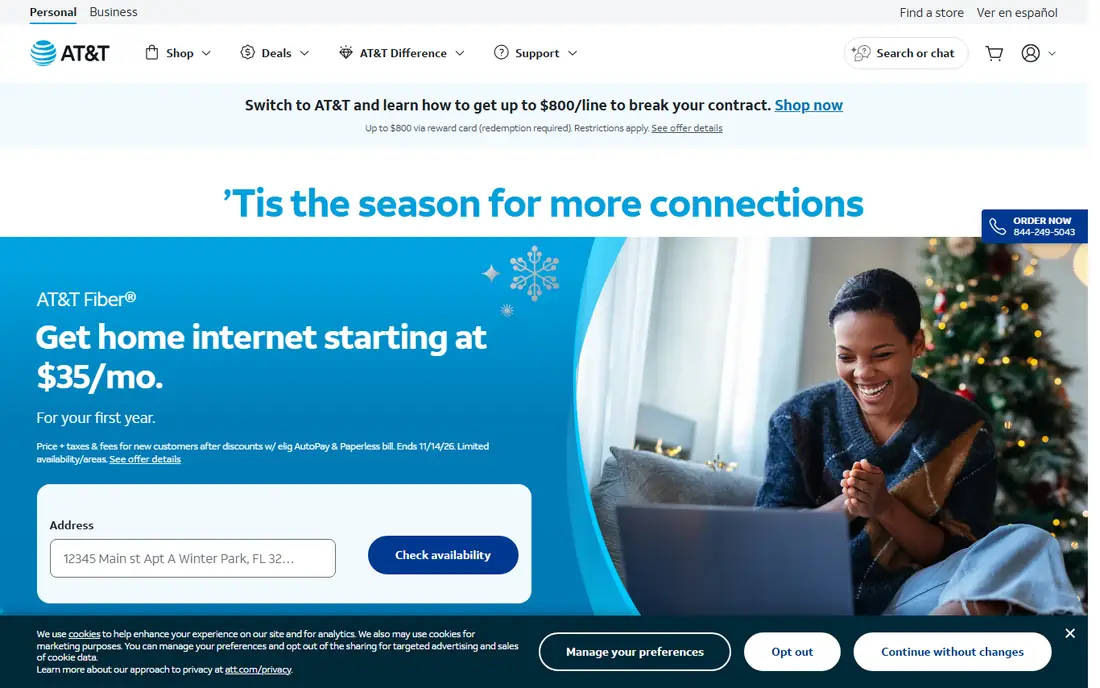
AT&T Fiber covers far more homes than Google Fiber, and its entry fiber plan starts at $55 per month for 300 Mbps. Upload speeds match download speeds on fiber plans, there is no data cap, and equipment is included in the listed price. That makes the monthly bill easier to compare with cable rivals.
Be careful with the address check, because AT&T also sells older internet service in areas without fiber. A home listed as AT&T service may get fiber, fixed wireless, or a much slower connection, depending on the street. Confirm that the quote says fiber before you judge the speed or the price.
- Large fiber footprint
- No data cap
- Equipment included
- Fiber is not available at every AT&T address
- Some areas still use slower DSL
- Prices rise with speed tier
Verizon Fios has a long record for steady fiber performance, and its entry plan starts at $49.99 per month. Like other fiber services, it offers equal upload and download speeds and no data cap, which helps households with video calls, cloud backups, and gaming at the same time. Existing Verizon mobile customers may also get a bundle discount.
Availability is the main limit. Fios is concentrated in the Northeast and Mid-Atlantic, so readers elsewhere should look at AT&T, Google Fiber, or a cable provider instead. Also confirm router costs in your quote, since equipment charges have varied by plan and promotion.
- Symmetrical speeds on fiber
- No data cap
- Strong bundle discounts with Verizon mobile
- Limited mainly to the Northeast and Mid-Atlantic
- Router fees can apply
- Installation may need an appointment
Xfinity is often the default choice simply because it is available. As the largest cable provider in the United States, it reaches homes that fiber has not yet reached, and its download speeds can match fiber on paper for streaming and browsing. Bundles with mobile service can also lower the combined bill.
Cable has two honest drawbacks. Upload speeds are much lower than download speeds, which matters for video calls and large uploads, and many plans carry a 1.2 TB data cap unless you pay for unlimited data. Promo pricing also means the second-year bill can look very different, so get the standard rate in writing.
- Very wide availability
- Fast download tiers
- Frequent bundle deals
- Upload speeds lag downloads on cable
- 1.2 TB data cap in many areas
- Promo prices rise after the term
Spectrum stands out among cable providers for two reasons: it does not impose a data cap, and most plans do not require a contract. Its promotional entry price starts at $30 per month for a year in many areas, with the modem included. For households that stream a lot and hate watching a data meter, that is a real advantage over capped cable rivals.
The usual cable limits still apply. Upload speeds stay well below download speeds, and the price after the promotional year is higher, so the long-term cost is more than the first-year headline. Spectrum is a strong fallback where fiber is absent, but it is not a full substitute for symmetrical fiber.
- No data cap
- No contract on most plans
- Modem included
- Upload speeds are lower than fiber
- Promo price rises after a year
- Advanced WiFi costs extra
T-Mobile Home Internet
Best for: No-contract wireless home internet
T-Mobile Home Internet uses the mobile 5G network to serve a home, which makes it easy to set up and easy to cancel. The standard plan costs $50 per month with equipment included and no annual contract, and the gateway arrives by mail for self-install. Renters and frequent movers often like that flexibility.
Speed is the variable. Real speeds depend on signal strength, tower congestion, and time of day, so one home may stream smoothly while a neighbor struggles. It also suits browsing and streaming better than latency-sensitive gaming. Check the coverage at your exact address, and use any trial or return window to test speeds in the evening.
- No annual contract
- Equipment included
- Simple self-install gateway
- Speeds vary by signal and congestion
- Not ideal for competitive gaming
- Availability depends on network capacity
Cox serves many homes in the West and South where fiber competition is thinner, and it offers tiers up to gigabit downloads in many areas. Bundles with Cox Mobile can reduce the total bill, and the provider has invested in faster cable tiers over time. For households in Cox territory, it is often the main wired choice.
The data cap is the main drawback, since many plans include a 1.2 TB limit with overage or unlimited-data options. Pricing also varies by market, so two cities can see different plans and fees for the same speed. Compare the full bill, including equipment, before you assume Cox is cheaper than a wireless alternative.
- Wide cable footprint in its regions
- Gigabit tiers available
- Bundle options with mobile
- 1.2 TB data cap on many plans
- Prices and fees vary by market
- Upload speeds trail fiber
Frontier Fiber is easy to overlook, but its entry price of $29.99 per month is among the lowest for true fiber in the United States. Fiber plans offer symmetrical speeds and no data cap, which gives budget households a way into fiber without paying gigabit prices. That value is genuine where the network has been upgraded.
Coverage is the catch. Frontier serves only parts of the country, and quality can vary between upgraded fiber neighborhoods and areas still on older lines. As with AT&T, confirm that your address qualifies for fiber, not just for Frontier service in general, and read the plan details for the speed you actually need.
- Low entry price for fiber
- No data cap
- Symmetrical speeds on fiber plans
- Footprint is limited to certain states
- Service history varies by area
- Higher tiers cost much more
Starlink is a satellite service, and it changes the question for rural homes from which provider is fastest to whether fast service is available at all. A dish on a clear patch of sky can deliver usable broadband to homes far from cable or fiber lines, and setup is designed for the customer to do without a technician visit.
It is not a fiber replacement for most suburban homes. Equipment costs are higher than a standard router rental, heavy rain or blocked sky views can interrupt service, and latency is higher than wired fiber. For remote households, though, Starlink is often the difference between workable internet and almost none, and that makes it worth its price in those places.
- Works where wired service does not reach
- Self-install kit
- Improving speeds as satellites launch
- Higher upfront equipment cost
- Weather and obstructions can affect service
- Latency is higher than fiber
How we picked these
We compared official plan pages, pricing disclosures, and coverage information for major United States providers that were active in October 2026, and we focused on starting price, speed, data caps, equipment, and availability. Prices vary by address and promotion, so we list the starting price where it is published and write See website where the provider prices by market. We did not claim hands-on testing we did not do, and we checked that each homepage below belongs to the provider named.
How to choose the right plan for your home
Start with availability, not advertising. Enter your exact address on each provider site, and write down only the plans that site says you can actually order. A gigabit plan that does not serve your street is not a real option, no matter how good the price looks. Then match speed to your household: 100 to 300 Mbps suits most small homes, while large families with many streams, calls, and gamers should look at 500 Mbps or higher.
Read the bill beyond the headline price. Ask for the standard rate after any promotion ends, the equipment fee, installation cost, data cap, and contract length. Fiber usually wins when the price is close, because equal uploads and no cap help every device at once. If only cable or wireless is available, favor no-cap plans and test evening speeds during any return window before you commit for a year.
Sources
Frequently asked questions
Which internet service is the best overall?
Fiber is usually the best type of service, and Google Fiber is our top pick where it is available, followed by AT&T Fiber and Verizon Fios in their regions. The best provider for you still depends on your address, since most homes can only choose from two or three of the providers on this list.
What is a good internet speed for a family?
For most families, 300 Mbps handles streaming, schoolwork, and video calls at the same time, while 500 Mbps to 1 Gbps gives more headroom for large households and heavy uploads. Upload speed matters more than many shoppers expect, especially for video calls, cloud backups, and gaming.
Do I need unlimited data?
Most households stay under 1.2 TB per month, but heavy 4K streaming, large game downloads, and cloud backups can push usage higher. If you stream in 4K on several TVs or back up large files often, a no-cap plan from a fiber or Spectrum connection removes a worry that is worth paying for.
Is 5G home internet as good as fiber?
No, fiber is generally faster and more consistent, with lower latency and equal upload speeds. T-Mobile Home Internet is a strong option where fiber and good cable are missing, and it wins on simplicity and no contract, but speeds vary more with signal and congestion.
Why does my internet price rise after a year?
Many cable and wireless plans use a promotional rate for the first 12 months, then move to a higher standard rate. Fiber providers more often publish a single rate with equipment included, but you should still confirm the price, fees, and contract terms in writing before you sign up.