Best ITSM Software in 2026: 8 Tools Compared
By ToolNimba Editorial Team November 9, 2026 9 min read

- Top pick
 ServiceNow
Large enterprises
Starting priceSee websiteCheck out ServiceNowRead our review - Runner-up
 Freshservice
Mid-market IT teams
Starting price$19 per monthCheck out FreshserviceRead our review - Also great
 Jira Service Management
Dev and Atlassian teams
Starting priceFreeCheck out Jira Service ManagementRead our review
How we researched this
We compared official pricing and feature pages, app store listings, privacy policies and public user reviews. Prices change, so check the provider's site before you pay.
Key takeaways
- The best ITSM tools cover incident, problem, change, service requests and assets in one system, with automation that routes work without manual triage.
- Freshservice and Jira Service Management offer the clearest published pricing for mid-size teams, while ServiceNow suits large enterprises with complex needs.
- Per-agent pricing means your bill follows your technician count, not your total staff, but AI add-ons and automation limits can raise the real cost.
- Start with a trial using your real ticket categories and SLAs, and check reporting, integrations and asset tracking before you sign a contract.
Quick comparison
| Name | Best for | Starting price | Free plan | |
|---|---|---|---|---|
| ServiceNow | Large enterprises | See website | No | Visit |
| Freshservice | Mid-market IT teams | $19 per month | Free trial | Visit |
| Jira Service Management | Dev and Atlassian teams | Free | Yes | Visit |
 ManageEngine ServiceDesk Plus | Budget teams and on-prem | $13 per month | Yes | Visit |
 BMC Helix ITSM | Large enterprises with automation | See website | No | Visit |
 SolarWinds Service Desk | Simple cloud ITSM | $39 per month | Free trial | Visit |
 SysAid | AI-first service management | $89 per month | Free trial | Visit |
 HaloITSM | All-in-one ITIL licensing | $49 per month | Free trial | Visit |
The best ITSM software
We compared official pricing pages, feature documentation and public reviews for tools that handle the full service lifecycle. The list below mixes enterprise platforms with mid-market and budget options, so a team of three and a team of three hundred can both find a fit.
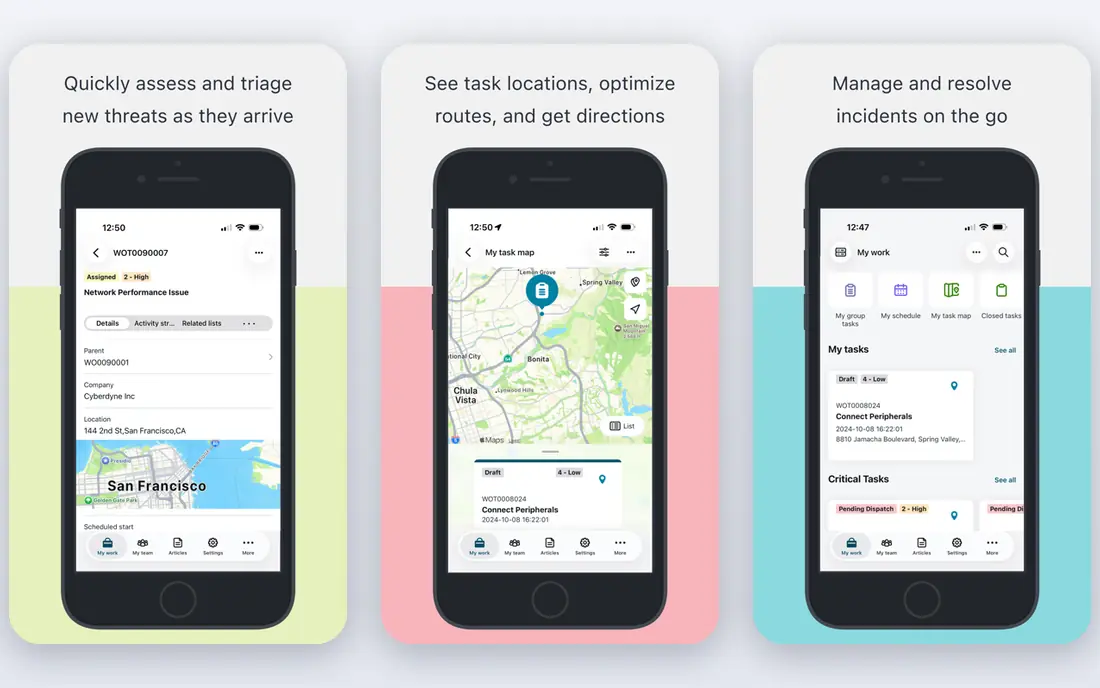
ServiceNow is the platform large organizations standardize on when their service processes span many teams, countries and compliance regimes. Incident, problem, change, asset and configuration management run on one data model, and the same platform extends into HR, security operations and custom applications. AI features, sold under the Now Assist name, help classify tickets and draft responses.
The cost is not just the license. Implementation takes months, contracts usually run for years with minimum license counts, and most deployments need specialist administrators. For a small IT team, ServiceNow is almost always more system than the job requires. Buy it when your complexity genuinely exceeds what mid-market tools handle.
- Deepest workflow and process modeling
- Wide module ecosystem beyond ITSM
- Strong enterprise references
- Quote-only pricing with multi-year contracts
- Needs dedicated admins and often an implementation partner
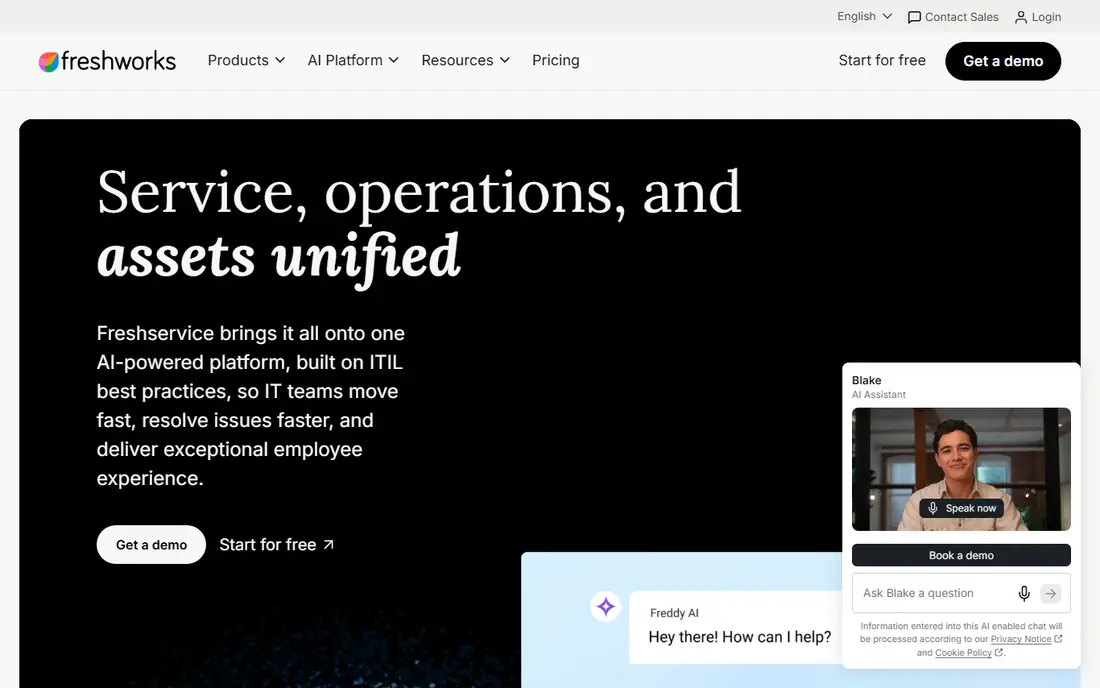
Freshservice is our pick for most mid-size teams because it balances ease of use with real ITSM depth. Ticketing, a self-service portal, knowledge base, SLA management and asset tracking come in one product, and most teams can get basic ticketing running quickly without a dedicated administrator. The Starter plan starts at 19 dollars per agent per month on annual billing.
The catch is in the extras. AI capabilities and higher automation volumes sit on paid add-ons or higher tiers, so check what your plan includes before you rely on it. Even with that caveat, Freshservice remains the most turnkey option for a team that wants strong asset tracking without a long project.
- Fast setup with built-in asset management
- Clear published pricing
- Freddy AI for triage and suggestions
- No free plan, only a trial
- Some AI features and automation capacity cost extra

Jira Service Management is the natural choice if your organization already lives in Atlassian tools. Service requests link directly to development work in Jira, knowledge articles live in Confluence, and engineers can see incidents in context. The free plan covers up to three agents, which makes it easy to trial with a real team.
Paid plans start around 20 dollars per agent per month and climb for Premium and Enterprise tiers, where advanced AI and asset limits improve. Teams outside the Atlassian world may find the interface more developer-shaped than service-desk-shaped. If your IT and engineering teams already share Jira, that shared context is a strong reason to choose it.
- Free for up to 3 agents
- Tight Jira and Confluence integration
- Virtual agent and AI features on higher tiers
- Pricing rises steeply at higher tiers
- Asset and AI limits vary by plan
ManageEngine ServiceDesk Plus
Best for: Budget teams and on-prem
ManageEngine ServiceDesk Plus is the budget pick that still takes ITSM seriously. It covers incident, problem, change, asset and project management, and it offers both cloud and on-premise deployment, which matters for organizations with data residency rules. A free edition supports up to five technicians, and paid cloud plans start from around 13 dollars per technician per month.
The interface is less polished than Freshservice or Jira Service Management, and setup takes more clicking through settings. For teams that care about cost and control more than looks, that trade is easy to accept. It is also a sensible choice for schools, public bodies and small firms with tight budgets.
- Free edition for up to 5 technicians
- On-prem and cloud deployment
- Broad ITIL coverage at a low price
- Interface feels dated next to newer rivals
- Some AI features need higher editions
BMC Helix ITSM pairs traditional ITIL processes with automation and predictive analytics that aim to spot problems before users report them. Large enterprises use it to run service operations across complex estates, with integrations into monitoring and operations tools. Its AI features focus on cognitive automation, such as routing, categorization and resolution suggestions.
Like ServiceNow, BMC Helix is sold on quote and needs real implementation effort. Smaller teams should not shortlist it unless they already use BMC tools or need its specific automation depth. For large, complex service operations, it is a credible enterprise alternative to ServiceNow.
- Strong automation and predictive capabilities
- Proven at enterprise scale
- Broad ITOM and service management integration
- Quote-only pricing
- Implementation and administration need experienced staff
SolarWinds Service Desk is built for teams that want a working service desk without a long project. It runs in the cloud, supports unlimited requesters so the whole company can raise tickets without per-user fees, and covers incident, service request, asset and change basics. Pricing starts at around 39 dollars per technician per month.
The starting price is higher than some mid-market rivals, so compare the tier that includes the features you actually need, not just the entry tier. For a team that values simplicity and fast rollout over deep customization, SolarWinds is a solid, low-drama choice.
- Quick cloud deployment
- Unlimited requesters on paid plans
- Clear ticketing and asset basics
- Higher starting price than Freshservice
- Advanced AI sits on higher tiers
SysAid positions itself as an AI-first service platform, with prebuilt agents that handle routine tickets, categorization and self-service. Asset management is included in the base offering, and deployment is simpler than the big enterprise platforms. The Professional plan starts at around 89 dollars per agent per month.
That price puts SysAid above Freshservice and Jira Service Management for a similar seat count, so the AI features need to earn their keep in your trial. Track how many tickets the AI resolves or deflects during the trial period. If the automation numbers are strong, the premium may pay for itself in agent time.
- Built-in AI agents and Copilot features
- Asset management included
- Simpler deployment than enterprise rivals
- High starting price per agent
- Enterprise tier is quote-only
HaloITSM takes a different pricing approach: one tier that includes the CMDB, asset management and AI features, rather than splitting them across many add-ons. That makes budgeting simpler, since you are less likely to discover a needed feature behind an extra fee. It also supports both cloud and on-premise deployment and offers deep customization for teams with unusual processes.
The trade-off is a smaller ecosystem than ServiceNow or Atlassian, so check integrations with your existing monitoring, identity and collaboration tools before you commit. For teams that want full ITIL coverage without a maze of add-on pricing, HaloITSM is a strong mid-market option.
- Single tier with CMDB and AI included
- Cloud and on-prem options
- Strong customization options
- Per-agent pricing still adds up for large teams
- Smaller partner ecosystem than the biggest vendors
How we picked these
We compared official pricing pages, product documentation and public reviews for tools that cover incident, problem, change, service request and asset management. We favored products with published pricing where available, and marked quote-only products as See website. We kept a mix of enterprise, mid-market and budget tools, and we noted where AI features or automation capacity cost extra.
What to check before you buy
Start from your ticket volume, technician count and must-have processes, not from a feature checklist. A tool with every ITIL process means little if agents find ticket creation slow or if requesters avoid the portal. Run a trial with real categories, real SLAs and real knowledge articles, and watch how long a ticket takes from creation to first response.
Pricing needs careful modeling. Confirm whether the price is per agent or per technician, whether requesters are free, and whether AI, automation and asset limits are included. Ask about implementation help, data migration from your current tool and contract length. A cheaper monthly price with a three-year lock-in can cost more than a flexible plan.
Plan the rollout in stages
Roll out ticketing and the portal first, then add change management, asset tracking and automation in later stages. Each stage needs owners, training and a way to measure success, such as first-response time or portal adoption. Teams that try to launch everything at once often end up with a half-configured system that agents work around.
Do not skip reporting
Good reporting is what turns a ticket queue into a service improvement plan. Check that you can report on volume by category, SLA breaches, repeat incidents and customer satisfaction without exporting to a spreadsheet. If reporting needs a separate business intelligence tool, factor that cost and effort into your decision.
Sources
Frequently asked questions
What is the best ITSM software?
For most mid-size teams, Freshservice or Jira Service Management offer the best balance of features, price and setup speed. Large enterprises with complex, regulated processes should shortlist ServiceNow and BMC Helix. Budget teams should look at ManageEngine ServiceDesk Plus, which covers the core ITIL processes at a low price.
What are the best ITSM tools for small teams?
Jira Service Management is free for up to three agents, and ManageEngine ServiceDesk Plus has a free edition for up to five technicians. Freshservice is a good paid step up when you need stronger asset management and automation. Start small, and only pay for AI add-ons once ticket volume justifies them.
What is the top ITSM software for enterprises?
ServiceNow is the most widely adopted enterprise ITSM platform, with the deepest workflow modeling and the largest module ecosystem. BMC Helix is the main alternative for enterprises that want strong automation and predictive capabilities. Both need implementation effort and quote-based contracts, so run a structured proof of concept before you sign.
How much does ITSM software cost?
Mid-market tools typically charge 13 to 49 dollars per agent or technician per month, while enterprise platforms are quote-only and often run into six figures a year for large deployments. Remember that AI add-ons, automation limits and implementation services can add to the headline price, so model the total cost at your actual team size.
What is the best IT service management platform for asset tracking?
Freshservice, SysAid and HaloITSM all include asset management in their core offering, which suits teams tracking laptops, licenses and contracts. ManageEngine ServiceDesk Plus also covers assets, including on its lower tiers. Check whether asset counts are capped on your plan, since caps can force an upgrade as your estate grows.