Best Marketing Attribution Software in 2026: 9 Tools Compared
By ToolNimba Editorial Team November 11, 2026 10 min read

- Top pick
 HubSpot
Teams already using HubSpot CRM
Starting priceSee websiteCheck out HubSpotRead our review - Runner-up
 Google Analytics 4
Free baseline attribution
Starting priceFreeCheck out Google Analytics 4Read our review - Also great
 Triple Whale
Shopify ecommerce brands
Starting price$219 per monthCheck out Triple WhaleRead our review
How we researched this
We compared official pricing and feature pages, app store listings, privacy policies and public user reviews. Prices change, so check the provider's site before you pay.
Key takeaways
- Attribution tools differ sharply by buyer: ecommerce tools focus on ad spend and orders, while B2B tools focus on pipeline and closed revenue.
- Google Analytics 4 gives a free starting point, but it does not replace a dedicated tool for teams that need account-level or revenue reporting.
- Published prices are rare in this category, so budget for a sales quote on most tools except a few with clear entry plans.
- The best tool is the one that connects cleanly to your ad platforms, CRM and website data, since weak data produces weak attribution.
- Multi-touch models, media mix modeling and incrementality testing answer different questions, so check which method each tool actually uses.
Quick comparison
| Name | Best for | Starting price | Free plan | |
|---|---|---|---|---|
| HubSpot | Teams already using HubSpot CRM | See website | No | Visit |
| Google Analytics 4 | Free baseline attribution | Free | Yes | Visit |
| Triple Whale | Shopify ecommerce brands | $219 per month | Yes | Visit |
 Northbeam | High-spend ecommerce advertisers | $1500 per month | No | Visit |
 Rockerbox | Multi-touch plus modeling in one tool | See website | No | Visit |
 Dreamdata | B2B teams needing account attribution | See website | Yes | Visit |
 Ruler Analytics | Lead and call attribution for smaller teams | $400 per month | No | Visit |
 Wicked Reports | Direct response and ecommerce advertisers | $499 per month | No | Visit |
 HockeyStack | B2B revenue teams wanting one view | See website | No | Visit |
The best marketing attribution software
The best marketing attribution software shows which channels and campaigns lead to revenue, not just clicks. These nine tools cover free analytics, ecommerce attribution and B2B revenue reporting, so you can match the tool to your sales cycle.
HubSpot suits teams that already run marketing, sales and service in HubSpot, because attribution sits on the same contact and deal records. That link makes it easier to connect a first website visit to a later closed deal without a separate data project. Marketing Hub reports can show multi-touch revenue attribution for campaigns, ads and content.
The limit is tiering. Deeper attribution features sit on higher Marketing Hub plans, and costs grow with contacts and added hubs. A team that only needs HubSpot for attribution, without the wider CRM, may find a specialist tool cheaper. If HubSpot is already your system of record, though, the built-in reporting is a strong advantage.
- Attribution built into the CRM
- Contact and deal data in one place
- Wide marketing tools
- Attribution depth depends on the HubSpot tier
- Pricing rises with contacts and hubs
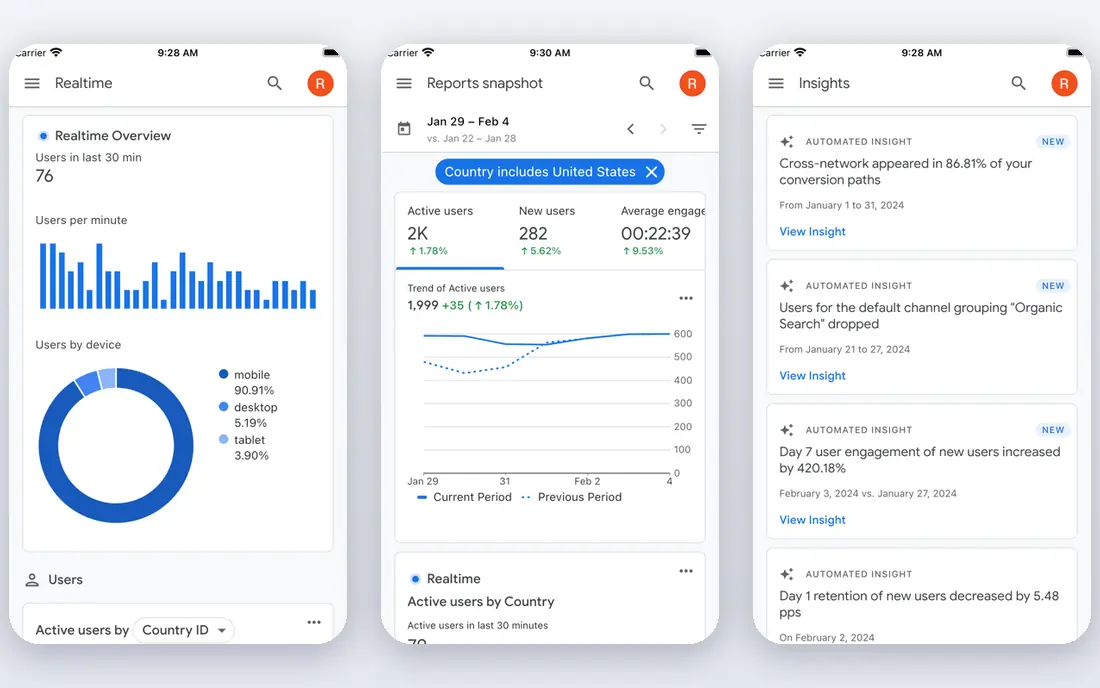
Google Analytics 4 is the right starting point for most teams, because it is free and already tracks website traffic, conversions and campaign sources. Its data-driven attribution model spreads credit across touchpoints based on observed patterns, which is more useful than last-click alone. For small teams with short sales cycles, it may be all they need.
The weakness shows up in B2B sales. Google Analytics 4 does not naturally link website visits to long CRM deals, offline sales or account-level journeys without extra work. Teams that need pipeline reporting, account attribution or ad platform write-back will likely need a dedicated tool alongside it, not instead of basic analytics.
- Free
- Data-driven attribution model
- BigQuery export available
- Widely used
- Limited CRM and revenue depth
- Setup and event design take care
Triple Whale is built for Shopify brands that want ad spend, orders, profit and attribution in one dashboard. It connects common ad platforms and store data, so a brand can compare channel performance against real orders rather than platform-reported conversions alone. Forecasting and creative reporting add context for budget decisions.
Pricing depends on annual store revenue and package, so a growing store should confirm which band it falls into before budgeting. Non-Shopify stores get less value, since the product is designed around Shopify data. For a Shopify brand with meaningful ad spend, the combined view is the main selling point.
- Shopify-focused dashboards
- Attribution plus profit and forecasting tools
- Free plan available
- Pricing rises with store revenue
- Best fit is Shopify stores
Northbeam targets ecommerce brands that spend heavily across several paid channels and need a modeled view of what works. It combines click-based tracking with cross-channel modeling, and higher plans add media mix modeling for budget planning. That blend helps teams that distrust any single ad platform report on its own.
The price puts it out of reach for small stores. Starter pricing starts at a level that only makes sense when ad spend is large enough for better allocation to repay the fee. Smaller brands should start with a cheaper tool and revisit Northbeam once spend and channel mix justify the cost.
- First-party multi-touch attribution
- Media mix modeling on higher plans
- Cross-channel dashboards
- High entry price
- Aimed at brands with large ad budgets
Rockerbox stands out because it offers several measurement methods in one platform, including multi-touch attribution, media mix modeling and incrementality testing. That range helps teams that want to cross-check results rather than rely on one model alone. It also supports sending conversion data back to ad platforms, which can improve bidding.
As a quote-based enterprise-style tool, it is not a quick self-serve purchase. Setup, tracking and data quality work matter, and smaller teams may find the scope more than they need. For mid-size and larger advertisers with complex channel mixes, the method range is a genuine advantage.
- Covers multi-touch, media mix and incrementality methods
- Strong data integrations
- Sends data back to ad platforms
- Pricing is quote-based
- Setup needs data and tracking care
Dreamdata is designed for B2B teams with long sales cycles and several contacts at one account. It stitches touchpoints from different people into a single deal journey, which matters when a deal closes months after the first ad click. That account view helps marketing teams show pipeline influence, not just lead counts.
The free plan gives smaller B2B teams a way to start, while paid plans are quoted based on needs. Setup still requires clean CRM, ad and website data, and teams without that foundation will get weaker results. For B2B SaaS and service firms with Salesforce or HubSpot data, it is one of the clearest B2B options.
- B2B account-level journeys
- Free plan available
- Links spend to pipeline and revenue
- Paid pricing is quote-based
- Setup needs CRM and ad connections
Ruler Analytics fits lead generation businesses that get enquiries by phone and form and need to know which campaigns produced paying customers. It tracks visitors, calls and forms, then links them to CRM revenue where possible. That closed-loop view is valuable for agencies, local services and B2B firms with offline sales steps.
It is not a media mix modeling platform for large ecommerce brands, and the entry price is meaningful for a very small business. For a lead-driven team that currently guesses which campaigns work, however, the ability to follow a call back to its source often justifies the cost quickly.
- Links calls and forms to revenue
- Useful for lead generation businesses
- Clear lead-level tracking
- No free plan
- Less suited to large ecommerce modeling
Wicked Reports appeals to direct response advertisers who want first-party, click-based attribution tied to orders and leads. It focuses on showing which ads and emails produced revenue over days and weeks, rather than only same-day conversions. That longer view helps brands that sell through email follow-ups and repeat purchases.
The entry price means it fits established advertisers better than new stores testing their first campaigns. Teams should also check integrations with their ad platforms, email tool and store or CRM before buying, since attribution quality depends on those connections.
- First-party click-based attribution
- Strong for direct response
- Clear order and lead tracking
- No free plan
- Entry price suits established advertisers
HockeyStack gives B2B revenue teams a single view from first touch to closed revenue, pulling in marketing, CRM and product usage data. That breadth helps teams see how content, ads and product activity together influence deals, rather than viewing each channel in isolation. Visual journey and account reports make the story easier to share with sales leaders.
Like other B2B attribution tools, it works best when CRM data is clean and complete. Pricing is quote-based, so budget planning needs a sales conversation. For a B2B team that already tracks pipeline carefully, HockeyStack can turn scattered touchpoints into a clearer revenue picture.
- Combines marketing, sales and product data
- Account-level revenue view
- Visual journey reports
- Pricing is quote-based
- Best value needs solid CRM data
How we picked these
We compared official product and pricing pages, recent attribution comparisons and vendor documentation in October 2026. We favored tools that connect ad spend to orders or CRM revenue, offer more than last-click reporting, and serve a clear buyer type, whether ecommerce or B2B. We used See website where pricing is quote-based, and we noted free plans only where a vendor lists one, rather than assuming a trial counts as free.
How to choose an attribution tool
Start with your sales cycle. Ecommerce brands with short purchase paths need order-level attribution and ad platform connections, while B2B teams need account journeys, CRM links and pipeline reporting. A tool built for one cycle will frustrate the other, no matter how good its dashboards look.
Next, audit your data before you buy. List your ad platforms, website analytics, CRM, email tool and any offline sales steps such as calls. Ask each finalist how it connects to those sources, how it handles consent and privacy rules, and whether it writes conversion data back to ad platforms. A tool that cannot ingest your main revenue source will not give a trustworthy answer.
Finally, test with a clear question. Pick one decision, such as whether to shift budget from paid social to paid search, and see whether the tool answers it with data you trust. Compare its view with your CRM or order records for a sample of deals. If the numbers do not line up, fix tracking first, since no model can repair missing or duplicate data.
Sources
Frequently asked questions
What is marketing attribution software?
Marketing attribution software assigns credit for a sale or deal to the marketing touchpoints that led to it, such as ads, emails, search and content. It goes beyond last-click reporting by showing earlier touches that started or advanced the journey. The goal is to help teams shift budget toward channels that truly drive revenue.
Is multi-touch attribution better than last-click attribution?
Multi-touch attribution usually gives a fairer picture than last-click, because it credits earlier touches as well as the final click. Last-click alone often overvalues bottom-of-funnel channels and undervalues awareness and research content. That said, no model is perfect, so many teams cross-check multi-touch results with media mix modeling or incrementality tests.
How much does marketing attribution software cost?
Costs range from free for Google Analytics 4 to a few hundred dollars per month for smaller specialist tools, and thousands per month for high-spend ecommerce or enterprise platforms. Many tools price by quote based on data volume, ad spend or revenue. Always confirm what counts toward the price tier before signing.
Do I need attribution software if I already use Google Analytics?
Google Analytics 4 is enough for many small teams, especially with short sales cycles and online-only sales. You may need a dedicated tool if you sell through a CRM with long cycles, take orders by phone, need account-level B2B reporting, or want to send revenue data back to ad platforms. Start with analytics and add a specialist tool when a specific reporting gap appears.
What is the difference between attribution and media mix modeling?
Attribution tracks individual user journeys and assigns credit to touchpoints, while media mix modeling uses aggregate spend and sales data to estimate channel impact over time. Attribution works well for digital journeys with clear tracking, while modeling helps when tracking is limited or offline channels matter. Many larger teams use both methods together.