Best Merchant Services for Small Business in 2026: 9 Services Compared
By ToolNimba Editorial Team November 12, 2026 10 min read

- Top pick
 Square
All-in-one in-person and online
Starting priceFreeCheck out SquareRead our review - Runner-up
 Stripe
Online and developer-friendly payments
Starting priceFreeCheck out StripeRead our review - Also great
 Helcim
Transparent interchange-plus pricing
Starting priceFreeCheck out HelcimRead our review
How we researched this
We compared official pricing and feature pages, app store listings, privacy policies and public user reviews. Prices change, so check the provider's site before you pay.
Key takeaways
- Square and Stripe are the simplest starts, with no monthly fee and published flat rates you can check before you sell.
- Helcim suits growing businesses that want interchange-plus pricing without negotiating, and its markup falls as volume grows.
- Stax suits high-volume sellers that can justify a monthly membership in exchange for lower per-transaction costs.
- Rates and fees vary by provider, plan, card type, and volume, so compare the full monthly statement, not just one headline rate.
Quick comparison
| Name | Best for | Starting price | Free plan | |
|---|---|---|---|---|
| Square | All-in-one in-person and online | Free | Yes | Visit |
| Stripe | Online and developer-friendly payments | Free | No | Visit |
| Helcim | Transparent interchange-plus pricing | Free | No | Visit |
 PayPal | Checkout trust and flexibility | Free | No | Visit |
 Stax | High-volume membership pricing | $99 per month | No | Visit |
 Payment Depot | Subscription wholesale pricing | See website | No | Visit |
 Chase Payment Solutions | Direct bank processing | See website | No | Visit |
 Toast | Restaurants | Free | Yes | Visit |
 Clover | Full point-of-sale setups | $14.95 per month | No | Visit |
The best merchant services for small business
A merchant service lets you accept card payments, and the right one depends on how you sell: in person, online, or both, and at what volume. Rates and fees vary, so treat every rate here as a starting point and confirm it at signup. This is general information, not financial advice.

Square is our pick for most new small businesses because it is fast to start and covers in-person and online sales in one account. There is no monthly fee, in-person rates list at 2.6 percent plus 15 cents, and online rates list at 2.9 percent plus 30 cents. A free magstripe reader gets a counter started, with chip and contactless readers from $49.
The catch is scale. Flat rates are simple, but at high monthly volume an interchange-plus provider will usually cost less. Square also reserves the right to hold funds in risk cases, which can hurt a business with large or unusual sales. For a shop, cafe, or market stall starting out, Square is the easiest first processor.
- No monthly fee
- Free card reader to start
- Point of sale, online store, and invoicing in one account
- Flat rates cost more at high volume
- Account holds can affect some sellers
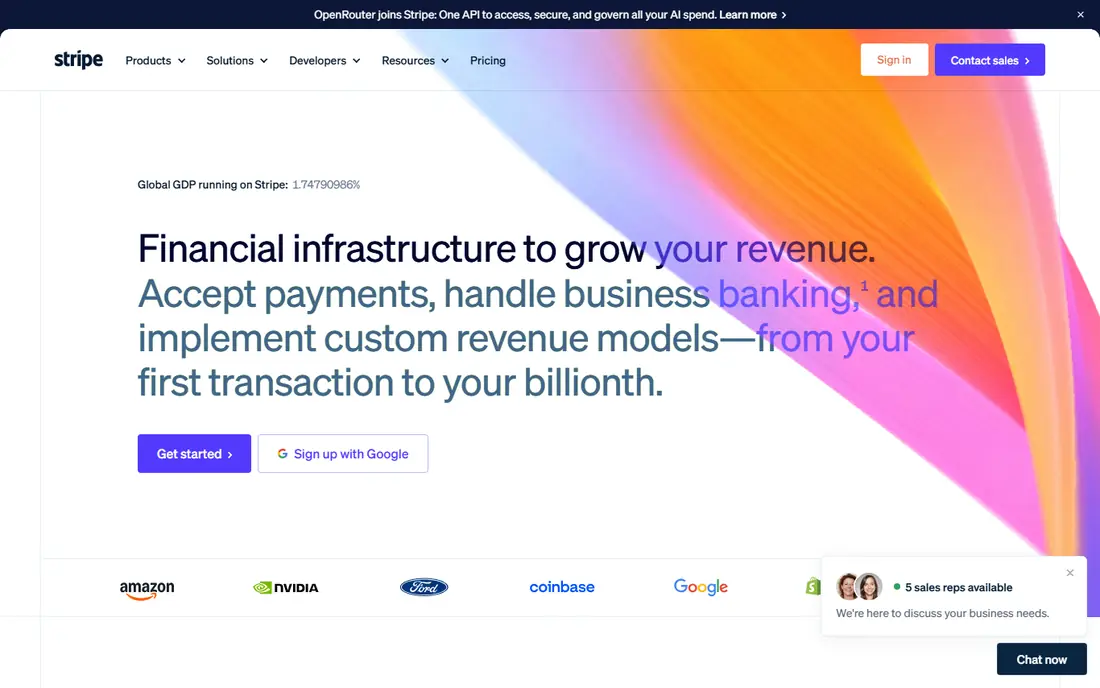
Stripe is the pick for businesses that sell online, run subscriptions, or need developer control. There is no monthly fee, online card rates list at 2.9 percent plus 30 cents, and the platform supports subscriptions, invoicing, and many payment methods through one integration. Its dashboard and docs are the standard other processors are judged against.
Stripe is less of a counter solution. Terminal hardware for in-person sales starts near $249, and the flat online rate penalizes very small transactions, since 30 cents is a large share of a $2 sale. For an online store, a SaaS product, or a subscription business, Stripe is the default to beat.
- No monthly fee
- Strong developer tools and subscriptions
- Wide payment method support
- Online rate of 2.9 percent plus 30 cents is dear for tiny sales
- In-person hardware costs more
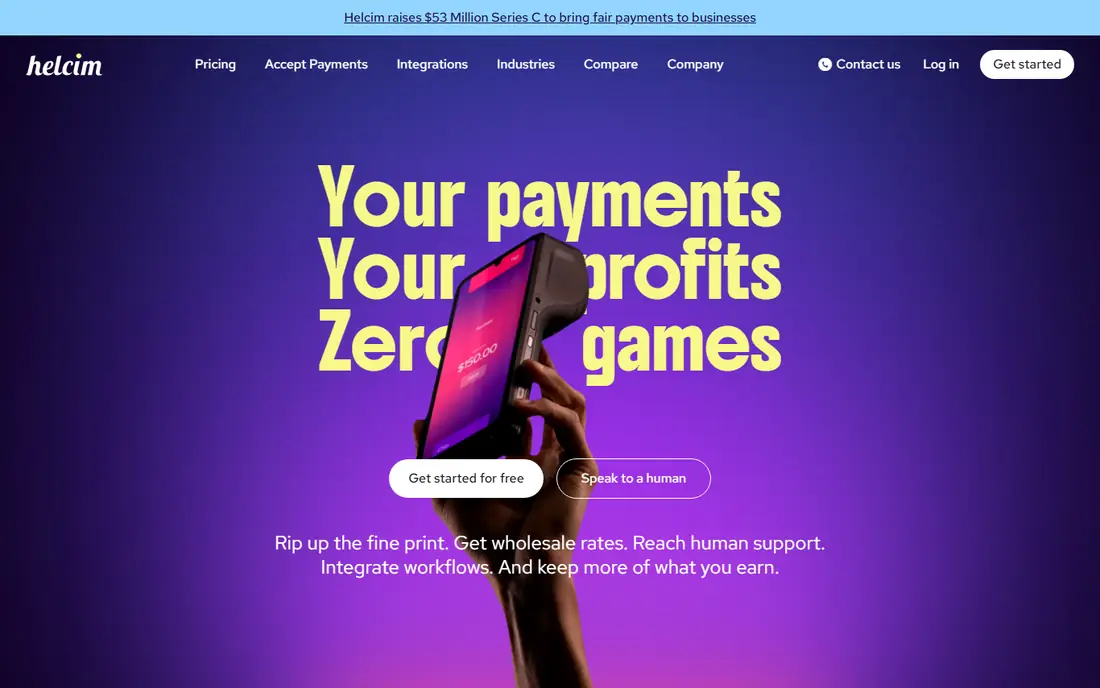
Helcim suits a growing business that wants honest pricing without haggling. There is no monthly fee, and interchange-plus rates start near interchange plus 0.4 percent plus 8 cents in person, and interchange plus 0.5 percent plus 25 cents online, with the markup falling as volume grows. You get invoicing, online checkout, and a point-of-sale app in the same account.
The trade-off is complexity. Interchange-plus statements are harder to read than a flat rate, and Helcim approves fewer high-risk businesses than a specialist high-risk processor. Card readers cost extra, with a reader listed near $109. If your volume is climbing past $10,000 a month, Helcim often beats flat-rate rivals on total cost.
- No monthly fee
- Interchange-plus pricing with a falling markup
- Invoicing and online checkout included
- Less suited to high-risk businesses
- Card readers cost extra
- Pricing has several tiers to read
PayPal is the pick when checkout trust drives sales. Many buyers choose a store that offers PayPal, and the service needs no monthly fee. In-person rates through Zettle list at 2.29 percent plus 9 cents, while online card processing lists near 2.99 percent plus 49 cents in recent comparisons, with Braintree card rates near 2.89 percent plus 29 cents.
The downside is cost and control. Online rates run higher than Stripe for some transactions, and PayPal can hold funds or freeze accounts during disputes, which frustrates sellers. For a store where buyer trust lifts conversion, PayPal earns its place at checkout, even if it is not the cheapest processor alone.
- Buyers trust the PayPal button
- No monthly fee
- In-person readers from $29
- Online card rates are higher than Stripe for some sales
- Account holds and disputes need care
Stax uses membership pricing: you pay $99 per month and then pay interchange plus 8 cents per in-person transaction, with no percentage markup. That model wins once volume is high, since the savings on every sale outweigh the monthly fee. A free terminal is included on some plans, and the dashboard covers invoicing and subscriptions.
The math only works at volume. A business processing $5,000 a month will likely pay more with Stax than with Square, since the $99 fee swamps the per-sale savings. Past roughly $25,000 to $50,000 a month, the model usually wins. Seasonal sellers should also check whether the fee pauses in quiet months.
- Interchange plus only 8 cents per transaction
- Free terminal on some plans
- No percentage markup
- $99 monthly fee needs real volume to justify
- Less suited to new or seasonal sellers
Payment Depot follows a similar membership idea to Stax, with wholesale interchange plus a small per-transaction fee, often near 5 to 10 cents, and a monthly subscription listed near $59 to $79 in recent comparisons. There is no percentage markup, so the savings grow with volume.
The subscription fee is the catch for small sellers, since a business processing a few thousand dollars a month may pay more overall than with a no-fee flat-rate processor. For a business already past $10,000 a month and still growing, Payment Depot is a credible way to cut the percentage cost of every sale.
- Wholesale interchange plus a small per-transaction fee
- No percentage markup
- Good for growing volume
- Monthly subscription fee makes it dear for low volume
- Quote varies by business type
Chase Payment Solutions suits businesses that prefer a bank processor to a fintech. It offers flat-rate pricing near 2.6 percent plus 10 cents in recent comparisons, or custom interchange-based pricing for larger sellers, plus reporting and fraud tools inside the Chase system. Businesses that already bank with Chase can keep payments and banking in one relationship.
The downsides are a $25 chargeback fee and a slower, more document-heavy onboarding than Square or Stripe. Pricing is also partly custom, so two businesses can pay different rates. For an established business that values a bank relationship and next-day funding, Chase is a steady choice.
- Direct processing through a major bank
- Flat-rate or custom pricing
- Strong fraud and reporting tools
- Pricing is partly custom
- Chargeback fee of $25
- Bank onboarding can be slower than a fintech signup
Toast is the pick for restaurants, cafes, and food trucks. Its point of sale covers tables, kitchen displays, online ordering, and handheld devices, with a Starter plan that charges no monthly fee and includes a hardware kit. In-person rates list near 2.49 percent plus 15 cents, while online rates run higher near 3.5 percent plus 15 cents.
Toast is built for food service, so a retail shop will find much of it irrelevant, and add-ons for payroll, marketing, and advanced reporting raise the bill. For a restaurant, though, the combination of hardware, software, and payments in one system is hard to match with a generic processor.
- Restaurant point of sale with kitchen display and online ordering
- Starter plan with no monthly fee
- Hardware kit on Starter
- Payment rates vary by plan
- Best value only for food businesses
- Add-ons raise the total
Clover suits a retail or service business that wants a complete counter setup. It offers counter terminals, handheld devices, and online checkout, plus an app marketplace for inventory, loyalty, and accounting. Software plans start at $14.95 per month, in-person rates list near 2.3 to 2.6 percent, and online rates run near 3.5 percent plus 10 cents.
The total cost is the catch. Hardware can cost $599 or more for a full terminal, and software fees stack on top of processing rates. For a business that needs a polished counter system with table service or complex inventory, Clover earns it. For a simple card reader need, Square or Helcim will be cheaper.
- Full counter, handheld, and online hardware range
- Large app marketplace
- Strong for retail and table service
- Monthly software fees from $14.95
- Hardware can cost $599 or more
- Online rates near 3.5 percent
How we picked these
We compared official pricing pages and current 2026 merchant service comparisons, and kept only providers that are live, serve US small businesses, and publish or quote clear rates. We favored a mix of flat-rate, interchange-plus, membership, bank, restaurant, and point-of-sale options, and we noted where monthly fees, chargeback fees, or hardware costs change the total. We did not claim hands-on testing. Rates and fees vary by provider, plan, card type, and volume, so confirm the full fee schedule before you sign.
What to check before you choose
Start with how you sell and how much you process. Under $5,000 a month, a no-fee flat-rate processor is usually cheapest and simplest. Past $10,000 a month, compare interchange-plus and membership quotes against your actual card mix, since debit, credit, and rewards cards cost different amounts.
Next, read the full fee list: monthly fees, chargeback fees, PCI compliance charges, hardware costs, and early termination terms. A low headline rate can hide a monthly fee that wipes out the saving. Finally, check funding speed, contract length, and how card-on-file data moves if you switch, since stored payment methods can be hard to migrate.
Sources
- https://www.squareup.com
- https://www.stripe.com
- https://www.helcim.com
- https://www.paypal.com
- https://www.staxpayments.com
- https://www.paymentdepot.com
- https://www.chase.com
- https://www.toasttab.com
- https://www.clover.com
- https://fitsmallbusiness.com/best-merchant-services/
- https://getholdings.com/resources/guides/best-payment-processing-small-business
Frequently asked questions
What is the cheapest merchant service for a small business?
For low volume, Square, Stripe, Helcim, and PayPal all offer no monthly fee, so the cheapest depends on your sales mix. In person, Square at 2.6 percent plus 15 cents and PayPal Zettle at 2.29 percent plus 9 cents are low. Online, Stripe at 2.9 percent plus 30 cents is the common benchmark. At high volume, Helcim, Stax, or Payment Depot usually win on total cost.
Do I need a merchant account or just a payment processor?
For most small businesses, a payment processor like Square or Stripe is enough, since it includes the merchant account function and you can start in a day. A traditional merchant account through a bank suits larger sellers that want custom rates and direct bank processing. The practical difference is onboarding speed and pricing control, not whether you can accept cards.
How long does it take to get paid?
Funding speed varies. Square offers next-business-day funding on many plans, Stripe typically pays in two business days, and Helcim reports next-business-morning funding. Bank processors and custom setups can be slower. Check the funding schedule for your plan, since a delay of days matters for cash flow.
Can I cancel a merchant service without a fee?
Square, Stripe, PayPal, and Helcim operate month to month or with no contract, so you can cancel without a termination fee. Some traditional processors and point-of-sale bundles include contracts or equipment leases, so read the agreement for termination and equipment return terms before you sign.
What fees should I watch for besides the transaction rate?
Watch monthly fees, chargeback fees, PCI compliance charges, hardware costs, and fees for refunds or international cards. Chargeback fees on this list run from waived or $15 to $35 depending on the provider. Ask for the full fee schedule in writing and compare a sample monthly statement, not just the headline rate.