Best Phone Service Plans in 2026: 10 Plans Compared
By ToolNimba Editorial Team November 9, 2026 10 min read

- Top pick
 Verizon
Widest coverage and stores
Starting price$75 per monthCheck out VerizonRead our review - Runner-up
 AT and T
Bundles and family plans
Starting price$60 per monthCheck out AT and TRead our review - Also great
 T-Mobile
Perks and travel benefits
Starting price$55 per monthCheck out T-MobileRead our review
How we researched this
We compared official pricing and feature pages, app store listings, privacy policies and public user reviews. Prices change, so check the provider's site before you pay.
Key takeaways
- Mint Mobile and Visible offer the lowest headline prices for a single line, at $15 and $25 per month on their entry plans, with different trade-offs on taxes and data priority.
- Verizon, AT and T, and T-Mobile cost more, but they include store support, device financing, and priority data that prepaid brands may not match.
- For two lines, compare the total bill, not the per-line headline price, because multi-line discounts and autopay credits change the ranking.
- Check coverage where you live and work before you switch, because the cheapest plan on the wrong network is a poor deal.
Quick comparison
| Name | Best for | Starting price | Free plan | |
|---|---|---|---|---|
| Verizon | Widest coverage and stores | $75 per month | No | Visit |
| AT and T | Bundles and family plans | $60 per month | No | Visit |
| T-Mobile | Perks and travel benefits | $55 per month | No | Visit |
 Mint Mobile | Low-cost single line | $15 per month | Free trial (7 days) | Visit |
 Visible | Simple unlimited on Verizon | $25 per month | No | Visit |
 Google Fi | Flexible data and travel | $20 per month | No | Visit |
 Cricket Wireless | In-store prepaid help | $35 per month | No | Visit |
 Metro by T-Mobile | Prepaid with stores | $30 per month | No | Visit |
 US Mobile | Network choice | $10 per month | No | Visit |
 Consumer Cellular | Simple plans for older users | $20 per month | No | Visit |
The best phone service plans
The best plan is the one that gives you enough high-speed data, on a network that works where you spend time, at a total price you can live with every month.
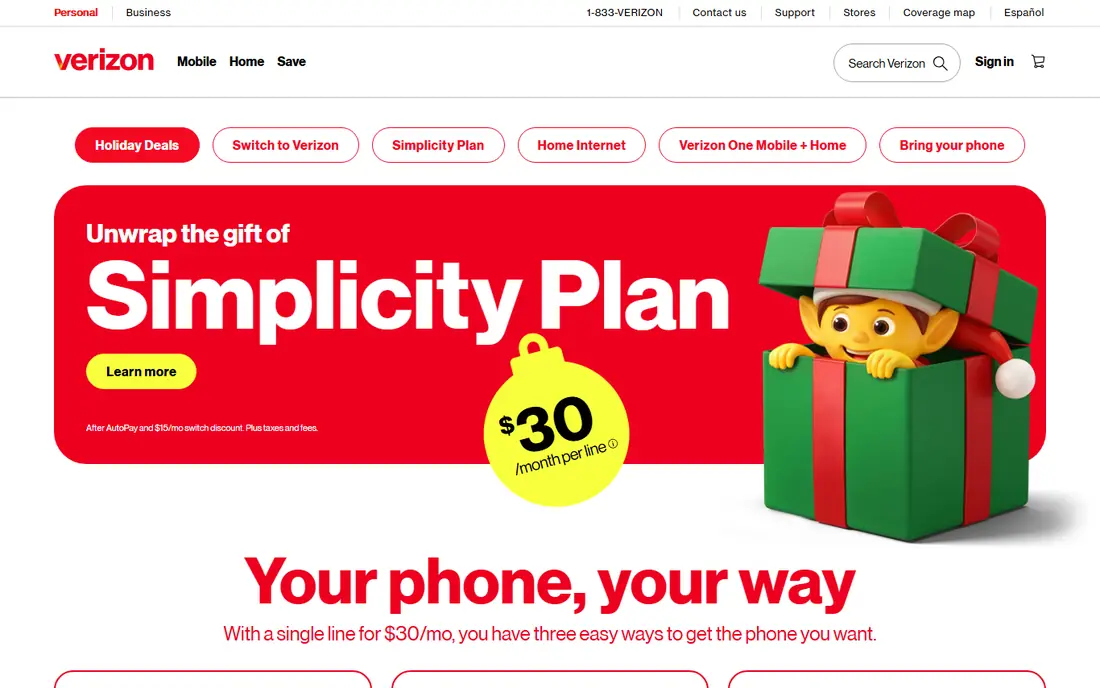
Verizon suits people who travel, live outside cities, or want to walk into a store when something goes wrong. Its Unlimited Welcome plan starts at $75 per month for one line before autopay discounts, and higher plans add priority data, hotspot allowances, and streaming perks. Coverage is the main reason people pay the premium.
The price is the catch. Taxes, fees, and add-ons lift the bill above the headline rate, and the cheapest plan has lower data priority than the top tiers. If you mainly stay in a city and rarely need store help, a Verizon-network prepaid brand may give you similar coverage for less.
- Large network coverage
- In-store support
- Strong device deals
- Highest entry price in this list
- Taxes and fees are extra on many plans

AT and T works well for households that already use AT and T for internet or TV, because bundles can cut the total household bill. Its Value plan starts at $60 per month for one line, and higher tiers add hotspot data, priority data, and streaming extras. Multi-line pricing brings the per-line cost down sharply.
Single-line buyers get less value. The entry plan is plain, and the best perks sit on the pricier tiers. If you only need one line and no bundle, compare Cricket, which runs on AT and T, before you pay postpaid prices.
- Strong family plan value
- Bundling with home internet
- Wide network
- Entry plan has limited perks
- Taxes are extra on many plans
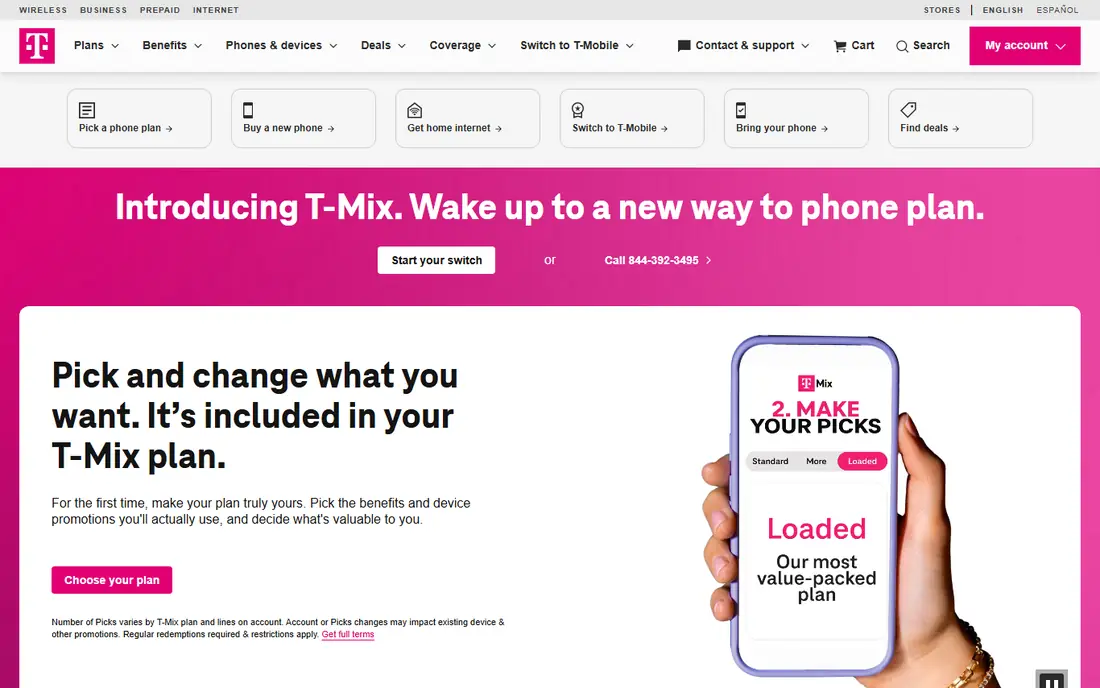
T-Mobile appeals to travellers and city dwellers. Its Essentials plan starts at $55 per month, and higher Experience plans add hotspot data, international data, and streaming perks. Taxes and fees are included in the advertised price on many plans, which makes the bill easier to predict than some rivals.
Rural coverage is the honest weakness. In many cities T-Mobile is fast and reliable, but in remote areas Verizon or AT and T may hold a signal where T-Mobile does not. Check the coverage map for your regular routes, not just your home address.
- Taxes and fees included on many plans
- Travel perks
- Strong 5G in cities
- Rural coverage can lag Verizon in some areas
- Top plans are pricey
Mint Mobile is the cheapest way to get a solid T-Mobile-based plan if you are happy to prepay. The 6GB plan costs $15 per month on a 12-month plan, and unlimited costs $30 per month on the same basis. Setup is done online with an eSIM or a mailed SIM, and the app handles most account tasks.
Prepayment is the trade-off. Shorter plans cost more per month, and you pay upfront for the whole term. Mint also has no retail stores, so people who want in-person help should look at Metro or Cricket instead.
- Very low price on multi-month plans
- Runs on T-Mobile
- Simple online setup
- Best price needs a 12-month prepay
- Taxes are extra
- No stores
Visible keeps pricing simple: one unlimited plan at $25 per month, taxes and fees included, on the Verizon network. There are no stores and no complex tier ladder to decode, and the higher Visible Plus plan adds priority data and faster hotspot for a higher price.
The base plan can slow down on busy towers, because postpaid Verizon customers get priority. The hotspot is also capped in speed. For most everyday use, including video and maps, Visible is a strong value pick, especially for a single line.
- Taxes and fees included
- Unlimited data
- Runs on Verizon
- Online only
- Base plan data may be deprioritised
- Hotspot speed is capped
Google Fi suits light data users and frequent travellers. The Flexible plan starts at $20 per month plus $10 per gigabyte, so a month of light use can cost far less than an unlimited plan. Unlimited plans start higher and include hotspot data and international features that suit people who travel often.
Heavy data users will find cheaper unlimited options elsewhere, and some advanced features work best on Pixel phones. If your data use varies a lot month to month, Fi is worth a close look. If you stream video daily, Mint or Visible will usually cost less.
- Pay only for data you use on Flexible
- Good international roaming
- Easy family billing
- Unlimited plans cost more than prepaid rivals
- Best features favour Pixel phones
Cricket is the prepaid brand for people who want a shop to visit. The Sensible 10GB plan starts at $35 per month, and unlimited plans run to $60 per month, with taxes and fees included on the advertised price in many cases. Staff can move your number, set up a new phone, and sort out billing in person.
Speed caps and data priority are the limits. Cheaper plans may cap download speeds, and Cricket customers can be deprioritised behind AT and T postpaid users on busy towers. If you value in-person help over the lowest price, that trade is reasonable.
- Stores across the US
- Runs on AT and T
- Taxes and fees included on many plans
- Data speeds may be capped on cheaper plans
- Top plan costs as much as some postpaid deals
Metro gives T-Mobile network access with a store network behind it. Plans start at $30 per month, and higher unlimited plans add hotspot data and perks such as streaming subscriptions on some tiers. Taxes and fees are included in the advertised price, which keeps the bill predictable.
As with other prepaid brands, priority data is the catch. Metro customers can slow down on congested towers before T-Mobile postpaid customers do. If you live in a busy city and use a lot of data at peak times, a higher Metro tier or a postpaid plan may serve you better.
- Stores across the US
- Runs on T-Mobile
- Taxes and fees included
- Entry plans have limited priority data
- Device deals often need a new line or port-in
US Mobile stands out because you can pick which major network your line runs on, and switch later if coverage disappoints. The Light 2GB plan starts at $10 per month, and Unlimited Premium costs $44 per month, with taxes and fees included. Shared and multi-line plans suit families who want one bill with different data levels per line.
The downside is complexity. Plan names, prices, and included features have changed several times, so a review from a few months ago may not match the current site. Check the live pricing page before you order, and confirm which network you are choosing at checkout.
- Choice of all three major networks
- Taxes and fees included
- Flexible shared plans
- Online only
- Plan names and prices change often, so check the current page
Consumer Cellular suits people who want a simple plan and helpful support rather than the lowest possible price. The Basic 1GB plan starts at $20 per month with an autopay credit, and unlimited plans are available for heavier users. The company runs on AT and T and T-Mobile networks, depending on the plan and phone.
The catch is value for heavy data users. Unlimited plans cost more than Mint, Visible, or US Mobile, and data may be deprioritised. For a light user who wants a human on the phone and a plain bill, Consumer Cellular is a comfortable choice.
- Simple plans
- US-based support reputation
- AARP member discounts
- Unlimited plans cost more than prepaid rivals
- Data priority is lower than postpaid
How we picked these
We compared official carrier pricing pages, plan details, and public plan comparisons from October 2026, focusing on single-line and two-line pricing, network, hotspot allowances, and whether taxes are included. We included the three major postpaid carriers and the prepaid brands most US buyers actually choose, and we noted where a headline price needs autopay, multi-month prepay, or a bundle to apply.
How to pick the right plan
Start with data use. Check your last three phone bills for actual data use, not the plan size you think you need. Light users under 5GB a month can save a lot on Mint, US Mobile, or Google Fi Flexible, while heavy users should compare unlimited plans on priority data and hotspot limits, not just the monthly price.
Next, check coverage. Ask friends or neighbours on each network how service holds up at home, at work, and on your commute. A carrier map is a guide, not a guarantee, and a free trial or a short prepaid month is a cheap way to test a network before you move every line.
Finally, add up the total bill. Include taxes, fees, autopay credits, multi-line discounts, and any device payments. A plan that looks $10 cheaper can cost more once fees are added, and a postpaid plan with a free phone deal can beat a prepaid plan if you were going to buy that phone anyway.
Sources
- https://www.verizon.com
- https://www.att.com
- https://www.t-mobile.com
- https://www.mintmobile.com
- https://www.visible.com
- https://fi.google.com
- https://www.cricketwireless.com
- https://www.metrobyt-mobile.com
- https://www.usmobile.com
- https://www.consumercellular.com
- https://www.usmobile.com/blog/cell-phone-plans/
Frequently asked questions
What is the best phone service plan for 2 lines?
It depends on data use and network. Mint and Visible keep two-line costs low for light and moderate users, while T-Mobile, Verizon, and AT and T offer stronger multi-line discounts and perks for heavier users. Add up the total two-line bill, including taxes, before you decide.
Is prepaid service worse than postpaid?
Not in coverage, but it can differ in priority. Prepaid customers may slow down on busy towers before postpaid customers do, and prepaid plans often have smaller hotspot allowances. For most everyday use, the difference is hard to notice outside crowded places.
How much data do I need?
Most light users need under 5GB per month, moderate users need 10GB to 20GB, and heavy video streamers or hotspot users should look at unlimited plans with at least 20GB of hotspot data. Check your past bills rather than guessing, because many people pay for data they never use.
Can I keep my phone number when I switch?
Yes. Do not cancel the old plan before you port the number, and keep the account number and transfer PIN from your old carrier ready. Porting usually takes minutes to a few hours, and your old plan should only close after the number moves.
Do I need a store, or is online signup fine?
Online signup suits most people, especially with eSIM phones, and it is how the cheapest plans keep prices low. Choose a carrier with stores, such as Cricket or Metro, if you want in-person help with setup, number moves, or phone repairs.