Best Platforms for AI Visibility Metrics in 2026: 9 Tools Compared
By ToolNimba Editorial Team November 11, 2026 10 min read

- Top pick
 Profound
Enterprise AI search depth
Starting priceSee websiteCheck out ProfoundRead our review - Runner-up
 Peec AI
Readable prompt analytics
Starting price$95 per monthCheck out Peec AIRead our review - Also great
 Otterly.AI
Budget AI monitoring
Starting price$29 per monthCheck out Otterly.AIRead our review
How we researched this
We compared official pricing and feature pages, app store listings, privacy policies and public user reviews. Prices change, so check the provider's site before you pay.
Key takeaways
- Otterly.AI and Rankscale suit small teams, with Otterly.AI starting at 29 dollars a month for core engines and daily checks.
- Peec AI and SE Ranking suit teams that want readable reports and prompt-level demand or project separation.
- Profound, Scrunch, and AthenaHQ suit larger brands that need broad engine coverage, sentiment, and citation analysis.
- AI answers change from run to run, so treat visibility as a trend across many prompts, not as a single daily score.
Quick comparison
| Name | Best for | Starting price | Free plan | |
|---|---|---|---|---|
| Profound | Enterprise AI search depth | See website | Free trial | Visit |
| Peec AI | Readable prompt analytics | $95 per month | Free trial | Visit |
| Otterly.AI | Budget AI monitoring | $29 per month | Free trial | Visit |
 Scrunch | Mid-size and enterprise brands | $300 per month | Free trial | Visit |
 AthenaHQ | Broad engine coverage on credits | $295 per month | Yes | Visit |
 Semrush AI Visibility Toolkit | Teams already on Semrush | $99 per month | Free trial | Visit |
 Ahrefs Brand Radar | SEO teams already on Ahrefs | $199 per month | Free trial | Visit |
 SE Ranking AI Visibility | Agencies on SE Ranking | $99 per month | Free trial | Visit |
 HubSpot AEO | Teams already in HubSpot | $50 per month | Free trial | Visit |
The best platforms for AI visibility metrics
We compared AI visibility platforms on engines covered, prompt limits, sentiment and citation metrics, reporting, and price, so you can measure how AI answers present your brand.
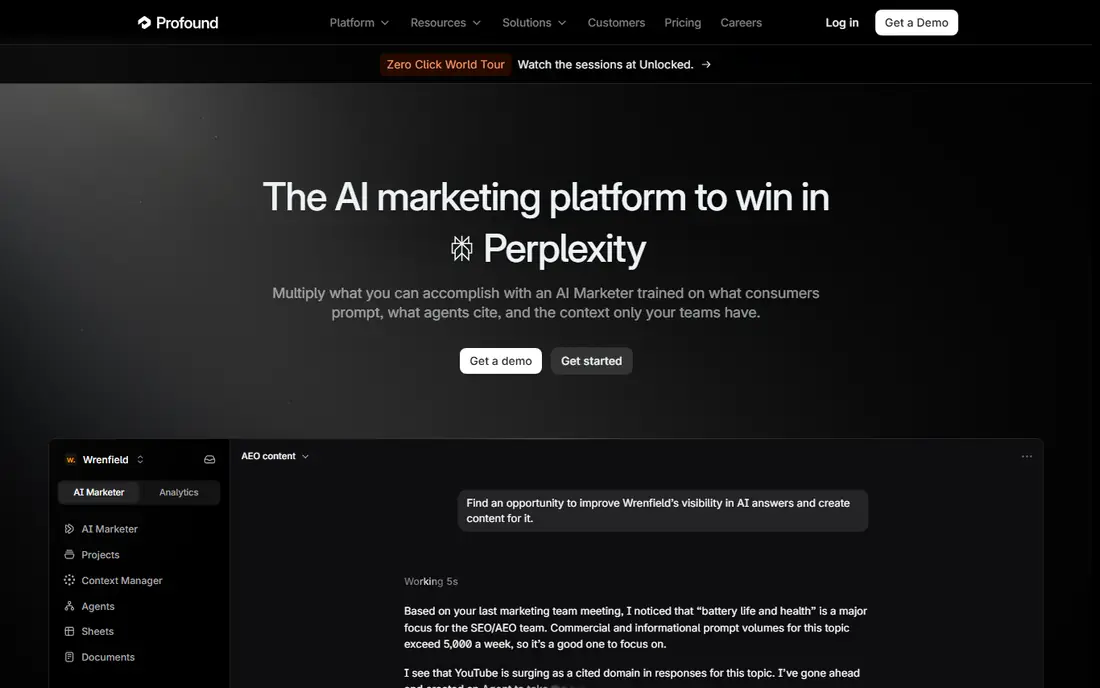
We place this option here because it is an enterprise AI marketing platform that tracks brand visibility across AI answer engines and pairs tracking with content agents. its engine breadth and crawler attribution suit large brands that need to connect AI visibility to traffic and content work in one platform. That detail matters in daily use. The honest catch is that pricing is custom at enterprise level, so smaller teams will find the entry cost unclear and likely out of reach without a sales conversation. Before you commit, trial it with your real work, check the limits on the plan you would actually buy, and confirm that the features you need are not locked behind a higher tier. If it passes, it fits the readers above.
- Broad engine coverage on higher tiers
- Citation and sentiment analysis
- Content agents on enterprise plans
- Enterprise pricing is custom and high
- Entry trial is limited
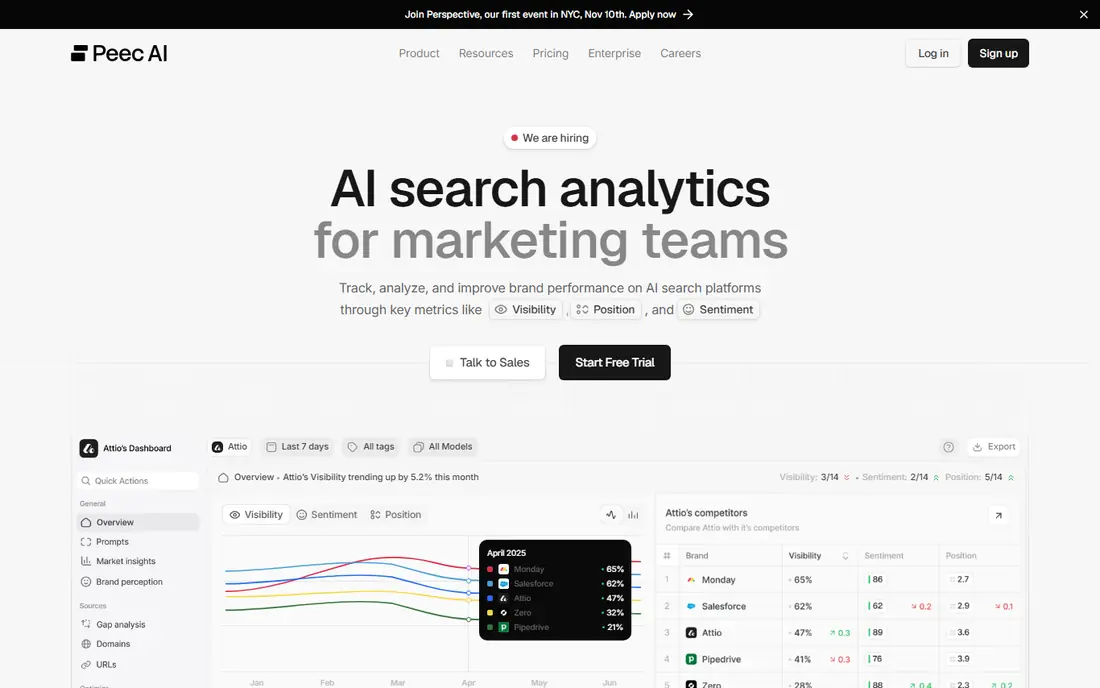
This pick earns its place because it is an AI search analytics tool that tracks prompts across chosen models and scores each prompt for relative demand. its demand scores help you weight prompts by buyer interest, so a win on a high-demand question counts more than a win on a rare one. That detail matters in daily use. The honest catch is that the entry plan limits you to three models, and opening all models plus API access requires a higher tier. Before you commit, trial it with your real work, check the limits on the plan you would actually buy, and confirm that the features you need are not locked behind a higher tier. If it passes, it fits the readers above.
- Prompt-level visibility, position, and sentiment
- Demand scores per prompt
- Clean project separation
- Entry plan covers three models of your choice
- API and all models need higher plans
For many readers, this is the practical choice because it is a budget AI search monitoring tool that tracks brand mentions and citations across core engines at a low entry price. at 29 dollars a month, it is the cheapest credible starting point here, and its content audit features point to fixes rather than only reporting scores. That detail matters in daily use. The honest catch is that add-ons for Claude, Gemini, and AI Mode add cost, and the Lite plan covers only 15 prompts, so larger prompt sets need a higher plan. Before you commit, trial it with your real work, check the limits on the plan you would actually buy, and confirm that the features you need are not locked behind a higher tier. If it passes, it fits the readers above.
- Low entry price
- ChatGPT, AI Overviews, Perplexity, and Copilot included
- Content audit features
- Some engines are paid add-ons
- Prompt count is modest on the Lite plan
We include this tool because it is a brand visibility platform for mid-size and enterprise teams, with tracking across several engines plus optimization guidance. its persona features and optimization recommendations suit teams that want to move from measurement to content changes in the same tool. That detail matters in daily use. The honest catch is that the 300-dollar entry price puts it beyond most solo users, and teams should confirm prompt and seat limits before signing. Before you commit, trial it with your real work, check the limits on the plan you would actually buy, and confirm that the features you need are not locked behind a higher tier. If it passes, it fits the readers above.
- Broad engine coverage
- Persona and content optimization features
- Agency workspaces
- Entry price is high for small teams
- Prompt counts need careful planning
We place this option here because it is a credit-based AI visibility platform that covers many engines and offers a free Essential plan for small tests. its credit model lets you spread checks across many engines, and the free plan gives a low-risk way to test the dashboard before paying. That detail matters in daily use. The honest catch is that the Starter price is high for small teams, and credit use can be hard to predict until you see how many answers your prompts generate. Before you commit, trial it with your real work, check the limits on the plan you would actually buy, and confirm that the features you need are not locked behind a higher tier. If it passes, it fits the readers above.
- Credit-based tracking across many engines
- Free Essential plan
- Optimization agent features
- Credit model needs planning
- Entry price is high for small teams
Semrush AI Visibility Toolkit
Best for: Teams already on Semrush
This pick earns its place because it is an add-on toolkit inside Semrush that tracks AI visibility per domain across ChatGPT, Google AI, Gemini, and Perplexity. teams already on Semrush get AI metrics without learning a new tool, and the reports sit next to SEO and ads data in one dashboard. That detail matters in daily use. The honest catch is that pricing per domain means agencies with many clients pay repeatedly, and the entry prompt count suits one brand better than a portfolio. Before you commit, trial it with your real work, check the limits on the plan you would actually buy, and confirm that the features you need are not locked behind a higher tier. If it passes, it fits the readers above.
- AI visibility per domain with daily prompt checks
- Integrates with the wider Semrush suite
- Priced per domain, so multi-brand tracking adds up
- Prompt count is modest at entry
For many readers, this is the practical choice because it is the AI visibility product inside Ahrefs, combining a large prompt index with custom prompt tracking for your brand. its index lets you research how AI answers cover a whole category, not only your own tracked prompts, which helps with competitor work. That detail matters in daily use. The honest catch is that pricing is layered, with index and custom prompt costs to untangle, and the full value shows best if you already use Ahrefs for SEO. Before you commit, trial it with your real work, check the limits on the plan you would actually buy, and confirm that the features you need are not locked behind a higher tier. If it passes, it fits the readers above.
- Large prompt index plus custom prompt tracking
- AI Overviews, AI Mode, and chatbot coverage
- Needs a paid Ahrefs plan context for full use
- Index pricing is separate from custom prompts
We include this tool because it is the AI visibility add-on inside SE Ranking, tracking AI Overviews, AI Mode, and ChatGPT alongside classic rank tracking. its 200-prompt entry count is generous for the price, and agencies already on SE Ranking avoid a second dashboard and a second login. That detail matters in daily use. The honest catch is that add-on pricing depends on your core plan, so the total bill needs checking, and engine coverage is narrower than specialist enterprise tools. Before you commit, trial it with your real work, check the limits on the plan you would actually buy, and confirm that the features you need are not locked behind a higher tier. If it passes, it fits the readers above.
- AI Overviews, AI Mode, and ChatGPT tracking
- Many prompts at entry
- Familiar suite interface
- Requires a core SE Ranking plan context
- Add-on pricing varies by plan
We place this option here because it is an answer engine optimization add-on inside HubSpot for teams that already run marketing and CRM there. keeping AI visibility next to CRM and content data helps teams tie a visibility change to leads and campaigns without exporting reports. That detail matters in daily use. The honest catch is that engine coverage is narrower than dedicated AI tools, and the 25-prompt entry count suits a single brand rather than an agency roster. Before you commit, trial it with your real work, check the limits on the plan you would actually buy, and confirm that the features you need are not locked behind a higher tier. If it passes, it fits the readers above.
- AI search grading and prompt tracking inside HubSpot
- CRM and content links
- Engine coverage is narrower than specialists
- Prompt count is modest at entry
How we picked these
We compared official feature pages, pricing pages, and product documentation, and we focused on entry prices, prompt counts, and engine lists. We gave weight to tools that store full answers and cited sources, since a single score without evidence is hard to act on. We did not claim hands-on testing, and we treated vendor engine counts as stated on their own pages, since coverage changes often.
How to choose an AI visibility platform
Pick prompts the way buyers ask
Track questions buyers actually type, including comparisons and problems, not only your brand name. Branded prompts will flatter you, while unbranded category prompts show whether AI recommends you to new buyers.
Demand the answer behind the score
A visibility score is only useful if you can open the answer, see the cited sources, and check sentiment. Tools that store full answers help you decide whether to fix a page, seek coverage, or correct a fact.
Watch prompt and engine limits
Entry plans cap prompts, projects, and engines, and add-ons for extra engines can add up. Count your core prompts and competitors first, then pick a plan that covers them daily without constant upgrades.
Sources
Frequently asked questions
What are the best AI visibility metrics tools?
Otterly.AI suits budget buyers, Peec AI suits readable analytics, and Profound suits enterprise depth. SE Ranking and Semrush suit teams that already use those suites and want AI metrics in the same dashboard.
What metrics matter most for AI visibility?
Mention rate, citation rate, sentiment, and share of voice against competitors matter most. Prompt-level trends and the sources AI cites tell you more than a single blended score, since they point to the fix.
How is AI visibility different from Google rankings?
Google rankings show a position on a results page, while AI visibility shows whether an answer names or cites you at all. Answers vary by run, so AI tools report frequency across many checks rather than a fixed rank.
Do I need a paid AI visibility tool?
Free checkers and trials help for a one-off audit, but ongoing tracking needs a paid plan to run prompts daily across engines. Start with a trial on your real prompts, then pay only if the reports change your content decisions.
How many prompts should I track?
Start with 15 to 50 prompts covering your core products, comparisons, and problems buyers ask about. Add competitors and new topics only after the first set produces clear actions, since every prompt adds cost.